Wastewater treatment expert: +86-181-0655-2851 Get Expert Consultation
HYDROPUREWATER · Industry library

Oil & gas wastewater
A connected industry library.

Follow five oil and gas water streams from production and refining to their treatment choices. Separate free oil, emulsions, dissolved organics and salts before selecting equipment.

Country coverage & industry connections

Country links count catalog associations, not verified plants or proof that every sub-industry operates there. The right-hand branches are industry references.

Explore the full database →
Country libraryProduction. Water. Treatment.Oil & GasUnited States · 248United States · 248Oman · 3Oman · 3Iraq · 2Iraq · 2Kuwait · 2Kuwait · 2Saudi Arabia · 2Saudi Arabia · 2Algeria · 1Algeria · 1Produced waterProduced waterRefinery process drainsRefinery process drainsDesalter water & brinesDesalter water & brinesCleaning & emulsionsCleaning & emulsionsTerminals & oily runoffTerminals & oily runoff
Country links count catalog associations, not verified plants or proof that every sub-industry operates there. The right-hand branches are industry references.
Browse all country libraries
United States248Oman3Iraq2Kuwait2Saudi Arabia2Algeria1Angola1Australia1Brazil1Iran1Kazakhstan1Kenya1Lebanon1Nigeria1Panama1United Arab Emirates1Egypt0

Production. Water. Treatment.

Choose a branch, then select a connection. Read what supports it, when it applies and where it stops.

Formation water can carry dispersed oil, dissolved hydrocarbons, salts and production chemicals. Decide its approved destination before designing treatment.

Production streamWater challengeTreatment / controlProduction separationProduction separationDispersed oil & solidsDispersed oil & solidsStaged oil separationStaged oil separationProduced-water routingProduced-water routingSalts & chemical compatibilitySalts & chemicalcompatibilityRoute-specific treatmentRoute-specific treatment
All documented connections
Production streamWater challengeTreatment / controlWhen it applies
Produced water · Production separationDispersed oil & solidsStaged oil separation

Gravity separation followed by suitable hydrocyclones or gas flotation can address oil droplets; this is a process family rather than a catalog unit selection.

Test droplet size, gas content, solids, chemistry and the reinjection or discharge requirements; evaluate gas and ignition hazards.

Oil removal does not demonstrate salt, dissolved-organic or toxicity removal. Offshore gas flotation does not validate an ordinary air-DAF package.

IFC / World Bank Group
Produced water · Produced-water routingSalts & chemical compatibilityRoute-specific treatment

Compare permitted reinjection, disposal and reuse routes. A reuse duty may require additional contaminant or salt control beyond oil separation.

Characterize the receiving formation or intended use, full ionic composition, scaling tendency and residual chemicals.

A technical reuse possibility is not permission to irrigate, discharge or inject. No universal produced-water quality is assumed.

IFC / World Bank Group United States Government Accountability Office
Refinery process drains · Oily process drainsOil & floatable solidsOil separator / suitable DAF

Recover separable oil and floatable solids before downstream treatment; DAF is one option alongside skimmers and coalescing separators.

Confirm droplet and solids behavior, hydraulic loading, chemical tests and hazardous-area requirements for the complete installation.

Selecting a separator or DAF does not establish final compliance or removal of dissolved salts and all soluble COD.

IFC / World Bank Group
Refinery process drains · Equalized refinery effluentSoluble organic loadBiological treatment / polishing

After segregation and pretreatment, biological treatment can target biodegradable dissolved organics. Persistent COD may need adsorption or oxidation.

Establish biodegradability, inhibition, nitrogen balance and shock-load control with representative water and the actual target quality.

A generic biological package is not demonstrated suitable for sour water, concentrated spent chemicals or every refinery contaminant.

IFC / World Bank Group
Desalter water & brines · Crude desaltingOily saline wash waterSegregation & pretreatment

Track desalter water separately to assess its salt and hydrocarbon burden before combining it with compatible treatment streams.

Measure conductivity, ions, oils, solids, sulfides and variability; identify any sour-water pretreatment duty.

The word desalting describes removal of salts from crude oil, not proof that its wastewater has been desalinated.

IFC / World Bank Group
Desalter water & brines · Saline-water reuse studyDissolved salts & scalingDesalination & brine plan

Where the intended use requires lower salts, evaluate appropriate desalination after pretreatment and include concentrate management in the design.

Compare ion chemistry, osmotic and scaling limits, fouling, energy and an authorized residuals route; pilot the selected option.

DAF, screening and conventional biological treatment do not establish dissolved-salt removal. A historical technical review is not a current cost quotation.

United States Government Accountability Office
Cleaning & emulsions · Turnaround cleaningBatch oily shock loadsCollection & controlled feed

Collect contaminated cleaning waters and characterize them before controlled transfer to a compatible wastewater treatment route.

Size storage for the actual batch, identify incompatible or volatile chemicals, and assess the receiving plant’s loading capacity.

Equalization smooths loading; it is not destruction of hydrocarbons, and dilution does not replace treatment or discharge permission.

IFC / World Bank Group IFC / World Bank Group
Cleaning & emulsions · Emulsified oily drainsPersistent oil dispersionTested chemical separation

Assess chemical conditioning and a suitable oil/solids separator on representative water instead of assuming a gravity separator handles every emulsion.

Check cleaning agents, pH, salinity and separation tests; evaluate chemical consumption, sludge and installation safety.

This is a testing decision, not a prescribed demulsifier or dose. Dissolved hydrocarbons may remain after successful oil separation.

IFC / World Bank Group IFC / World Bank Group
Terminals & oily runoff · Contaminated-area runoffRain-driven oil loadsContainment & oil separation

Prevent spills, retain contaminated runoff and route it through appropriately designed oil-water separation rather than mixing all site drainage.

Assess rainfall, contributing area, spill scenarios, maintenance and controlled release arrangements.

A separator can be hydraulically overloaded and does not remove every dissolved contaminant. Clean runoff and contaminated runoff require distinct assessment.

IFC / World Bank Group
Terminals & oily runoff · Tank-bottom drainingOil & dissolved hydrocarbonsBatch treatment / off-site route

Drain with oil-loss controls, segregate the water and assess further biological, chemical or carbon treatment on-site or at an authorized receiving facility.

Analyze the stored product’s contaminants and batch frequency; confirm treatment acceptance and manage recovered oil and residuals.

Intermittent terminal flows may not support a continuously fed biological plant. Oil separation alone does not resolve dissolved BTEX or oxygenates.

IFC / World Bank Group

Equipment in context

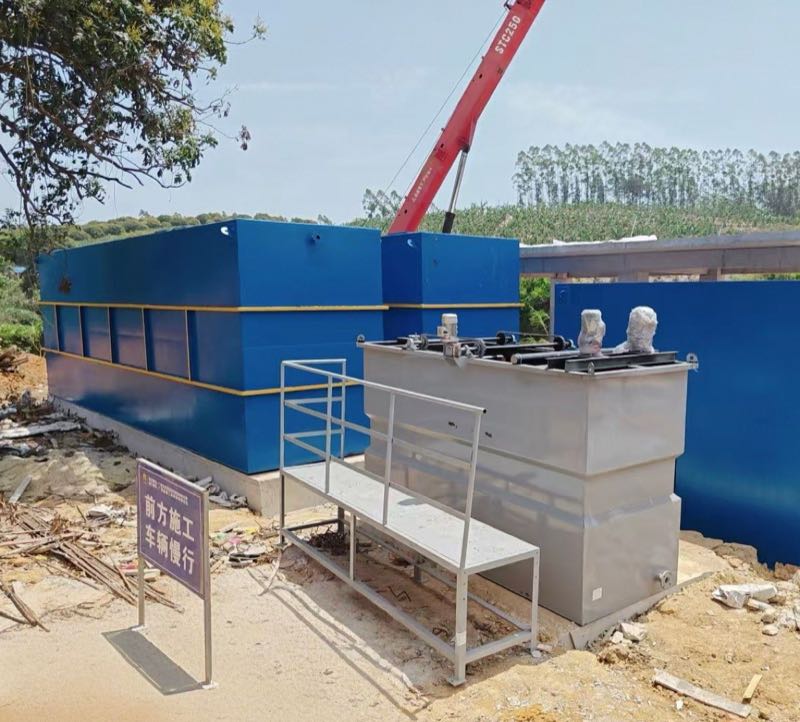
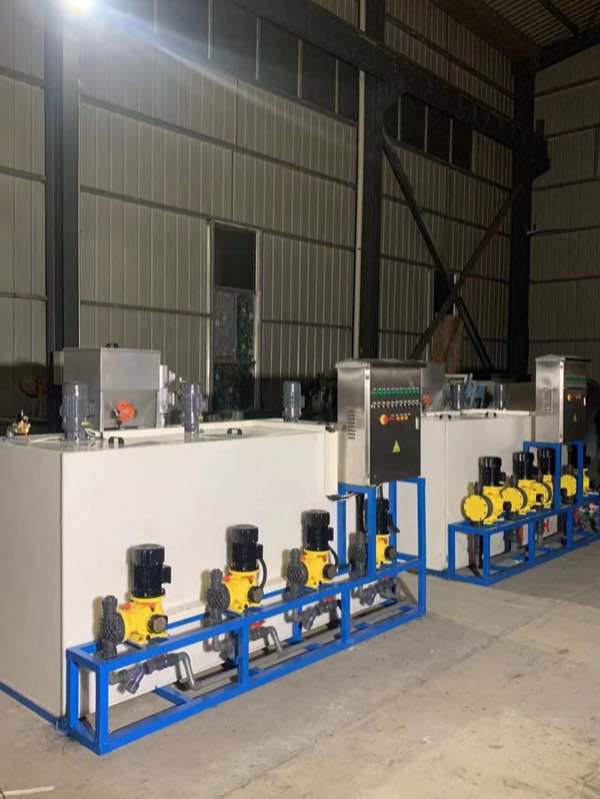
Equipment follows the treatment duty. Flow, solids, fats, biodegradability and the receiving route still require a site assessment.

Original references

Industry guidance linking water streams, pollutants and control options. These are not local measurements, country discharge limits or equipment guarantees. Confirm fluid hazards, discharge or reinjection route, site tests and applicable permits.

Technical references reviewed

EHS Guidelines for Offshore Oil and Gas Development

IFC / World Bank Group · 1.1.2 Wastewaters — Produced Water, paragraphs 28–36 · Printed page 6–7

GIIP technical reference for offshore operations; not a universal marine discharge authorization or product approval.

a gas flotation cell or hydrocyclone
Read original source ↗
EHS Guidelines for Onshore Oil and Gas Development

IFC / World Bank Group · 1.1 Environment — Wastewater / Effluent Discharges; Produced Water · Printed page 5–6

GIIP technical reference for onshore development. Management depends on field chemistry, receiving formation and approved disposal route.

dissolved salts, trace metals, suspended particles
Read original source ↗
EHS Guidelines for Petroleum Refining

IFC / World Bank Group · 1.1 Environment — Wastewater, paragraphs 29–35; Annex A — Desalting, paragraph 77 · Printed page 8–10, 27

GIIP technical reference for petroleum refining. Treatment sequences are options for assessment, not guaranteed removals or local permit limits.

source segregation and pretreatment of concentrated wastewater streams
Read original source ↗
EHS Guidelines for Crude Oil and Petroleum Product Terminals

IFC / World Bank Group · 1.1 Environment — Wastewater; Stormwater; Tank Bottom Water; Storm and Process Wastewater Treatment · Printed page 4–5

GIIP technical reference for land and shore petroleum terminals. Batch effluents may require on-site or off-site treatment according to their composition and destination.

separate phase and dissolved petroleum hydrocarbons
Read original source ↗
Energy-Water Nexus: Information on Water Produced during Oil and Gas Production — GAO-12-156

United States Government Accountability Office · Most Produced Water Is Minimally Treated, but More Advanced Treatment Methods Are Available · Printed page 22–23

Historical U.S. technical review used here to distinguish solids/oil pretreatment from desalination. Its costs and historic concentration ranges are not reproduced as current project data.

reduce hardness, salts, and other contaminants
Read original source ↗

Questions before selecting a treatment

Is all oily wastewater treated in the same way?

No. Produced water, refinery drains and terminal batches differ in oil form, dissolved chemicals, salt content and destination. Characterize and segregate streams before choosing a process.

Does DAF remove salts from produced water?

Oil/solids separation and desalination are different duties. Where lower salts are required, evaluate separate ion-removal treatment, pretreatment and concentrate disposal using the actual water chemistry.

Can a standard air-DAF unit be selected for an offshore platform?

The offshore reference describes gas flotation and other separation options, not approval of a standard air-DAF product. Gas handling, ignition hazards, materials, footprint and the permitted water route require specialist assessment.

What is needed before quoting an oily-water treatment system?

Provide site and destination, flow and batch pattern, oil form, solids, dissolved organics, salinity, temperature and relevant hazards. Share representative analyses and the applicable permit target; equipment alone does not establish compliance.

Bring your process into the picture.

Share your country, production stream and available water analysis to assess a suitable treatment train.

Discuss your wastewater →

Oil & Gas — water evidence database

Public guides, reported developments and reviewed evidence. Counts describe this library’s coverage.

Explore relationships
Partial: confirmed material onlyPartial coveragePublic snapshot · UTC+8

Related guides
299
Reported events
1
Reviewed facts
12
Published dossiers
1
Independent sources
2

Guides are article candidates, events are source-supported reports, and facts are reviewed records. Countries and industries overlap; grouped counts cannot be added into a global total.

Country × industry coverage

Select a cell to inspect its records. Coverage measures published material, never market size, factories or local project volume.

Related guides · more published material
Select a cell to inspect its records. Coverage measures published material, never market size, factories or local project volume.
CountryTextileFood & BeverageChemical ManufacturingPharmaceutical ManufacturingOil & GasMunicipal Wastewater
Algeria13—116
Angola33—115
Argentina1511—5
Australia24—1121
Azerbaijan———1——
Bahrain1111—6
Bangladesh101—2—5
Bolivia1—————
Brazil1511119
Burkina Faso—1————
Cambodia22—1—6
Cameroon23—1—4
Canada252——27
Chile13—1—6
China5111—1
Colombia14—1—7
Costa Rica11—1—2
Cyprus—————1
Czech Republic—1———2
Denmark—2—1—1
Dominican Republic2211—4
Ecuador1321—5
Egypt420108
El Salvador—————1
Ethiopia33—1—1
Fiji—1———1
Finland—1———1
France1311—8
Germany13—3—7
Ghana23—1—6
Greece—1———1
Hungary—2————
India341745—51
Indonesia11641—15
Iran645118
Iraq131128
Ireland—3———2
Israel11———5
Italy13—1—4
Ivory Coast11—1—4
Japan1111—1
Jordan21—1—6
Kazakhstan11—115
Kenya43—113
Kuwait133—27
Lebanon————1—
Malaysia16—3—16
Mexico4513—17
Mongolia11———1
Montenegro—1————
Morocco6311—9
Mozambique31—1—6
Myanmar2111—5
Namibia—————1
Nepal32—1—1
Netherlands12———2
New Zealand—2———2
Nigeria553117
Norway11———2
Oman223136
Pakistan12330—12
Panama342115
Peru54—1—6
Philippines3321—14
Poland11—1—3
Portugal12———1
Qatar2321—6
Romania—1———2
Russia—211—1
Rwanda2211—3
Saudi Arabia1741215
Senegal2111—4
Singapore11—1—2
South Africa23—1—13
South Korea21———5
Spain13—1—3
Sri Lanka321——2
Sweden11—1—1
Syria—————1
Tajikistan—————1
Tanzania14—1—1
Thailand47—1—10
Turkey4211—1
Turkmenistan31—1—3
Uganda55—1—5
Ukraine—————1
United Arab Emirates232119
United Kingdom1311—20
United States212984213824864
Uzbekistan41—1—4
Vietnam5313—13

A dash means coverage is unknown or unconnected. A verified zero is shown only when the metric scope is known.

Daily public additions

First verified public appearance in this library, by UTC+8 day. Source publication dates do not create historical growth.

Reported eventsReviewed factsPublished dossiersRelated guides
—
—

History is accumulating. Missing or failed days remain gaps; a single snapshot cannot establish a trend. Historical baseline and backfill are labelled separately.

Inspect recorded days and changes
Day (UTC+8)Coverage statusnew recordsHistorical backfillRevisedWithdrawnRestored
2026-10-15Partial: confirmed material only—0000
2026-10-16Partial: confirmed material only20000
2026-10-17Partial: confirmed material only20000
2026-10-18Partial: confirmed material only30000
2026-10-19Partial: confirmed material only20000
2026-10-20Partial: confirmed material only30000
2026-10-21Partial: confirmed material only31000
2026-10-22Partial: confirmed material only50000
2026-10-23Partial: confirmed material only20000
2026-10-24Partial: confirmed material only10000
2026-10-25Partial: confirmed material only10000
2026-10-26Partial: confirmed material only101700
2026-10-27Partial: confirmed material only10000
2026-10-28Partial: confirmed material only50000
2026-10-29Partial: confirmed material only30000
2026-10-30Partial: confirmed material only60000
2026-10-31Partial: confirmed material only30000
2026-11-01Partial: confirmed material only10000
2026-11-02Partial: confirmed material only20000
2026-11-03Partial: confirmed material only40000
2026-11-04Partial: confirmed material only30000
2026-11-05Partial: confirmed material only60000
2026-11-06Partial: confirmed material only10000
2026-11-07Partial: confirmed material only40000
2026-11-08Partial: confirmed material only10000
2026-11-09Partial: confirmed material only30000
2026-11-10Partial: confirmed material only70000
2026-11-11Partial: confirmed material only20000
2026-11-12Partial: confirmed material only30000
2026-11-13Partial: confirmed material only30000
2026-11-14Partial: confirmed material only10000
2026-11-15Partial: confirmed material only30000
2026-11-16Partial: confirmed material only20000
2026-11-17Partial: confirmed material only20000
2026-11-18Partial: confirmed material only140000
2026-11-19Partial: confirmed material only20000
2026-11-20Partial: confirmed material only40000
2026-11-21Partial: confirmed material only—0000
2026-11-22Partial: confirmed material only10000
2026-11-23Partial: confirmed material only—0000

Current sources and reviewed facts

Two separate stocks at the published watermark. No historical stock line is reconstructed from article dates.

Current snapshot only
Independent sources2
Reviewed facts12

Record explorer

Inspect the records behind the selected coverage or day. Source links open the original publisher.

Record typeRecordCountryFirst public verificationEvidence
Guide candidatePetroleum Bulk-Plant Pretreatment: API/CPI and DAF SelectionEnglish source titleUnited States2026-11-22 15:19Open the record for its evidence
Guide candidatePetroleum Plant Pretreatment: How to Meet Sewer Limits in 2026English source titleUnited States2026-11-20 15:24Open the record for its evidence
Guide candidateMBR vs Activated Sludge for Chattanooga Petroleum WastewaterEnglish source titleUnited States2026-11-20 15:24Open the record for its evidence
Guide candidateMBR vs Activated Sludge for Jefferson Hills Petroleum WastewaterEnglish source titleUnited States2026-11-20 15:24Open the record for its evidence
Guide candidateMBR vs Activated Sludge for Petroleum Wastewater in ClarkEnglish source titleCountry scope not reported2026-11-20 15:24Open the record for its evidence
Guide candidatePetroleum Plant Pretreatment Limits: El Paso 2026 GuideEnglish source titleUnited States2026-11-19 15:35Open the record for its evidence
Guide candidatePetroleum Bulk Plant Pretreatment: Choose a Compliant Treatment TrainEnglish source titleUnited States2026-11-19 15:35Open the record for its evidence
Guide candidatePetroleum Wastewater Pretreatment for West Lebanon Sewer LimitsEnglish source titleLebanon2026-11-18 16:36Open the record for its evidence
Guide candidateDAF vs. Clarifier for Petroleum Wastewater in 2026English source titleCountry scope not reported2026-11-17 14:46Open the record for its evidence
Guide candidatePetroleum Plant Pretreatment for Panama City Sewer DischargesEnglish source titlePanama2026-11-17 14:46Open the record for its evidence
Guide candidateDAF vs. Clarifier for Petroleum Wastewater in 2026English source titleCountry scope not reported2026-11-16 15:03Open the record for its evidence
Guide candidateDAF vs. Clarifier for Petroleum Wastewater in Indianapolis 2026English source titleUnited States2026-11-16 15:03Open the record for its evidence

Related guides

Technical and news articles provide reading paths and candidate associations; they do not prove a local project or reviewed fact.

More country-specific reading is available through the country links in the coverage table.

Recent reported developments

Source publication and first public verification are separate dates. Reported developments remain observations.

Source published

US EPA detailed study of the petroleum refining industry reviewing refinery wastewater discharges and the existing effluent limitations regulations for potential revision.

Inspect original excerpt
1. Introduction This report summarizes information collected and analyzed by the United States Environmental Protection Agency (EPA) as part of a detailed study of the petroleum refining industry. The EPA conducted this study to review discharges from petroleum refineries and to determine whether the current wastewater discharge regulations for these operations should be revised. The EPA promulgated effluent limitations guidelines and standards (ELGs) for the Petroleum Refining Point Source Category in 1974. The ELGs were challenged in the U.S. Court of Appeals; as a result of the litigation, the EPA made revisions and finalized the ELGs on October 18, 1982.
Original source

First public verification: 2026-10-21 15:40

Comparable water samples

Compare only matching parameter, unit, water stage and scope. Individual facility samples never represent a national average or a continuous water-quality trend.

No group of at least two comparable, reviewed samples is available. Read individual evidence in the published dossiers.

Move from evidence to a treatment discussion

Carry the selected country and industry into your enquiry. Confirm influent conditions, discharge destination and operating scope with the engineering team.

Snapshot scope and provenance
Version
6889d751e1e7198767137ede85034e787f2a1257a51e3d0c0dbe40b87dea5d5f
Industry classification version
2026-10-15.1
Reviewed foundation version
20261015T105811-e19facf957c3
Observation version
ec4063e1203c11f4cde1b0b0cd605ff1e4a88de125a6bddfeabba96dafe156a0
Public coverage watermark
b13e9e980ea1373beb87c0d4c5b5337690ad0b30d73553a4a0e8129d8ec1d961
Historical baseline cutoff
Not reported

Only caller-frozen public records are counted. Language versions and revisions share a record identity; source versions share the independent source identity.

AI Growth
Contact
Contact Us
Call Us
+86-181-0655-2851
Email Us Get a Quote Contact Us