Identify the Gregory POTW requirements before selecting equipment
Petroleum plants near Gregory meet sewer pretreatment limits by segregating contaminated streams, controlling tank-bottom releases and coalescer dumps, removing free oil in an API separator or corrugated plate interceptor, and then using DAF for emulsified oil, FOG, suspended solids and colloidal material. Biological or adsorption polishing is added only when permit pollutants and wastewater chemistry require it. Compliance must be demonstrated at the POTW connection using the current permit, sampling method, averaging period, BMP requirements and representative wastewater analyses.
The controlling document is the receiving Gregory POTW’s current industrial-user discharge permit or equivalent control mechanism, together with sewer-use requirements, the sewer map, approved BMP language and applicable state or local approvals. Clean Water Act Section 402(b), 40 CFR Part 403 and the specific POTW permit establish the legal framework. EPA’s Local Limits Development Guidance, published 2021-06, explains local-limit development; EPA states that the permit or regulation controls if there is a conflict.
Two regulatory concepts determine whether a discharge creates treatment risk. Pass-through under 40 CFR 403.3(p) occurs when pollutants pass through the POTW and cause the POTW to violate its NPDES permit. Interference under 40 CFR 403.3(k) occurs when the discharge inhibits or disrupts POTW treatment or sludge processes and causes a related permit or sludge-use violation. A generic oil-and-grease limit therefore does not establish compliance by itself.
Confirm whether petroleum-refining requirements in 40 CFR Part 419 apply. A petroleum plant or bulk facility is not automatically a refinery merely because it handles petroleum products. Until the current permit or a written POTW clarification establishes the applicable concentration, averaging period, monitoring basis and prohibited-discharge conditions, do not publish a numerical Gregory limit in the design basis.
Turn the permit into a site-specific design brief
The permit becomes a procurement document only when every enforceable condition is converted into a measurable engineering input, an equipment function and a verification record. EPA’s five-stage local-limits framework provides the upstream logic: determine pollutants of concern; collect and analyze data; calculate maximum allowable headworks loadings for each pollutant of concern; designate and implement local limits; and address collection-system concerns (EPA, Local Limits Development Guidance, 2021-06).
Use a single compliance matrix to organize these requirements. For each numerical limit, narrative BMP, prohibited discharge and monitoring condition, identify the sampling point, analytical method, averaging period, monitoring frequency, reporting deadline, responsible operator and design response. The same matrix should become part of the request for proposal and the commissioning test plan.
| Permit condition | Design input required | Compliance evidence |
|---|---|---|
| Concentration limit and averaging period | Representative analyses, target residual and flow-weighted load | Analytical results linked to flow and sampling basis |
| Prohibited discharge or narrative BMP | Containment, isolation, routing or operating control | Inspection record and authorized operating procedure |
| Slug-control requirement | Credible event flow, storage response and discharge route | Event log, retained sample and notification record |
| Monitoring method and frequency | Accessible sample point, calibrated instrument and method | Chain of custody, calibration log and report |
Request peak instantaneous flow, daily average flow, daily oil-and-grease load, slug-event frequency, representative analyses and the required residual concentration. Average daily flow alone is insufficient for batch discharges or coalescer-dump conditions. If the permit contains no numerical ceiling, request the POTW’s written basis and preserve that unresolved condition in the design and procurement documents; do not convert an assumption into a specification.
EPA guidance addresses sampling locations, frequencies, methods, analytical methods, flow data and information maintenance (EPA, Local Limits Development Guidance, 2021-06). The Gregory permit supplies the enforceable monitoring conditions. Any proposed sampling plan should therefore show exactly where it came from.
Map every wastewater stream before choosing treatment units
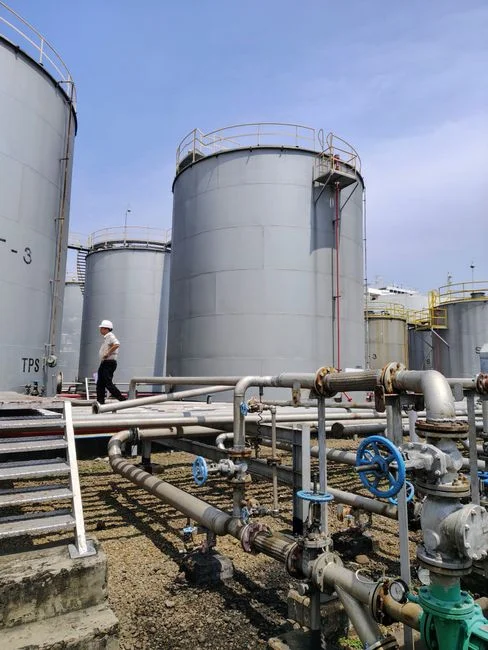
An undefined mixture cannot support defensible unit sizing. Inventory tank-bottom water, coalescer dumps, loading-arm or loading-rack drip, wash-rack wastewater, hydrostatic-test water and stormwater that contacts product-handling areas. For each stream, document its source, normal flow, credible peak flow, discharge frequency, containment, routing and analytical history.
Keep product-contact runoff separate from clean drainage and provide dedicated routing for each waste stream where practical. That separation allows analysts to characterize the actual condition—free oil, emulsified oil, suspended solids or another contaminant—rather than receiving a blended concentration that may conceal the controlling release. It also gives operators a defined destination when a slug must be held or rerouted.
Develop a written pretreatment slug-control plan covering tank transitions, coalescer dumps and batch discharges. Define what constitutes a slug, which valve or containment route isolates it, who inspects it, where retained wastewater goes, when discharge must stop and when the POTW must be notified. The plan should identify the responsible operator and include the applicable permit procedure.
Characterize normal operations and worst credible release conditions through representative sampling. Short grab samples can miss the event that controls treatment performance. The sampling plan should therefore define when samples are collected, how flow is recorded and how analytical results are associated with operating conditions.
Do not assign a universal percentage reduction to segregation savings. The supplied research establishes no verified reduction for a Gregory facility. Quantify the benefit from measured stream volumes, concentrations and discharge frequencies; otherwise, the design should carry segregation as a risk-control requirement rather than a credited capacity reduction.
Build the pretreatment train around the pollutant
A defensible petroleum pretreatment train follows a specific sequence: source segregation, equalization and slug control, API separator or corrugated plate interceptor, DAF, optional biological or adsorption polishing, and monitoring at the POTW connection. Each stage has a distinct function; no single unit covers the complete petroleum-wastewater condition.
Assign primary separation to free oil. Use DAF for emulsified oil, FOG, suspended solids and colloidal matter. Add biological treatment or adsorption only when permit pollutants, residual targets and wastewater chemistry show that physical separation is insufficient. The guide to selecting a DAF system for FOG and TSS provides a useful process-screening reference, but it does not establish the Gregory design basis.
For a credible free-oil slug, place an API separator or CPI ahead of DAF. The commercial petroleum reference warns that free oil can blanket DAF micro-bubbles and impair flotation performance during coalescer-dump events (HydropureWater, “How U.S. Petroleum Bulk Plants Meet Pretreatment Limits Before Sewer Discharge,” 2026). DAF alone is therefore a weak selection where uncontrolled free-oil slugs are credible.
The same commercial reference gives preliminary API residence time of at least 30 minutes at peak flow, CPI plate spacing of 1–2 inches and corrugation angle near 45 degrees (HydropureWater, 2026). Treat these as initial screening values only. Final selection must follow the selected manufacturer’s confirmed duty curve and site conditions.
| Train stage | Primary function | Required sizing basis |
|---|---|---|
| Segregation and slug control | Keep contaminated streams separate and hold releases | Stream inventory, event frequency, credible peak flow |
| Equalization | Smooth batch releases and provide response time | Hydraulic profile and permitted operating levels |
| API separator or CPI | Remove free oil before flotation | Free-oil loading, manufacturer duty curve and plate configuration |
| DAF | Remove emulsified oil, FOG, suspended solids and colloidal matter | Flow, oil distribution, chemistry and confirmed air-to-solids duty |
| Conditional polishing | Address pollutants not reliably removed physically | Permit parameter, residual target and wastewater chemistry |
Select chemical dosing through jar or pilot testing. The supplied research does not establish a universal coagulant, demulsifier or pH dose for this site. If testing demonstrates a need for controlled addition, specify an automatic chemical dosing system with verification against the proposed chemical, representative wastewater and selected operating sequence.
Size DAF against peak load and confirmed manufacturer duty
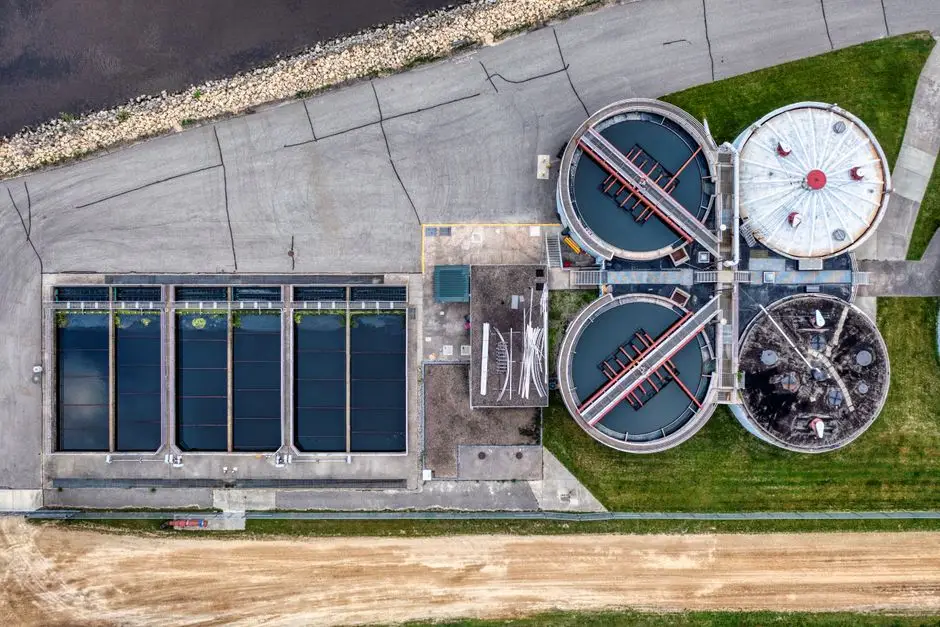
Size DAF against the peak instantaneous flow and credible slug conditions—not average daily flow. Batch releases can govern hydraulic demand and sustained treatment response. The bidder must connect peak flow, measured oil loading and chemistry assumptions to the proposed model’s confirmed operating envelope.
The HydropureWater DAF catalog covers 4–300 m³/h across 13 standard models (HydropureWater, “DAF or Clarifier for Petroleum Wastewater in Nazareth: 2026,” 2026). That range provides an initial commercial screening range for petroleum, petrochemical and industrial pretreatment applications. It does not establish that any listed model is correct for the Gregory plant.
The commercial design reference calls for 20–30% additional hydraulic and air-to-solids capacity (HydropureWater, 2026). Use that only as a preliminary margin, then verify the selected model’s actual performance envelope. Do not convert the screening margin into a universal hydraulic loading, air-to-solids rate or compliance guarantee.
| Bid item | Evidence required | Reason for review |
|---|---|---|
| Hydraulic envelope | Peak flow, flow profile and confirmed operating range | Prevents catalog capacity from substituting for duty verification |
| Process assumptions | Oil distribution, chemistry, air saturation and recycle conditions | Tests whether performance claims apply to site wastewater |
| Oil recovery | Skimming arrangement and operating controls | Links equipment operation to free-oil management |
| Maintenance and operation | Utilities, access, controls and operator training | Determines whether sustained performance is practical |
| Validation | Representative chemistry and coalescer-dump scenario | Links procurement to the credible upset condition |
Require validation against the plant’s oil-droplet distribution, representative chemistry and coalescer-dump scenario. Generic removal percentages without defined test conditions should not support procurement. When comparing offers, review the proposed DAF system for petroleum wastewater polishing against those inputs rather than by catalog flow alone.
Set acceptance tests and compliance records
Equipment acceptance and permit compliance are separate tests. Connect every permit parameter to a sampling point, method, frequency, responsible operator, calibration requirement and reporting deadline. Commission the treatment train, then demonstrate performance at the regulated point of connection under defined flow, chemistry and operating conditions.
Commercial monitoring examples include daily visual free-oil inspection, weekly TSS grab sampling and monthly HEM composite sampling with EPA Method 1664A (HydropureWater, 2026). Use these only as drafting aids. Confirm each frequency, composite basis, analytical method and reporting deadline against the Gregory permit; do not import a commercial example as a local requirement.
Maintain a traceable audit file containing sewer maps, flow data, analytical results, chain-of-custody records, calibration logs, chemical inventory, BMP inspections, slug plans and operator-training records. Link each treatment change to the next compliance sample so a reviewer can distinguish a process failure from a sampling defect.
If an outfall result is out of specification, isolate the affected stream and stop the affected discharge. Retain samples; inspect separator and DAF performance; review chemical dosing and operating conditions; document the cause and corrective action; and obtain any required approval before discharge resumes. The permit and POTW instructions govern notification and resampling. An upset is a troubleshooting and corrective-action event, not simply an opportunity to resample until the result improves.
Frequently Asked Questions
Is DAF alone sufficient for petroleum wastewater at a site with free-oil slugs?
No—not where uncontrolled free-oil releases are credible. The commercial petroleum reference warns that free oil from coalescer dumps can blanket DAF micro-bubbles and impair flotation performance (HydropureWater, 2026). Compare DAF following an API separator or CPI against any combined arrangement, using representative site chemistry and the actual slug scenario.
How should DAF be sized without inventing a universal hydraulic rate?
Start with peak instantaneous flow, measured oil loading, representative chemistry and the credible slug profile. Then require the selected manufacturer to demonstrate that the proposed model operates within a confirmed duty envelope under those conditions. The commercial 20–30% hydraulic and air-to-solids margin is only a preliminary screening value (HydropureWater, 2026), not a substitute for site data or confirmed performance.
What should a buyer request in an equipment proposal and from a supplier?
Issue the current Gregory industrial-user permit or equivalent control mechanism, sewer map, approved BMPs, representative analyses, flow data, known slug events and required monitoring methods. Require each bidder to disclose duty