Start With the Nederland POTW Permit
A petroleum bulk plant near Nederland, Texas generally meets sewer pretreatment limits by controlling the discharge at the point of connection to the POTW. EPA explains that local limits are site-specific requirements developed to prevent pass-through and interference and can include numerical limits or narrative BMPs. A practical train starts with source segregation, then uses an API separator or CPI for free oil, DAF for emulsified oil and colloidal solids, and biological or adsorption polishing where the permit requires it. The final design must be based on the Nederland POTW’s permit, measured wastewater characteristics, peak and slug flows, monitoring requirements and verified treatment performance—not a generic national limit.
The controlling documents are the Nederland POTW’s current industrial-user discharge permit or equivalent control mechanism, sewer-use ordinance, sewer map, approved BMP language and applicable state or local approvals. The Clean Water Act and 40 CFR Part 403 establish the pretreatment framework, while the local permit supplies enforceable site-specific conditions. EPA’s Local Limits Development Guidance is guidance, not a permit; EPA states that the permit or regulation controls if there is a conflict (EPA, Local Limits Development Guidance, 2021-06).
Two legal risks frame the equipment decision. Pass-through under 40 CFR 403.3(p) occurs when a discharge exits the POTW and causes a violation of the POTW’s NPDES permit. Interference under 40 CFR 403.3(k) occurs when a discharge inhibits or disrupts POTW treatment or sludge processes and causes a related permit or sludge-use violation. An industrial user therefore cannot demonstrate compliance by meeting a generic “oil and grease” number alone; the discharge must satisfy local limits while protecting POTW operations, receiving waters and biosolids.
EPA states that POTWs impose local limits at the end-of-pipe discharge from an industrial user, meaning the point of connection to the POTW collection system (EPA, “Pretreatment Standards and Requirements—Local Limits,” accessed 2026). Confirm whether the facility is subject to categorical standards before selecting equipment. Petroleum refining standards in 40 CFR Part 419 apply only where the facility’s operations and regulatory classification meet that category; a petroleum bulk plant is not automatically a refinery. Use the DAF versus clarifier for petroleum wastewater discussion as a screening reference, not as a substitute for the controlling permit.
Turn Permit Limits Into a Wastewater Design Basis
The permit becomes an engineering brief when every requirement is converted into a measurable design and procurement input. EPA describes local limits as site-specific and says they can be numeric or narrative, including BMPs (EPA, “Pretreatment Standards and Requirements—Local Limits,” accessed 2026). That means the basis of design must cover concentrations, averaging periods, prohibited discharges, narrative operating requirements and monitoring conditions—not just equipment capacity.
- Transcribe each pollutant limit and whether it is a daily maximum, monitoring average or narrative BMP.
- Identify prohibited discharges, pH requirements, analytical methods, sampling locations, frequencies and reporting deadlines.
- Record peak instantaneous flow, daily oil-and-grease load and the required residual oil and grease.
- Collect representative wastewater data across normal operations and identified release events.
- Carry every unresolved numerical condition into the basis-of-design and RFQ schedule for written POTW clarification.
HydropureWater’s petroleum article identifies peak instantaneous flow, daily oil-and-grease load and target residual oil and grease as the three engineering inputs for a defensible design (HydropureWater, “How U.S. Petroleum Bulk Plants Meet Pretreatment Limits Before Sewer Discharge,” 2026). Average daily flow is insufficient because a tank-bottom release, coalescer dump or wash-rack discharge can govern instantaneous hydraulic demand. Daily average results also cannot substitute for a peak or slug characterization.
Representative sampling should span normal operations, coalescer dumps, tank-bottom water releases, loading-area drip and wash-rack discharges. Short grab sampling can miss the condition that controls treatment. If the permit establishes no numerical ceiling for a relevant parameter, request the POTW’s written basis and preserve that uncertainty in the design and procurement documents. Treatment objectives should be set below an established ceiling when technically and economically feasible, but no fixed percentage margin can be assigned to a Nederland permit without that permit.
| Permit or site condition | Required design translation | Buyer evidence |
|---|---|---|
| Daily maximum or monitoring-average concentration | Define concentration objective, sampling basis and averaging period. | Current permit text and POTW clarification where needed. |
| Prohibited discharge or narrative BMP | Convert into an operating control, monitoring action or equipment interlock. | Approved BMP language, inspection record and responsible operator. |
| Peak flow and batch release | Size equalization and primary separation for peak and slug behavior. | Flow records and event-based sampling. |
| Oil-and-grease load and residual target | Establish separator and polishing objectives. | Representative analyses and permitted residual concentration. |
| Method, frequency and reporting deadline | Design sampling points, controls and recordkeeping workflow. | Monitoring plan and chain-of-custody requirements. |
Segregate Waste Before It Reaches the Sewer

Source segregation reduces the flow and pollutant load entering treatment, but the supplied research does not establish a universal reduction percentage for segregation at Nederland facilities. The design basis should therefore rely on measured stream volumes and pollutant concentrations rather than an assumed savings claim.
Provide separate collection for tank-bottom water, loading-rack or loading-arm drip, wash-rack wastewater, hydrostatic-test water and contaminated stormwater. Keep product-contact runoff and clean drainage separate. Protect dump valves and provide containment around storage and loading areas so that a release can be isolated, inspected and routed to the correct treatment path. These operational controls also improve sampling: analysts can characterize each waste stream instead of receiving an undefined mixture.
A written pretreatment slug control plan should define what constitutes a slug, how tank transitions, coalescer dumps and batch discharges are contained, and when the POTW is notified. The HydropureWater petroleum article identifies 40 CFR 403.8(b)(4) as the slug-control-plan reference used in its refinery discussion (HydropureWater, “How U.S. Petroleum Plants Meet Pretreatment Limits Before Sewer Discharge,” 2026). Use that provision as a regulatory reference and confirm the plant’s permit-specific procedure with the Nederland POTW.
Accidental-discharge procedures should include immediate stream isolation, retained samples, notification, root-cause review and written corrective action. Tank-bottom releases, coalescer dumps and loading spills should be included in operator training and exercises. A segregation plan is effective only when operators know which valve to close, where the affected wastewater will go and when discharge must stop.
Build a Treatment Train That Proves Compliance
The correct process sequence is source segregation, equalization and slug control, API separator or corrugated plate interceptor, DAF, optional biological or adsorption polishing, then final monitoring and the POTW connection. This sequence matches the pollutant-removal roles: primary units capture free oil, DAF targets emulsified oil, FOG and colloidal solids, and conditional polishing addresses dissolved pollutants that physical separation cannot meet.
An oil-water separator or CPI should normally precede DAF. The HydropureWater petroleum article warns that free oil from a slug can blanket DAF micro-bubbles and impair the air-to-solids relationship during coalescer-dump events (HydropureWater, “How U.S. Petroleum Bulk Plants Meet Pretreatment Limits Before Sewer Discharge,” 2026). DAF alone is therefore a weak selection when uncontrolled free-oil slugs are credible.
| Process step | Dominant function | Design evidence required |
|---|---|---|
| Source segregation and slug control | Reduces hydraulic and pollutant loading to the treatment train. | Stream inventory, event procedures and measured flows. |
| Equalization | Smooths batch releases and provides treatment response time. | Peak-flow profile and operating-level study. |
| API separator or CPI | Removes free oil before flotation. | Manufacturer duty curve, plate configuration where applicable and free-oil loading. |
| DAF | Polishes emulsified oil, FOG, suspended solids and colloidal matter. | Oil distribution, flow profile, chemistry and confirmed air-to-solids duty. |
| Biological or adsorption polishing | Addresses permit pollutants not reliably removed by physical treatment. | Permit parameters, residual targets and wastewater chemistry. |
| Monitoring and POTW connection | Verifies compliance at the regulated point of connection. | Permit sampling plan, calibrated instruments and chain-of-custody procedure. |
For DAF screening, the HydropureWater DAF reference lists 4–300 m³/h across 13 standard models (HydropureWater, “DAF or Clarifier for Petroleum Wastewater in Nazareth: 2026,” 2026). Its related petroleum article gives a 20–30% design margin on hydraulic and air-to-solids loading (HydropureWater, “How U.S. Petroleum Bulk Plants Meet Pretreatment Limits Before Sewer Discharge,” 2026). Treat both as commercial design references: final loading must be checked against the selected manufacturer’s confirmed duty curve and site data.
The same commercial reference cites at least 30 minutes at peak flow for API units, CPI plate spacing of 1–2 inches and corrugation angle near 45 degrees (HydropureWater, “How U.S. Petroleum Bulk Plants Meet Pretreatment Limits Before Sewer Discharge,” 2026). These are preliminary design clues, not universal compliance guarantees. Biological treatment or adsorption should be selected only when permit pollutants, residual targets and wastewater chemistry show that it is necessary. Add a PLC-controlled chemical dosing system only when jar or pilot testing establishes a need for coagulant, demulsifier or pH control; do not specify a chemical dose without testing.
Choose DAF, Clarifier or a Combined Treatment System
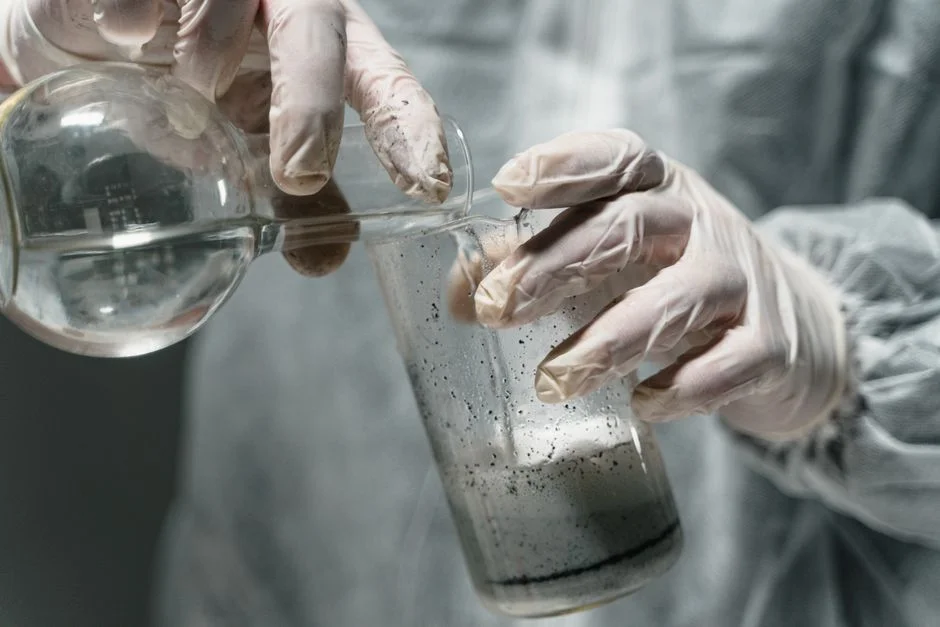
DAF is the more relevant catalog match when emulsified oil, FOG, oil and grease, suspended solids and colloidal matter must be removed before the POTW connection. A gravity clarifier remains useful when the dominant condition is settleable free oil or solids and the required residual is achievable without flotation. The governing decision is the measured wastewater condition—not a preference for one equipment label.
The HydropureWater comparison states that DAF without an upstream primary gravity stage can fail during coalescer-dump slugs because free oil blankets the bubble surface (HydropureWater, “How U.S. Petroleum Bulk Plants Meet Pretreatment Limits Before Sewer Discharge,” 2026). For a plant with credible free-oil slugs, compare a DAF following an API separator or CPI against a combined system that provides primary separation and flotation in a defined configuration.
| Decision factor | DAF | Gravity clarifier | Combined primary-separation system |
|---|---|---|---|
| Free-oil loading | Requires upstream removal when free-oil slugs are credible. | Well suited to recoverable free oil and settleable solids. | Primary stage removes free oil before flotation. |
| Emulsified oil | Primary catalog match where residual targets require flotation. | Performance depends on droplet rise and settling behavior. | Flotation handles residual emulsified contaminants. |
| Peak and slug flow | Must be checked against confirmed hydraulic and air-to-solids curves. | Requires adequate area and quiescent operating conditions. | Must be evaluated across the complete sequence. |
| Controls and operator burden | Requires attention to saturation, recycle, skimming and chemical conditions. | Generally simpler hydraulics but still needs sludge and oil removal. | More coordinated controls and maintenance interfaces. |
| Permit evidence | Residual performance must be tied to site wastewater and test conditions. | Residual performance must be tied to site wastewater and test conditions. | Must demonstrate performance at the final discharge point. |
Require suppliers to test or otherwise validate performance using the plant’s oil droplet distribution, flow profile, chemistry and coalescer-dump scenario. Generic removal percentages without defined test conditions do not support procurement. Automatic skimming, controls, maintenance access and operator training belong in the comparison because sustained compliance depends on operating condition as much as initial removal performance. Review an industrial DAF system for petroleum wastewater against those site inputs rather than selecting by catalog flow alone.
Build the Monitoring and Audit File
Compliance evidence must connect every permit parameter to a sampling point, method, frequency, responsible operator, calibration requirement and reporting deadline. EPA’s local-limits guidance identifies sampling locations, frequencies, methods, analytical methods, flow data and information maintenance as components of local-limit development and review (EPA, Local Limits Development Guidance, 2021-06). For this plant, those elements should become a site-specific compliance matrix.
The HydropureWater petroleum article gives daily visual free-oil inspection, weekly TSS grab sampling and monthly HEM composite sampling as monitoring examples to confirm against the permit (HydropureWater, “How U.S. Petroleum Bulk Plants Meet Pretreatment Limits Before Sewer Discharge,” 2026). Those frequencies are not substitutes for the Nederland POTW’s requirements. The commercial article identifies HEM with EPA Method 1664A and 40 CFR § 401.16; preserve the permit’s sampling basis, reporting method and chain-of-custody requirements.
The audit file should include sewer maps, flow data, analytical results, chain-of-custody records, calibration logs, chemical inventory, BMP inspections, slug plans and operator training. Keep records that connect a treatment change to the next compliance sample. This allows the operator to distinguish a process failure from a sampling defect and demonstrate that corrective action was completed.
Treat an outfall upset as a troubleshooting event rather than simply a resampling exercise. Isolate the affected stream, retain samples, inspect separator and DAF performance, review chemical dosing and operating conditions, document the cause and corrective action, and obtain approval before the affected discharge resumes. The permit and POTW instructions govern notification and resampling.
Use a Pre-Purchase Compliance Checklist
A compliant equipment purchase begins with the actual Nederland POTW documents and site data, not a generic capacity range. Before pricing, give bidders the current industrial-user discharge permit, local limits, sewer-use requirements, representative wastewater analyses, peak-flow information, known slug events and required monitoring methods.
- Ask each bidder to state the treatment objective, design flow, oil condition, footprint, utilities, controls and chemical requirements.
- Request the startup sequence, normal operating range, slug-response method and oil-carryover detection provisions.
- Require a proof-of-performance plan tied to representative wastewater and an identified test method.
- List maintenance tasks, operator training, spare-parts strategy and the records needed for permit compliance.
- Make final sizing dependent on current site data and the selected manufacturer’s confirmed performance curves.
Treat catalog capacities, removal claims and design margins as screening information only. EPA states that a discharger’s obligations are determined by its POTW permit or equivalent control mechanism and applicable regulatory requirements, not by EPA guidance or a supplier’s performance promise (EPA, Local Limits Development Guidance, 2021-06). Bidder language should therefore be evaluated against 40 CFR Part 403, the current permit and documented site conditions. If the permit leaves a requirement unresolved, obtain written POTW clarification rather than accepting a guessed concentration or test basis.
Frequently Asked Questions
What must a petroleum bulk plant near Nederland comply with before discharging to the POTW?
The plant must comply with its industrial-user discharge permit or equivalent POTW control mechanism, applicable sewer-use requirements and 40 CFR Part 403. Federal guidance and a generic treatment description do not replace local numerical limits, narrative BMPs, monitoring conditions or reporting duties.
How should the pretreatment train be sized?
Use the permit’s pollutant limits and monitoring conditions, representative wastewater analyses, peak instantaneous flow, daily oil-and-grease load and required residual concentration. Do not size only by average daily flow; characterize batch releases and free-oil slugs because they can govern hydraulic and treatment demand.
When is DAF preferred over a gravity clarifier?
DAF is generally the more relevant catalog match for emulsified oil, FOG, suspended solids and colloidal matter. A primary API separator or CPI should precede it where free-oil slugs are credible. Final selection still requires representative wastewater testing and a confirmed manufacturer duty basis.
What should a buyer request when selecting a treatment supplier?
Request a site-specific proposal stating duty assumptions, analytical method, acceptance criteria, utilities, controls, maintenance, operator training and compliance documentation. Do not accept a generic capacity range as the sizing basis. Also require the supplier to explain how the system handles slug loads, detects oil carryover and preserves audit records.
What should the pretreatment budget include?
Base budget and return-on-investment analysis on the complete scope: source segregation, equalization, primary separation, DAF, conditional polishing, controls, chemicals, sludge handling, utilities, commissioning and monitoring. Request a site-specific quotation tied to the permit and representative wastewater data; a DAF skid price alone does not establish the cost of demonstrated compliance.