
What a Kuwait City Factory Needs from an ETP or DAF System
A Kuwait City factory requires an integrated industrial effluent treatment plant (ETP) when its wastewater contains biodegradable organics or requires biological treatment, disinfection, and reuse. A dissolved air flotation (DAF) unit is appropriate when the main targets are suspended solids, oil and grease, colloids, or floatable contaminants. Safe-Guard reports DAF removal of 70–98% for suspended solids, 80–99% for oil and grease, 30–70% for BOD, and 20–60% for COD; these are screening ranges, not guarantees for an unidentified factory. The correct choice depends on representative wastewater testing, peak flow, discharge or reuse targets, available footprint, and the required Kuwaiti approvals.
An industrial ETP is an integrated treatment facility. Its process train combines physical separation, chemical treatment, biological degradation, filtration, and disinfection to produce effluent suitable for the specified discharge or reuse route. Safe-Guard describes industrial ETPs as using chemical, physical, and biological processes according to the wastewater composition and treatment objective (Safe-Guard, undated).
DAF is a specific physical separation process rather than a complete plant. It injects air into water under pressure to form microbubbles; these attach to suspended or floatable particles, carry them to the surface, and leave them available for skimming. It is relevant to oily, solids-rich, or floatable factory wastewater, but clarification alone may be inadequate when biodegradable organics, nutrients, pathogens, or reuse-specific quality requirements remain.
Safe-Guard reports DAF reductions of 70–98% for suspended solids, 80–99% for oil and grease, 30–70% for BOD, and 20–60% for COD (Safe-Guard, undated). Those figures provide an initial screening reference: the buyer needs application-specific evidence and representative wastewater results before accepting them as design guarantees.
Before selecting equipment, the factory must confirm its discharge destination, sewer connection conditions, reuse plan, and approval pathway with the responsible Kuwaiti authorities. The 2026 DAF unit selection and decision framework provides a process for narrowing the equipment decision, but it should not replace project sampling or local approval.
Choose the Treatment Train from the Wastewater
The selection sequence starts with wastewater characterization, not with a preferred equipment name. Establish the flow profile and contaminant load, define the discharge or reuse target, select the primary separation process, identify any biological or polishing requirements, and then size the train around peak demand and operating variability.
- Characterize representative production, washdown, runoff, and batch-discharge streams, including their variability and chemical constituents.
- Define the required effluent or reuse quality, the receiving route, and which parameters must be controlled.
- Choose primary separation: DAF is a strong candidate when suspended solids, oil and grease, colloids, or floatable contaminants dominate.
- Assess downstream treatment. Safe-Guard states that biological processes break down organic material; therefore, biodegradable organics can justify adding a biological stage rather than treating clarification as the final solution.
- Size for peak flow and contaminant loading, then include equalization, chemical conditioning, sludge removal, controls, utilities, and operating redundancy.
DAF can precede biological treatment because Safe-Guard identifies removal of free oil and grease as a way to protect downstream biological processes (Safe-Guard, undated). That makes DAF the pretreatment core of an ETP rather than an alternative to every other treatment stage.
| Factory wastewater profile | Treatment route to evaluate | Decision basis |
|---|---|---|
| Food processing | DAF evaluation for fats and organics, followed by any required biological or polishing stages | Safe-Guard identifies food processing, dairies, and slaughterhouses as DAF applications |
| Oil and gas | DAF for produced-water treatment and hydrocarbon separation, with project-specific downstream treatment as required | Safe-Guard identifies produced-water treatment as an application |
| Pulp and paper | DAF evaluation for fiber recovery and white-water clarification | Safe-Guard identifies fiber recovery and white-water clarification as applications |
| Textile and chemical | DAF evaluation for dye, effluent polishing, and floatable contaminants | Safe-Guard identifies dye treatment and effluent polishing as applications |
| Mining | DAF evaluation for solids separation in drainage water | Safe-Guard identifies mining drainage solids separation as an application |
The RFQ data package should include average and peak flow, operating hours, TSS, oil and grease, COD, BOD, pH, temperature, conductivity, relevant toxicity information, chemical composition, and the proposed reuse application. The buyer should request an industrial DAF system for factory wastewater only after identifying which of these inputs materially affect the design.
ETP or DAF: Compare Scope, Performance, and Operating Burden
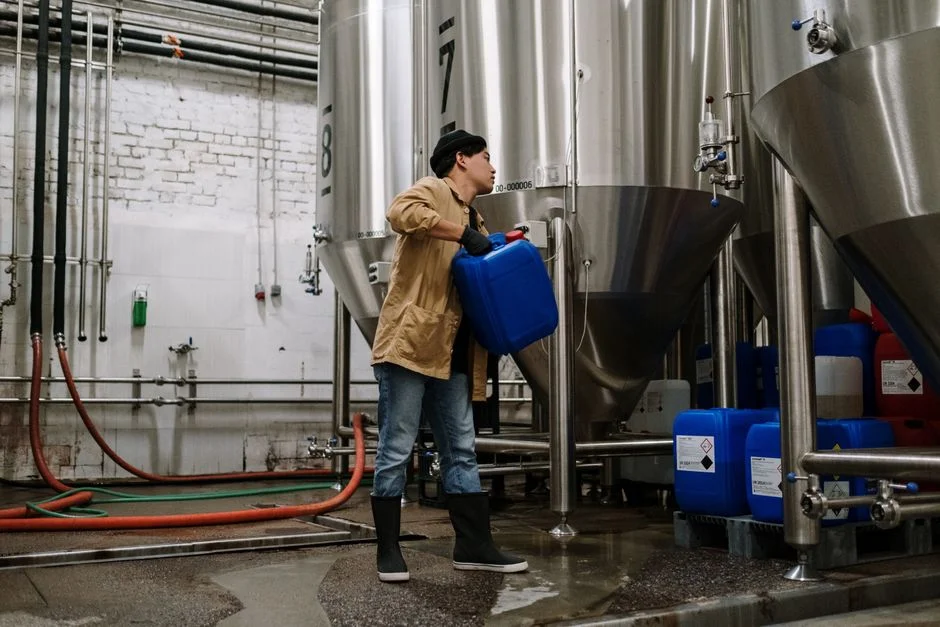
DAF and an ETP differ in scope: DAF removes floatable material by flotation, while an ETP coordinates multiple treatment stages to meet a broader effluent objective. A standalone DAF may be adequate for suitable wastewater, but it is not a substitute for biological treatment, nutrient removal, filtration, or disinfection when the reuse or discharge specification requires them.
| Assessment point | DAF-centered option | Full ETP |
|---|---|---|
| Primary purpose | Remove suspended solids, oil and grease, colloids, and floatable contaminants | Treat a broader industrial wastewater profile through coordinated stages |
| Typical scope | Conditioning, saturator, flotation chamber, and skimming | Physical, chemical, biological, filtration, and disinfection stages as required |
| Reported removal | Safe-Guard reports 70–98% TSS, 80–99% oil and grease, 30–70% BOD, and 20–60% COD (Safe-Guard, undated) | Performance depends on the selected process train and project wastewater |
| Footprint | Safe-Guard states that DAF can operate faster and with a smaller footprint than sedimentation | Greater civil and equipment demand where several stages are included |
| Operating burden | Chemical conditioning, pressure control, bubble quality, skimming, and sludge handling | All DAF burdens plus biological operation, polishing, disinfection, and associated controls |
| Sludge route | Produces a skimmable float stream | Produces sludge or residuals from multiple process stages |
Chemical and sludge implications belong in the commercial comparison. DAF requires coagulation-flocculation to support effective bubble attachment and generates a float that must be removed and routed. An ETP may add biological sludge, filtration residues, and disinfection by-products, so comparing equipment prices without comparing residuals and operating costs is incomplete.
Generic performance ranges should not be presented as project guarantees. The buyer should request evidence from comparable industrial wastewater, identify the measurement basis, and ask the supplier how its proposed duty differs from the reference application. The comparison of DAF and alternative wastewater treatment processes helps frame the selection, while the DAF system engineering specifications supports process-scope review.
Size the DAF Unit from Verified Project Data
Available catalog capacity is an equipment filter, not a hydraulic design. HydropureWater lists a standard range of 4–300 m³/h across 13 DAF models. That range can screen preliminary suppliers, but final DAF system sizing requires project flow, loading, wastewater, temperature, chemical, and effluent data.
| Design or procurement parameter | Available reference | Buyer verification required |
|---|---|---|
| Catalog capacity | 4–300 m³/h across 13 models | Selected model must cover verified peak hydraulic and contaminant demand |
| Saturator pressure | 3–6 bar | Confirm the pressure basis and duty point used in the supplier design |
| Bubble size | 20–100 μm | Confirm bubble quality at the proposed wastewater and operating conditions |
| Residence time | 20–60 minutes | Confirm the design basis and how variable flow is handled |
| Equipment sequence | Equalization and chemical conditioning as applicable, pump and saturator, flotation chamber, and automatic skimming | Define each item as either supply-only or part of the complete train |
Sizing must address peak flow, hydraulic and contaminant loading, wastewater characteristics, operating temperature, chemical availability, and the selected effluent or reuse target. The bidder should state whether the quotation includes recycle flow, the pressure vessel, compressor or saturated-air system, internal recirculation, and the sludge-removal method.
Operation requires verifiable controls. Safe-Guard advises maintaining saturator pressure for bubble quality, keeping skimmers clean to prevent sludge buildup, and monitoring coagulant dosing for effective flocculation (Safe-Guard, undated). These checks should appear in the control narrative, preventive-maintenance plan, and acceptance test. Chemical metering may be defined separately through an automatic chemical dosing system for DAF and ETP pretreatment.
Build a Kuwait Factory Procurement and Compliance Checklist
Comparable proposals require one common wastewater basis, one clear discharge route, and explicit responsibility for every approval. A supplier should not price equipment against an unverified flow or performance claim that the factory has not documented.
| RFQ package | Required information | Acceptance point |
|---|---|---|
| Wastewater basis | Representative sampling report, average and peak flow, operating hours, and principal contaminants | All bidders size and guarantee against the same documented basis |
| Process proposal | Process flow diagram, equipment list, materials of construction, control philosophy, duty points, utilities, and sludge estimate | Scope boundaries are explicit and internally consistent |
| Performance evidence | Removal basis and reference conditions for comparable industrial wastewater | Generic source ranges are not accepted as project guarantees |
| Site and installation | Footprint, access, electrical supply, drainage routing, chemical storage, noise limits, and shutdown window | Proposal fits verified site constraints |
| Compliance responsibility | Discharge route and allocation of permits, approvals, sewer conditions, and environmental responsibilities | No unresolved authority or permit assumption |
| Handover and support | Acceptance tests, training, spares, controls, maintenance access, warranty, and consumable availability | Deliverables and long-term support are contractually defined |
The factory should require the supplier to identify which Kuwaiti permits, environmental approvals, sewer acceptance conditions, and discharge requirements remain the buyer’s responsibility. The research provides no verified Kuwait-specific limits, prices, or approval lead times, so the team must obtain those requirements directly from the responsible authorities.
An automatic chemical dosing system may be quoted as PLC-controlled, skid-mounted equipment; the buyer must still verify the actual scope for coagulants, flocculants, pH adjustment, specialty chemicals, storage, calibration, alarms, and operator controls. Solids handling should also be defined. For example, a plate-frame filter press can be evaluated as a sludge-dewatering item, but its selection requires the expected residual volume, solids characteristics, and disposal route.
Frequently Asked Questions
What industrial ETP or DAF system does a factory in Kuwait City, Kuwait need?
Choose DAF as the primary unit when oily, suspended-solids-rich, colloidal, or floatable contaminants dominate and the required outcome can be met by physical separation and chemical conditioning. Choose an integrated ETP when biological degradation, nutrient management, filtration, disinfection, or a defined reuse specification is also required. DAF may sit at the head of that ETP. The decision should follow representative sampling, peak-flow assessment, and confirmation of the discharge route with the responsible authorities.
How should DAF system sizing be verified before requesting a quotation?
Give bidders the same verified inputs: average and peak flow, operating hours, TSS, oil and
Frequently Asked Questions
Should my factory in Kuwait City install an ETP or a standalone DAF system?
The choice depends on the pollutant load and the final discharge objective. A standalone Dissolved Air Flotation (DAF) system is typically sufficient for primary treatment to remove fats, oils, grease (FOG), and suspended solids (TSS) if the factory output meets the Kuwait Environment Public Authority (EPA) standards for discharge into the municipal sewer network. However, if your wastewater contains high levels of dissolved organic matter (BOD/COD) or requires discharge into the marine environment, a full Effluent Treatment Plant (ETP) incorporating secondary biological treatment is mandatory.
What wastewater flow and quality data do I need to request a DAF quotation?
To receive an accurate quote, you must provide the hourly and daily average flow rates in cubic meters per hour (m³/h) and the peak flow capacity. Essential water quality parameters include the influent concentrations of Oil and Grease (mg/L), Total Suspended Solids (TSS), Chemical Oxygen Demand (COD), Biological Oxygen Demand (BOD), and the pH range of the wastewater. You should also specify the required discharge limits mandated by your specific industrial zone in Kuwait.
How do I compare DAF suppliers in Kuwait without accepting unverifiable performance claims?
Do not rely solely on theoretical data; request performance data from local installations with similar influent characteristics. Ask suppliers to provide a mass balance calculation and a guaranteed removal efficiency percentage for TSS and FOG specifically for your wastewater type. Verify if the system components, such as saturation tanks and scraper mechanisms, are rated for the high ambient temperatures and humidity levels typical of Kuwait to prevent premature equipment failure.
When does a factory need biological treatment in addition to DAF?
Biological treatment is necessary when the COD and BOD levels exceed the threshold limits allowed for sewer discharge or when local regulations require stringent nutrient removal, such as nitrogen and phosphorus. If the ratio of BOD to COD is greater than 0.3, the wastewater is generally considered biodegradable. In these cases, the DAF serves as a pretreatment step to protect downstream biological processes—such as Moving Bed Biofilm Reactors (MBBR) or Membrane Bioreactors (MBR)—from oil and grease clogging.
What should I verify before approving an industrial wastewater treatment system for Kuwait discharge or reuse?
Before approval, verify that the system design complies with the latest Kuwait EPA Decree regarding industrial wastewater discharge limits. Ensure the system includes a reliable flow measurement device and a representative sampling point for compliance monitoring. If the treated water is intended for irrigation or industrial reuse, verify that the system includes a tertiary treatment stage, such as sand filtration or UV disinfection, to meet the specific quality standards required for non-potable water reuse.