When DAF Units Fall Short: Real-World Limitations Driving the Search for Alternatives
DAF unit alternatives matter when sludge hauling or emulsified oils erase DAF's edge. Dissolved Air Flotation (DAF) still reaches 92–97% TSS removal and 60–80% COD reduction, according to 2024 EPA benchmarks. At 120 m³/h and 500 mg/L influent TSS, food plants can see sludge rise up to 30% year over year (HydropureWater internal analysis) even at 95% TSS removal. 2025 disposal averages run $120–$200 per ton, with DAF often yielding 5–10% more sludge than competing options.
Other pain points include high coagulant and flocculant demand, sensitivity to flow swings, and limited removal of fine emulsified oils, a gap noted in competitive analyses (Top 3).
How DAF Works: Mechanism, Strengths, and Engineering Parameters
DAF units pressurize a recycle stream, typically at 3–6 bar, to dissolve air, then release it through a diffuser that forms 30–100 μm micro-bubbles. Bubbles attach to suspended solids, oils, and FOG (Fats, Oils, and Grease), cut effective density, and float solids to a skimmer. Strengths include 92–97% TSS removal, 80–90% FOG removal, and high-flow capacity: the DAF systems for industrial wastewater treatment handle 4–300 m³/h.
Typical hydraulic loading sits at 5–15 m/h, solids loading at 2–10 kg/m²/h, and flotation retention at 20–60 minutes. Sludge volume commonly reaches 5–10% of influent flow. Coagulant and flocculant dosing usually runs 50–150 mg/L, and performance tracks wastewater temperature and pH. For spec details, see our DAF systems for industrial wastewater treatment.
| Parameter | Typical Range | Notes |
|---|---|---|
| TSS Removal | 92–97% | EPA 2024 benchmarks |
| COD Reduction | 60–80% | EPA 2024 benchmarks |
| FOG Removal | 80–90% | Effective for emulsified oils |
| Flow Rate Capacity | 4–300 m³/h | HydropureWater product specification |
| Hydraulic Loading Rate | 5–15 m/h | Influences tank size |
| Solids Loading Rate | 2–10 kg/m²/h | Impacts sludge generation |
| Retention Time | 20–60 minutes | Ensures sufficient bubble attachment |
| Sludge Volume | 5–10% of influent flow | Significant disposal consideration |
| Energy Consumption | 0.3–0.5 kWh/m³ | Excluding pumping |
| Chemical Usage | 50–150 mg/L (coagulant) | Required for optimal performance |
DAF Unit Alternatives: Engineering Specs, Removal Rates, and Use-Case Fit
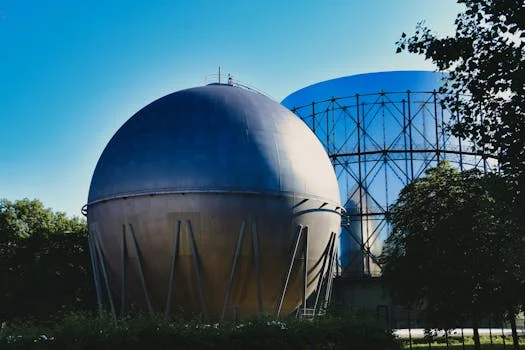
Several DAF unit alternatives target industrial streams where DAF is not the best fit. Swirltex technology uses vortex separation and reaches about 95% TSS removal, up to 70% COD reduction, and around 90% FOG removal. Competitive analysis (Top 1) cites sludge volume cut by up to 55% versus DAF, which attracts food and beverage, produced water, and municipal plants where disposal cost drives the budget.
Dispersed Air Flotation forms larger 1–3 mm bubbles. That helps larger particles but runs generally 20–30% less efficient than DAF for TSS below 50 μm (Top 3). Energy use sits at 0.1–0.3 kWh/m³ versus DAF's 0.3–0.5 kWh/m³, so it fits sites where particle size is less critical and energy savings matter.
Lamella clarifiers use inclined-plate gravity separation at 20–40 m/h surface loading and can need up to 30% less chemical dosing than DAF (HydropureWater Product Catalog). They fit metalworking, mining, and municipal pre-treatment where lower chemical use is preferred. See our lamella clarifiers for low-chemical, high-flow wastewater treatment.
Membrane Bioreactor (MBR) systems combine biological treatment with 0.1 μm membrane filtration and routinely deliver effluent TSS below 1 mg/L for reuse or tight discharge limits. MBR footprints run up to 60% smaller than DAF (HydropureWater Product Catalog), which helps space-constrained industrial sites or urban retrofits. CAPEX sits at $2,500–$4,000/m³/day versus DAF at $1,200–$2,000/m³/day. For a side-by-side biological-process comparison, consult our detailed comparison of MBR and conventional activated sludge systems.
| Technology | Primary Mechanism | TSS Removal (%) | COD Reduction (%) | FOG Removal (%) | Sludge Volume Reduction vs. DAF | Typical Footprint | Energy Use (kWh/m³) | Chemical Use | Key Applications |
|---|---|---|---|---|---|---|---|---|---|
| DAF | Dissolved Air Bubbles | 92–97 | 60–80 | 80–90 | Baseline (5–10% of influent flow) | Medium | 0.3–0.5 | Moderate to High (Coagulant/Flocculant) | General industrial, FOG removal |
| Swirltex | Vortex Separation | ~95 | ~70 | ~90 | Up to 55% less | Medium | 0.2–0.4 | Moderate | Food & Beverage, Produced Water, Municipal |
| Dispersed Air Flotation | Dispersed Air Bubbles | 70–90 (for <50 μm particles: 20-30% lower than DAF) | 50–70 | 70–85 | Similar to DAF | Medium | 0.1–0.3 | Moderate | Larger particle removal, energy sensitive |
| Lamella Clarifier | Gravity Separation (Inclined Plates) | 60–85 (settleable solids) | 20–40 | 30–60 | Lower (sludge settles) | Medium to Large | Low (gravity driven) | Lower (up to 30% less than DAF) | Metalworking, Mining, Municipal Pre-treatment |
| MBR System | Biological Treatment + Membrane Filtration | >99.9 | 85–95 | >95 | N/A (sludge treated biologically) | Small (60% smaller than DAF) | 0.5–1.0 (includes aeration/pumping) | Low to Moderate (primarily for biological process) | High-purity effluent, Water Reuse, Strict discharge |
Cost Comparison: CAPEX, OPEX, and ROI for DAF vs Alternatives
Total cost of ownership (TCO) usually decides the project. CAPEX ranges run roughly $1,200–$2,000/m³/day for DAF, $1,500–$2,500/m³/day for Swirltex, $800–$1,500/m³/day for lamella clarifiers, and $2,500–$4,000/m³/day for MBR. OPEX tracks energy, chemicals, and sludge hauling. DAF draws 0.3–0.5 kWh/m³ while dispersed-air flotation runs 0.1–0.3 kWh/m³. DAF coagulant demand is 50–150 mg/L; lamella clarifiers can use up to 30% less. Sludge disposal averages $120–$200/ton (2025 industry average), and DAF typically produces 5–10% more sludge than alternatives, which compounds over time.
On a hypothetical 100 m³/h system over 5 years, a DAF TCO lands near $1.2 million. Swirltex, with its 55% sludge reduction, drops to about $1.1 million. Lamella clarifiers, with the lowest CAPEX and reduced chemical use, reach roughly $0.9 million. MBR TCO exceeds $2.5 million once membrane replacement and higher energy are included, though reuse value or strict compliance can offset part of that gap. Maintenance downtime also matters: DAF needs 2–4 hours/month, MBR 8–12 hours/month for membrane cleaning. For ways to cut the hauling line item, see sludge dewatering technologies to reduce disposal costs.
| Technology | Estimated CAPEX ($/m³/day) | Estimated TCO (5 Years, $M) | Key Cost Drivers |
|---|---|---|---|
| DAF | 1,200–2,000 | ~1.2 | Sludge disposal, chemicals, energy |
| Swirltex | 1,500–2,500 | ~1.1 (with sludge savings) | Sludge disposal (reduced), chemicals, energy |
| Lamella Clarifier | 800–1,500 | ~0.9 | Lower chemical use, lower CAPEX |
| MBR System | 2,500–4,000 | ~2.5+ | High CAPEX, membrane replacement, energy |
Step-by-Step Selection Framework: Matching Technology to Your Wastewater
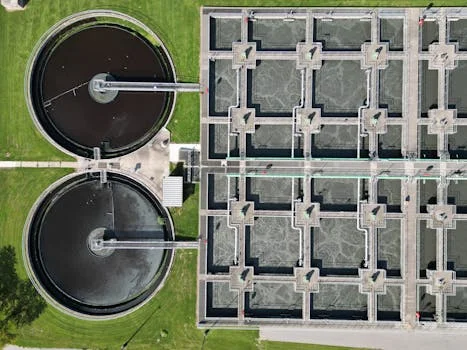
Choosing between DAF and its alternatives needs a structured pass through influent data and discharge targets. Most plants we size for fall into one of the four boxes below once the numbers are in. Use this sequence before you commit to a vendor:
- Characterize Your Wastewater: Measure TSS, COD, BOD, FOG, oil & grease, and particle size distribution. DAF struggles with very fine particles (<50 μm) and tightly emulsified oils, while MBR handles a broader contaminant range.
- Define Your Treatment Goals: Rank removal efficiency, sludge reduction, OPEX control, water reuse, and regulatory compliance. If disposal costs exceed $150/ton, Swirltex's sludge reduction typically wins the ROI math.
- Assess Flow Rate and Variability: DAF is robust from 4–300 m³/h but prefers stable flow; lamella clarifiers tolerate more fluctuation; MBR is modular but needs consistent influent for stable biology.
- Check Regulatory Limits: For near-reuse effluent under 1 mg/L TSS or zero liquid discharge targets, MBR is usually the only viable option. EU Urban Waste Water Directive 91/271/EEC Annex I Table 1 sets secondary-treatment TSS at 35 mg/L where the parameter applies, so less intensive options often meet that municipal limit.
- Evaluate Space Constraints: MBR footprints are up to 60% smaller than DAF, which matters in urban or retrofit sites; lamella clarifiers are also relatively compact for their hydraulic capacity.
Working through these five points before contacting suppliers prevents the most common sizing regrets we see on retrofits. For region-specific guidance, see our DAF system in Sweden 2025: Engineering Specs, Costs & Supplier Checklist for Industrial Wastewater.
Who This Is For (And Who Should Look Elsewhere)
This comparison fits plant engineers and procurement teams weighing DAF against Swirltex, dispersed air flotation, lamella clarifiers, or MBR for flows in the 4–300 m³/h band with TSS loads typical of food processing, metalworking, or municipal pretreatment. If your effluent target is simple settleable-solids removal under low chemical budgets, lamella is usually the cheapest answer; if you need reuse-quality water under 1 mg/L TSS, MBR is the only realistic path. When DAF already meets your discharge limits and sludge hauling is below $150/ton, staying with DAF is defensible.
Send your influent characterization, target effluent quality, and peak flow to our applications team for a sized recommendation and budgetary quote.
Frequently Asked Questions
How much does a DAF unit cost compared to its main alternatives?
DAF unit pricing runs $1,200–$2,000/m³/day in CAPEX, against $1,500–$2,500/m³/day for Swirltex, $800–$1,500/m³/day for lamella clarifiers, and $2,500–$4,000/m³/day for MBR systems. OPEX differences come mainly from chemical use and sludge hauling at $120–$200/ton in 2025.
What is the main difference between DAF and Dispersed Air Flotation?
DAF produces 30–100 μm micro-bubbles for fine particles and emulsified oils, while Dispersed Air Flotation produces 1–3 mm bubbles better suited to larger particles, with 20–30% lower TSS efficiency below 50 μm and lower energy use of 0.1–0.3 kWh/m³ versus DAF's 0.3–0.5 kWh/m³.
How does an MBR wastewater treatment system compare with a DAF system?
MBR combines biological treatment with 0.1 μm membranes, routinely delivering under 1 mg/L TSS and 85–95% COD reduction for reuse or strict discharge, at $2,500–$4,000/m³/day CAPEX and a footprint up to 60% smaller than DAF, but with 8–12 hours/month of membrane-cleaning downtime.
Why does wastewater from my DAF unit sometimes look milky yellow and sometimes transparent yellow?
Milky yellow effluent usually indicates carryover of fine bubbles or untreated emulsified oil below DAF's effective particle range, often tied to under-dosed coagulant, pH drift, or temperature swings. Transparent yellow typically means the FOG and most TSS have been removed but dissolved organics remain; confirm with COD and oil & grease tests.
When is a lamella clarifier a better choice than a DAF unit?
Lamella clarifiers win when wastewater contains mainly settleable solids, when chemical dosing must stay low (up to 30% less than DAF), and when CAPEX drives the decision. They fit metalworking, mining, and municipal pretreatment where gravity separation is efficient at 20–40 m/h surface loading.
Related Equipment
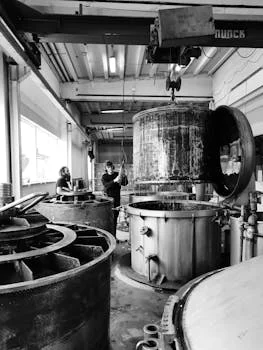
The following HydropureWater products are engineered for the wastewater challenges discussed above:
- MBR systems for near-reuse-quality effluent and compact footprint — view specifications, capacity range, and technical data
Need a customized solution? Request a free quote with your specific flow rate and pollutant parameters.