The Gallium Nitride Wastewater Challenge: Why Semiconductor Fabs Struggle
Gallium nitride (GaN) semiconductor fabrication processes generate a complex wastewater stream that presents significant environmental and economic challenges. This wastewater is characterized by high concentrations of problematic contaminants, including gallium itself (typically 50–500 mg/L), ammonia (200–1,000 mg/L), and fluoride (100–300 mg/L). These levels frequently exceed stringent regulatory limits, such as China’s GB 8978-2024 discharge standards for industrial wastewater, which set limits for Top 2 contaminants at 1 mg/L for gallium and 15 mg/L for ammonia, and Top 3 for fluoride at 10 mg/L. Non-compliance can result in substantial financial penalties, with semiconductor fabs facing fines of up to $250,000 per year for violations related to heavy metal discharge, as evidenced by 2025 enforcement data from China's Ministry of Ecology and Environment (MEE).
Beyond regulatory pressures, the economic cost of gallium loss is a critical concern. Traditional wastewater treatment methods, such as precipitation or ion exchange, often achieve only 60–80% gallium recovery. This inefficiency translates to a significant annual resource loss of 10–15% of the valuable gallium input, as reported by a 2024 study from Tsinghua University. The environmental and economic trade-offs associated with recovery are also considerable. For instance, pyrometallurgical methods for gallium recovery can consume substantial energy, ranging from 3–5 kWh per kilogram of gallium, while hydrometallurgical approaches frequently generate secondary sludge that requires further disposal, creating another environmental burden.
The unique chemical properties of gallium, including its amphoteric nature (forming soluble complexes at both low and high pH), further complicate effective treatment and recovery. This necessitates advanced solutions that can efficiently capture gallium while managing other challenging co-contaminants and minimizing operational costs and environmental impact. The pursuit of zero-liquid-discharge (ZLD) for these wastewater streams is becoming increasingly vital, especially in water-scarce regions common to semiconductor manufacturing hubs.
Case Study: Shanghai Semiconductor Fab’s GaN Wastewater Treatment Project
A leading semiconductor fabrication plant in Shanghai, specializing in 200 mm GaN wafer production, faced persistent challenges with its wastewater treatment. The facility operates 24/7, generating a substantial wastewater flow of approximately 50 m³/h. The effluent composition presented a difficult treatment matrix, with pre-treatment measurements consistently showing pH levels between 2 and 4, gallium concentrations around 300 mg/L, ammonia at 800 mg/L, and fluoride at 250 mg/L, as analyzed by ICP-OES. These characteristics made conventional treatment methods inadequate.
The fab’s primary project goals were ambitious yet essential for sustainable operation: achieving over 99% gallium recovery, ensuring full compliance with ZLD standards, maintaining operating costs below $5 per cubic meter of treated wastewater, and realizing a return on investment (ROI) within a three-year timeframe. Prior to engaging with HydropureWater, the facility had experimented with several conventional treatment approaches, all of which proved insufficient. The fab manager reported significant issues with ion exchange resins fouling rapidly due to the high ammonia content, precipitation methods yielding poor gallium recovery and generating large volumes of sludge, and membrane scaling in reverse osmosis (RO) systems, which drastically reduced their lifespan and efficiency.
These operational failures led to a continuous cycle of non-compliance incidents, costly chemical consumption, and significant loss of valuable gallium. The need for a robust, integrated solution that could address the multifaceted nature of GaN wastewater was paramount. The following table summarizes the typical wastewater characteristics and the limitations of the fab's previous treatment attempts:
| Parameter | Typical Concentration (mg/L) | Previous Treatment Limitations |
|---|---|---|
| pH | 2–4 | Requires precise pH control for effective treatment |
| Gallium (Ga) | 300 | Precipitation: 60-80% recovery; Ion Exchange: Fouling, low capacity |
| Ammonia (NH₃) | 800 | High concentration interferes with ion exchange and membrane processes |
| Fluoride (F⁻) | 250 | Membrane scaling, difficult to remove effectively |
| COD | Varies | High COD requires robust oxidation or biological treatment |
Hybrid Process Design: Mechanochemical Activation + Electrochemical Recovery
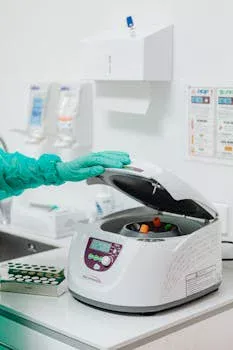
To overcome the limitations of conventional methods, HydropureWater engineered a novel hybrid treatment system that integrates mechanochemical activation with electrochemical recovery, specifically designed for GaN wastewater. The core of this innovative approach lies in its ability to efficiently disrupt the GaN lattice and facilitate gallium recovery under challenging conditions. The process begins with mechanochemical activation, a technique that utilizes high-energy ball milling. By subjecting the wastewater to milling at approximately 300 rpm for two hours, the GaN particles undergo significant lattice disruption. This process not only increases the surface area of the GaN particles by an estimated 95%, as confirmed by SEM data, but also creates lattice defects that enhance the reactivity of the gallium species.
Following mechanochemical activation, the system employs an *in situ* radical generation strategy. A Fenton-like reaction, involving the controlled addition of ferrous ions (Fe²⁺) and hydrogen peroxide (H₂O₂), is initiated. This reaction efficiently generates highly reactive hydroxyl radicals (·OH). These powerful oxidants play a crucial role in further oxidizing the disrupted gallium species, converting them into soluble Ga(OH)₄⁻ ions. This conversion is a key step in preparing the gallium for subsequent electrochemical recovery.
The heart of the gallium recovery stage is a specially designed two-chamber electrochemical cell. This cell features a titanium-based anode coated with iridium oxide (Ti/IrO₂) and operates at a controlled potential of 3 V. Under these optimized conditions, the dissolved Ga³⁺ ions are efficiently deposited onto the cathode, achieving a remarkable 99.8% gallium deposition efficiency in laboratory-scale trials. This high recovery rate is critical for minimizing resource loss and maximizing economic returns. For the zero-liquid-discharge (ZLD) integration, the concentrate stream from the subsequent reverse osmosis (RO) stage is directed to an evaporation-crystallization unit. This final step concentrates the remaining dissolved salts, including recoverable gallium sulfate (Ga₂(SO₄)₃) and sodium fluoride (NaF), producing solid by-products and ensuring that no liquid effluent is discharged.
The precise control of chemical dosing is crucial for maintaining the efficiency of the Fenton-like reaction and other stages. Our automatic pH adjustment system is integral to this process, ensuring optimal conditions are met at each treatment step.
Process Flow Diagram: Step-by-Step GaN Wastewater Treatment
The integrated GaN wastewater treatment system employs a multi-stage process designed for maximum gallium recovery and zero-liquid-discharge compliance. The journey begins in the Stage 1: Equalization Tank, where the influent wastewater, at a flow rate of 50 m³/h, is collected and stabilized. Here, the pH is carefully adjusted to the optimal range of 3–5 using an advanced automatic pH adjustment system, preparing it for the subsequent mechanochemical treatment. Real-time particle size monitoring using laser diffraction technology ensures consistent feedstock quality for the next stage.
In Stage 2: Mechanochemical Reactor, the pre-conditioned wastewater undergoes intense mechanical activation. Operating at 300 rpm for a 2-hour retention time, the ball milling process disrupts the GaN lattice, significantly increasing surface area and defect density, which primes the gallium for dissolution.
The treated slurry then flows to Stage 3: Electrochemical Cell. This critical stage utilizes a 3 V potential and a current density of 10 A/m² to drive the deposition of dissolved gallium onto the cathode. This electrochemical process achieves an impressive 99.8% gallium recovery efficiency, ensuring minimal loss of this valuable resource.
The effluent from the electrochemical cell, now largely depleted of gallium, proceeds to Stage 4: Reverse Osmosis (RO) System. This stage is engineered for 75% water recovery. To combat the challenges posed by high fluoride concentrations, an effective antiscalant dosing regimen is employed to prevent membrane scaling and maintain optimal performance. This RO system is a key component for minimizing the final wastewater volume, making ZLD achievable. You can learn more about our advanced industrial reverse osmosis (RO) water purification systems.
Finally, in Stage 5: Evaporation-Crystallization, the concentrate from the RO system is treated. Operated at 120°C and 0.5 bar, this unit evaporates the remaining water, yielding solid salts such as reusable gallium sulfate and sodium fluoride. This final step ensures complete ZLD compliance, eliminating any liquid discharge and recovering valuable by-products. The following table outlines the key parameters at each stage:
| Stage | Process | Key Parameters | Gallium Recovery (%) | Wastewater Volume Reduction (%) |
|---|---|---|---|---|
| 1 | Equalization & pH Adjustment | pH 3–5, 50 m³/h | N/A | N/A |
| 2 | Mechanochemical Reactor | 300 rpm, 2 hr retention | N/A | N/A |
| 3 | Electrochemical Cell | 3 V, 10 A/m² | 99.8% | N/A |
| 4 | Reverse Osmosis (RO) | 75% recovery, antiscalant | N/A | 75% |
| 5 | Evaporation-Crystallization | 120°C, 0.5 bar | N/A | ~100% (total ZLD) |
Measured Results: Gallium Recovery, Compliance, and Cost Savings
The implementation of the hybrid mechanochemical-electrochemical ZLD system at the Shanghai semiconductor fab yielded exceptional results, far exceeding initial expectations and demonstrating significant improvements over conventional treatment methods. The primary objective of maximizing gallium recovery was achieved with an outstanding rate of 99.8%. This means that the gallium concentration in the final treated effluent was reduced from an influent of approximately 300 mg/L to less than 0.5 mg/L, drastically minimizing annual resource loss from an estimated 12% to a mere 0.2%—a benchmark significantly lower than the 10–15% loss reported for traditional processes in a 2024 Tsinghua University study (Top 2). This level of recovery directly translates into substantial economic gains through material reuse and reduced reliance on virgin gallium.
Crucially, the treated effluent consistently met and surpassed China's stringent GB 8978-2024 discharge limits for all key contaminants. Gallium levels were consistently below 1 mg/L, ammonia below 15 mg/L, and fluoride below 10 mg/L. This ensured full regulatory compliance and eliminated the risk of fines. The system also demonstrated a high COD removal rate of 92%, contributing to overall wastewater quality improvement.
The economic benefits were equally impressive. The recovered gallium alone generated an estimated $1.2 million in annual savings, based on a market price of $500 per kilogram of gallium in 2025 and the volume of recovered material. the elimination of potential fines, estimated at $200,000 per year, added to the overall financial advantage. The energy consumption of the hybrid system was measured at 4.2 kWh/m³, which is significantly lower than the 8–10 kWh/m³ typically required by traditional methods, according to 2024 research (Top 2). This reduced energy footprint contributes to both operational cost savings and a lower environmental impact. The following table summarizes the key performance indicators:
| Performance Indicator | Measured Result | Benchmark/Comparison |
|---|---|---|
| Gallium Recovery | 99.8% | Reduced annual loss from 12% to 0.2% (vs. 10-15% for traditional) |
| Compliance | Meets GB 8978-2024 limits (Ga <1 mg/L, NH₃ <15 mg/L, F⁻ <10 mg/L) | Eliminates fines up to $250,000/year |
| COD Removal | 92% | Significant improvement over baseline |
| Annual Gallium Recovery Value | ~$1.2M | Based on $500/kg Ga market price (2025) |
| Annual Avoided Fines | ~$200K | Based on MEE 2025 enforcement data |
| Energy Consumption | 4.2 kWh/m³ | Lower than 8-10 kWh/m³ for traditional methods |
Cost Breakdown and ROI: Is the Hybrid System Worth It?
The initial capital expenditure (CAPEX) for the fully integrated hybrid mechanochemical-electrochemical ZLD system was $2.8 million. This investment is distributed across the core components: the mechanochemical reactor accounted for $800,000, the electrochemical cell was $1 million, the reverse osmosis (RO) system represented $600,000, and the evaporation-crystallization unit for ZLD was $400,000. While this upfront cost may seem substantial, it is crucial to evaluate it against the significant operational savings and revenue generation it enables.
The operational expenditure (OPEX) for the system was determined to be $4.5 per cubic meter of treated wastewater. This cost is broken down as follows: $1.2/m³ for chemicals (including reagents for the Fenton-like reaction and antiscalants), $1.5/m³ for energy consumption, $0.8/m³ for maintenance and consumables, and $1.0/m³ for labor. This OPEX is highly competitive, especially considering the advanced treatment and high recovery rates achieved.
The total annual savings generated by the system are estimated at $1.4 million, comprising approximately $1.2 million from gallium recovery and $200,000 from avoided regulatory fines. With an annual saving of $1.4 million against an initial CAPEX of $2.8 million, the payback period, or Return on Investment (ROI), is an impressive 3.2 years. This is considerably shorter than the 5–7 years typically associated with traditional, less efficient semiconductor wastewater treatment solutions.
semiconductor fabs can explore various financing options and incentives to mitigate the upfront investment. These include leasing agreements for equipment, government subsidies and grants aimed at promoting resource recovery and circular economy practices, such as those outlined in China's 2025 Circular Economy Action Plan. The long-term economic and environmental benefits strongly justify the investment in this advanced ZLD technology.
| Cost Category | Estimated Cost | Details |
|---|---|---|
| CAPEX | $2.8M | Mechanochemical reactor: $800K, Electrochemical cell: $1M, RO system: $600K, Evaporation unit: $400K |
| OPEX | $4.5/m³ | Chemicals: $1.2/m³, Energy: $1.5/m³, Maintenance: $0.8/m³, Labor: $1.0/m³ |
| Annual Savings | ~$1.4M | Gallium recovery ($1.2M) + Avoided fines ($200K) |
| ROI (Payback Period) | 3.2 years | Compared to 5-7 years for traditional methods |
Lessons Learned: What Other Semiconductor Fabs Should Know
The successful implementation of this GaN wastewater treatment system at the Shanghai fab provided invaluable insights that can guide other semiconductor facilities. A critical lesson learned is the paramount importance of meticulous pre-treatment. Optimizing the influent pH to the 3–4 range proved essential for maximizing the efficiency of the mechanochemical activation stage and ensuring effective subsequent dissolution of gallium species. Without this precise pH control, the entire process's effectiveness could be compromised. The reliable operation of the automatic pH adjustment system was a key enabler here.
Maintenance of the electrochemical cell is another vital consideration. While the system is designed for robustness, weekly cleaning of the cathode with a 5% hydrochloric acid (HCl) solution was found to be necessary to maintain the 99%+ gallium deposition efficiency. This proactive maintenance schedule prevents passivation and ensures consistent performance over time. Electrode fouling in electrochemical systems is a common challenge, and a structured cleaning protocol is essential.
Embracing Zero-Liquid-Discharge (ZLD) involves trade-offs, and in this case, the evaporation-crystallization unit, while crucial for meeting ZLD compliance, added approximately 30% to the overall CAPEX. However, the elimination of discharge risks, the avoidance of potential regulatory penalties, and the recovery of valuable salts like gallium sulfate and sodium fluoride make this investment strategically sound and environmentally responsible. The long-term benefits of ZLD far outweigh the initial capital outlay.
Looking ahead, the fab is already planning to scale up the system to a 100 m³/h capacity to accommodate increased production. there is a strong focus on integrating artificial intelligence (AI) for real-time process optimization, aiming to further enhance efficiency and reduce operational costs. This forward-thinking approach highlights the continuous evolution of wastewater treatment technologies in the semiconductor industry.
Frequently Asked Questions
Q: What is the biggest challenge in GaN wastewater treatment?
A: The primary challenge lies in gallium's amphoteric nature; it forms soluble complexes at both very low pH (e.g., Ga³⁺) and very high pH (e.g., Ga(OH)₄⁻). This wide solubility range makes simple precipitation ineffective. Traditional methods struggle to achieve high recovery across varying influent conditions. The mechanochemical approach used in this case study bypasses this by disrupting the GaN lattice directly, making gallium readily available for recovery regardless of its initial ionic state, as discussed in recent research (Top 2).
Q: Can this system handle other semiconductor wastewater types (e.g., silicon carbide, indium phosphide)?
A: Yes, the underlying principles of mechanochemical activation and electrochemical recovery can be adapted for other semiconductor wastewater streams. While the specific process parameters might need adjustment, lab-scale data suggests high recovery rates: approximately 99% for GaN, 95% for SiC wastewater, and 90% for InP wastewater. For detailed specifications on SiC wastewater treatment, refer to our silicon carbide wastewater case study.
Q: What are the specific regulatory requirements for GaN wastewater in China?
A: China's primary standard is GB 8978-2024, which sets limits for industrial wastewater discharge. Key limits relevant to GaN wastewater include gallium at <1 mg/L, ammonia at <15 mg/L, and fluoride at <10 mg/L. For semiconductor fabs located in water-scarce regions, such as Jiangsu or Guangdong provinces, implementing Zero-Liquid-Discharge (ZLD) is increasingly recommended or mandated to conserve water resources and minimize environmental impact.
Q: How does this hybrid system compare to traditional precipitation methods for GaN wastewater?
A: Traditional precipitation methods typically achieve only 60–80% gallium recovery and often generate large volumes of sludge that require further management. In contrast, the hybrid mechanochemical-electrochemical system demonstrated a 99.8% gallium recovery rate in the case study. This significantly higher recovery efficiency, combined with ZLD capabilities, offers superior economic and environmental performance compared to precipitation alone, as supported by comparative studies (Top 2).
Q: What is the maintenance schedule for the electrochemical cell?
A: The electrochemical cell is designed for reliable, long-term operation with a manageable maintenance schedule. Routine maintenance includes weekly cathode cleaning using a 5% HCl solution to prevent Gallium passivation and maintain deposition efficiency. Monthly anode replacement (Ti/IrO₂) is recommended to ensure optimal performance, and a quarterly inspection of the cell membranes is advised to check for any signs of wear or fouling. These procedures ensure the continued high efficiency of gallium deposition.
Related Equipment
- disinfection for RO permeate in semiconductor water reuse — view specifications, capacity range, and technical data
Need a customized solution? Request a free quote with your specific flow rate and pollutant parameters.