Third-generation semiconductor (GaN/SiC) fabs face wastewater treatment costs ranging from $2.5M to $15M in CAPEX and $0.36 to $1.20/m³ in OPEX, depending on system scale and technology. For example, a 150 m³/h MBR + RO system for fluoride/silica removal achieves 99.5% contaminant reduction at $0.85/m³, while a zero-liquid-discharge (ZLD) hybrid system (electrodialysis + evaporation) costs $1.20/m³ but eliminates discharge fees. Key cost drivers include pretreatment for GaN/SiC-specific contaminants (e.g., gallium, ammonia-nitrogen) and energy-intensive processes like electrocoagulation. This guide provides 2025 engineering specs, cost benchmarks, and an ROI calculator to optimize your investment.
Why Third-Generation Semiconductor Wastewater Differs from Silicon Fabs
Third-generation semiconductor manufacturing, specifically Gallium Nitride (GaN) and Silicon Carbide (SiC), introduces a chemical profile that renders traditional silicon fab wastewater systems inadequate. While silicon fabs primarily manage Tetramethylammonium hydroxide (TMAH), Chemical Mechanical Planarization (CMP) slurry, and organic solvents, GaN/SiC lines generate high concentrations of heavy metals such as gallium (Ga) and indium (In), alongside significantly higher ammonia-nitrogen (NH&sub4;-N) and fluoride (F&supmin;) loads. According to a 2025 engineering review, these contaminants require specialized precipitation and ion-exchange stages that are not standard in legacy silicon facilities.
A 2024 pilot study of a GaN fab in Taiwan revealed that fluoride concentrations in the etching and grinding streams reached 120–180 mg/L, nearly triple the 40–60 mg/L typically found in silicon manufacturing. This disparity necessitates advanced pretreatment to prevent membrane scaling and meet strict environmental discharge limits. the pH levels of GaN etching wastewater often dwell between 2.0 and 4.0, whereas silicon etching typically ranges from 8.0 to 10.0. This acidity increases chemical dosing costs for neutralization and impacts the selection of corrosion-resistant piping and tank liners.
| Parameter | Legacy Silicon Fabs | GaN/SiC (Third-Gen) Fabs | Impact on Treatment Cost |
|---|---|---|---|
| Fluoride (F&supmin;) | 40–60 mg/L | 120–180 mg/L | Higher chemical/sludge costs |
| Gallium (Ga) | Negligible | 5–25 mg/L | Requires specialized precipitation |
| Ammonia-Nitrogen | Moderate | High (MOCVD processes) | Increased aeration/stripping energy |
| Wastewater pH | 8.0–10.0 (Alkaline) | 2.0–4.0 (Acidic) | 2x caustic dosing requirements |
| TSS (Total Suspended Solids) | CMP-heavy | Grinding/Dicing-heavy | Requires high-flux filtration |
The presence of refractory organics and metal hydroxides in third-gen wastewater often requires electrocoagulation or advanced oxidation (AOP) before biological treatment. These additional stages contribute to the "third-gen premium" in both capital equipment and daily chemical consumption.
Contaminant Removal Efficiency by Treatment Technology: 2025 Benchmarks
Selecting a treatment train for GaN/SiC fabs requires balancing removal efficiency against energy consumption. Integrated MBR systems for semiconductor wastewater reuse have become the industry standard for organic and solids removal, but they must be paired with specialized stages for fluoride and heavy metal capture. 2025 benchmarks indicate that while MBRs achieve 99.8% TSS removal and 95% COD reduction, their standalone fluoride removal is limited to approximately 70%, necessitating post-treatment or upstream chemical precipitation.
Electrocoagulation (EC) has emerged as a high-efficiency alternative for fluoride and gallium removal. Field data shows EC can achieve 99.5% fluoride removal by utilizing aluminum or iron sacrificial anodes. However, this efficiency comes at the cost of sludge production, which adds roughly $0.12/m³ to the OPEX for hazardous waste disposal. For fabs operating in water-stressed regions, ZLD systems for semiconductor wastewater offer 100% contaminant capture and 95% water recovery. These systems typically employ a hybrid approach: electrodialysis for brine concentration followed by thermal evaporation.
| Technology | Ga Removal (%) | NH&sub4;-N Removal (%) | F&supmin; Removal (%) | COD Removal (%) | Energy (kWh/m³) |
|---|---|---|---|---|---|
| MBR (Membrane Bioreactor) | 40–60% | 90–95% | 60–70% | 95% | 0.8–1.2 |
| Electrocoagulation (EC) | 98% | 30–50% | 99.5% | 70% | 1.5–2.5 |
| Advanced Oxidation (AOP) | 10% | 20% | 0% | 99% | 2.0–4.0 |
| ZLD (Hybrid System) | 99.9% | 99% | 100% | 99.9% | 5.0–8.0 |
Engineering specifications for these systems have tightened in 2025. MBR membrane flux is typically maintained at 15–25 LMH (liters per square meter per hour) to prevent fouling from residual CMP surfactants. For electrocoagulation, current density is optimized at 10–20 A/m² to balance removal speed with anode lifespan. In ZLD configurations, the use of mechanical vapor recompression (MVR) is now standard to keep energy costs within the $0.45–$0.60/m³ range for the evaporation stage.
CAPEX Breakdown: From Pilot Testing to Full-Scale Deployment
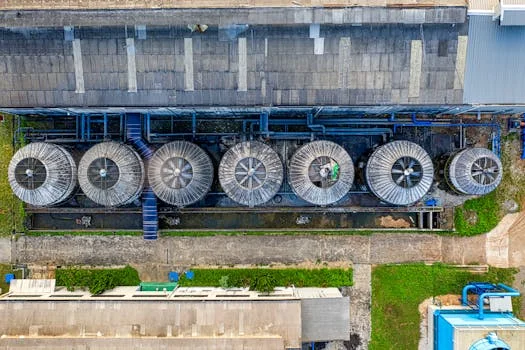
Capital expenditure for third-generation semiconductor wastewater facilities is heavily front-loaded due to the need for extensive pilot testing. Because GaN and SiC chemistries are proprietary and vary by fab, a 6-to-12-month pilot phase is mandatory. This phase, costing between $50,000 and $150,000, involves bench-scale jar tests and treatability studies to determine the exact dosage for precise chemical dosing for fluoride and pH adjustment.
The core equipment costs represent the largest portion of the budget. A standard MBR-based system for a 150 m³/h fab typically requires $1.2M to $8M in equipment, while adding ZLD capabilities can push the total CAPEX to $15M. These figures include the cost of high-grade stainless steel (316L) or HDPE-lined tanks required to handle the acidic influent of GaN etching lines. Design and engineering fees generally account for 10–15% of the total project cost, covering P&IDs, control logic integration, and BIM modeling.
Civil and construction costs for these facilities are often higher than municipal projects, ranging from 20% to 30% of CAPEX. This is due to the requirement for double-containment piping and specialized foundation work for heavy evaporation equipment. Commissioning and startup, which include operator training and the initial "seeding" of biological reactors, typically add another 5–10% to the total investment. For a mid-sized fab, the total CAPEX often settles around $5.5M for a high-efficiency discharge system and $12M+ for a full ZLD installation.
OPEX Analysis: Cost per m³ and Key Drivers for GaN/SiC Fabs
Operational expenses for third-gen fabs are dominated by energy and chemical consumption. Energy costs range from $0.15/m³ for simple MBR systems to $0.60/m³ for ZLD systems. In GaN fabs, the high ammonia load increases aeration requirements in the biological stage, while electrocoagulation units consume significant electricity to drive the electrochemical reactions. Chemical costs are similarly elevated; coagulants and flocculants for gallium and fluoride precipitation cost between $0.08 and $0.20/m³, while pH adjustment using caustic soda can add $0.15/m³ depending on the acidity of the raw influent.
Maintenance is a critical OPEX driver often overlooked in initial budgeting. Membrane replacement for MBR and RO systems typically occurs every 3 to 5 years, contributing $0.05–$0.15/m³ to the lifecycle cost. In ZLD systems, the high salinity of the brine can lead to more frequent membrane failures, increasing the replacement cost to $0.20/m³. Sludge disposal is another significant factor; electrocoagulation produces a dense, metal-rich sludge that requires sludge dewatering for electrocoagulation systems to reduce volume before transport to hazardous waste facilities.
| OPEX Category | MBR System ($/m³) | Electrocoagulation ($/m³) | ZLD System ($/m³) |
|---|---|---|---|
| Energy Consumption | $0.25 (35%) | $0.35 (40%) | $0.55 (46%) |
| Chemicals & Consumables | $0.15 (21%) | $0.25 (28%) | $0.20 (17%) |
| Labor (Automated) | $0.10 (14%) | $0.10 (11%) | $0.15 (12%) |
| Membrane/Anode Replace. | $0.12 (17%) | $0.08 (9%) | $0.22 (18%) |
| Sludge Disposal | $0.09 (13%) | $0.12 (12%) | $0.08 (7%) |
| Total OPEX | $0.71/m³ | $0.90/m³ | $1.20/m³ |
Automated systems can reduce labor costs by 40%, but they require higher initial CAPEX for sensors and PLC integration. For most GaN/SiC fabs, the goal is to optimize the chemical-to-energy ratio by using real-time monitoring of fluoride and ammonia levels to adjust dosing pumps and blower speeds dynamically.
ROI Calculator: When Does Wastewater Treatment Pay Off?
The return on investment (ROI) for a GaN/SiC wastewater system is calculated by comparing the total cost of ownership (CAPEX + OPEX) against the savings generated from water reuse and the avoidance of discharge fees and environmental penalties. The standard formula used by EHS managers is: ROI (Years) = CAPEX / (Annual Avoided Discharge Fees + Annual Water Reuse Value - Annual OPEX).
Consider a 150 m³/h GaN fab. If local discharge fees are $0.50/m³ and the fab implements a system with 30% water reuse (valuing ultrapure water at $1.50/m³), the annual savings from reuse and reduced discharge total approximately $295,000. If the system has a $3M CAPEX and an OPEX of $0.85/m³, the net annual benefit must be weighed against the operational cost. In high-cost regions where discharge fees exceed $1.00/m³, the ROI period can drop significantly.
| Fab Scale | Technology Type | CAPEX Est. | Annual Savings* | Estimated ROI |
|---|---|---|---|---|
| 50 m³/h | Electrocoagulation | $1.5M | $180,000 | 8.3 Years |
| 150 m³/h | MBR + RO Reuse | $4.5M | $920,000 | 4.9 Years |
| 300 m³/h | Full ZLD Hybrid | $12M | $3,100,000 | 3.8 Years |
*Savings include avoided discharge fees at $0.85/m³ and reuse value at $1.20/m³.
To use this framework, engineers must input their specific contaminant load. Higher concentrations of gallium or fluoride increase the OPEX, which can extend the ROI. However, for large-scale 300 mm SiC fabs, the economies of scale in ZLD systems often result in the fastest ROI due to the massive volume of water reclaimed and the total elimination of hazardous discharge compliance risks.
Choosing the Right System: Decision Framework for GaN/SiC Fabs
The decision between MBR, electrocoagulation, and ZLD depends on four primary variables: contaminant profile, local discharge limits, water scarcity, and available CAPEX. For fabs with high TSS and COD but moderate fluoride, MBR systems are the most cost-effective solution, especially when paired with CMP wastewater treatment for semiconductor fabs to handle the slurry-heavy streams. MBRs provide the highest water quality for non-potable reuse, such as cooling tower make-up.
If the fab's primary challenge is the high fluoride and ammonia typical of GaN etching, electrocoagulation (EC) is the superior choice for small-to-medium facilities (50–150 m³/h). EC has a lower CAPEX than ZLD and is more effective at removing ionic gallium than standard biological processes. However, engineers must account for the higher OPEX associated with anode replacement and hazardous sludge management. For large-scale fabs (300+ m³/h) or those located in regions with "zero discharge" mandates, ZLD is the only viable path. While ZLD has the highest CAPEX, it provides complete regulatory immunity and the highest degree of water independence.
Hybrid systems are increasingly popular for third-generation semiconductors. A common 2025 configuration involves electrocoagulation for metal/fluoride removal followed by an MBR for organic polishing and RO for final desalination. This hybrid approach balances the high removal efficiency of EC with the stable, lower OPEX of MBR, cutting overall life-cycle costs by 15–20% compared to a standalone ZLD system.
Frequently Asked Questions
Q: What is the single biggest cost driver for GaN/SiC wastewater treatment?
A: Fluoride removal is the primary driver. Due to the high concentrations (up to 180 mg/L) in third-gen fabs, the chemical dosing and subsequent hazardous sludge disposal can add $0.20–$0.40/m³ to the total OPEX.
Q: Can I use a legacy silicon fab’s wastewater system for GaN/SiC production?
A: Generally, no. Silicon systems are not designed for the high gallium and ammonia loads of GaN fabs, nor the extreme acidity (pH 2-4) of the effluent. Using a legacy system often leads to membrane fouling, metal breakthrough, and regulatory non-compliance.
Q: How do I reduce ZLD costs for my GaN fab?
A: Implementing a hybrid system that uses electrodialysis reversal (EDR) to concentrate brine before it reaches the evaporator can reduce the thermal load, cutting energy-related OPEX by 20–30%.
Q: What is the expected lifespan of an MBR system in this industry?
A: The biological tanks and infrastructure typically last 15–20 years. PVDF membranes have a lifespan of 3–5 years, while high-frequency pumps and automated dosing valves usually require replacement every 5–7 years.
Q: Are there subsidies available for third-gen semiconductor wastewater treatment?
A: Yes. Under programs like the U.S. CHIPS Act and the EU Green Deal, fabs can often apply for grants or tax credits covering 20–50% of the CAPEX for water recycling and sustainable treatment facilities.