Why RO Desalination Dominates Industrial Water Treatment: A 2025 Market Snapshot
Reverse osmosis (RO) desalination systems are now the cornerstone of industrial water management, driven by escalating water scarcity, stringent discharge regulations, and the pursuit of operational efficiency. Globally, RO accounts for approximately 70% of desalination capacity, with over 16,000 plants in operation as of 2024 (ScienceDirect, 2024). Key industrial sectors are leading this demand: semiconductor manufacturing relies on RO for ultrapure water production, power plants utilize it for cooling tower makeup water, the food and beverage industry employs it for critical process water, and municipalities are increasingly adopting it for wastewater reuse, exemplified by Singapore’s NEWater program. Regulatory pressures are intensifying, with EPA’s 2024 updates setting stricter TDS limits for industrial discharge, some sectors facing <250 ppm requirements, and WHO drinking water standards mandating <500 ppm TDS. water-stressed regions, particularly in the Middle East and California, are implementing zero-liquid discharge (ZLD) mandates. For instance, a 2023 HydropureWater project for a leading Chinese semiconductor fab successfully reduced TDS from 35,000 ppm to below 10 ppm, resulting in a 40% reduction in water costs and averting an estimated $200,000 annually in discharge penalties.
Osmosis vs. Reverse Osmosis: The Physics Behind the Process
Understanding the fundamental principles of osmosis is crucial to grasping how reverse osmosis operates. Osmosis is the natural phenomenon where solvent molecules (typically water) move across a semi-permeable membrane from a region of lower solute concentration to a region of higher solute concentration. This movement aims to equalize the solute concentration on both sides of the membrane, a driving force known as osmotic pressure. For example, seawater with a Total Dissolved Solids (TDS) concentration of 35,000 ppm exerts an osmotic pressure of approximately 25 bar. Reverse osmosis (RO) effectively reverses this natural flow by applying external pressure that exceeds the osmotic pressure. This forces water molecules through the semi-permeable membrane, leaving behind dissolved salts, minerals, and other impurities. Imagine a highly selective coffee filter: while water passes through, coffee grounds are retained. RO membranes are exponentially finer, with pore sizes so small they can block individual ions like sodium (Na⁺) and chloride (Cl⁻). The fundamental equation governing this process can be simplified as ΔP = π + Δπ, where ΔP represents the applied pressure, π is the osmotic pressure, and Δπ accounts for any pressure difference across the membrane, highlighting that the applied pressure must overcome the inherent osmotic pressure to achieve water purification.
Step-by-Step RO Desalination Process: From Feedwater to Permeate
The efficacy of an RO desalination system hinges on a well-managed, multi-stage process, beginning with robust pretreatment to safeguard the delicate semi-permeable membranes. This critical stage involves preliminary screening to remove larger debris, followed by coagulation and flocculation to aggregate suspended solids, and then multimedia filtration (MMF) to reduce turbidity. For high-recovery systems, maintaining a high-quality feedwater is paramount, often requiring a Silt Density Index (SDI) below 3, while standard RO applications typically aim for an SDI of <5. Antiscalant dosing is also crucial during pretreatment to prevent mineral precipitation on the membrane surface. Following pretreatment, the feedwater is pressurized by a high-pressure pump. For brackish water desalination, operating pressures typically range from 600–800 psi, whereas seawater desalination demands higher pressures of 800–1200 psi, with energy consumption generally falling between 3–5 kWh/m³. The core of the system is the membrane stage, where semi-permeable membranes, characterized by pore sizes between 0.0001–0.001 microns, reject over 99.5% of dissolved salts, heavy metals, and microorganisms. Specific rejection rates vary; for instance, RO membranes can achieve 99% rejection for NaCl and around 95% for boron. Post-treatment is essential to condition the purified permeate, often involving pH adjustment for stability, remineralization to improve taste and alkalinity for potable water applications, and careful management of the concentrated brine byproduct. This concentrated stream requires appropriate disposal methods, which can range from deep-well injection to evaporation ponds or integration into a zero-liquid discharge (ZLD) framework. A typical process flow diagram illustrates this journey: feedwater enters the pretreatment stage, is then fed to the high-pressure pump, passes through the membrane array where permeate and concentrate are separated, and finally, the permeate undergoes post-treatment before discharge or reuse. For advanced industrial RO solutions with high recovery rates and PLC automation, consider exploring HydropureWater’s industrial RO systems.
| Process Stage | Key Components/Actions | Typical Parameters/Specifications | Purpose |
|---|---|---|---|
| Pretreatment | Screening, Coagulation/Flocculation, Multimedia Filtration (MMF), Ultrafiltration (UF) (optional), Antiscalant Dosing | SDI < 5 (standard RO), SDI < 3 (high recovery); Turbidity < 1 NTU; Chlorine < 0.1 ppm (for TFC membranes) | Remove suspended solids, colloids, and prevent scaling/fouling to protect RO membranes. |
| High-Pressure Pumping | Centrifugal pumps, Positive displacement pumps | Brackish Water: 600-800 psi (40-55 bar) Seawater: 800-1200 psi (55-82 bar) |
Provide sufficient pressure to overcome osmotic pressure and drive water through membranes. |
| Membrane Separation | RO membrane modules (spiral-wound configuration) | Pore Size: 0.0001-0.001 microns Salt Rejection: 95-99.8% Recovery Rate: 40-85% (depending on feedwater and system design) |
Physically separate dissolved salts, ions, heavy metals, microbes, and larger organic molecules from water. |
| Post-Treatment | pH Adjustment, Remineralization, Disinfection (UV, Chlorination) | Permeate pH: 6.5-8.5 TDS: < 500 ppm (drinking water), < 10 ppm (semiconductor) |
Stabilize permeate quality, enhance palatability, and ensure microbial safety for intended use. |
| Brine Management | Concentrate stream discharge, Evaporation, ZLD integration | TDS: 2-3x feedwater concentration | Dispose of rejected salts and contaminants in an environmentally compliant manner. |
RO System Pressure Requirements: A 2025 Engineering Spec Table
Accurate pressure specification is critical for efficient and effective RO system design and operation. The required operating pressure for an RO system is dictated by the feedwater's salinity, which directly influences its osmotic pressure, and the desired recovery rate. Higher salinity feedwater, such as seawater, necessitates significantly higher operating pressures to overcome the greater osmotic pressure. For instance, feedwater with 35,000 ppm TDS (typical seawater) generates an osmotic pressure of approximately 25 bar (363 psi). To achieve effective desalination, the RO system pressure must exceed this value, typically by 20-50%. For industrial applications, particularly those involving challenging feedwater or high-purity requirements, precise pressure control is paramount. HydropureWater’s 2025 engineering specifications, informed by extensive field data and advancements in membrane technology, provide clear benchmarks. For example, a recent project in Saudi Arabia treating feedwater with 42,000 ppm TDS required operating pressures in the 950-1100 psi range to achieve a 40% recovery rate. Energy consumption is also directly correlated with pressure; higher pressures mean greater energy input, underscoring the importance of optimizing system design and considering energy recovery devices.
| Feedwater Type | TDS Range (ppm) | Approx. Osmotic Pressure (bar) | Typical RO Operating Pressure (psi) | Typical Recovery Rate (%) | Estimated Energy Consumption (kWh/m³) |
|---|---|---|---|---|---|
| Seawater | 30,000 - 45,000 | 21 - 32 | 800 - 1200 | 40 - 45 | 4.0 - 5.5 |
| Brackish Water (High Salinity) | 5,000 - 15,000 | 3.5 - 11 | 400 - 700 | 50 - 75 | 1.5 - 3.0 |
| Brackish Water (Low Salinity) | 1,000 - 5,000 | 0.7 - 3.5 | 200 - 400 | 60 - 85 | 0.5 - 1.5 |
| Industrial Effluent (Variable) | 1,000 - 50,000+ | Variable | Variable (system specific) | Variable (system specific) | Variable (system specific) |
RO vs. Alternative Desalination Technologies: A Comparison Matrix for Industrial Buyers
When evaluating desalination solutions, industrial buyers must consider various technologies, each with distinct advantages and disadvantages. Reverse osmosis (RO) has emerged as the dominant technology due to its energy efficiency and high salt rejection, but alternatives like Multi-Stage Flash (MSF) distillation, Multi-Effect Distillation (MED), and Electrodialysis (ED) offer different value propositions. MSF and MED are thermal processes, historically favored for large-scale municipal seawater desalination due to their robustness and tolerance to varying feedwater quality, but they exhibit significantly higher energy consumption, typically ranging from 10–15 kWh/m³, compared to RO's 3–5 kWh/m³ for seawater. Electrodialysis (ED) is more suited for brackish water with lower salinity, as its energy consumption is directly proportional to the salt content, making it less economical for high-salinity sources. RO systems are highly modular, allowing for scalable deployment from small industrial units to large plants, and achieve superior salt rejection (99.5%+). However, RO systems can have a higher capital expenditure (CapEx) for very large capacities ($0.5–1.2M per 100 m³/h) and are more sensitive to feedwater quality, requiring extensive pretreatment to prevent membrane fouling and scaling. Brine disposal also presents a significant operational challenge for RO. Thermal processes generally have lower CapEx for very large capacities and are less sensitive to feedwater quality but incur higher OPEX due to energy demands. ED offers lower CapEx for brackish water and good scalability but has limitations in salt rejection and is sensitive to fouling. Hybrid systems, combining RO with thermal or ED processes, are increasingly utilized to optimize recovery rates and energy efficiency in specific applications.
| Criterion | Reverse Osmosis (RO) | Thermal (MSF/MED) | Electrodialysis (ED) |
|---|---|---|---|
| CapEx ($/m³/day) | Moderate to High (Modular) | High (Large Scale) | Low to Moderate (Brackish Water) |
| OPEX ($/m³) | Low to Moderate | High (Energy Intensive) | Low (Low Salinity), Moderate (High Salinity) |
| Energy Use (kWh/m³) | 3-5 (Seawater), 0.5-2 (Brackish) | 10-15 (Seawater) | 0.5-3 (Brackish, depends on salinity) |
| Salt Rejection (%) | 95-99.8+ | 99+ | 70-95 (depends on design) |
| Recovery Rate (%) | 40-85 | High | High |
| Feedwater Quality Requirements | Requires extensive pretreatment (SDI, turbidity, scaling potential) | Relatively tolerant to feedwater quality | Requires pretreatment, sensitive to fouling |
| Scalability | Highly modular, suitable for small to large plants | Best for large-scale plants | Good scalability for brackish water applications |
| Maintenance Complexity | Moderate (membrane cleaning/replacement) | Moderate (scale removal, corrosion) | Moderate (membrane cleaning, electrode maintenance) |
How to Select an RO Desalination System: A Zero-Risk Decision Framework
Selecting the optimal RO desalination system requires a systematic approach, ensuring performance, compliance, and economic viability. The process begins with a comprehensive feedwater analysis (Step 1). This involves testing for TDS, SDI, pH, turbidity, and specific contaminants like silica, boron, and heavy metals, adhering to standard protocols such as ASTM D4195 for SDI. Next, determine the required capacity (Step 2), calculating daily water demand and peak flow rates, factoring in redundancy requirements (e.g., N+1 for critical applications). For a food processing plant requiring 500 m³/day, this step ensures adequate supply. Compliance check (Step 3) is paramount; the permeate quality must meet stringent standards, whether it's WHO drinking water guidelines, semiconductor ultrapure water specifications, or local industrial discharge limits. Based on feedwater quality, select the appropriate pretreatment technology (Step 4). For feedwater with high turbidity and SDI, Dissolved Air Flotation (DAF) systems for RO pretreatment are highly effective, reducing SDI and fouling risk, often costing $50K–$200K for a 100 m³/h system. Membrane selection (Step 5) involves comparing thin-film composite (TFC) membranes, known for high rejection and efficiency but sensitive to chlorine, against cellulose acetate (CA) membranes, which offer better chlorine resistance but lower rejection. Energy optimization (Step 6) is crucial for reducing OPEX; incorporating energy recovery devices (ERDs) like pressure exchangers can slash energy consumption by 30–50%. Finally, conduct a thorough ROI calculation (Step 7), comparing the system’s CapEx ($0.5–1.2M per 100 m³/h) and OPEX ($0.2–0.5/m³) against alternative technologies and the cost of untreated water or discharge penalties. Precise dosing of antiscalants and biocides using PLC-controlled chemical dosing systems is vital for optimizing pretreatment and membrane lifespan, ensuring long-term system performance and cost-effectiveness.
RO System Troubleshooting: Common Problems, Causes, and Solutions
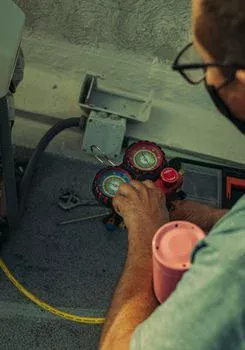
Effective operation of an RO desalination system relies on proactive maintenance and swift troubleshooting to mitigate performance degradation and unscheduled downtime. A common issue is a low permeate flow rate, often caused by membrane fouling from organic matter or colloids, or scaling by mineral precipitates like calcium carbonate or silica. Solutions include Clean-In-Place (CIP) procedures, using citric acid for scale removal or sodium hydroxide (NaOH) for organic fouling; if flux drops by more than 20%, membrane replacement may be necessary. High permeate Total Dissolved Solids (TDS) can indicate membrane damage, such as from chlorine attack, or leaks in O-rings and seals. An integrity test using a dye tracer can identify damaged elements, and prompt replacement or resealing is required. An increased pressure drop across the membrane modules typically signals fouling, scaling, or biofilm growth. This can be addressed by backwashing pretreatment filters, performing a biocidal CIP, or increasing antiscalant dosing. A low recovery rate can result from feedwater quality degradation or membrane aging; adjustments to the recovery setpoint, membrane replacement, or the addition of a second RO pass might be necessary. A regular maintenance checklist is essential: daily monitoring of flow and pressure, weekly SDI tests (target <5), and monthly CIP are standard practices. For managing the concentrated brine byproduct, consider solutions for sludge dewatering with 95%+ volume reduction.
| Problem | Potential Causes | Troubleshooting Steps & Solutions | Preventative Measures |
|---|---|---|---|
| Low Permeate Flow | Membrane fouling (colloidal, organic, biological) Scaling (CaCO₃, CaSO₄, silica) Membrane compaction Low feed pressure |
Clean-In-Place (CIP) with appropriate chemicals (citric acid for scale, NaOH for organics, biocide for biofouling). If flux drop >20%, consider membrane replacement. Verify feed pump performance and pressure settings. |
Effective pretreatment (SDI control, antiscalant dosing). Regular membrane cleaning schedule. Monitor feedwater quality. |
| High Permeate TDS | Membrane damage (tears, pinholes) O-ring/seal leaks Feedwater bypass High feed pressure exceeding membrane limits |
Perform membrane integrity test (e.g., dye test). Replace damaged membranes. Reseal O-rings and gaskets. Inspect for bypass valves. |
Proper membrane handling and installation. Regular pressure monitoring. Avoid over-pressurization. |
| High Pressure Drop | Severe fouling/scaling Biofilm growth Plugged pre-filters |
Backwash/clean pretreatment filters. Perform CIP with appropriate biocides/descalers. Increase antiscalant dosage if scaling is suspected. |
Optimize pretreatment effectiveness. Regular filter maintenance. Monitor differential pressure across modules. |
| Low Recovery Rate | Feedwater quality degradation Membrane aging/fouling Incorrect system settings Concentrate valve issues |
Adjust recovery setpoint based on feedwater quality. Clean or replace membranes. Inspect and calibrate concentrate valve. Consider a second RO pass for higher recovery. |
Consistent feedwater quality monitoring. Adhere to membrane lifespan recommendations. Proper system design for target recovery. |
Frequently Asked Questions
Q: What is the typical lifespan of an RO membrane?
A: The lifespan of an RO membrane typically ranges from 3 to 5 years. This duration is heavily influenced by feedwater quality, the effectiveness of pretreatment, the frequency and appropriateness of cleaning cycles, and the specific membrane type. Thin-film composite (TFC) membranes generally offer longer service life and higher performance than older cellulose acetate (CA) membranes but are more susceptible to fouling and chlorine degradation (Dow Filmtec 2024 specifications).
Q: How much energy does an RO system use?
A: Energy consumption for RO systems varies significantly with feedwater salinity. For seawater desalination, it typically ranges from 3–5 kWh/m³. For brackish water, the consumption is considerably lower, often between 0.5–2 kWh/m³. The strategic implementation of energy recovery devices (ERDs) can reduce overall energy consumption by 30–50% (EPA 2024 benchmarks).
Q: What contaminants can RO remove?
A: RO is highly effective at removing a broad spectrum of contaminants, including over 99% of dissolved salts (like NaCl, MgSO₄), heavy metals (such as Pb, As, Cd), microorganisms (bacteria, viruses, protozoa), and larger organic molecules (e.g., pesticides, VOCs). However, it is not designed to remove dissolved gases like CO₂ or O₂, nor very small, low-molecular-weight organic compounds such as methanol.
Q: What is the difference between RO and nanofiltration (NF)?
A: The primary difference lies in their membrane pore size and operating pressure. NF membranes have larger pores (approximately 0.001–0.01 microns) and operate at lower pressures (100–300 psi), making them ideal for applications like water softening and removal of divalent ions and larger organic molecules. RO membranes have significantly smaller pores (0.0001–0.001 microns) and require higher pressures (600–1200 psi) for complete desalination and the production of high-purity water.
Q: How do I calculate the recovery rate of an RO system?
A: The recovery rate of an RO system is calculated as the ratio of the permeate flow rate to the feedwater flow rate, expressed as a percentage: Recovery Rate = (Permeate Flow / Feedwater Flow) × 100%. For example, if a system produces 50 m³/h of permeate from 100 m³/h of feedwater, the recovery rate is 50%. It's important to note that higher recovery rates, while maximizing water yield, can increase the risk of scaling and fouling due to higher concentrate TDS.