Why DAF Systems Are Critical for Industrial Wastewater in Ireland
A DAF system in Ireland removes 90–97% of suspended solids, fats, oils, and greases from industrial wastewater, with systems like HydropureWater’s DAF line handling 4–300 m³/h. Compliant with EU Urban Waste Water Directive 91/271/EEC, modern DAF units reduce BOD by 85–92% and COD by up to 90%, cutting discharge costs for food, textile, and chemical processors. As Irish regulatory bodies tighten enforcement, the installation of high-efficiency flotation systems has transitioned from an operational preference to a compliance necessity.
Ireland enforces the EU Urban Waste Water Treatment Directive 91/271/EEC, which mandates strict discharge limits: Biochemical Oxygen Demand (BOD) must not exceed 25 mg/L, Chemical Oxygen Demand (COD) is capped at 125 mg/L, and Total Suspended Solids (TSS) are limited to 35 mg/L for final discharge. For industrial sectors such as food and beverage, pharmaceuticals, and textiles, these limits are often unattainable without robust pre-treatment. High concentrations of Fats, Oils, and Greases (FOG) and colloidal loads common in Irish dairy and meat processing facilities can overwhelm municipal treatment plants, leading to heavy surcharges or legal penalties from Uisce Éireann.
The strategic importance of dissolved air flotation is evidenced by Uisce Éireann’s recent Dissolved Air Flotation and Filtration (DAFF) upgrade in Trim. This project signals a national shift toward flotation technology to manage effluent compliance effectively. By utilizing a HydropureWater DAF system for industrial wastewater, plants can significantly reduce the volume of sludge produced while lightening the downstream load on biological treatment systems. This pre-treatment step is essential for maintaining the health of activated sludge processes, as it prevents the coating of microbial flocs with oils and greases, which otherwise inhibits oxygen transfer. Understanding BOD and TSS discharge limits by country and global standards provides further context on why Irish facilities must prioritize these removal rates to remain competitive and compliant.
How DAF Systems Work: From Micro-Bubbles to Sludge Removal
Dissolved Air Flotation relies on the physical principle of altering the buoyancy of suspended particles. In a standard industrial configuration, a portion of the clarified effluent is recycled and saturated with air under high pressure (typically 4–6 bar) in a saturation vessel. When this air-saturated water is injected into the main flotation tank through specialized nozzles, the sudden drop to atmospheric pressure creates a dense cloud of micro-bubbles, ranging from 20 to 100 µm in diameter. These bubbles attach to suspended particles, increasing their buoyancy and causing them to rise to the surface.
The flotation process is highly effective for removing low-density solids that are difficult to settle via gravity. Once the solids reach the surface, an automatic mechanical skimmer removes the thickened sludge layer, often achieving TSS removal rates of 90–97% under optimal conditions. To maximize efficiency, chemical pre-treatment is often required. An automatic chemical dosing system introduces coagulants such as alum or ferric chloride to neutralize particle charges, followed by flocculants to bridge smaller particles into larger "flocs" that bubbles can easily capture.
For engineers evaluating system capacity, the surface loading rate is a primary design metric. Industrial DAF systems typically operate at 10–20 m³/m²/h. This compact footprint allows DAF units to handle significantly higher flow rates than traditional sedimentation tanks of the same size. Modern designs also incorporate laminar flow plates (lamella) to increase the effective flotation area, further enhancing the separation of oils and fine colloidal matter. This technical mechanism ensures that even variable wastewater streams, common in batch-processing industries, can be treated to a consistent standard before discharge or secondary treatment.
Performance by Industry: What Removal Rates to Expect
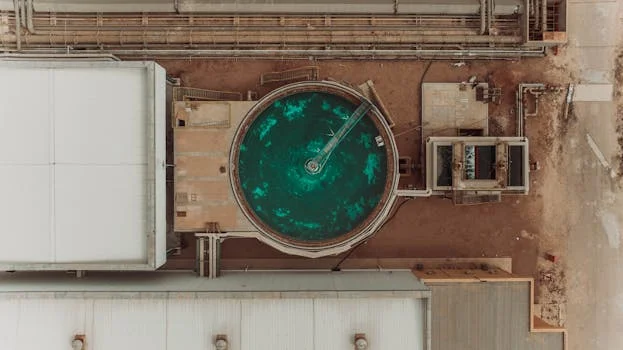
A DAF system in Ireland delivers removal performance that varies by industrial effluent composition. In Ireland's food processing sector—particularly dairy and meat—the primary challenge is the high concentration of emulsified fats and proteins. DAF systems excel here, often reducing FOG levels from several thousand mg/L to under 100 mg/L. In the pulp and paper industry, the focus shifts to COD reduction and the removal of lignins and color-causing organic compounds, which requires precise cationic polymer dosing.
For metalworking and automotive facilities, DAF is used to break oil-in-water emulsions. By adjusting the pH and applying specific coagulants, these systems can achieve up to 95% removal of free and emulsified oils. Municipal applications in Ireland often utilize DAF as a pre-treatment stage to protect sensitive biological reactors from high solids loading during storm events or to treat algae-rich reservoir water. The following table outlines the typical performance benchmarks expected across these key sectors.
| Industry Sector | TSS Removal Rate | BOD Reduction | FOG/Oil Removal | COD Reduction |
|---|---|---|---|---|
| Food & Beverage | 90–97% | 85–92% | 90–95% | 70–85% |
| Pulp & Paper | 92–96% | 60–70% | N/A | 88–93% |
| Metalworking | 90–95% | 50–60% | 95%+ | 65–80% |
| Municipal Pre-treatment | 70–80% | 60–75% | 80–90% | 50–65% |
Key Technical Specifications for DAF Systems in Ireland
When selecting a DAF system for an Irish industrial site, engineers must prioritize material durability and energy efficiency. Given the corrosive nature of many industrial effluents and the damp Irish climate, stainless steel construction (SS304 or SS316) is the industry standard for long-term reliability. Modular designs are increasingly favored, as they allow for rapid installation and the flexibility to scale treatment capacity as production volumes grow. Compact, skid-mounted units are particularly useful for retrofitting into existing facility footprints where space is at a premium.
Energy consumption is a critical factor in the Total Cost of Ownership (TCO). Modern, high-efficiency systems utilize variable speed drives (VSDs) on recycle pumps and air compressors to optimize power use based on real-time flow and load data. Efficient systems now operate at less than 1.5 kW per 100 m³/h of treated water. For those managing long-term operations, following a complete DAF machine maintenance guide with task frequencies is essential to sustain these performance levels and prevent mechanical degradation. The table below summarizes the technical specifications, which serves as a benchmark for industrial-grade flotation equipment.
| Parameter | Specification Range | Operational Benefit |
|---|---|---|
| Flow Capacity | 4 – 300 m³/h (13 standard models) | Scalable for small plants to large refineries |
| Material of Construction | SS304 / SS316 / Carbon Steel Epoxy | Corrosion resistance in harsh environments |
| Power Consumption | 0.75 – 1.5 kW per 100 m³/h | Lower operational expenditure (OPEX) |
| Bubble Size | 20 – 100 µm | Maximum particle attachment efficiency |
| Control System | PLC with HMI Touchscreen | Automated operation and remote monitoring |
Top DAF Suppliers in Ireland Compared
The Irish market for DAF systems is served by a mix of multinational technology providers, local engineering firms, and specialized manufacturers. Choosing the right supplier involves balancing initial capital expenditure (CAPEX) with long-term support and technical capability. Some providers focus exclusively on rental markets, which is ideal for short-term compliance fixes or during plant upgrades, while others provide full design-build services for permanent installations.
Direct manufacturers like HydropureWater offer a competitive middle ground, providing high-specification equipment with lower CAPEX than many European-assembled brands. While local Irish engineering firms provide the advantage of proximity for commissioning, manufacturers often partner with these local firms to provide "boots on the ground" support while maintaining the cost advantages of large-scale production. When evaluating costs, procurement officers should consult real 2025 DAF clarifier cost price data by capacity and configuration to ensure the quoted ROI aligns with market averages.
| Supplier Category | Primary Focus | Typical Lead Time | Best For |
|---|---|---|---|
| Multinational Rental Specialists | Short-term leasing & emergency response | 1–3 weeks | Temporary capacity or pilot testing |
| Local Irish EPC Firms | Turnkey installation & civil works | 12–20 weeks | Complex municipal or large industrial builds |
| Specialized Industrial Manufacturers | High-efficiency modular units | 10–14 weeks | Standard industrial pre-treatment & ROI focus |
| Global Water Tech Groups | Proprietary high-rate flotation | 16–24 weeks | Very high flow municipal applications |
Frequently Asked Questions
What does a DAF system do?
A DAF system removes suspended solids, fats, oils, and greases (FOG), and colloidal matter from wastewater. It uses micro-bubbles to float these contaminants to the surface for mechanical removal, providing high-clarity effluent suitable for discharge or further biological treatment.
What is the largest water treatment plant in Ireland?
The Leixlip Water Treatment Plant is the largest in Ireland, currently serving approximately 1.8 million people in the Greater Dublin Area. It utilizes advanced clarification and filtration stages to meet the region's massive demand.
How is water treated in Ireland?
Water treatment in Ireland typically involves a multi-stage process: primary screening, coagulation and flocculation, secondary biological treatment (such as activated sludge), and increasingly, tertiary treatment using DAF or DAFF (Dissolved Air Flotation and Filtration) to ensure compliance with EU environmental standards.
Are DAF systems energy efficient?
Yes, modern DAF systems are highly energy-efficient. Units equipped with variable speed drives and optimized air saturation systems typically consume less than 1.5 kW per 100 m³ of treated water, significantly reducing operational costs compared to older sedimentation technologies.
<