Semiconductor CMP Wastewater Treatment: 2025 Engineering Specs, Process Flow & Cost-Optimized Equipment Guide
Semiconductor CMP wastewater contains high levels of oxide particles (up to 150 nm), turbidity (>1,000 NTU), and COD (500 mg/L), requiring multi-stage treatment to meet discharge limits or enable water reuse. Proven solutions combine dissolved air flotation (DAF) for 95% TSS removal, MBR membranes (0.1 μm pore size) for biological treatment, and reverse osmosis (RO) for final polishing, achieving 99%+ contaminant removal and 85% water recovery. Costs range from $1.2M for small fabs (10 m³/h) to $45M for large-scale zero-liquid-discharge (ZLD) systems, with payback periods of 2–5 years through water savings and regulatory compliance.
Why CMP Wastewater Treatment is a Critical Challenge for Semiconductor Fabs
Chemical Mechanical Polishing (CMP) wastewater accounts for 30% to 50% of a semiconductor fab’s total water consumption and discharge volume, according to 2024 SEMI industry reports. As fabs scale to 3nm and 2nm nodes, the volume of ultra-fine slurry particles and complex organic additives increases, making traditional treatment methods insufficient. The primary contaminants include oxide particles (10–150 nm), silica slurry concentrations reaching 5,000 mg/L, dissolved copper (1–5 mg/L), and Chemical Oxygen Demand (COD) levels averaging 500 mg/L (per U.S. EPA data).
Regulatory pressure is intensifying globally, transforming wastewater management from a compliance checkbox into a core operational risk. In China, the GB 31573-2015 standard mandates COD levels below 50 mg/L for direct discharge, while the EU Industrial Emissions Directive (2010/75/EU) and U.S. EPA Effluent Limitations Guidelines (ELGs) set strict caps on heavy metals like copper and arsenic. Non-compliance leads to severe financial and reputational damage. For example, a 10,000 m² semiconductor fab in Taiwan was fined $2.1M in 2023 for exceeding copper discharge limits due to an undersized ion exchange system, highlighting the need for robust, high-capacity engineering solutions.
Beyond fines, the rising cost of ultrapure water (UPW) production makes water reclamation a financial necessity. Modern fabs are increasingly adopting hybrid ZLD systems for 99% water recovery in semiconductor fabs to mitigate water scarcity risks and stabilize operational expenditures (OPEX) against fluctuating utility rates. Effective treatment requires an integrated approach that handles both the abrasive physical particles and the chemically stable organic stabilizers used in modern CMP slurries.
CMP Wastewater Contaminant Profile: Engineering Specs for Treatment Design
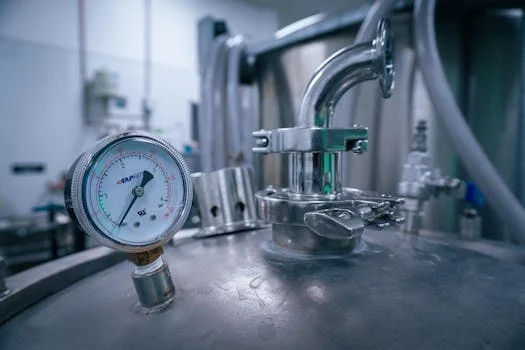
The design of a CMP wastewater treatment system depends on the specific particle size distribution and chemical stabilization of the slurry used in the planarization process. Approximately 80% of oxide particles in CMP effluent are smaller than 150 nm, according to Pall Corporation engineering benchmarks. These sub-micron particles carry a negative surface charge (zeta potential), which prevents natural settling and necessitates the use of advanced coagulation or membrane-based separation. Turbidity levels often reach 1,000–3,000 NTU, a stark contrast to the 5–50 NTU found in standard municipal wastewater, requiring high-rate solids removal technologies like DAF before any membrane polishing can occur.
Chemical Oxygen Demand in CMP waste is largely driven by organic additives such as benzotriazole (BTA), used as a corrosion inhibitor, and citric acid, used as a chelating agent. These organics contribute 300–800 mg/L to the COD profile, with roughly 60% being recalcitrant to simple physical filtration. Heavy metal concentrations, particularly copper (1–5 mg/L) and nickel (0.5–2 mg/L), require specialized removal to meet the sub-0.5 mg/L limits required by most industrial zones. The pH of CMP wastewater is typically alkaline (8.5–10.5) due to ammonia-based slurries, necessitating precise pH adjustment to optimize the performance of downstream biological or chemical stages.
| Parameter | Influent Range (Raw CMP) | Discharge Limit (Typical) | Reuse Target (UPW Feed) |
|---|---|---|---|
| Total Suspended Solids (TSS) | 1,000 – 5,000 mg/L | < 10 mg/L | < 0.1 mg/L |
| Turbidity | 1,000 – 3,000 NTU | < 5 NTU | < 0.1 NTU |
| COD (Cr) | 300 – 800 mg/L | < 50 mg/L | < 5 mg/L |
| Copper (Cu²⁺) | 1.0 – 5.0 mg/L | < 0.5 mg/L | < 0.02 mg/L |
| pH | 8.5 – 10.5 | 6.0 – 9.0 | 6.5 – 7.5 |
| Particle Size (d80) | 10 – 150 nm | N/A | < 50 nm |
Treatment Process Flow: 4 Proven CMP Wastewater Treatment Trains Compared
For effective treatment, selecting the correct treatment train involves balancing the required effluent quality against footprint and energy costs. The industry standard for high water recovery is Train 1 (DAF + MBR + RO). This sequence utilizes DAF systems for high-efficiency CMP wastewater pretreatment to remove 95% of suspended solids. The effluent then enters integrated MBR systems for CMP wastewater biological treatment and water reuse, where 0.1 μm pore size membranes provide a physical barrier to bacteria and remaining fine particles. Finally, high-recovery RO systems for CMP wastewater polishing and water reuse remove dissolved salts and organic traces, achieving 85% water recovery (per 2024 Pall Corporation benchmarks).
Other treatment trains include Train 2 (Coagulation + Sedimentation + Ion Exchange), which offers a lower CAPEX but generates significantly more hazardous sludge. This method achieves 97% copper removal but often struggles with the ultra-fine silica particles that remain suspended after sedimentation. Train 3 (Electrocoagulation + RO) is increasingly used for Zero Liquid Discharge (ZLD) applications. Electrocoagulation (EC) destabilizes 99% of particles without adding large volumes of chemical salts, though it consumes 3–5 kWh/m³ of energy. Train 4 (Crossflow Filtration + Ion Exchange) is the specialized choice for copper recovery, allowing fabs to recover 95%+ copper from CMP wastewater while meeting discharge limits, turning a waste stream into a potential resource.
| Treatment Train | Primary Goal | Removal Efficiency (TSS/COD) | Key Engineering Specs |
|---|---|---|---|
| DAF + MBR + RO | Water Reuse (85%) | 99% TSS / 95% COD | DAF Bubble: 30-50 μm; MBR Flux: 15-25 LMH |
| Coag + Sed + IX | Compliance Only | 95% TSS / 80% COD | Settling Velocity: 0.5-1.0 m/h; IX Resin: Chelating |
| Electrocoag + RO | ZLD Pretreatment | 99% TSS / 90% COD | Current Density: 10-20 mA/cm²; Energy: 3-5 kWh/m³ |
| Crossflow + IX | Copper Recovery | 98% TSS / 75% COD | Membrane Pore: 0.05 μm; Recovery Rate: 95% Cu |
Equipment Selection Guide: Matching CMP Wastewater Treatment Technologies to Fab Requirements
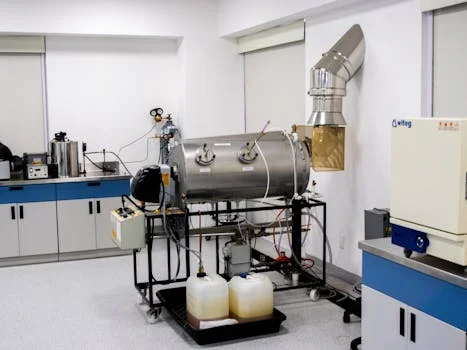
Engineering teams must size equipment based on hydraulic load and the specific chemistry of the CMP slurry. Small fabs with flow rates under 5 m³/h typically prioritize a small footprint and low CAPEX, opting for DAF units coupled with PLC-controlled chemical dosing for CMP wastewater coagulation and pH adjustment. These systems cost between $200K and $500K and are designed for discharge compliance, with OPEX ranging from $0.50 to $1.20 per cubic meter treated.
Medium-sized fabs (5–50 m³/h) generally implement MBR and RO configurations to achieve 80–85% water reuse. While the CAPEX is higher ($1.2M–$8M), the ROI is driven by the reduction in UPW procurement costs. MBR systems are particularly advantageous here, as they require 60% less space than conventional activated sludge systems (per 2024 MBR manufacturer data), allowing for capacity upgrades within existing fab footprints. For large-scale operations exceeding 50 m³/h, ZLD systems utilizing electrocoagulation and thermal evaporators are the gold standard. These systems involve a heavy CAPEX ($20M–$45M) but offer the highest level of environmental security and water independence.
| Fab Scale | Flow Rate | Recommended Equipment | CAPEX Range | OPEX ($/m³) |
|---|---|---|---|---|
| Small | < 5 m³/h | DAF + Chemical Dosing | $200K – $500K | $0.50 – $1.20 |
| Medium | 5 – 50 m³/h | MBR + RO + IX | $1.2M – $8.0M | $0.80 – $2.00 |
| Large | > 50 m³/h | EC + RO + Evaporator (ZLD) | $20M – $50M | $2.50 – $5.00 |
When evaluating ROI, procurement teams should factor in the cost of non-compliance, including potential fines and production halts. A standard water reuse system in a 20 m³/h fab typically sees a payback period of 2 to 5 years. For more details on budgeting, consult our step-by-step engineering guide for CMP wastewater treatment projects.
Optimizing CMP Wastewater Treatment: 5 Engineering Best Practices for Maximum Efficiency
To ensure long-term reliability and minimize membrane fouling, engineers should implement specific operational protocols. Pre-treatment is critical