Chip fab wastewater projects handle high-variability, low-nutrient streams that carry TMAH (tetramethylammonium hydroxide), fluoride, silica, and metals. A typical 5 MGD (about 18,900 m³/d) fab can see TSS up to 500 mg/L and COD up to 1,200 mg/L, which exceeds ordinary municipal plant capability. Common trains combine dissolved air flotation (DAF) for solids (95%+ removal), membrane bioreactors (MBR) with 0.1 μm filtration, and reverse osmosis (RO) at about 90% recovery. Permit limits and reuse targets drive CAPEX in the $12M–$45M range for a full DAF + MBR + RO system at that scale.
What Does a Chip Fab Wastewater Project Need to Deliver?
A semiconductor fab wastewater project must treat low-BOD, chemically complex effluent to NPDES or local pretreatment limits and support high on-site reuse. At 5 MGD (about 18,900 m³/d), design loads often reach TSS 500 mg/L, COD 1,200 mg/L, TMAH 10–100 mg/L, and fluoride 50–300 mg/L. DAF, precipitation, MBR, and RO trains commonly target about 90% recovery when silica is controlled.
Why Fab Effluent Differs From Other Industrial Wastewater
Semiconductor fabrication plants generate wastewater that starves conventional biology and swings hard with tool recipes. Biochemical Oxygen Demand (BOD) is often below 50 mg/L, so activated-sludge plants lose food unless carbon is dosed or an MBR is used. Daily swings in TMAH from 10–100 mg/L, fluoride from 50–300 mg/L, copper, nickel, arsenic, and silica from 100–500 mg/L are common across more than 4,000 process steps per chip.
As fabs re-tool from nodes such as 7 nm to 3 nm, wastewater chemistry can shift monthly. Flow can change by up to 30% within hours, so equalization and flexible hydraulics are mandatory.
| Characteristic | Typical Range/Value | Impact on Treatment |
|---|---|---|
| BOD | < 50 mg/L | Starves biological treatment processes |
| TSS | Up to 500 mg/L | Requires robust primary solids removal |
| COD | Up to 1,200 mg/L | High organic load requiring advanced treatment |
| TMAH | 10–100 mg/L | Toxic to biological cultures, requires specific pretreatment |
| Fluoride | 50–300 mg/L | Corrosive, requires precipitation to meet discharge limits |
| Heavy Metals (Cu, Ni, As) | Varying concentrations | Inhibitory to biological processes, requires removal |
| Silica | 100–500 mg/L | Fouling agent for membrane systems (RO) |
| Flow Variability | Up to 30% within hours | Requires flexible and responsive treatment design |
Contaminant Profile: What Breaks Standard Treatment Trains
Tetramethylammonium hydroxide (TMAH) from photolithography is toxic to bacteria above about 20 mg/L and often needs advanced oxidation or RO pretreatment before biology. Fluoride at 50–300 mg/L corrodes metals above about 150 mg/L and must be precipitated, commonly with calcium chloride (CaCl₂). Many design packages still aim for fluoride below 4 mg/L as a conservative screening target, while actual NPDES and local pretreatment limits remain permit-specific.
Heavy metals above about 1 mg/L can inhibit biomass and need precipitation or ion exchange. Silica at 100–500 mg/L fouls RO and needs coagulation, flocculation, or ultrafiltration first. Poor neutralization control can also form hydrofluoric acid (HF) gas when TMAH and fluoride streams mix.
| Contaminant | Typical Concentration Range | Treatment Challenges & Impacts | Primary Treatment Mechanisms |
|---|---|---|---|
| TMAH (Tetramethylammonium Hydroxide) | 10–100 mg/L | Toxic to biological organisms (>20 mg/L), requires advanced oxidation or RO pretreatment. | Oxidation, RO |
| Fluoride | 50–300 mg/L | Corrosive (>150 mg/L), requires precipitation to meet EPA <4 mg/L limits. | Chemical Precipitation (CaCl₂), Adsorption |
| Heavy Metals (Cu, Ni, As) | > 1 mg/L (inhibitory) | Inhibit biological treatment, require chemical precipitation or ion exchange. | Chemical Precipitation, Ion Exchange |
| Silica | 100–500 mg/L | Fouling agent for RO membranes, requires pretreatment. | Coagulation, Flocculation, Ultrafiltration |
Process Design for Chip Fab Wastewater Projects
Fab wastewater process trains start with high-rate solids removal, then chemical control, biology, and membrane polishing. A high-efficiency dissolved air flotation unit such as HydropureWater’s can remove up to 95% of TSS and about 80% of oils and greases (FOG) before biology. An automatic chemical dosing system holds pH near 6.5–8.5 and doses CaCl₂ at about 1.2 times the stoichiometric fluoride demand for CaF₂ precipitation.
An MBR system with 0.1 μm PVDF membranes suits low-BOD streams at roughly 0.4–0.6 kWh/m³. Final polishing with an industrial reverse osmosis (RO) system can reach about 90% recovery when antiscalant and silica pretreatment are correct.
A typical path cuts influent TSS from <500 mg/L to <50 mg/L after DAF, holds MBR COD <100 mg/L, and returns RO permeate for non-critical or further polished reuse. Campus sanitary flows that are separate from process drains can use a compact Underground Package Sewage Treatment Plant (WSZ Series) so the process WRRF stays focused on fab chemistry.
Equipment Selection Framework: DAF vs. MBR vs. RO for Chip Fabs
Dissolved air flotation units such as HydropureWater’s fit streams with TSS >300 mg/L. They can deliver over 95% TSS removal and 80% FOG removal when coagulants match emulsified oils. Membrane bioreactors such as the DF series suit low-BOD feeds (typically <100 mg/L) and provide 0.1 μm filtration with a compact footprint, at the cost of scheduled membrane cleaning.
Industrial reverse osmosis (RO) systems support recycling above 90% recovery only when UF or coagulation controls silica. An automatic chemical dosing system remains essential for pH 6.5–8.5 and fluoride precipitation.
Decision rules that hold in practice include RO or oxidation pretreatment when TMAH stays above 50 mg/L. Precipitate before DAF when fluoride exceeds 200 mg/L. Prefer MBR over conventional aeration when BOD stays nutrient-poor.
| Technology | Primary Application in Fabs | Key Performance Metrics | Considerations |
|---|---|---|---|
| DAF | High TSS/FOG removal | 95% TSS removal, 80% FOG removal | Requires chemical coagulants for emulsified oils; effective for primary clarification. |
| MBR (DF Series) | Low-BOD biological treatment | 0.1 μm filtration, high effluent quality | Requires regular membrane cleaning; effective for compact footprints; suitable for low-nutrient streams. |
| RO (Industrial System) | Water recycling, high-purity water production | >90% water recovery | Requires extensive pretreatment (e.g., UF, antiscalants) to manage silica and other foulants. |
| Chemical Dosing System | pH adjustment, chemical precipitation (e.g., fluoride) | Precise dosing, automated control | Essential for optimizing other treatment processes; requires careful chemical selection and management. |
Cost Breakdown: CAPEX, OPEX, and ROI for Fab Wastewater Projects
Capital cost for a comprehensive 5 MGD (about 18,900 m³/d) fab wastewater system typically spans $12 million to $45 million. Final CAPEX depends on automation, redundancy, and recovery depth. Operating cost usually falls between $0.80 and $1.50 per cubic meter treated for chemicals, energy, labor, and membrane replacement. High-recovery designs near 90% can show a 3–5 year ROI when freshwater is about $2.00/m³ and recycled process water lands near $0.50/m³ after treatment.
Earlier project summaries cited tax credits of up to 30% for water recycling systems. The CHIPS Act Advanced Manufacturing Investment Credit instead covers qualified investment in advanced manufacturing facilities that make semiconductors or semiconductor manufacturing equipment (IRS Advanced Manufacturing Investment Credit). Water assets qualify only when they are part of that facility investment. Component examples still used in screening include DAF CAPEX about $500,000 with OPEX near $0.10/m³, and MBR CAPEX about $2 million with OPEX near $0.30/m³.
What Is Long-Term UPW System Cost for Fabs?
Long-term UPW cost is driven more by membrane replacement, resin or EDI polishing, and piping integrity under ultrapure conditions than by the first RO skid price alone. Fab owners comparing Georg Fischer-class UPW piping and polishing loops should model 10–15 year OPEX for cleaning chemicals, heat tracing, and leak risk, then tie reclaim RO permeate quality to the UPW make-up blend. Process reclaim that reaches RO permeate specs cuts purchased UPW volume, but silica and TOC breakthrough still set the true lifecycle cost.
What CAPEX and OPEX Apply to Blowdown Recovery?
Cooling-tower blowdown recovery CAPEX and OPEX sit below full fab process WRRF costs but still need hardness, silica, and biocide control before RO. Data-center and fab utility yards often size blowdown RO as a bolt-on with lower CAPEX than a 5 MGD process train, while OPEX tracks antiscalant, cartridge filters, and concentrate disposal. When blowdown RO permeate offsets tower make-up, savings scale with local water and sewer tariffs rather than with chip-tool chemistry.
| Technology Component | Estimated CAPEX (5 MGD System) | Estimated OPEX (per m³) | Key Savings/Benefits |
|---|---|---|---|
| DAF System | $500,000 - $2,000,000 | $0.10 - $0.20 | Reduces downstream treatment load, improves effluent quality. |
| MBR System | $2,000,000 - $8,000,000 | $0.30 - $0.50 | High effluent quality, compact footprint, effective for low-BOD streams. |
| RO System (for Recycling) | $5,000,000 - $20,000,000 | $0.20 - $0.40 | Enables significant water reuse, reducing freshwater dependency; potential for 3-5 year ROI. |
| Chemical Dosing System | $100,000 - $500,000 | $0.05 - $0.10 | Optimizes precipitation and pH control, essential for meeting permit limits. |
| Total System (DAF + MBR + RO) | $12,000,000 - $45,000,000 | $0.80 - $1.50 | Comprehensive treatment and high-level recycling capabilities. |
Compliance Checklist: Meeting EPA and Local Permit Limits
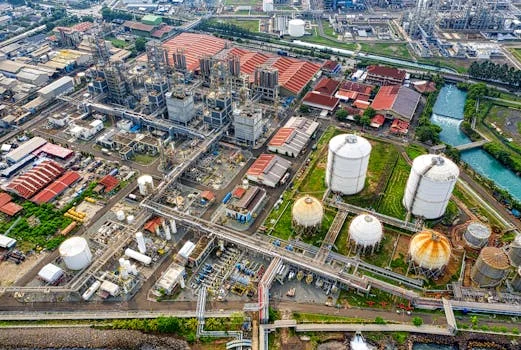
Chip fab permits usually combine an NPDES or pretreatment package with aggressive local reuse goals. Screening targets still used on many projects include TSS <30 mg/L, COD <125 mg/L, fluoride <4 mg/L, and TMAH <1 mg/L, subject to the issued permit. Local reuse goals of 50–90% are common; TSMC’s Arizona facility has publicly targeted 90% reuse as reclaim capacity comes online. CHIPS Act-funded sites often run monthly fab–WRRF coordination so recipe changes do not surprise the treatment plant.
Practical checklist items include monthly fab–WRRF coordination, continuous online TSS and COD, and scheduled lab tests for fluoride, TMAH, and emerging species. Keep a chemical change log for new tool chemistries. Prove each unit process meets limits across the stated flow swing of up to 30% within hours.
Selection checklist before freezing the P&ID
- Confirm peak and average flows, including the 30% short-term swing case.
- Map TMAH, fluoride, metals, and silica by drain family, not as one blended average.
- Decide discharge vs. reclaim first; RO recovery near 90% changes upstream chemistry.
- Size CaCl₂ precipitation and solids handling for fluoride at 50–300 mg/L.
- Separate sanitary campus flows; an Underground Package Sewage Treatment Plant (WSZ Series) can keep domestic load off the process WRRF.
- Budget membrane cleaning and replacement inside the $0.80–$1.50/m³ OPEX band.
- Align online analyzers with the exact permit analytes, not only TSS and COD.
Plant engineers and EPC teams comparing unit-process options can request a duty-based equipment list once influent ranges and reuse targets are fixed.
Who This Is For
Fab owners, EPC process leads, and procurement managers use this guide when sizing a 5 MGD-class process WRRF or major upgrade. Teams that only need sanitary package treatment or cooling-tower blowdown RO should look at those narrower scopes instead of a full DAF + MBR + RO train. Next step: lock influent ranges, permit limits, and reclaim percentage, then match each unit process to those numbers.
Frequently Asked Questions
What are the biggest challenges in treating chip fab wastewater?
The biggest challenges are near-zero nutrients, wide swings in TMAH, fluoride, metals, and silica, and flow changes up to 30% within hours. BOD often stays below 50 mg/L, so biology needs MBR design or carbon management. Fluoride at 50–300 mg/L and TMAH above about 20 mg/L force dedicated pretreatment before membranes or biomass. Without equalization and recipe-change coordination, even a correctly sized train will miss permit limits.
How much does a chip fab wastewater treatment system cost?
A typical 5 MGD (about 18,900 m³/d) DAF + MBR + RO system costs about $12 million to $45 million in CAPEX. OPEX usually lands between $0.80 and $1.50 per cubic meter for chemicals, energy, labor, and membranes. High-recovery plants near 90% can show a 3–5 year ROI when freshwater is near $2.00/m³ and recycle water near $0.50/m³. Final price tracks redundancy, automation, and silica pretreatment depth.
Can fab wastewater be recycled for ultra-pure water production?
Yes, fab wastewater can be recycled, but RO polishing plus silica control are mandatory before any UPW make-up blend. Reclaim water often meets non-critical reuse first; further polishing is required before true UPW service. Antiscalant programs and UF or coagulation pretreatment protect RO recovery near 90%. TOC, ions, and particles—not just conductivity—decide whether permeate can enter the UPW train.
What permits are required for a new fab wastewater project?
New fab wastewater projects need an NPDES discharge permit or an industrial pretreatment agreement with the local WRRF, plus any state reuse authorizations. Screening numbers such as TSS <30 mg/L, COD <125 mg/L, and fluoride <4 mg/L appear often but are not universal. CHIPS Act-supported sites should also plan fab–WRRF coordination for chemical change control. Always design to the issued permit, not to a generic checklist alone.
How often do fab wastewater treatment systems need maintenance?
DAF units usually need weekly skimming and float handling checks. MBR membranes typically need monthly cleaning cycles, with replacement set by transmembrane pressure and flux. RO cleaning is often quarterly, but silica-rich feeds can shorten that interval. Chemical dosing skids need regular calibration so fluoride precipitation and pH stay inside the 6.5–8.5 control band.