MBR Membrane Module Explained: Specs, Duty, and Selection
An MBR membrane module is a submerged or sidestream MF/UF cassette that retains activated sludge while permeate exits under low pressure. Typical pores are 0.05–0.4 μm. Municipal design flux is commonly 15–30 LMH at 15–25 °C; high-strength industrial duty often uses 10–20 LMH. Stable trains frequently report <1 mg/L TSS and >95% COD removal (EPA 2024 benchmarks).
This MBR membrane module explained guide covers pore size, flux, TMP, energy, flat-sheet versus hollow-fiber geometry, and a practical selection sequence for industrial wastewater plants. Specs below keep the same engineering ranges used in the original design package so buyers can compare vendors on equal terms. Module choice then hinges on material, packing density, air-scour load, and cleaning regime.
How MBR Membrane Modules Work: The Engineering Mechanism
MBR membrane modules sit after the bioreactor biology that converts soluble organics into settleable or filterable biomass. In submerged layouts, cassettes hang in the mixed liquor and a permeate pump pulls filtrate through the membrane wall while solids remain in the tank. An integrated MBR system with submerged PVDF membrane filtration removes the secondary clarifier footprint that many urban plants can no longer expand.
External MBR trains pump mixed liquor to a separate membrane tank, then return concentrate to the bioreactor. Both layouts rely on air scour from module headers. Air scour typically runs 0.2–0.5 Nm³/m²/h on flat-sheet packs and often accounts for 30–50% of total MBR energy use (EPA 2024). Most plants we size for food or textile duty keep scour at the lower end of that band once FOG pretreatment is stable.
Microfiltration pores of 0.1–0.4 μm remove suspended solids, bacteria, and protozoa. Ultrafiltration pores of 0.01–0.1 μm add virus and macromolecule rejection. Microfiltration removes 99.9% of bacteria and 90–95% of viruses under clean-water challenge conditions (Lenntech 2023). Submerged trains usually run dead-end filtration with periodic relaxation or backwash; external trains more often use cross-flow when solids are high.
What Is a Flat Sheet Membrane Module?
A flat sheet membrane module is a stacked panel cassette with parallel membrane sheets, spacer channels, and bottom air headers for submerged MBR service. Panel packs such as the MBR Flat Sheet Membrane Module (DF Series) typically stand about 1–1.5 m high and 0.5–1 m wide per module. Wide channels tolerate fibrous solids and FOG better than fine hollow-fiber lumens, which is why many industrial trains still prefer flat sheet despite a larger footprint.
MBR Membrane Module Specifications: Key Engineering Parameters

MBR membrane modules are sized from a short list of parameters that control permeate quality, cleaning frequency, and power draw. Engineers should lock these values before comparing bids.
Membrane Materials: Polyvinylidene fluoride (PVDF) holds about 70% of the market share because of chemical resistance and a typical 5–10 year service life under municipal-to-moderate industrial duty (DuPont 2023). Polyethylene (PE) is often cheaper and fouling-tolerant. Ceramic membranes handle extreme pH or temperature but raise capital cost.
Pore Size: MBR membranes typically range from 0.05 to 0.4 μm. Smaller pores raise pathogen and turbidity rejection. For instance, 0.1 μm PVDF membranes achieve <1 NTU turbidity (HydropureWater DF Series specs) when TMP and scour stay in design band.
Flux Rate: Design flux is stated in LMH (L/m²·h). Municipal design flux is commonly 15–30 LMH at 15–25 °C. High-strength industrial wastewater is often held at 10–20 LMH to limit cake growth and chemical cleans.
Transmembrane Pressure (TMP): Typical TMP in MBR operations ranges from 0.1–0.5 bar. Rising TMP at constant flux signals fouling. Chemical cleaning is typically required when TMP reaches 0.3–0.5 bar (EPA 2024) if relaxation and scour no longer recover permeability.
Module Configurations and Dimensions: Flat sheet packs are robust and channel-open. Hollow fiber bundles such as HydropureWater BF Series modules are often 1.5–2 m high and 0.2–0.3 m in diameter, which raises packing density on tight sites.
| Parameter | Typical Range/Description | Impact/Notes |
|---|---|---|
| Membrane Material | PVDF, PE, Ceramic | Chemical resistance, lifespan, cost. PVDF dominates the market. |
| Pore Size | 0.05–0.4 μm (MF/UF) | Effluent quality, pathogen removal, turbidity. Smaller pores for higher clarity. |
| Design Flux Rate | 10–30 LMH | Permeate production capacity. Lower for high-strength industrial wastewater. |
| Transmembrane Pressure (TMP) | 0.1–0.5 bar | Indicates membrane fouling; higher TMP necessitates cleaning. |
| Aeration Requirements | 0.2–0.5 Nm³/m²/h (flat sheet) | Critical for fouling control; significant energy consumer. |
Are Flat Sheet MBR Membranes Backwashable?
Backwashable flat sheet MBR membranes exist, but most submerged flat-sheet trains rely on air scour plus relaxation rather than frequent reverse-flow backwash. Hollow fiber modules more often use short backwash every 10–15 minutes. Flat sheet packs usually take intensive chemical cleaning every 3–6 months, or sooner if TMP climbs into the 0.3–0.5 bar band at constant flux. Confirm vendor CIP ports, chemical compatibility, and recovery flux before specifying “backwashable” language in a bid sheet.
Flat Sheet vs. Hollow Fiber MBR Modules: Head-to-Head Comparison
Flat sheet and hollow fiber MBR membrane modules differ in footprint, scour energy, fouling behavior, and module price per square meter. Match the geometry to solids character first, then to available plot space.
Footprint: Hollow fiber systems typically require 0.3–0.6 m²/m³/day, whereas flat sheet modules demand 0.5–1 m²/m³/day (Lenntech 2023). Space-limited municipal plants often accept hollow fiber for that reason.
Energy Consumption: Hollow fiber systems tend to draw 0.3–0.5 kWh/m³ for membrane duty. Flat sheet systems often land at 0.4–0.6 kWh/m³ because scour air demand is higher (EPA 2024).
Cleaning Requirements: Hollow fiber membranes often rely on frequent, short backwash cycles every 10–15 minutes. Flat sheet membranes typically need less frequent but stronger chemical cleans every 3–6 months.
Fouling Resistance: Flat sheet membranes resist irreversible fouling better in high FOG or fibrous streams. Hollow fiber lumens clog faster under those loads (BLUFOX 2024), which shortens clean intervals and can cut fiber life.
Capital Cost: Flat sheet modules typically range from $50–$100/m² of membrane area. Hollow fiber modules often price at $30–$80/m² (market average 2025). Total CAPEX still depends on required area and balance-of-plant equipment.
| Feature | Flat Sheet MBR Modules | Hollow Fiber MBR Modules |
|---|---|---|
| Footprint (m²/m³/day) | 0.5–1.0 | 0.3–0.6 |
| Energy Consumption (kWh/m³) | 0.4–0.6 | 0.3–0.5 |
| Fouling Resistance | High (good for high solids/FOG) | Moderate (more prone to clogging with high FOG) |
| Cleaning Frequency | Chemical cleaning every 3–6 months | Backwash every 10–15 minutes |
| Mechanical Robustness | Very High | High (can be susceptible to fiber breakage) |
| Capital Cost ($/m² membrane) | $50–$100 | $30–$80 |
Efficiency Data: COD, TSS, and BOD Removal Rates by Industry
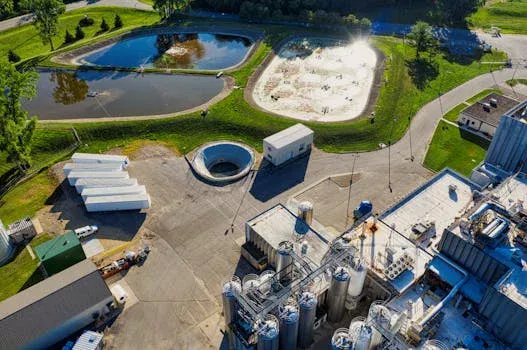
MBR trains deliver high COD, TSS, and BOD removal when HRT, MLSS, and membrane flux stay inside design limits. Municipal plants commonly reach 95–99% COD removal, 99% TSS removal, and 90–95% BOD removal (EPA 2024).
- Textile Industry: MBR systems typically achieve 90–95% COD removal on dyehouse wastewater when color and recalcitrant organics are managed upstream.
- Food Processing: Dairies, breweries, and meat plants often see 95–98% COD removal and near-complete TSS removal at variable organic loads.
- Pharmaceutical Industry: Complex pharma streams commonly land at 92–97% COD removal for biodegradable and moderately recalcitrant fractions (Lenntech 2023).
Influent COD >1,000 mg/L or high FOG can cut stable flux. Many plants add DAF units for pre-treatment in high-FOG wastewater before the MBR cassette. Beyond organics, MBR modules often deliver about 6-log bacteria and 4-log virus reduction (EPA 2024), which supports irrigation, cooling-tower makeup, and process-water reuse where permits allow.
| Industry Sector | Typical Influent COD (mg/L) | Achievable COD Removal (%) | Achievable TSS Removal (%) |
|---|---|---|---|
| Municipal Wastewater | 250–500 | 95–99 | >99 |
| Textile Wastewater | 500–2000 | 90–95 | >98 |
| Food Processing (Dairy, Brewery) | 1000–5000 | 95–98 | >99 |
| Pharmaceutical Wastewater | 800–3000 | 92–97 | >98 |
| Oil & Gas (Produced Water) | 500–1500 | 85–95 | >99 |
Energy Consumption and Operating Costs: What to Expect
MBR OPEX is driven by scour air, permeate pumping, chemicals, and membrane replacement. Air scouring typically accounts for 0.2–0.4 kWh/m³ of treated wastewater. Permeate pumping usually adds 0.1–0.2 kWh/m³ (EPA 2024). Sludge recycle and influent pumping matter less on most industrial packages.
Overall OPEX often falls in $0.15–$0.30/m³ for municipal service. High-strength industrial wastewater more often lands at $0.30–$0.60/m³ because energy and CIP chemicals rise with load. MBR energy use is generally 2–3 times that of conventional extended aeration, yet footprint is often about 50% smaller (HydropureWater cost analysis). That trade is decisive on constrained plots.
PVDF membranes commonly last 5–10 years, with replacement around $50–$100/m² (DuPont 2023). Steady CIP and controlled TMP defer that cost. For a full CAPEX/OPEX split versus conventional biology, review the cost comparison between MBR and extended aeration systems.
Operators should trend specific scour air (Nm³/m²/h) against TMP rise rate each week. A slow TMP climb at fixed flux usually means scour is undersized or FOG pretreatment drifted, not that the polymer failed. Correcting air or pretreatment first avoids unnecessary CIP chemicals and downtime.
How to Select the Right MBR Membrane Module: A Step-by-Step Guide
Use the checklist below when MBR membrane module explained decisions must move from brochure claims to a purchasable bill of materials.
- Characterize influent and effluent limits. Measure COD, BOD, TSS, FOG, pH, temperature, and salinity. Lock discharge or reuse targets before picking pore size and flux.
- Map footprint. Flat sheet modules typically need about 30% more plot than hollow fiber for the same hydraulic capacity.
- Decide pretreatment. FOG >100 mg/L or coarse solids usually need screens plus DAF units for enhanced solids and oil removal before the cassette.
- Compare module geometry. Prefer hollow fiber for moderate solids and tight sites. Prefer flat sheet for fibrous or high-FOG industrial streams.
- Build CAPEX/OPEX. Include modules, tanks, blowers, pumps, CIP skid, energy, chemicals, and 5–10 year membrane replacement. A 100 m³/day industrial flat-sheet plant may land near $150K CAPEX and about $0.25/m³ OPEX under mid-range energy tariffs.
- Pilot when wastewater is odd. Variable or toxic streams need pilot flux, fouling, and CIP data before you freeze an integrated MBR system design.
Selection checklist (field use): Confirm influent COD/FOG band, reuse or discharge targets, and available plot area. Then lock design flux at stated temperature, TMP alarm and CIP chemistry, blower specific energy, and membrane replacement year with $/m².
Who This Is For and Next Step
Plant engineers, EPC process leads, and procurement managers use this page when sizing industrial or municipal MBR cassettes. Teams still deciding whether a clarifier train is enough should compare footprint and reuse quality first; MBR is usually overkill for simple TSS polishing with loose permits. If you already have flow, COD, and FOG data, request an MBR membrane module quote with design flow and effluent limits so sizing can start from your numbers.
Frequently Asked Questions
What is the typical lifespan of an MBR membrane module?
PVDF MBR membrane modules typically last 5 to 10 years under municipal-to-moderate industrial duty. Life shortens when influent FOG is high, TMP stays elevated, or CIP is delayed. Stable pretreatment, design-band flux, and on-time chemical cleans are the three controls that most often push service toward the upper end of that range.
How often do MBR membranes need cleaning?
Physical cleaning is continuous or frequent: air scour plus relaxation, and hollow-fiber backwash every 10–15 minutes in many trains. Chemical cleaning for flat sheet modules is typically every 3–6 months, or when TMP reaches about 0.3–0.5 bar at constant flux. Acid and alkali recipes must match the membrane polymer and foulant type.
Can MBR systems handle high-strength industrial wastewater?
Yes. Food-processing MBRs often reach 95–98% COD removal when biology and flux are stable. Influent COD above about 1,000 mg/L or FOG above 100 mg/L usually needs DAF or equivalent pretreatment so cake resistance does not collapse flux. Pilot data remain the safest way to set industrial design flux.
What is the primary advantage of MBR over conventional activated sludge?
MBR replaces secondary clarification with membrane separation, yielding near-complete TSS removal and a footprint often about 50% smaller. Pathogen reduction is also higher, supporting reuse duties that clarifiers alone rarely meet. Energy use is typically 2–3 times higher than extended aeration, so the decision is quality and space versus power cost.
How do I choose between flat sheet and hollow fiber modules?
Choose hollow fiber when plot space is tight and solids are moderate, because footprint can fall to 0.3–0.6 m²/m³/day. Choose flat sheet when FOG or fibers are high, because open channels foul less and tolerate tougher CIP. Compare scour kWh/m³, CIP labor, and $/m² membrane before locking the geometry.