What Makes an Industrial Dust Collection System Fit for Purpose
The right industrial dust collection system matches particle size, dust chemistry, airflow, and emission limits before hardware is chosen. Cyclones suit coarse dust above 10 µm at 80–95% efficiency. Baghouses reach 99%+ on 0.1–10 µm particles. Wet scrubbers and ESPs cover sticky, hot, or very large gas volumes when fabric filtration is a poor fit.
Collectors often fail when the technology does not match the dust. A coal-fired boiler plant that kept a cyclone sized for coarse ash faced persistent PM2.5 exceedances and a $250,000 fine after finer combustion ash overloaded the unit. Particle size mismatch plus airflow too low for expanded boiler capacity drove chronic non-compliance.
Hidden costs stack quickly. OSHA links dust exposure to 12% higher respiratory illness rates among industrial workers. Abrasive dust can cut bearing life by 40%. Clogged filters force fans harder and can raise fan power by up to 25%. Matching an industrial dust collection system to dust data—size, abrasiveness, moisture, explosivity—then to space, energy, and budget keeps those losses in check.
How Do Particulate Collectors Separate Dust From Gas?
Industrial particulate collectors separate dust from gas using inertia, filtration, liquid contact, or electrostatic force, each tuned to a particle size band and duty. Performance language matters: particle size distribution (PM10, PM2.5, submicron), baghouse air-to-cloth ratio (m³/min per m² of cloth), cyclone cut point (50% capture size), and scrubber liquid-to-gas ratio (L/G).
Most plants we size for dry, fine process dust land on a baghouse, often with a cyclone pre-cleaner when inlet loading is high. Sticky or hot streams push the design toward wet scrubbing instead.
- Inertial separation (cyclones): Tangential inlet flow creates 50–500 Gs of centrifugal force. Particles >10 µm hit the wall, drop to the hopper, and cleaned gas exits the top. Ducon Environmental data indicates 80–95% efficiency for particles greater than 10 µm. Cyclones need little maintenance and tolerate high dust loads, so they often run as pre-cleaners.
- Filtration (baghouses): Fabric filters capture 0.1–10 µm particles at efficiencies exceeding 99%. Polyester, PTFE, or fiberglass bags build a dust cake that improves capture. Pulse-jet cleaning uses 0.1–0.3 MPa compressed air in 50–100 ms pulses to drop cake into the hopper.
- Wet scrubbing: Venturi scrubbers accelerate gas to 100–200 m/s in the throat so particles impact liquid droplets. Removal of 95%+ of submicron particles is typical. Ducon data cites 99.9% SO₂ removal in flue gas service; the slurry then needs wastewater treatment.
- Electrostatic precipitation (ESP): A 30–70 kV corona charges particles that migrate to collection plates and are rapped off. ESPs reach 99%+ across a wide size range and handle high-resistivity dusts such as fly ash, usually at higher capital cost.
| System Type | Primary Capture Mechanism | Typical G-Forces / Pressures | Primary Particle Size Range | Efficiency (Typical) |
|---|---|---|---|---|
| Cyclone Separator | Inertial Separation (Centrifugal Force) | 50–500 Gs | >10 µm (coarse) | 80–95% |
| Baghouse Filter | Filtration (Fabric Impaction/Interception) | 0.1–0.3 MPa (Pulse-Jet) | 0.1–10 µm (fine) | 99%+ |
| Wet Scrubber | Impaction, Diffusion, Absorption | 100–200 m/s (Venturi Throat Velocity) | Submicron to >10 µm | 95%+ |
| Electrostatic Precipitator (ESP) | Electrostatic Attraction (Corona Discharge) | 30–70 kV (Charging Voltage) | 0.1–100 µm | 99%+ |
Dust Collector Specifications by Type: A Parameter Comparison Table

Selecting among collector types means comparing measurable specs: efficiency band, airflow, pressure drop, energy, maintenance, and which rules the unit can meet.
| System Type | Particle Size Range (µm) | Efficiency (%) | Airflow Range (m³/h) | Pressure Drop (Pa) | Energy Use (kW/1,000 m³) | Maintenance Frequency | Material Compatibility | Regulatory Compliance (EPA/EU) |
|---|---|---|---|---|---|---|---|---|
| Cyclone Separator | >10 | 80–95 | 1,000–50,000 | 250–1,000 | 0.05–0.15 | Low (Hopper emptying) | Abrasive, high-temp dust | Pre-cleaner for PM10 |
| Baghouse Filter | 0.1–10 | 99.5–99.99 | 5,000–200,000 | 1,000–2,000 | 0.2–0.4 | Moderate (Filter replacement, pulse-jet) | Dry, non-sticky dusts; specific media for temp/chem | Meets EPA NSPS (<10 mg/Nm³ PM2.5) & EU IED |
| Wet Scrubber | 0.1–100 | 95–99.9 | 1,000–100,000 | 1,500–7,500 | 0.5–1.5 | High (Slurry handling, corrosion, nozzle cleaning) | Sticky, hot, corrosive, explosive dusts; gas absorption | Meets EPA NSPS (SO₂, acid gases) |
| Electrostatic Precipitator (ESP) | 0.1–100 | 99–99.9 | 10,000–1,000,000+ | 50–200 | 0.02–0.08 | Low (Rapper maintenance, plate cleaning) | Dry, high-resistivity dusts (e.g., fly ash) | Meets stringent PM limits for large volumes |
Wet scrubbers handle moisture and sticky dust and can remove acid gases, but pressure drop and slurry treatment raise OPEX. ESPs keep pressure drop and fan power low on large flows, yet dust resistivity and CAPEX constrain the fit. Hybrid trains—cyclone then baghouse—are common when inlet loading would blind filters too fast.
How Should Engineers Select a Collector?
Engineers should select a collector with a stepwise framework that starts from dust data, not brand preference. Work the dust first, then airflow, site limits, rules, and lifecycle cost.
- Characterize the dust: Physical and chemical properties drive the technology choice.
- Particle size distribution: Use laser diffraction for PM10 and PM2.5 fractions; that sets required capture efficiency.
- Abrasiveness: Rate on the Mohs scale. Silica and alumina favor cyclones or heavy-duty baghouse internals.
- Moisture content: Sticky or hygroscopic dusts (food powders, some chemicals) blind standard bags; prefer wet scrubbers or PTFE-coated media.
- Explosivity: Run Kst and MIE tests. Earlier plant specs often cited NFPA 652: 2023 for dust hazard analysis; the last stand-alone edition is NFPA 652 (2019), now consolidated into NFPA 660 (NFPA). Explosion vents, isolation valves, or inerting belong in the design when DHA results demand them.
- Determine airflow requirements: Capture and transport velocities must be measured, not guessed.
- Hood capture velocity: 0.5–2.5 m/s for general dusts; 10–15 m/s for highly toxic fumes.
- Duct sizing: Keep transport velocity at 15–25 m/s to limit settling.
- Airflow formula: Use
Q = A × V, where Q is airflow in m³/h, A is hood area in m², and V is capture velocity in m/s (multiply by 3,600 when converting s to h).
- Assess facility constraints: Footprint, power, and capital ceilings eliminate options early.
- Space: Baghouses typically need 3–5 times the footprint of cyclones at similar capacity; ESPs also need large plots.
- Energy: Wet scrubbers can draw 2–3 times the power of ESPs from higher ΔP and pumping.
- Budget: ESP CAPEX can run 2–4 times a cyclone package of comparable duty.
- Global standards: EU Industrial Emissions Directive 2010/75/EU often targets <10 mg/Nm³ PM for new plants; China GB 13223-2011 cites <30 mg/Nm³ for thermal power plants.
- Compare lifecycle costs: CAPEX alone misranks options.
- CAPEX: Cyclone $50K–$200K; baghouse $200K–$1M; ESP $500K–$2M (equipment ranges by capacity).
- OPEX: Energy, bags, water/chemicals, and scrubber wastewater treatment. A 5-year TCO model usually changes the ranking.
Case examples:
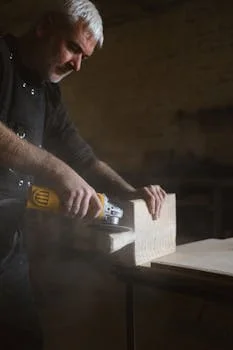
- A woodworking shop making 50 µm sawdust typically pairs a cyclone for bulk removal with a baghouse for fine PM.
- A pharmaceutical plant with 0.5 µm API dust needs a HEPA-grade baghouse for purity and worker exposure control.
- A steel mill with hot, sticky, potentially explosive arc-furnace dust usually favors a Venturi wet scrubber for temperature, moisture, and fume capture.
| Application Scenario | Dust Characteristics | Key Constraints | Recommended System Type | Justification |
|---|---|---|---|---|
| Woodworking Shop | Sawdust (50-200 µm), non-sticky, combustible | Moderate budget, energy efficiency | Cyclone + Baghouse Hybrid | Cyclone for bulk, baghouse for fine PM, handles combustibility with safety features. |
| Pharmaceutical API Production | API powder (0.5-5 µm), highly valuable, toxic | Ultra-high efficiency, product recovery, compliance | HEPA Baghouse | 99.99%+ efficiency for submicron particles, critical for product purity and worker safety. |
| Steel Mill (Arc Furnace) | Hot, sticky, potentially explosive dust, fumes | High temperature, moisture, explosion risk, gas removal | Wet Scrubber (Venturi) | Handles hot, sticky, and explosive dusts; also captures fumes and cools gas. |
| Coal-Fired Power Plant | Fly ash (1-50 µm), high volume, high temperature | Large airflow, high efficiency, low pressure drop | ESP or Pulse Jet Baghouse | ESPs for large volume and low OPEX, baghouses for stringent PM2.5 limits. |
What Dust Collector Works for Food Production?
Food-plant dust control usually needs sanitary-compatible media, moisture tolerance, and combustible-dust controls because flour, sugar, starch, and spice dusts are often sticky and explosible. Dry, free-flowing streams often use stainless or food-grade baghouses with PTFE-coated bags; wet or hygroscopic powders more often need scrubbers or specialized filter media to avoid blinding.
Selection checklist for food plants:
- Confirm Kst/MIE and apply NFPA 660 / prior NFPA 652 DHA controls before finalizing the collector.
- Specify washdown access, drainability, and media that resists oil and sugar blinding.
- Size capture velocity for open conveyors and bag-dump stations (often 0.5–2.5 m/s at the hood).
- Plan for explosion vents or chemical isolation on the dirty-air side when DHA requires it.
- Budget filter change-outs and housekeeping vacuum systems as part of OPEX, not afterthoughts.
- Document cleaning intervals and allergen segregation when the same room handles multiple food dusts.
- Verify that scrubber or washdown wastewater can meet plant sewer limits before choosing a wet path.
Real-World Performance Data: Emission Cuts and Energy Savings
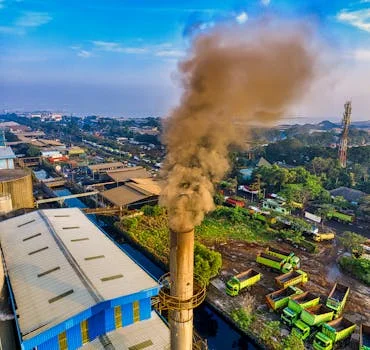
Field upgrades show what correctly matched collectors deliver on stack PM, worker exposure, and fan energy.
- Case Study 1: Coal-fired boiler plant upgrade
A coal-fired boiler plant replaced an aging mechanical collector with a HydropureWater Pulse Jet Baghouse. Outlet PM2.5 fell from 50 mg/Nm³ to consistently below 10 mg/Nm³—an 80% reduction—and stayed inside stringent EPA NSPS-style limits. Optimized pulse cleaning and controls cut fan energy use by 22%.Scrubber slurry with heavy metals was clarified in a High-Efficiency Sedimentation Tank (Lamella Clarifier). Further polishing can use DAF systems or RO systems for zero-liquid-discharge (ZLD) dust collection, including approaches used in industrial wastewater treatment solutions in Australia. - Case Study 3: Cement plant PM10 reduction
A cement plant added a high-efficiency cyclone + ESP hybrid and cut PM10 by 92%, aligning with EU IED 2010/75/EU expectations and avoiding an estimated $1.2 million in annual non-compliance fines.
Baghouses with VFDs on fans can cut fan power 30–50% at lower dust loading. According to DOE 2023 data, a VFD on a 50,000 m³/h system can save about $15,000 per year in electricity. Plants using an integrated FGD scrubber for SO₂ and particulate removal report about 99% SO₂ removal in coal-fired service when the scrubber circuit is sized and controlled for that duty. Where scrubber blowdown needs solids separation before reuse or discharge, a second-stage lamella clarifier for scrubber wastewater treatment keeps suspended solids from recycling into nozzles and pumps.
Common Mistakes in Collector Design and How to Avoid Them
Design errors show up as fugitive dust, bag failures, and permit spikes long before the nameplate efficiency looks wrong on paper.
- Mistake 1: Undersized airflow. About 70% of collector failures trace to wrong airflow or weak capture velocity. A 1 m² hood at 0.5 m/s needs 1,800 m³/h; installing only 1,000 m³/h leaves fugitive emissions. Verify with a pitot traverse against the design Q.
- Mistake 2: Ignoring dust explosivity. Aluminum, coal, flour, and many plastics can explode. Skipping DHA per combustible-dust standards risks catastrophic events. Specify explosion-rated baghouses with vents, isolation, or inerting when the DHA requires them.
- Mistake 3: Overlooking maintenance access. Baghouses with less than 600 mm between filter rows fail filters about four times more often because change-outs get rushed. Modular walk-in plenums pay back in uptime.
- Mistake 4: Mismatched filter media. Polyester softens above about 130°C; fiberglass holds to about 260°C but wears under abrasion. Sticky food or chemical dusts need PTFE-coated bags to limit blinding.
- Mistake 5: No bypass strategy for cleaning. Roughly 15% of dislodged dust can re-entrain during pulse cleaning and spike the stack briefly. Managed cleaning sequences on units such as the HydropureWater baghouse with integrated bypass reduce those spikes.
Who This Is For / Who Should Look Elsewhere / Next Step
This guide is for plant engineers, EPC teams, and procurement managers sizing dry or wet particulate controls for boilers, process vents, food dust, metals fumes, or cement kiln gas. Look elsewhere if you only need a portable shop vac for intermittent cleanup, or if the problem is gas-phase VOCs with almost no particulate.
Cost drivers to freeze before bid: dust PSD and Kst, design airflow at the hood, allowable stack PM, media life at operating temperature, and scrubber wastewater treatment if a wet path is chosen. When you have PSD, airflow, and permit limits in hand, request a dust collection sizing review with those three inputs attached.
Frequently Asked Questions
What collector is most efficient for fine particles (PM2.5)?
Baghouse filters with PTFE-coated media typically reach about 99.9% efficiency down to 0.1 µm, which is why they dominate fine PM2.5 duties. Pulse-jet baghouses can hold outlet loadings below 10 mg/Nm³ on many coal and process streams when air-to-cloth ratio and cleaning are correct. Wet scrubbers still remove 95%+ of submicron particles but add slurry handling and wastewater treatment cost.
How do I calculate the airflow needed for dust capture?
Required airflow is Q = A × V, with Q in m³/h, A the hood area in m², and V the capture velocity in m/s, multiplied by 3,600 when converting from seconds. General dust often uses 0.5–1.0 m/s; toxic fumes may need 10–15 m/s. Example: a 2 m × 1 m welding hood at 12 m/s needs 2 × 12 × 3,600 = 86,400 m³/h.
What is the difference between a cyclone and a baghouse?
Cyclones use centrifugal force to drop coarse particles above about 10 µm at 80–95% efficiency with low maintenance. Baghouses use fabric filtration for 0.1–10 µm dust at 99%+ efficiency and need pulse cleaning plus periodic bag changes. Many plants run a cyclone upstream so the baghouse sees a lower grain loading and longer media life.
How much does plant-scale dust collection equipment cost?
Equipment-only CAPEX commonly falls in these bands: cyclone $50K–$200K (about 1,000–50,000 m³/h), baghouse $200K–$1M (about 10,000–100,000 m³/h), wet scrubber $150K–$500K (about 5,000–50,000 m³/h), and ESP $500K–$2M (about 50,000–200,000 m³/h). Add roughly 20–30% for installation and budget 5–10% of CAPEX per year for energy, media, and maintenance.
What emission and exposure rules apply to industrial dust?
Key benchmarks include EPA NSPS Subpart Da PM limits such as 0.03 lb/MMBtu for older utility boilers, EU IED 2010/75/EU targets near <10 mg/Nm³ PM for many new plants, China GB 13223-2011 values such as <30 mg/Nm³ for thermal power, and OSHA PELs such as 5 µg/m³ Cr(VI) as an 8-hour TWA. Always confirm the facility permit and local rules before locking efficiency guarantees.