Why Industrial RO Systems Outperform Traditional Filtration
An industrial reverse osmosis (RO) system purifies water by forcing pressurized feedwater (150–600 PSI) through semi-permeable membranes, removing up to 99.5% of dissolved salts, heavy metals, and organic contaminants. Unlike simple filtration, RO relies on the solution-diffusion model: water molecules diffuse through polyamide membranes while ions and larger molecules are rejected. For example, a pharmaceutical plant treating 50,000 GPD of feedwater with 2,000 mg/L TDS can achieve permeate with <10 mg/L TDS at 75% recovery, reducing downstream deionization costs by 60%. Traditional mechanical filtration methods, such as sand or multimedia filters, are effective at removing suspended solids and larger particles (typically >10-20 μm). However, they cannot address dissolved ions, such as calcium, magnesium, or sodium, nor can they remove bacteria smaller than 0.2 μm. This limitation leads to issues like boiler scale formation in power plants, which can reduce heat transfer efficiency by up to 15% and necessitate costly chemical treatments and frequent maintenance. The natural force that RO must overcome is osmotic pressure, the tendency for water to move from an area of lower solute concentration to an area of higher solute concentration across a semi-permeable membrane to achieve equilibrium. A textile dyeing facility, for instance, reduced chemical softening costs by 70% after switching from sand filters to RO for process water, as RO effectively removed hardness ions that caused dye inconsistencies. For industries requiring ultrapure water, such as semiconductor manufacturing (where conductivity must be <0.1 μS/cm), RO is the only viable technology capable of achieving these stringent purity levels by removing virtually all dissolved ionic and non-ionic contaminants.
The Physics of Industrial RO: Osmotic Pressure, Membrane Chemistry, and Pressure Requirements
Understanding the fundamental physics governing industrial RO systems is crucial for optimizing performance and anticipating operational parameters. At its core, RO operates by counteracting the natural phenomenon of osmosis. Osmotic pressure (π) is the minimum pressure that needs to be applied to a solution to prevent the inward flow of its pure solvent across a semi-permeable membrane. It can be calculated using the van't Hoff equation: π = iCRT, where i is the van't Hoff factor (representing the number of ions a solute dissociates into), C is the molar concentration of the solute, R is the ideal gas constant, and T is the absolute temperature. This equation highlights how feedwater's dissolved solids content directly influences the pressure required for effective reverse osmosis. For example, feedwater with 500 mg/L TDS typically requires approximately 150 PSI of operating pressure, whereas feedwater with 5,000 mg/L TDS can necessitate pressures up to 600 PSI. The actual separation mechanism within RO membranes is best described by the solution-diffusion model. In this model, both water and solute molecules dissolve into the membrane polymer at the high-pressure side. They then diffuse through the membrane matrix at different rates – water molecules diffuse much more readily than dissolved ions and larger molecules, which are retained. Modern industrial RO systems primarily utilize Thin-Film Composite (TFC) membranes, which offer superior salt rejection (typically 99.5%) compared to older Cellulose Acetate (CA) membranes (around 95%). However, TFC membranes are more susceptible to fouling and chemical degradation at extreme pH levels. A typical TFC polyamide membrane structure consists of a very thin active layer (around 0.2 μm) responsible for separation, supported by a thicker microporous polysulfone layer (approximately 50 μm), all resting on a non-woven fabric backing for structural integrity.
| Feedwater TDS (mg/L) | Approximate Osmotic Pressure (PSI) | Typical RO Operating Pressure (PSI) |
|---|---|---|
| 500 | ~150 | 200 - 300 |
| 2,000 | ~600 | 400 - 500 |
| 5,000 | ~1,500 | 500 - 650 |
Industrial RO System Components: Engineering Specs and Design Parameters
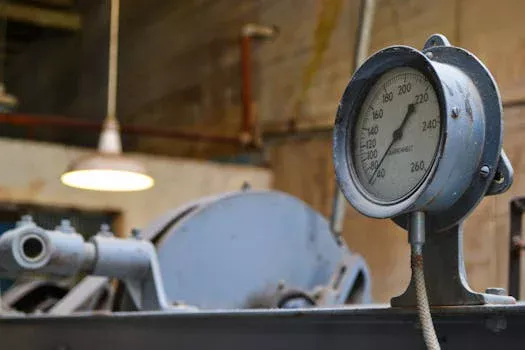
A robust industrial RO system is comprised of several interconnected components, each engineered to specific performance criteria. The primary stages include pre-treatment, the high-pressure pump, membrane housings with TFC membranes, post-treatment, and an integrated control system. Effective pre-treatment is paramount for membrane longevity and performance; this typically involves multi-media filters (MMF) to remove suspended solids and activated carbon filters for chlorine removal, as chlorine can degrade polyamide membranes. For well water or water with high hardness, ion exchange softeners are essential. The target for Surface Water is typically a Silt Density Index (SDI) of <3, while for well water, it's <5. Maintaining feedwater pH between 6.5 and 7.5 is critical to prevent membrane hydrolysis. The heart of the system is the high-pressure pump, usually a multistage centrifugal pump constructed of stainless steel, capable of generating pressures from 150 to 600 PSI, with higher pressure ratings required for feedwater with elevated TDS. These pumps feed the water into membrane housings, which contain spiral-wound RO elements. For systems treating 6,000 to 50,000 GPD, these elements are commonly 4-inch or 8-inch in diameter, with 6 to 8 elements per housing to achieve the desired flow and rejection rates. Post-treatment may include UV sterilization to inactivate any remaining microorganisms or remineralization to adjust permeate pH and alkalinity for specific applications. The control system, typically a Programmable Logic Controller (PLC) with integrated TDS monitoring, manages system operation, pressure, flow, and provides alerts for optimal performance and maintenance scheduling. A typical process flow diagram illustrates this sequence: Feedwater enters the pre-treatment stages, then passes through the high-pressure pump before entering the RO membrane modules. The treated water (permeate) is collected for storage and further post-treatment, while concentrated reject water is discharged.
| Component | Key Engineering Specification | Typical Application Context |
|---|---|---|
| Pre-treatment (MMF/Carbon) | Removes suspended solids and chlorine | Essential for all RO systems to protect membranes |
| Pre-treatment (Softener) | Reduces hardness (Ca, Mg) | Required for feedwater with >5 GPG hardness |
| High-Pressure Pump | 150-600 PSI, Stainless Steel (316L) | Pressure selection based on feedwater TDS and desired permeate flow |
| Membrane Housings | 8-inch diameter, FRP or Stainless Steel | Accommodates 6-8 spiral-wound TFC elements; capacity scales with number of housings |
| TFC Membranes | 99.5% nominal salt rejection, 15 GFD flux | Standard for most industrial applications; specific types for low-fouling or high-rejection |
| Control System (PLC) | TDS monitoring, pressure/flow sensors, automated flush cycles | Ensures stable operation and alerts for maintenance |
Explore HydropureWater industrial RO systems for robust pre-treatment and purification solutions.
Performance Benchmarks: Recovery Rates, Salt Rejection, and Flux by Industry
Achieving optimal performance from an industrial RO system requires understanding key metrics and how they vary across different applications. The recovery rate, defined as the ratio of permeate flow to feedwater flow (Permeate Flow / Feedwater Flow × 100%), is a critical parameter for water conservation and cost-effectiveness. Industrial RO systems typically achieve recovery rates between 50% and 95%, with higher rates being more challenging and often requiring advanced pre-treatment or staged configurations. Salt rejection, a measure of the membrane's effectiveness in separating dissolved salts, is generally very high for TFC membranes, often exceeding 99.5% for monovalent ions and even higher for multivalent ions, as per NSF/ANSI 58 standards. Flux rate, expressed in gallons per square foot per day (GFD), quantifies the volume of water passing through the membrane surface per unit area per day. Standard TFC membranes operate at flux rates of 12–18 GFD; exceeding this can lead to increased fouling and reduced membrane life, while lower flux can reduce throughput. Performance benchmarks vary significantly by industry and feedwater quality. For example, a food processing plant in Shandong treating feedwater with 3,000 mg/L TDS successfully operated its RO system at an 85% recovery rate, achieving 99.2% salt rejection. This resulted in a 40% reduction in wastewater disposal costs by maximizing water reuse. For industries with high purity requirements, such as semiconductor manufacturing, recovery rates might be lower (e.g., 60-75%) to ensure extremely low permeate TDS, while industries focused on wastewater reuse might prioritize higher recovery rates. For applications requiring ultra-pure water, multiple passes of RO may be employed, or RO may be followed by deionization (DI) systems.
| Industry | Typical Feedwater TDS (mg/L) | Typical Recovery Rate (%) | Typical Salt Rejection (%) |
|---|---|---|---|
| Power Generation (Boiler Feed) | 100 - 500 | 75 - 90 | 98.5 - 99.5 |
| Food & Beverage | 500 - 1,500 | 70 - 85 | 98.0 - 99.2 |
| Pharmaceuticals | 200 - 1,000 | 75 - 90 | 99.0 - 99.5 |
| Semiconductor Manufacturing | 50 - 200 | 60 - 75 (often multi-pass) | 99.5+ |
| Desalination (Brackish Water) | 1,000 - 5,000 | 40 - 60 | 98.0 - 99.0 |
RO vs. Alternative Technologies: When to Choose Reverse Osmosis
Selecting the appropriate water treatment technology hinges on a detailed analysis of feedwater quality and the specific treatment objectives. Reverse osmosis (RO) excels at removing dissolved salts, heavy metals, and a wide range of organic contaminants, achieving permeate purity often below 10 mg/L TDS. Membrane Bioreactors (MBR), on the other hand, are primarily designed for wastewater treatment and reuse, effectively removing suspended solids, biochemical oxygen demand (BOD), and bacteria through a combination of biological treatment and membrane filtration. MBRs do not significantly reduce dissolved salts. Therefore, RO is preferred for producing ultrapure water, such as in pharmaceutical manufacturing or boiler feed applications, while MBRs are more suited for treating challenging wastewater streams for reuse in irrigation or industrial cooling. Dissolved Air Flotation (DAF) systems are highly effective at removing suspended solids, oils, greases, and some colloidal matter by introducing micro-bubbles that attach to contaminants and float them to the surface for skimming. DAF is not designed for removing dissolved contaminants. RO becomes essential when feedwater TDS exceeds approximately 500 mg/L and significant salt reduction is required. Ion exchange (IX) is another technology capable of producing very high-purity water, achieving conductivity levels below 0.1 μS/cm, comparable to RO followed by DI. However, IX systems require periodic regeneration with strong acids and bases, leading to significant chemical consumption and wastewater generation. RO is generally more cost-effective for feedwater TDS above 1,000 mg/L due to lower operating costs and less chemical usage compared to IX regeneration.
| Technology | TDS Removal (%) | Suspended Solids Removal (%) | Bacteria Removal (%) | Chemical Usage | Approx. OPEX ($/1,000 GPD) |
|---|---|---|---|---|---|
| RO | 95 - 99.5 | 90 - 98 (with pre-treatment) | 99.9+ | Low (cleaning chemicals) | 0.50 - 2.00 |
| MBR | 0 - 10 | 95 - 99.9 | 99.9+ | Moderate (biological nutrients, disinfectants) | 1.00 - 3.00 |
| DAF | 0 - 5 | 90 - 98 | Moderate (depends on coagulants/flocculants) | High (coagulants, flocculants, air) | 0.75 - 2.50 |
| Ion Exchange | 99.9+ (for specific ions) | 95 - 99 (with pre-treatment) | 99.9+ | High (regeneration chemicals: acids/bases) | 1.50 - 4.00 (excluding regeneration chemicals) |
For advanced wastewater reuse, consider HydropureWater's membrane bioreactor systems. For applications requiring suspended solids removal, explore our dissolved air flotation (DAF) machines.
Operating Costs and ROI: How to Calculate the True Cost of Industrial RO
Evaluating the financial viability of an industrial RO system involves a comprehensive assessment of both capital expenditure (CAPEX) and operational expenditure (OPEX). CAPEX for RO systems can range significantly, typically from $10,000 to $50,000 per 1,000 GPD of capacity, with pre-treatment accounting for an additional 20–30% of the total CAPEX, and installation costs typically between 10–15%. OPEX is driven by several key factors: energy consumption, membrane replacement, chemical usage, and labor. Energy typically constitutes 40–50% of OPEX, with consumption ranging from 0.5 to 1.5 kWh per 1,000 gallons treated, heavily influenced by feedwater TDS and the required operating pressure. Membrane replacement is another significant cost, accounting for 20–30% of OPEX, with TFC membranes having a lifespan of 3–5 years and replacement costs ranging from $0.10 to $0.30 per 1,000 gallons treated. Chemical usage (10–20% of OPEX) primarily involves cleaning agents for membrane maintenance. Labor costs typically represent 5–10% of OPEX. A practical approach to calculating ROI involves a detailed spreadsheet model that accounts for feedwater TDS, flow rate, local energy costs, membrane replacement intervals, and projected savings from reduced chemical usage, water purchase, or wastewater disposal. For instance, a semiconductor fab in Jiangsu reduced its ultrapure water production costs by 35% by transitioning from ion exchange to RO, achieving a payback period of just 2.1 years due to lower energy and chemical consumption despite higher initial CAPEX. This demonstrates how a thorough ROI analysis, considering all cost components, can justify the investment in advanced RO technology.
Frequently Asked Questions
Q: How does feedwater quality impact RO system design and operating pressure?
Feedwater quality, particularly its Total Dissolved Solids (TDS) concentration, is the primary driver for RO system design. Higher TDS levels necessitate higher operating pressures to overcome osmotic pressure, and may require more robust pre-treatment to prevent rapid membrane fouling. For example, feedwater with 5,000 mg/L TDS requires significantly higher pressures and more intensive pre-treatment than feedwater with 500 mg/L TDS. Learn more about membrane fouling prevention in our RO maintenance guide.
Q: What is the typical lifespan of RO membranes?
The lifespan of RO membranes varies based on feedwater quality, operating conditions, and maintenance practices. Under optimal conditions and with effective pre-treatment, Thin-Film Composite (TFC) membranes typically last between 3 to 5 years. Factors like high SDI, chlorine exposure, or extreme pH can significantly shorten this lifespan. Regular cleaning and monitoring are essential for maximizing membrane longevity.
Q: How can I minimize operating costs for an industrial RO system?
Minimizing operating costs involves optimizing energy consumption through efficient pump selection and operation, maximizing recovery rates where feasible, implementing robust pre-treatment to extend membrane life and reduce cleaning frequency, and adhering to a proactive maintenance schedule. Energy recovery devices can also significantly reduce power consumption, especially in high-pressure desalination applications. Consider automated chemical dosing for RO pre-treatment to ensure precise chemical application and reduce waste.
Q: What are the primary causes of membrane fouling in RO systems?
The most common causes of membrane fouling in RO systems include scaling (precipitation of mineral salts like calcium carbonate or calcium sulfate), organic fouling (accumulation of organic matter), biological fouling (growth of microorganisms), and colloidal fouling (clogging by fine suspended particles). Effective pre-treatment, including softening, filtration, and biocides where necessary, is critical for preventing these issues.
Q: When should I consider a Zero Liquid Discharge (ZLD) system instead of just RO?
A ZLD system is typically considered when regulatory requirements mandate the elimination of liquid wastewater discharge, or when the concentrate from RO is too high in dissolved solids or contains hazardous materials that cannot be discharged. RO is often a crucial pre-treatment step in ZLD systems, reducing the volume of water that needs further treatment (e.g., evaporation or crystallization) to achieve zero discharge. Explore Zero Liquid Discharge (ZLD) systems for industrial wastewater in detail.
Q: How is Polyamide (PAM) dosing relevant to RO pre-treatment?
Polyamide (PAM) is a type of flocculant that can be used in conjunction with coagulation in pre-treatment stages for RO systems. Its purpose is to agglomerate very fine suspended particles and colloidal matter, making them larger and easier to remove by downstream filtration (e.g., multimedia filters). This enhances the effectiveness of pre-treatment, protecting the RO membranes from fouling and improving overall system performance. Learn more about PAM dosing for pre-treatment.
Related Equipment
- HydropureWater industrial RO systems — view specifications, capacity range, and technical data
- automated chemical dosing for RO pre-treatment — view specifications, capacity range, and technical data
Need a customized solution? Request a free quote with your specific flow rate and pollutant parameters.