PAM dosing systems for wastewater treatment require precise engineering to balance flocculation efficiency and chemical costs. Key specifications include dosing accuracy (±1.5%), preparation concentration (0.1–0.5% PAM), and capacity (up to 3000 L/h for industrial systems). Modern units integrate PLC-controlled metering pumps, jet mixers for powder dissolution, and level switches to prevent overflow. For example, a textile plant processing 500 m³/h of wastewater with 300 mg/L TSS may require a 10 kg/h PAM powder feed system to achieve 90% solids removal at 0.3 mg/L dosage. Compliance with ISO 9001:2015 and local discharge limits (e.g., China’s GB 18918-2002) further dictates material selection (PVC or stainless steel) and control redundancy.
How PAM Dosing Systems Work: Process Flow & Key Components
PAM dosing systems utilize a three-stage maturation process to transform raw polyacrylamide into a functional flocculant solution, with dissolution times typically ranging from 45 to 90 minutes depending on water temperature and agitator speed. This mechanical sequence ensures that the long-chain polymer molecules are fully hydrated without being sheared or degraded, which is essential for effective bridge-flocculation in secondary treatment or sludge dewatering.
The process begins with dry powder pre-infiltration. A specialized jet mixer utilizes a high-velocity water stream to break up the polymer powder as it enters the tank. This mechanism is critical because it prevents the formation of "fish eyes"—undissolved lumps of polymer that are dry on the inside. According to field data, high-efficiency jet mixers increase the contact area between water and powder, reducing overall dissolution time by up to 40% compared to traditional top-entry hoppers. Once the powder is wetted, it enters the dissolution stage, where agitators maintain a preparation concentration between 0.1% and 0.5%. Finally, the metering stage employs PLC-controlled PAM dosing systems for precise flocculation to deliver the matured solution to the wastewater stream at rates typically between 0.03 and 0.5 mg/L.
Safety and automation are managed through a series of level switches. The maximum level switch stops the powder feed and water inlet to prevent tank overflow, while a low-level switch protects the metering pumps from dry running. An overflow level switch is also integrated into the system design; if reached, it immediately shuts down the unit and closes the solenoid valves to prevent unmixed polymer from entering the drain (HydropureWater field data, 2025). When evaluating systems, engineers must choose between dry powder and liquid PAM configurations based on storage and operational priorities.
| Feature | Dry Powder PAM Systems | Liquid/Emulsion PAM Systems |
|---|---|---|
| Storage Cost | Lower; powder is concentrated and stable. | Higher; requires larger tanks for bulk liquid. |
| Preparation Complexity | High; requires jet mixer and maturation time. | Low; simple dilution via static mixer. |
| Chemical Shelf Life | 12–24 months in dry conditions. | 3–6 months; prone to phase separation. |
| Equipment CapEx | Higher due to powder handling mechanics. | Lower; simplified pump and tank setup. |
| Best For | High-flow industrial/municipal plants. | Small-scale or intermittent operations. |
PAM Dosing System Specifications: Engineering Data & Compliance Standards
Engineering specifications for industrial PAM dosing systems dictate a maximum preparation concentration of 0.5%, as higher levels significantly increase solution viscosity, leading to excessive torque on agitator motors and potential pump cavitation. To ensure system longevity and operational accuracy, procurement managers must evaluate equipment against a standardized set of technical parameters and international compliance frameworks.
Material selection is a primary consideration in these specifications. PVC is frequently used for its corrosion resistance and cost-effectiveness in standard municipal applications. However, for high-pressure systems or food-grade environments, 304 or 316 stainless steel is preferred. Control modes further differentiate system performance: while manual systems rely on mechanical stroke adjustment of the pump, fully automatic systems utilize PLC integration with flowmeter feedback to adjust dosing in real-time based on influent wastewater volume. This level of automation is often required to meet strict discharge limits, such as China's GB 18918-2002 or US EPA 40 CFR Part 133 standards for secondary treatment.
| Parameter | Standard Range / Value | Engineering Note |
|---|---|---|
| Dosing Accuracy | ±1.5% | Critical for chemical cost control in high-flow plants. |
| Preparation Concentration | 0.1% – 0.5% | Optimal range for flocculant maturation and viscosity. |
| Powder Feed Capacity | 1 – 15 kg/h | Scalable based on wastewater TSS load. |
| Solution Tank Capacity | 500 – 3000 L | Must allow for 45–60 min retention time. |
| Agitator Speed | 150 – 300 RPM | Prevents polymer chain shearing while ensuring mix. |
| Operating Temperature | 5°C – 40°C | Dissolution efficiency drops below 10°C. |
| Material Compliance | PVC / SS304 / SS316 | Selected based on chemical compatibility and hygiene. |
| Control Interface | PLC + Touch Screen | Supports Modbus/Ethernet for remote monitoring. |
The preparation concentration has a direct impact on flocculation efficiency. Research indicates that concentrations below 0.2% may require significantly longer mixing times to achieve the same floc strength as a 0.3% solution. Conversely, exceeding 0.4% risks "polymer aging," where the solution becomes too viscous to disperse evenly in the wastewater, leading to wasted chemicals and poor solids separation (per industry benchmarks, 2025).
Selecting the Right PAM Dosing System: Capacity, Control, and Cost Trade-offs
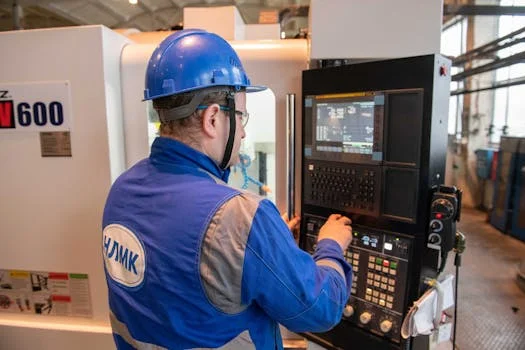
Selecting an appropriately sized PAM dosing system requires a calculation of the peak polymer demand, where the system capacity (L/h) must equal the product of the wastewater flow rate and the target dosage divided by the preparation concentration. Failure to size the system for peak loads can lead to inadequate flocculation during high-flow events, resulting in permit violations and increased downstream maintenance.
To calculate the required capacity, engineers should use the following formula: Capacity (L/h) = (Flow Rate [m³/h] × Target Dosage [g/m³]) / Preparation Concentration (%). For example, a facility processing 500 m³/h with a target dosage of 0.3 mg/L (0.3 g/m³) using a 0.2% solution would require a system capacity of 75 L/h of prepared solution. When optimizing PAM dosing for sludge dewatering applications, the dosage is often much higher, requiring larger capacity tanks and more robust metering pumps.
| Operational Scale | Wastewater Profile | Recommended System Spec |
|---|---|---|
| Small/Pilot | <50 m³/h flow, Low TSS | Manual/Semi-auto; 500L tank; 1–2 kg/h feed. |
| Medium Industrial | 100–300 m³/h, Variable TSS | PLC-controlled; 1000–2000L tank; 5 kg/h feed. |
| Large Municipal/Heavy Ind. | >500 m³/h, High TSS | Fully Auto; 3000L+ tank; 10–15 kg/h feed; feedback loop. |
The trade-off between CapEx and OpEx is a vital part of the decision framework. Dry powder systems typically carry a 20-30% higher initial investment due to the complexity of the powder hopper and jet mixer. However, because PAM powder costs approximately $2–$5/kg compared to $5–$10/kg for the equivalent active polymer in liquid form, the ROI for dry systems is often achieved within 12–18 months in high-capacity plants. For more on how these systems integrate with treatment stages, see how DAF systems integrate with PAM dosing for food industry compliance.
Real-World Application Data: PAM Dosing for Industrial Wastewater
Real-world data from textile wastewater treatment indicates that a PAM dosage of 0.3 mg/L consistently achieves a 90% reduction in Total Suspended Solids (TSS) when integrated with secondary clarification or flotation. These benchmarks allow facility operators to validate their system performance against industry standards and identify opportunities for chemical cost savings.
In the pulp and paper industry, PAM dosing is integral to fiber recovery. A dosage of 0.4 mg/L in DAF systems optimized for PAM flocculation in high-TSS wastewater can achieve up to 95% fiber recovery. This not only reduces waste but provides a direct economic benefit by returning fiber to the production cycle. In food processing, where hygiene is paramount, liquid PAM systems are often preferred to avoid dust from powder handling. A 0.2 mg/L dosage in these environments typically reduces Fats, Oils, and Grease (FOG) by 85%, ensuring compliance with municipal sewer codes.
| Industry | Influent TSS (mg/L) | PAM Dosage (mg/L) | Removal Efficiency (%) | Est. Chemical Cost ($/m³) |
|---|---|---|---|---|
| Textile | 300 – 500 | 0.3 – 0.5 | 90% TSS / 60% COD | $0.0015 – $0.0025 |
| Pulp & Paper | 800 – 1200 | 0.4 – 0.6 | 95% Fiber Recovery | $0.0020 – $0.0030 |
| Food Processing | 200 – 400 | 0.2 – 0.4 | 85% FOG Reduction | $0.0010 – $0.0020 |
| Municipal Sludge | 2% – 4% solids | 2.0 – 5.0 | 98% Capture Rate | $0.0100 – $0.0250 |
Chemical costs remain the largest variable in OpEx. Based on 2025 market rates for PAM powder ($3–$5/kg), the treatment cost for most industrial applications ranges from $0.0015 to $0.003 per cubic meter of wastewater. Systems that lack precision dosing or fail to maintain proper maturation times can see these costs rise by 20% or more due to chemical wastage.
Troubleshooting PAM Dosing Systems: Common Failures & Solutions
Inaccurate PAM dosing often stems from a deviation in metering pump stroke calibration, which should be maintained at a tolerance of ±1.5% to prevent chemical waste and ensure discharge compliance. Operators should perform a drawdown test monthly to calibrate the pump against actual solution displacement. If dosing remains inconsistent, check the flowmeter feedback loop and inspect pump diaphragms for wear; these components typically require replacement every 6 to 12 months depending on the chemical grade used.
Clogging is the most frequent maintenance issue in dry powder systems. The jet mixer nozzles should be cleaned weekly to prevent buildup. In plants processing high-TSS wastewater, daily inspections may be necessary. To further mitigate this risk, install a 0.5 mm mesh pre-filter on the powder feed line. Polymer aging is another concern; PAM powder must be stored in cool, dry conditions (under 30°C) to prevent clumping. For liquid PAM, monitor the shelf life (3–6 months) and test the solution viscosity monthly. A target viscosity of 1000–3000 cP is standard for a matured 0.25% solution.
Poor flocculation performance, even when dosing volume is correct, usually points to improper preparation. Ensure the preparation concentration is within the 0.1–0.5% range and that the maturation time is at least 30 to 45 minutes. If the flocs are small or fragile, the agitator speed may be too high, causing polymer chain shearing; adjust the VFD to maintain a speed between 150 and 300 RPM. Finally, verify the functionality of all level switches quarterly. A faulty float switch can lead to tank overflows or "dry firing" of the metering pumps, both of which cause significant operational downtime.
Frequently Asked Questions
What is the optimal PAM preparation concentration for wastewater treatment?The optimal concentration is 0.1–0.5%, with 0.2–0.3% being the most common for industrial applications. Concentrations below 0.2% require excessive tank volume and mixing time, while concentrations above 0.4% lead to high viscosity, reduced dispersion efficiency, and potential equipment strain.
How do I calculate the required PAM dosage for my facility?Use the formula: (Wastewater Flow Rate [m³/h] × Target Dosage [mg/L]) / Preparation Concentration (%). For example, 100 m³/h at 0.5 mg/L dosage with a 0.25% solution requires 20 L/h of prepared PAM solution. Always size the system for peak flow rather than average flow.
How often should a PAM dosing system be maintained?Jet mixer nozzles and powder hoppers should be inspected weekly. Metering pump calibration and level switch testing should occur monthly. Agitator seals and pump diaphragms generally require replacement every 6–12 months to maintain the ±1.5% dosing accuracy required for cost-effective operation.
Can I use the same dosing system for PAC and PAM?While the mechanical components are similar, PAC (Polyaluminum Chloride) and PAM have different viscosities and corrosive properties. A PAM system is specifically designed for high-viscosity fluids and includes maturation tanks. Using a PAM unit for PAC is possible but often inefficient; however, a PAC unit rarely has the torque or maturation capacity required for PAM.