What Cooling Tower Blowdown Recycling Delivers on Spec
Cooling tower blowdown recycling recovers 70–99% of blowdown volume as reuse water when pretreatment, membrane desalting, and concentrate handling match feed chemistry. Typical blowdown TDS runs 1,500–10,000 mg/L. Standalone reverse osmosis (RO) usually recovers 70–85% of ultrafiltration (UF) permeate; UF+RO or UF+electrodialysis reversal (EDR) hybrids commonly reach 90–95%, with selected trains reporting up to 99% after thermal polishing of reject.
According to the UN Water 2023 report, an estimated 40% of industrial facilities face significant water restrictions by 2025. Industrial sites now treat blowdown reuse as a permit and cost decision.1319(d) are $68,445 per day for penalties assessed on or after January 8, 2025 (EPA, 2025). A 100 MW plant that recycles about 200 m³/d of blowdown has shown roughly $120,000/yr freshwater savings in 2024 industry benchmarks. Missed discharge limits bring fines, permit pressure, and makeup-water curtailment risk.
Blowdown Water Composition: What’s in Your Cooling Tower Discharge?
Blowdown chemistry sets the treatment train. Dissolved solids commonly fall between 1,500 and 10,000 mg/L, with calcium at 200–800 mg/L and silica at 50–150 mg/L. Residual bromine or chlorine can remain from biocide programs. An Langelier Saturation Index (LSI) above 0.5 signals elevated calcium carbonate scaling risk on heat-transfer surfaces. Chloride above 500 mg/L, common at coastal or chemically loaded sites, accelerates pitting on stainless alloys, as noted in ASHRAE 2024 guidance. Power plants often carry higher mineral loads; data centers usually show a narrower dissolved-solids spectrum but still need accurate lab data before membrane selection.
| Contaminant | Typical Range (mg/L) | Impact on System | Industry Example |
|---|---|---|---|
| Total Dissolved Solids (TDS) | 1,500 – 10,000 | Scaling, increased conductivity, reduced heat transfer | Power generation, chemical processing |
| Calcium (Ca²⁺) | 200 – 800 | Calcium carbonate scaling (high LSI risk) | All industries |
| Silica (SiO₂) | 50 – 150 | Silica scaling, difficult to remove | Power generation, refineries |
| Chlorides (Cl⁻) | 100 – 1,000+ | Corrosion, especially pitting in stainless steel | Coastal facilities, chemical plants |
| Biocides (e.g., Bromine, Chlorine) | Residuals present | Membrane degradation, potential toxicity | All industries |
How Blowdown Recovery Trains Are Engineered Step by Step
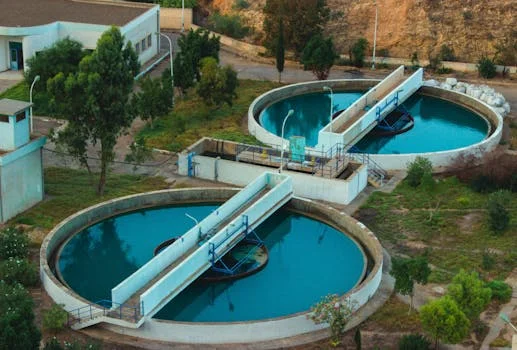
Most plants we size for intermittent blowdown start with collection and equalization, not the RO skid. Sump volume, surge control, and cooling keep influent below about 35°C so thin-film composite RO membranes stay within design flux. Pretreatment then removes grit and oxidants: multi-media filters target 10–20 μm solids, and activated carbon strips residual chlorine that would oxidize polyamide membranes. For integrated clarification and filtration ahead of desalting, HydropureWater’s pre-treatment systems for cooling tower blowdown are a common plant-room package.
UF hollow-fiber stages (0.02–0.1 μm) typically remove up to 99% TSS at 50–80 LMH flux and protect the RO or EDR stage. Two-pass or two-stage RO on UF permeate recovers 70–85% when antiscalant is dosed at about 3–5 mg/L and clean-in-place intervals match SDI trends. Post-treatment returns pH to 7.0–8.5 and often applies chlorine dioxide at 0.5–1.0 mg/L before reuse as tower makeup. Reject management decides whether the site stops at high recovery or moves to zero liquid discharge (ZLD) via evaporation ponds or crystallizers. Stable antiscalant and pH control is easier with PLC-controlled chemical dosing for antiscalants and pH adjustment.
How Do Data Centers Recycle Cooling Water?
Data centers recycle cooling-tower blowdown by treating a concentrated mineral stream and returning permeate as tower makeup, cutting municipal supply volume. Compared with heavy-industry blowdown, many halls run cleaner organics but still concentrate silica and hardness as cycles of concentration rise. For campus-scale reuse targets near 99% recovery, see data center blowdown water reuse engineering specs. Liquid-cooled halls add a different wastewater matrix; those loads are covered in data center liquid cooling wastewater treatment specs.
CapEx and OPEX for hall-level reclaim differ from power-plant ZLD trains. When you need a data-hall cost lens rather than a generic industrial model, use the sibling brief on cooling tower blowdown recovery system capex opex cost data center. Indian sites comparing purified recycle against municipal tariff should model local water price, reject haulage, and power tariff before locking recovery above 90%.
Technology Comparison: RO vs. UF vs. Electrodialysis for Blowdown Recycling
RO trains fit blowdown with TDS typically below 3,000 mg/L and deliver 70–85% recovery when scaling indices stay controlled. UF alone removes suspended solids—about 90% TSS in many pre-treatment roles at 50–80 LMH—but does not cut dissolved salts. EDR suits higher TDS feeds, often 5,000–10,000 mg/L, with 85–90% recovery and lower chemical demand than RO on saline streams. Hybrid UF+RO commonly reaches 90–95% recovery below about 5,000 mg/L TDS; UF+EDR is used above 5,000 mg/L when ZLD pressure is high. Indicative treated-water OPEX often falls near $0.50–$1.00/m³ for RO and $0.40–$0.80/m³ for EDR under comparable duty. HydropureWater’s HydropureWater’s industrial RO systems for blowdown recycling cover many low-to-medium TDS duties; the JY Series packages pretreatment where solids load is unstable.
| Technology | Typical TDS Range (mg/L) | Typical Recovery Rate (%) | Primary Application | Approx. CapEx/m³ | Approx. OPEX/m³ | Key Advantage | Key Disadvantage |
|---|---|---|---|---|---|---|---|
| Reverse Osmosis (RO) | < 3,000 | 70 – 85 | High purity makeup water, low-medium TDS | $$$ | $0.50 – $1.00 | High purity output, compact footprint | Prone to scaling, requires extensive pre-treatment |
| Ultrafiltration (UF) | N/A (Removes TSS) | 99% TSS removal | Pre-treatment, suspended solids removal | $$ | $0.10 – $0.25 | Effective pre-treatment, robust | No TDS reduction |
| Electrodialysis Reversal (EDR) | 5,000 – 10,000+ | 85 – 90 | High TDS blowdown, ZLD applications | $$$$ | $0.40 – $0.80 | Handles high salinity, lower chemical usage | Higher CapEx, sensitive to fouling |
| UF + RO Hybrid | < 5,000 | 90 – 95 | High recovery, challenging water quality | $$$$ | $0.60 – $1.20 | Maximizes water recovery | Complex system, higher CapEx |
| UF + EDR Hybrid | > 5,000 | 90 – 98 | Very high TDS, ZLD | $$$$$ | $0.50 – $0.90 | Optimal for extreme TDS, high recovery | Highest CapEx, complex |
Cost Breakdown: CapEx, OPEX, and ROI for Blowdown Recycling Systems
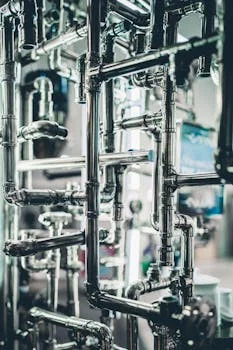
For a typical 50 m³/h train, CapEx often lands at $250,000–$500,000 for UF+RO and $350,000–$600,000 for UF+EDR, including install and commissioning. OPEX is usually dominated by energy (40–50%), then chemicals (20–30%), membrane replacement (15–25%), and labor (10–15%). RO elements on a 50 m³/h skid are commonly replaced every 3–5 years at about $15,000–$30,000. A 100 m³/h system saving about $0.80/m³ on freshwater often shows 18–24 month payback when utilization is high. Energy-recovery devices and automated dosing cut the chemical share; detailed industrial benchmarks are summarized in cost benchmarks for industrial water treatment systems.
| Cost Component | Typical Percentage of OPEX | Notes |
|---|---|---|
| Energy | 40 – 50% | Dominant cost, influenced by pumping head and recovery rate |
| Chemicals (Antiscalants, Cleaners) | 20 – 30% | Essential for membrane longevity and performance |
| Membrane Replacement | 15 – 25% | Frequency depends on water quality and operational practices |
| Labor & Maintenance | 10 – 15% | Includes operator oversight, routine checks, and repairs |
| Waste Disposal (if applicable) | Variable | Applies to systems not achieving ZLD |
What ZLD Recovery Benchmarks Apply?
ZLD benchmark ranges for blowdown reuse typically target 90–99% water recovery, near-zero liquid discharge from the site boundary, and reuse of permeate as cooling makeup or service water. Membrane stages alone rarely finish the last 5–15% of volume; evaporators or crystallizers handle the final brine. Field checks outside power plants still show real water cuts. According to GSA and NREL reporting on a courthouse blowdown recovery trial, blowdown volume fell 53% and overall water use fell 16% (GSA/NREL, 2023). Pushing from 90% to 99% recovery raises CapEx and energy sharply, so most plants we size for stay at the lower end unless discharge is banned.
Case Study: 99% Water Recovery in a Power Plant Blowdown System
A 500 MW coal-fired plant in Texas faced 2024 blowdown at about 8,500 mg/L TDS and 120 mg/L silica. The site installed a UF+EDR train with antiscalant at 4 mg/L and automated pH control. Reported results were 99% water recovery and 95% TDS reduction, about $450,000/yr freshwater savings, and elimination of discharge violations during the reported operating window. Pilot testing on high-silica water and continuous fouling monitoring were the two operating lessons the plant team flagged as non-negotiable.
What Is Smart Blowdown Recovery?
Smart blowdown recovery means pairing membrane trains with online conductivity, SDI, and dosing feedback so recovery setpoints track actual scaling risk instead of a fixed timer. PLC-linked antiscalant and pH loops reduce under-dose scaling and over-dose chemical waste. Most plants we commission start with conservative recovery, then raise it only after two to four weeks of stable differential pressure. Adjacent data-center reclaim write-ups reuse similar 2025 engineering language. Compare cooling tower blowdown recycling: 2025 engineering specs, 99% recovery & cost-optimized zld systems — HydropureWater — industrial wastewater treatment.
How to Select the Right Blowdown Recycling System: A 5-Step Decision Framework
Selection fails when teams skip chemistry. Work this checklist in order:
- Full water analysis for TDS, silica, hardness, metals, and biocide residuals (lab or verified online sensors).
- Recovery target tied to reuse duty: ~70% may suit RO alone; ≥90% usually needs UF+RO, UF+EDR, or thermal polishing.
- Technology match using the comparison table above for TDS band and OPEX band.
- Compliance check against EPA and local NPDES or pretreatment limits before ordering membranes.
- Vendor proof: pilot data on your water, membrane warranty terms, and documented uptime—not a brochure curve.
- Concentrate plan: sewer, deep well, evaporation pond, or crystallizer costed for the last 5–15% volume.
- OPEX model with energy tariff, chemical unit cost, and 3–5 year membrane replacement included.
Plant engineers comparing membrane options for cooling tower blowdown recycling should also review HydropureWater’s industrial RO systems for blowdown recycling. High-purity recycle lessons from electronics plants also transfer when silica is the limiter; see advanced wastewater recycling for high-purity applications.
Who This Is For / Next Step
This page is for plant engineers, EPC process leads, and procurement teams sizing industrial or municipal cooling-tower blowdown reuse. Look elsewhere if you only need once-through cooling with unlimited discharge capacity and no water-cost pressure. To size a train against your TDS, silica, and recovery target, send duty data through our blowdown recycling inquiry form and we will return a process block diagram with CapEx/OPEX bands.
Frequently Asked Questions
What recovery rate should I expect from blowdown reuse systems?
Modern UF+RO or UF+EDR trains typically recover 90–99% of blowdown volume when pretreatment and antiscalant control match the feed. Standalone RO on UF permeate more often lands at 70–85%. The last few percent to ZLD almost always need evaporation or crystallization, which dominate energy cost.
How does silica change blowdown recycling technology choice?
Silica above about 100 mg/L often forces specialized antiscalants, lower recovery, or ion-exchange pretreatment before RO or EDR. Uncontrolled silica scales are hard to clean and cut membrane life. Most high-silica plants we size for run recovery at the conservative end until pilot data confirms stable flux.
What are the main cost drivers for blowdown recycling systems?
Energy usually takes 40–50% of OPEX, chemicals 20–30%, and membrane replacement 15–25% on a well-run plant. CapEx for a 50 m³/h UF+RO package commonly spans $250,000–$500,000 installed. Payback tracks local freshwater price and whether reject disposal fees disappear under high recovery.
Can blowdown recycling systems achieve zero liquid discharge?
Yes. ZLD is achievable when RO or EDR is paired with evaporators or crystallizers for the final concentrate. Feasibility hinges on climate for ponds, power price for thermal steps, and whether regulators ban liquid discharge. Many sites stop at 90–95% recovery when sewer or deep-well options remain legal and cheaper.
What EPA rules apply to cooling tower blowdown discharge?
Cooling tower blowdown is regulated under the Clean Water Act through NPDES permits and, for some sectors, effluent guidelines. Limits focus on TDS-related parameters, metals, and residual treatment chemicals and vary by receiving water and industry category. Civil penalty maxima are inflation-adjusted in 40 CFR Part 19; facilities must meet their specific permit, not a single national TDS number.