Why Australian Industrial Facilities Need Wastewater Treatment Upgrades in 2025
In 2025, industrial wastewater treatment in Australia requires compliance with stringent EPA and state regulations, including ANZECC guidelines for discharge limits (e.g., TSS < 30 mg/L, COD < 125 mg/L for most industries). Facilities in food processing, mining, and oil & gas sectors rely on technologies like dissolved air flotation (DAF) for 92-97% TSS removal or membrane bioreactors (MBR) for near-reuse-quality effluent (<1 μm filtration). Australian-made systems from providers offer turnkey solutions with 20-35 years of proven performance, but equipment selection depends on influent characteristics, footprint constraints, and budget—with CAPEX ranging from AUD 200,000 for compact DAF systems to AUD 2M+ for large-scale MBR plants.
NSW EPA data from 2024 indicates that regulatory breaches now result in fines exceeding AUD 120,000 per incident, creating a significant financial risk for aging facilities. Beyond punitive measures, the Waterform 2025 report highlights that 40% of Australian industrial facilities are now under mandatory requirements to recycle 30-50% of their process water due to increasing scarcity and rising Tier 1 water costs. For a food processing plant in Victoria, exceeding Total Suspended Solids (TSS) limits recently resulted in a AUD 250,000 fine; however, by upgrading to DAF systems for high-efficiency TSS and FOG removal, the facility achieved 95% removal efficiency and reached a full payback on the investment within 18 months through reduced trade waste charges and water reuse.
Industry-specific contaminants present unique engineering challenges that traditional systems often fail to address. Food processing effluent frequently contains Fats, Oils, and Grease (FOG) concentrations between 500 and 10,000 mg/L, while mining operations must manage heavy metals like arsenic at levels exceeding 0.1 mg/L. In the oil and gas sector, Total Petroleum Hydrocarbons (TPH) often exceed 10 mg/L, necessitating advanced separation technology. Upgrading to modern, automated systems is no longer just a compliance measure but a critical strategy for operational continuity and cost management in the Australian industrial landscape.
Australian Wastewater Treatment Regulations: EPA Standards and State-Specific Compliance
The ANZECC 2025 guidelines provide the primary national framework for industrial discharge, setting baseline limits such as TSS < 30 mg/L and COD < 125 mg/L for the majority of industrial sectors. However, state-specific variations introduce additional layers of complexity; for instance, the NSW EPA enforces stricter limits for facilities located within sensitive catchments, while the Victoria EPA has implemented mandatory recycling targets for high-water-use industries. Navigating these requirements requires a detailed understanding of the permitting process, which mirrors NPDES-style applications, including rigorous monitoring and reporting schedules.
| Parameter | General Industrial Limit (ANZECC) | Food Processing (Typical) | Mining/Heavy Industry | Oil & Gas (Typical) |
|---|---|---|---|---|
| TSS (mg/L) | < 30 | < 50 | < 30 | < 20 |
| COD (mg/L) | < 125 | < 250 (Site specific) | < 150 | < 100 |
| BOD5 (mg/L) | < 20 | < 30 | N/A | < 15 |
| FOG (mg/L) | < 10 | < 50 | < 5 | < 10 (TPH) |
| Heavy Metals (mg/L) | < 0.1 (As, Cd, Pb) | N/A | < 0.05 - 0.1 | N/A |
Failure to meet these standards results in escalating penalties. In Queensland, recent EPA enforcement actions against a manufacturing site involved daily fines until compliance was proven via third-party auditing. The permitting process involves a detailed characterization of the wastewater stream, an assessment of the receiving environment, and the submission of a comprehensive management plan. For many facilities, achieving these limits requires a multi-stage approach, often combining primary physical separation with secondary biological treatment or tertiary chemical polishing.
Industrial Wastewater Treatment Technologies: How They Work and When to Use Them
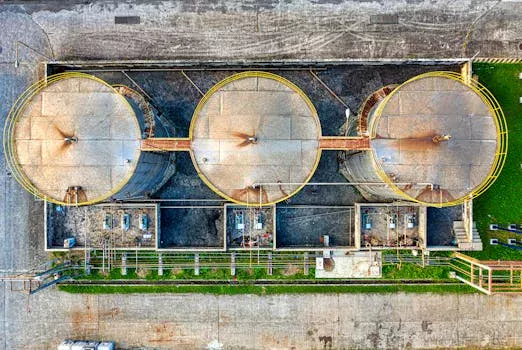
Dissolved Air Flotation (DAF) utilizes micro-bubble technology (10-80 μm) to achieve 92-97% TSS removal, making it the industry standard for food processing, pulp and paper, and petrochemical applications. The process flow begins with coagulation and flocculation to aggregate particles, followed by air saturation in a recycle stream. When this saturated water is released into the DAF tank, millions of micro-bubbles attach to the flocs, floating them to the surface for mechanical skimming. You can learn how micro-bubble flotation achieves 92-97% TSS removal in industrial wastewater to better understand the fluid dynamics involved in high-load scenarios.
For facilities requiring the highest effluent quality, the Membrane Bioreactor (MBR) provides a sophisticated solution by combining activated sludge treatment with PVDF membrane filtration. With a pore size typically around 0.1 μm, MBR systems achieve 99% BOD removal and produce effluent suitable for direct reuse in non-potable applications. The Integrated MBR systems for near-reuse-quality effluent utilize aeration scouring to prevent membrane fouling, resulting in a footprint up to 60% smaller than conventional clarifier-based biological systems. To explore the mechanical details, engineers should discover the engineering behind flat sheet MBR membranes and their efficiency in wastewater treatment.
Effective treatment often hinges on precise chemical intervention. PLC-controlled chemical dosing for optimal coagulation and flocculation ensures that coagulants like Polyaluminum Chloride (PAC) and flocculants like Polyacrylamide (PAM) are injected at flow rates ranging from 0.1 to 500 L/h. This precision prevents chemical waste and ensures optimal particle aggregation before separation. Finally, sludge dewatering using plate and frame filter presses reduces waste volume by achieving 20-30% dry solids content. These systems, with filtration areas from 1 to 500 m², operate through a cycle of filling, high-pressure pressing, cake discharge, and automated cloth cleaning (HydropureWater specs, 2025).
Equipment Selection Guide: Matching Technology to Your Industry and Wastewater Profile
Selecting the correct equipment requires a decision framework based on influent characteristics, required removal efficiencies, and available facility footprint. In the food processing sector, particularly dairy and meat processing, DAF is the primary choice for managing FOG levels that can reach 10,000 mg/L. If the goal is water reuse for Clean-in-Place (CIP) systems or irrigation, the DAF must be followed by an MBR system to remove dissolved organics and pathogens. For instance, a dairy plant in Queensland successfully implemented a DAF-MBR train to achieve 99% contaminant removal, allowing for 40% process water recovery.
| Technology | Primary Target | Removal Efficiency | Footprint | CAPEX/OPEX |
|---|---|---|---|---|
| DAF | TSS, FOG, Insoluble BOD | 92-97% TSS | Medium | Moderate / Low |
| MBR | Dissolved BOD, Nutrients | >99% BOD | Small | High / Moderate |
| Chemical Dosing | Heavy Metals, Emulsified Oil | Variable (High with DAF) | Very Small | Low / High (Chemicals) |
| Oil Separator (CPS) | Free Hydrocarbons (TPH) | >95% Free Oil | Small | Low / Very Low |
Mining operations in Western Australia typically utilize a combination of chemical dosing, lamella clarification, and sludge dewatering to manage heavy metals like arsenic and cadmium. By adjusting pH and adding specific coagulants, dissolved metals are precipitated and then settled or filtered. In the oil and gas industry, the priority is often the removal of hydrocarbons. Coalescing plate separators, such as the Baldwin RM-10, are effective for TPH concentrations above 10 mg/L, but emulsified oils require secondary treatment via DAF or chemical cracking to meet discharge standards. Textile mills, facing high COD (>1,000 mg/L) and dye concentrations, rely on MBR systems followed by disinfection to reduce freshwater consumption by up to 40% through internal reuse.
2025 Cost Benchmarks for Industrial Wastewater Treatment in Australia
Capital expenditure (CAPEX) for industrial wastewater systems in Australia varies significantly based on flow rate and required effluent quality. According to 2025 market quotes, compact DAF systems generally range from AUD 200,000 to AUD 800,000 for flow rates up to 300 m³/h. MBR systems, due to their advanced membrane technology and automation, command higher prices, typically ranging from AUD 500,000 for small modular units to over AUD 2M for large-scale municipal-grade industrial plants. For a more detailed financial comparison, engineers can compare wastewater treatment plant costs and ROI calculations for industrial facilities to see how these benchmarks align with international standards.
| System Type | CAPEX Range (AUD) | Energy (kWh/m³) | Chemicals (AUD/m³) | Maintenance Note |
|---|---|---|---|---|
| DAF System | $200k - $800k | 0.1 - 0.5 | $0.15 - $0.45 | Annual pump/scraper check |
| MBR System | $500k - $2M+ | 0.5 - 1.2 | $0.10 - $0.30 | Membrane replacement 5-7 yrs |
| Chemical Dosing | $50k - $200k | < 0.1 | $0.20 - $0.60 | Sensor calibration monthly |
| Filter Press | $100k - $500k | 0.2 - 0.4 | N/A | Cloth replacement as needed |
Operating expenditure (OPEX) is driven by energy consumption, chemical usage, and periodic component replacement. MBR systems have the highest energy demand due to continuous aeration for membrane scouring, while DAF systems incur higher chemical costs for flocculation. However, the return on investment (ROI) is often reached within 18 to 36 months for DAF systems in food processing due to trade waste savings. For MBR-based water reuse projects, the payback period is typically 3 to 5 years, supported by state grants like Victoria’s "Water for Victoria" program or low-interest loans from the Clean Energy Finance Corporation (CEFC).
Case Studies: Australian Industrial Wastewater Treatment Success Stories
A dairy processing plant in Victoria faced significant compliance issues with influent FOG levels of 8,000 mg/L and TSS of 1,200 mg/L. By installing a custom DAF system with a CAPEX of AUD 450,000, the facility reduced effluent FOG to < 50 mg/L and TSS to < 30 mg/L. This upgrade not only cleared all EPA compliance hurdles but also achieved a 22-month payback period through the reduction of surcharges and the reclamation of water for site irrigation.
In Western Australia, a copper mine required a solution for arsenic contamination in pit water. The implementation of a lamella clarifier coupled with a plate and frame filter press (CAPEX AUD 1.2M) reduced arsenic concentrations from 0.5 mg/L to below the 0.1 mg/L regulatory limit. The system operates at an OPEX of AUD 0.30/m³, providing a cost-effective method for managing tailings water. Similarly, a refinery in Queensland utilized a Baldwin RM-10 oil water separator to treat influent with 150 mg/L TPH. The AUD 300,000 investment brought the facility into full compliance with a TPH effluent of < 10 mg/L within three months of commissioning.
Lastly, a textile mill in New South Wales integrated an MBR system to address high COD (1,500 mg/L) in its dye-heavy wastewater. With a CAPEX of AUD 1.8M, the MBR system achieved 99% COD removal. The resulting high-quality effluent was reused directly in the dyeing process, reducing the mill’s freshwater consumption by 40% and insulating the business against rising water utility rates and drought-related supply restrictions.
Frequently Asked Questions
What are the EPA discharge limits for industrial wastewater in Australia?
Under the ANZECC 2025 guidelines, most industries must meet limits of TSS < 30 mg/L and COD < 125 mg/L. However, state authorities like NSW EPA or Victoria EPA may impose stricter limits (e.g., FOG < 20 mg/L or specific heavy metal limits) depending on the sensitivity of the local catchment area.
How much does a DAF system cost in Australia?
A standard industrial DAF system typically costs between AUD 200,000 and AUD 800,000. This range depends on the flow rate (typically 4–300 m³/h), material construction (e.g., SS304 vs SS316), and the level of automation required for chemical dosing and sludge removal.
What is the best wastewater treatment technology for food processing?
Dissolved Air Flotation (DAF) is the most effective primary treatment for removing high levels of FOG and TSS. If the facility intends to reuse water for cooling or cleaning, a Membrane Bioreactor (MBR) is the preferred secondary treatment to remove dissolved organic matter and bacteria.
How do I choose between DAF and MBR for my facility?
The choice depends on your goals. Use DAF if you need to remove suspended solids and fats to meet trade waste sewer limits. Choose MBR if you require high-clarity effluent for environmental discharge or internal water reuse. Often, these technologies are used in tandem for high-strength wastewater.
Are there grants available for industrial wastewater treatment in Australia?
Yes, programs such as Victoria’s "Water for Victoria" and various federal sustainability incentives provide funding for projects that focus on water recycling and environmental protection. The Clean Energy Finance Corporation also offers low-interest loans for water-efficient infrastructure.