pH Adjustment System Working Principle
A pH adjustment system working principle centers on electrode measurement, PID dosing, and turbulent mixing so acid or base is neutralized before discharge. At 25°C a glass electrode shifts about 59.16 mV per pH unit. Continuous tanks usually hold wastewater 5–15 minutes; batch tanks hold 10–30 minutes until the setpoint is confirmed. Deadbands of 0.1–0.5 pH limit acid-base hunting.
Industrial discharge often targets a local or permit window near 6.0–9.0 pH. According to US EPA pretreatment rules (40 CFR 403.5(b)(2)), discharges to a POTW with pH lower than 5.0 are prohibited unless the works is designed for them. For NPDES continuous monitors, 40 CFR 401.17 allows limited excursions outside the applicable effluent range. Total time outside the range may not exceed 7 hours and 26 minutes in a calendar month, and no single excursion may exceed 60 minutes (EPA, 2025 fact sheet; eCFR 401.17).
Why pH Control Failures Cost Plants Money
Reported civil penalties for pH non-compliance commonly fall in the $10,000–$50,000 range per violation when instantaneous spikes leave the plant’s permit window. In semiconductor fabs, a failed neutralization train can release hydrofluoric acid or strong caustic rinse water and force a production hold. Food plants see a different failure mode. When reactor pH drops below 5.0 or rises above 9.0, COD removal in biological stages can fall 30–50% as microbes lose activity (HydropureWater field data, 2025).
Chemical overdosing alone often costs $0.15–$0.30 per m³ when acidic streams need 0.5–2.0 kg NaOH per m³. Sensor drift of ±0.2 pH over 30 days without recalibration drives the PLC to chase a phantom error. Poor pH adjustment for DAF pretreatment weakens flocculation and can raise polymer use and sludge disposal by up to 20%. Plants that already run metal oxidation/ph adjustment unitdesign trains should keep the pH skid on the same calibration schedule as the oxidation stage.
Core Sensing, Mixing, and Control Specs
Glass pH probes pair a measuring electrode with an Ag/AgCl reference, often double-junction to slow fouling. A transmitter converts the millivolt signal for the PID loop. Neutralization of NaOH with HCl is chemically fast (about 1–2 seconds), yet the tank still needs mechanical mixing so the bulk volume reaches equilibrium.
Most plants we size for continuous service run retention at the lower end of 5–15 minutes and keep Reynolds number above 4,000 for turbulent flow. Tank height-to-diameter ratios between 1:1 and 2:1 with top-entry or side-entry agitators limit dead zones. An Automatic Chemical Dosing System typically injects reagent through metering pumps with a 0.1–0.5 pH deadband so the loop does not oscillate between acid and base.
| Engineering Parameter | Standard Specification | Impact on Performance |
|---|---|---|
| Sensor Accuracy | ±0.1 pH units | Prevents compliance buffer violations |
| Response Time | < 30 seconds | Enables real-time dosing correction |
| Mixing Retention Time | 5–15 minutes | Ensures chemical homogenization |
| Tank Reynolds Number | > 4,000 (Turbulent) | Eliminates pH gradients/dead zones |
| Controller Deadband | 0.1–0.5 pH | Reduces pump wear and chemical waste |
Batch vs Continuous pH Adjustment
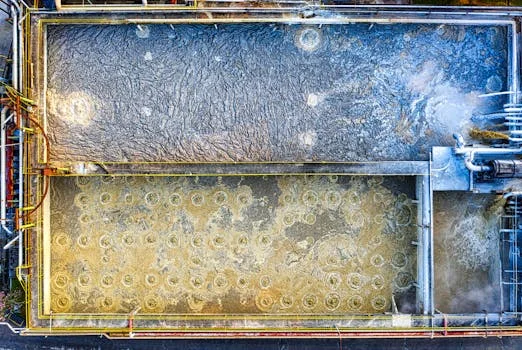
Batch pH systems suit flows of about 1–50 m³/h with variable chemistry or intermittent discharge, as in food processing or textile dyeing. The sequence is fill, mix, dose, then discharge only after the target pH is confirmed. That hold gives the strongest compliance buffer, but tanks are larger and chemical use runs about 10–20% higher than steady-state continuous control. Batch retention is typically 10–30 minutes before the discharge valve opens.
Continuous systems handle steady flows from about 50 to 1,000 m³/h. They are common in semiconductor, pharmaceutical, and large chemical plants. They use inline mixers or small reaction tanks with fast feedback. CapEx per unit throughput is lower, yet PID tuning must absorb flow swings. pH control in PCB wastewater treatment often uses multi-stage continuous neutralization from about pH 2.0 to 8.5 so concentrated acids do not create heat spikes.
| Feature | Batch System | Continuous System |
|---|---|---|
| Flow Capacity | 1–50 m³/h | 50–1,000+ m³/h |
| Retention Time | 10–30 minutes | 5–15 minutes |
| Chemical Efficiency | Moderate (higher waste) | High (steady-state) |
| Typical CapEx | $20,000 – $50,000 | $50,000 – $200,000 |
| Best Use Case | Variable chemistry, Mining, Food | Steady flow, Semiconductor, Pharma |
Which Chemical Dosing Equipment Fits Water Plants?
The best chemical dosing equipment for water treatment plants matches reagent type, pump turndown, and sensor lag to the plant’s pH swing, not a single catalog model. Acidic wastewater at pH 2–5 usually takes 30–50% NaOH at 0.5–2.0 kg per m³ because it dissolves fast and reacts quickly. NaOH needs corrosion-resistant materials and, in cold climates, heat tracing to avoid crystallization. Magnesium hydroxide is safer and rarely overshoots past pH 9.0, but slow dissolution needs larger tanks and more mixing energy.
Alkaline streams at pH 10–12 commonly use 93–98% sulfuric acid at about $0.15–$0.30/kg and 0.3–1.2 kg per m³ from pH 11. CO₂ forms carbonic acid in situ and is hard to drive below pH 6.0, so overshoot risk falls, while CapEx rises for gas injection. Strong acid or caustic storage tanks typically need secondary containment under applicable chemical-storage and hazardous-waste rules when stored liquids sit below pH 2 or above pH 12.
| Chemical | Concentration | Avg. Cost ($/kg) | Dosing Rate (kg/m³) |
|---|---|---|---|
| Sodium Hydroxide (NaOH) | 30% – 50% | $0.30 – $0.50 | 0.5 – 2.0 (for pH 3) |
| Sulfuric Acid (H₂SO₄) | 93% – 98% | $0.15 – $0.30 | 0.3 – 1.2 (for pH 11) |
| Hydrochloric Acid (HCl) | 30% – 37% | $0.25 – $0.45 | 0.4 – 1.5 (for pH 11) |
| Carbon Dioxide (CO₂) | Gas/Liquid | $0.20 – $0.40 | Flow-dependent |
Can chemical dosing systems cut boiler wastewater?
Chemical dosing systems on boiler feedwater reduce wastewater when they hold cycle chemistry inside a narrow band and cut unnecessary blowdown. Tight pH and alkalinity control lowers corrosion product load returning to the wastewater plant. Pairing the neutralization skid with a PLC-logged PLC-controlled chemical dosing skid for pH adjustment keeps both boiler and effluent loops on the same audit trail.
Troubleshooting Common pH Loop Failures
Wild overshoot or undershoot usually traces to PID mistuning or sensor lag. When the loop hunts, retune from typical starting gains (Kp 0.5–2.0, Ki 0.1–0.5) and confirm sensor response under 10 seconds. Fouled probes slow the loop: clean alkaline scale with 0.1M HCl, or organic/acidic films with 0.1M NaOH. Drift beyond ±0.2 pH in 30 days often means depleted reference electrolyte and a probe change.
pH gradients appear when the discharge probe disagrees with a grab sample. Raise retention time 20–40% or add baffles to break vortexing. Redundant sensors with median-select logic stop a single failed probe from flooding the tank with reagent. Set high/low alarms near pH 5.5 and 9.5 so operators act before a permit breach.
Cost Drivers and Selection Checklist
Lifetime costs for a pH skid split into CapEx and OPEX, with chemicals often 60–70% of lifetime spend. A small batch train may cost about $30,000 installed and $0.20/m³ to run. A continuous train for 500 m³/h may cost about $100,000 but run near $0.15/m³. At 500 m³/h and 24/7 operation, a $0.05/m³ chemical and energy gap is about $219,000 per year. The higher CapEx can pay back in under six months when flow is steady.
Stable pH also protects biological COD removal and can cut related energy use by 10–30% in plants that depend on bugs downstream. Combining neutralization with on-site ClO₂ generation for wastewater disinfection lets one control architecture cover both pH and microbial limits. Procurement should require PLC data logging so audit trails replace manual compliance paperwork.
| Cost Category | Batch Example | Continuous Example |
|---|---|---|
| Typical CapEx | ~$30,000 (small plant) | ~$100,000 (500 m³/h) |
| Typical OPEX | $0.20/m³ | $0.15/m³ |
| Chemical share of lifetime cost | 60–70% | 60–70% |
| Payback vs higher CapEx | N/A (lower CapEx) | < 6 months at 500 m³/h, 24/7 |
Selection checklist before you buy:
- Confirm permit type: POTW local limits versus NPDES continuous pH rules.
- Map peak acid/base load in kg/h, not only average m³/h.
- Choose batch if chemistry swings hard; continuous if flow is steady above ~50 m³/h.
- Specify probe accuracy ±0.1 pH and response under 30 seconds at process temperature.
- Size retention for 5–15 minutes continuous or 10–30 minutes batch with Re > 4,000.
- Require redundant probes, median select, and alarms at about pH 5.5 / 9.5.
- Price OPEX at expected kg reagent per m³, not CapEx alone.
Who This Is For / Next Step
This guide is for plant engineers, EPC designers, and procurement managers sizing neutralization before biological treatment, DAF, or direct discharge. Look elsewhere if you only need laboratory titration hardware or drinking-water remineralization packages. To match pump, tank, and probe specs to your load profile, request a pH adjustment system quote with measured flow and influent pH range.
Frequently Asked Questions
What is the working principle of an industrial pH adjustment system?
An industrial pH adjustment system measures electrode voltage, converts it to pH, and doses acid or base through a PID loop while the tank mixes to equilibrium. At 25°C the glass electrode changes about 59.16 mV per pH unit. Continuous tanks typically retain wastewater 5–15 minutes; batch tanks hold 10–30 minutes until the setpoint is confirmed before discharge.
What pH range must industrial wastewater meet?
Many NPDES and categorical limits use a 6.0–9.0 pH window, but the exact range is permit-specific. According to 40 CFR 403.5(b)(2), POTW discharges below pH 5.0 are prohibited unless the works is designed for them. EPA notes local upper limits often fall between about 10 and 11.5 where no categorical ceiling applies (EPA pH fact sheet, 2025).
How much chemical does a pH adjustment system use?
Acidic wastewater near pH 3 often needs 0.5–2.0 kg NaOH per m³ at 30–50% concentration. Alkaline wastewater near pH 11 often needs 0.3–1.2 kg H₂SO₄ per m³ at 93–98%. Overdosing from sensor drift commonly adds $0.15–$0.30 per m³, so calibration and deadband settings control OPEX as much as reagent price.
Should I choose a batch or continuous pH system?
Choose batch for 1–50 m³/h flows with variable chemistry or intermittent discharge when you need the highest compliance hold. Choose continuous for steady 50–1,000+ m³/h flows when CapEx per throughput and reagent efficiency matter more. Multi-stage continuous trains suit strong acid streams that release heat if neutralized in one step.
Why does my pH controller keep hunting between acid and base?
Hunting usually means the deadband is too tight, the probe is slow, or PID gains are too aggressive. Start with a 0.1–0.5 pH deadband, verify sensor response under 10 seconds, and retune around Kp 0.5–2.0 and Ki 0.1–0.5. Clean or replace fouled probes before changing pump size.