Why Ontario’s Wastewater Treatment Costs Are Rising in 2025
In Ontario, wastewater treatment plant costs in 2025 are experiencing a notable increase, driven by a confluence of factors including increasingly stringent regulatory demands from the Ministry of the Environment, Conservation and Parks (MOECC), sustained industrial growth, and the pressing need to upgrade aging infrastructure. For municipal engineers, industrial facility managers, and developers evaluating significant investments, understanding these escalating costs is paramount to securing accurate budgets and avoiding costly overruns. The MOECC's 2025 effluent standards, targeting parameters like <25 mg/L BOD and <1 mg/L total phosphorus, necessitate more advanced and energy-intensive treatment processes, directly impacting both Capital Expenditure (CAPEX) and Operational Expenditure (OPEX). Simultaneously, Ontario's industrial sector continues to expand, with hubs in food processing in Guelph and automotive manufacturing in Windsor placing greater demands on existing wastewater management systems, often highlighting the need for localized, high-performance solutions. Compounding these pressures, approximately 40% of Ontario’s municipal wastewater treatment plants are now over 30 years old, requiring substantial modernization or replacement. A prime example of this necessity is the City of Greater Sudbury's Lively-Walden Wastewater System Upgrades project, a significant municipal undertaking valued at $28M, which encompasses lift station and collection system upgrades, plant expansion, and decommissioning of older facilities, serving as a critical benchmark for large-scale infrastructure investments across the province.
Wastewater Treatment Plant Costs in Ontario: 2025 Benchmarks by Plant Type and Capacity
Accurately budgeting for a wastewater treatment plant in Ontario requires a granular understanding of costs, which vary significantly based on the chosen technology and the plant's treatment capacity. For packaged plants, CAPEX typically ranges from CAD $1,200 to $3,500 per cubic meter per day (m³/day). For example, a compact 50 m³/day system might have an initial CAPEX between $60,000 and $175,000, while a 500 m³/day system could range from $600,000 to $1,750,000. Operational expenditures (OPEX) can range from CAD $0.15 to $0.40 per m³, influenced by energy consumption, chemical usage, and labor requirements. The selection of treatment technology is a primary cost driver, with Membrane Bioreactor (MBR) systems for Ontario’s stringent effluent standards often commanding higher CAPEX but offering superior effluent quality and a smaller footprint compared to conventional activated sludge or Sequencing Batch Reactor (SBR) systems. Dissolved Air Flotation (DAF) systems for industrial pretreatment in Ontario are typically employed for specific pollutant removal, such as fats, oils, and grease (FOG), adding to the overall project cost. Beyond the core equipment, significant consideration must be given to hidden costs, which can dramatically inflate project budgets. Permit acquisition can range from $50,000 to $200,000, depending on project complexity and location. Land acquisition costs vary widely, from $200 to $500 per square meter in urbanized areas to significantly less in rural settings. Certified operator labor costs in Ontario average between $80 and $120 per hour, and sludge disposal, a perpetual cost, can range from $150 to $300 per tonne. For developers, costs associated with new wastewater infrastructure can be substantial, with estimates for projects like the Town of Erin reaching $7,000 to $10,000 per single detached unit, in addition to development charges.
| Technology | CAPEX/m³/day (CAD) | OPEX/m³ (CAD) | Footprint | Effluent Quality | Maintenance Complexity |
|---|---|---|---|---|---|
| MBR | $1,800 – $3,500 | $0.25 – $0.40 | Compact | High (e.g., <5 mg/L BOD, <5 mg/L TSS, <1 mg/L TP) | Moderate (membrane cleaning/replacement) |
| Activated Sludge | $1,200 – $2,800 | $0.15 – $0.30 | Moderate to Large | Good (e.g., <25 mg/L BOD, <30 mg/L TSS) | Moderate |
| SBR | $1,500 – $3,000 | $0.20 – $0.35 | Moderate | Good to High | Moderate |
| DAF (Pretreatment) | $1,000 – $2,500 (as part of system) | $0.10 – $0.25 (chemical/energy) | Moderate | Effective for FOG, TSS | Moderate (skimmer/chemical management) |
Explore our MBR systems for Ontario’s stringent effluent standards and DAF systems for industrial pretreatment in Ontario.
MOECC Compliance Costs: How Ontario’s Effluent Standards Impact Your Budget

Meeting the Ministry of the Environment, Conservation and Parks (MOECC) effluent standards in Ontario is a primary driver of wastewater treatment plant costs, directly influencing technology selection, operational expenses, and the potential for significant financial penalties. The MOECC mandates stringent discharge limits for parameters such as Biochemical Oxygen Demand (BOD), Total Suspended Solids (TSS), ammonia nitrogen, and total phosphorus. For instance, achieving a total phosphorus limit of <1 mg/L, common for many Ontario discharges, often necessitates the implementation of advanced tertiary treatment processes like chemical precipitation or enhanced biological nutrient removal, which can add 15–25% to a plant's CAPEX. Similarly, meeting ammonia nitrogen limits (<5 mg/L) requires robust nitrification and denitrification stages, often integrated into activated sludge or MBR processes. Disinfection, whether through UV irradiation or chemical methods like chlorine dioxide, is also essential for meeting microbial standards. Beyond capital investments, ongoing monitoring and reporting constitute a significant operational cost, with annual expenses for laboratory testing and MOECC submissions typically ranging from $20,000 to $50,000. Non-compliance carries severe financial repercussions. Under the Ontario Environmental Protection Act (2024), municipalities can face fines up to $100,000 per day, while industrial facilities may be subject to daily fines of up to $25,000. These penalties underscore the critical importance of investing in compliant treatment solutions. For specific industrial needs, our chlorine dioxide generators and medical wastewater treatment systems are designed to meet advanced regulatory requirements.
| Parameter | Typical MOECC Limit (mg/L) | Associated Treatment Technologies | Estimated CAPEX Add-on (%) |
|---|---|---|---|
| BOD | <25 (municipal) | Activated Sludge, MBR, SBR | N/A (standard component) |
| TSS | <30 (municipal) | Clarification, Filtration, MBR | 5-10% (for advanced filtration) |
| Ammonia Nitrogen | <5 | Nitrification/Denitrification (Activated Sludge, MBR) | 10-20% |
| Total Phosphorus | <1 | Chemical Precipitation, Enhanced Biological Removal | 15-25% |
| Disinfection | N/A (microbial limits) | UV, Chlorine Dioxide, Ozone | 5-15% |
Industrial vs. Municipal Wastewater Treatment: Cost and ROI Comparison
Differentiating between industrial and municipal wastewater treatment projects in Ontario is crucial for accurate cost assessment and financial justification. While municipal plants primarily treat domestic sewage, industrial facilities often contend with complex wastewater streams containing specific contaminants like high concentrations of Fats, Oils, and Grease (FOG), heavy metals, or recalcitrant organic compounds. This often necessitates specialized pretreatment systems, such as DAF systems for industrial pretreatment in Ontario, and higher chemical dosing rates, potentially increasing overall CAPEX and OPEX by 20–40% compared to a similarly sized municipal plant. Municipal projects often benefit from diverse funding streams, including federal and provincial grants (e.g., through the Canada Infrastructure Bank), development charges levied on new construction, and user fees collected from residents. Industrial facilities, conversely, may have access to incentives such as tax credits for implementing water reuse systems, with some programs offering up to a 30% credit for MBR systems achieving over 50% water recovery. Calculating the Return on Investment (ROI) and payback period is essential for both sectors. A simplified ROI framework involves estimating total project cost (CAPEX + lifetime OPEX) against the avoided costs (e.g., reduced water purchase, lower discharge fees, avoided penalties) and potential revenue generation (e.g., water reuse). For example, a facility investing $500,000 in a treatment system that reduces annual discharge fees by $75,000 and water purchase costs by $25,000 would have a simple payback period of approximately 5 years ($500,000 / $100,000 per year).
| Factor | Municipal Wastewater Treatment | Industrial Wastewater Treatment | Considerations |
|---|---|---|---|
| Primary Influent | Domestic sewage | Industrial process wastewater (variable composition) | Requires tailored pretreatment for industrial |
| CAPEX Drivers | Scale, advanced nutrient removal, infrastructure age | Pretreatment (DAF, equalization), specialized equipment, higher material compatibility | Industrial can be 20-40% higher per m³/day |
| OPEX Drivers | Energy, labor, chemical for nutrient removal, sludge disposal | Higher chemical dosing, energy for pretreatment, specialized consumables, sludge disposal | Industrial OPEX can be higher due to specialized treatment needs |
| Funding Sources | Grants, development charges, user fees | Internal capital, debt financing, potential tax incentives | Industrial may qualify for water reuse incentives |
| Payback Period Focus | Long-term asset value, public service provision, regulatory compliance | Cost savings (water, discharge), compliance assurance, operational efficiency, resource recovery | Industrial ROI often tied to direct cost reductions or revenue generation |
For a deeper understanding of costs in other regions, compare with our Wastewater Treatment Plant Cost in England 2025 guide.
How to Reduce Wastewater Treatment Plant Costs in Ontario: 5 Engineering Strategies
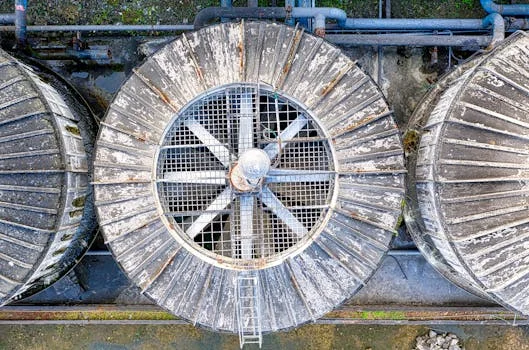
Optimizing wastewater treatment plant costs in Ontario without compromising performance or regulatory compliance is achievable through strategic engineering and operational planning. A modular design approach allows for phased construction, enabling facilities to spread CAPEX over time by starting with a base capacity and expanding as demand grows. This is particularly beneficial for developing communities or rapidly growing industrial parks. Investing in energy-efficient technologies can yield significant long-term savings; for instance, modern MBR systems can offer 30–50% lower energy consumption compared to conventional activated sludge processes for equivalent treatment levels. Implementing water reuse strategies, such as treating wastewater for non-potable applications like irrigation, industrial cooling, or equipment washdown, can dramatically reduce both freshwater intake costs and discharge fees. Automation plays a critical role in reducing labor costs and improving operational consistency. Programmable Logic Controller (PLC)-controlled systems facilitate automatic chemical dosing, remote monitoring, and optimized process adjustments, minimizing the need for constant manual intervention. Effective sludge management is another key area for cost reduction. On-site dewatering of sludge using technologies like our plate and frame filter presses can reduce sludge volume by 70–80%, significantly cutting down transportation and disposal costs by 40–60%. By integrating these strategies, stakeholders can achieve substantial cost efficiencies while ensuring long-term operational reliability and environmental stewardship.
Frequently Asked Questions
What is the average cost to build a small wastewater treatment plant in Ontario?
For a small packaged plant, such as a 50 m³/day system, the CAPEX in Ontario for 2025 typically ranges from $60,000 to $175,000, depending on the technology and specific effluent requirements.
How much does MOECC compliance add to wastewater treatment plant costs?
Meeting stringent MOECC effluent standards, particularly for phosphorus and ammonia, can add 15-25% to the CAPEX of a wastewater treatment plant due to the need for advanced treatment stages and higher operational complexity.
What are the main operational cost drivers for wastewater treatment plants in Ontario?
Key OPEX drivers include energy consumption for aeration and pumping, chemical usage for treatment and disinfection, labor costs for certified operators, and sludge disposal fees, which can vary significantly by location and technology.
Can industrial wastewater be treated effectively with packaged plants in Ontario?
Yes, packaged plants, especially those incorporating pretreatment steps like DAF systems, can effectively treat many industrial wastewater streams to meet MOECC compliance, provided the system is appropriately engineered for the specific contaminant profile.
What is the typical payback period for investing in water reuse technology in Ontario?
The payback period for water reuse systems varies widely based on water savings, discharge fee reductions, and the initial investment. However, systems that achieve significant water recovery can often see payback within 3-7 years, especially in areas with high water costs or strict discharge regulations.