Ozone generator for industrial wastewater treatment: working principle
An ozone generator for industrial wastewater treatment makes O₃ on site, dissolves it, and holds contact time before residual destruction. Corona-discharge units on >90% oxygen feed deliver 80–120 g O₃/kWh at 1–10% concentration. Residual is commonly held below 0.1 mg/L. Workplace air must stay under the OSHA PEL of 0.1 ppm as an 8-hour TWA.
A Midwest food plant faced chlorine-resistant Listeria in treated effluent, repeated EPA permit violations, and fines exceeding $200,000 per year. Chlorine storage and handling under OSHA 1910.119 added process-safety burden, and disinfection byproducts such as THMs and HAAs remained a compliance risk. Ozone achieves 99.9% kill rates against many chlorine-resistant pathogens, generates on site without bulk chemical transport, and decomposes back to oxygen with far lower DBP formation when residual is controlled.
Most plants we size above 100 m³/h run the contact chamber toward the lower end of 4–10 minutes once scavengers and TSS are already cut. The gas is dissolved into the wastewater. It is not stored as a bulk chemical on the pad.
Corona discharge ozone generator specifications
Corona discharge ozone generator specifications for flows above 100 m³/h center on 80–120 g O₃/kWh at 1–10% concentration when oxygen feed is >90%. Generation method still sets efficiency, outlet concentration, CapEx, and the flow a plant can serve. Most industrial wastewater trains we size above 100 m³/h land on corona discharge because output and oxygen feed scale cleanly with demand. Below that band, UV generation can still meet low dose duty when the matrix is already low in scavengers and TSS.
Corona discharge applies a high-voltage field across a dielectric barrier to split O₂. With oxygen feed purity >90%, these units reach 80–120 g O₃/kWh and 1–10% ozone concentration, covering roughly 100–1,000 m³/h. UV photolysis at about 185 nm is simpler but yields only 20–40 g O₃/kWh at 0.1–0.5% concentration, so it fits flows below about 50 m³/h. Electrolytic splitting of water can reach 100–150 g O₃/kWh and 15–25% concentration, yet cost and complexity usually confine it to ultrapure pharmaceutical or semiconductor water rather than bulk industrial wastewater.
| Method | Efficiency (g/kWh) | Ozone Conc. (%) | CapEx | OPEX | Best Use Case |
|---|---|---|---|---|---|
| Corona Discharge | 80–120 | 1–10 | Medium to High | Medium | High-volume industrial wastewater (>100 m³/h) |
| UV Light | 20–40 | 0.1–0.5 | Low to Medium | Low | Low-flow applications (<50 m³/h) |
| Electrolytic | 100–150 | 15–25 | High | High | Ultrapure water (pharmaceutical, semiconductor) |
What do corona discharge specifications include?
Corona discharge specifications for this duty are 80–120 g O₃/kWh, 1–10% ozone, and a practical flow band of about 100–1,000 m³/h on >90% oxygen. PSA oxygen at 90–95% purity is the usual feed. LOX at 99% purity costs more but raises concentration headroom when peak demand spikes.
Nameplate curves, dielectric ratings, and oxygen-feed envelopes sit in the ozone generator specifications page, which owns that narrower topic. Use those curves after the dose and CT on this page are fixed.
Broader selection tables are in Ozone Generator Water Treatment Specifications: 2026 Engineering Data. For packaged tank-loop duty, an Ozone Generator & Water Tank Sterilization System is the usual starting point on reuse or holding tanks.
What is an ozone generator for water treatment?
An ozone generator for water treatment is the on-site unit that converts oxygen into O₃, then feeds that gas into an injection and contact train sized to the plant’s dose and CT targets. Integration into an industrial wastewater line usually follows six stages that protect equipment first, then lock CT and residual control.
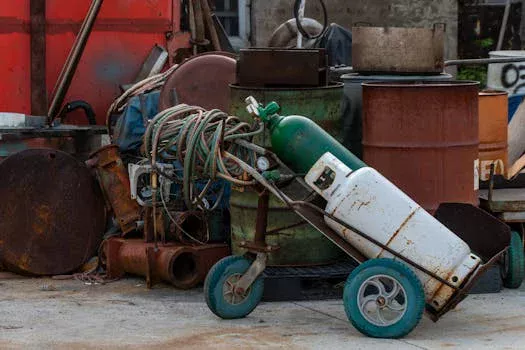
Step 1: Pre-treatment. Protect diffusers and cut ozone demand. Target TSS below 50 mg/L and oil/grease below 10 mg/L using screening, grit removal, equalization, and often a PLC-controlled chemical dosing system for pH or flocculation. Dissolved air flotation removes solids and oils before contact. High-salinity streams may need the pre-treatment approach used in PCB high-salinity wastewater treatment.
Settleable solids ahead of flotation follow the lamella clarifier working principle, which keeps grit and floc out of the ozone diffusers. Floatable grease is a different unit operation and should not be forced onto plates.
Step 2: Ozone generation. For 100 m³/h at 1–5 mg O₃/L, generator capacity is typically 100–500 g O₃/h. PSA oxygen at 90–95% purity is the usual feed for corona units. LOX at 99% purity costs more but raises concentration headroom when peak demand spikes.
Step 3: Ozone injection. Fine-pore bubble diffusers transfer about 80–90% of the gas. Venturi injectors reach 95–98% and are preferred on many industrial skids. A throat ratio near 1:4 helps sustain vacuum. Static mixers downstream improve gas-liquid contact before the chamber.
Step 4: Contact time. Contact chambers hold ozone long enough to meet CT (concentration × time). Typical industrial chambers run 4–10 minutes in plug-flow layouts to limit short-circuiting. Most plants we commission set the destruct target before they freeze that chamber volume.
Step 5: Post-treatment. Destroy residual ozone with activated carbon or a short UV pass. Many plants target residual ozone below 0.1 mg/L in treated water (WHO guidance cited in plant specs). The EU Drinking Water Directive 98/83/EC is often referenced at 0.05 mg/L for drinking-water contexts.
Step 6: Monitoring. Track dose (mg/L), residual (mg/L), ORP (mV), and flow (m³/h). Real-time residual feedback prevents overdosing that wastes oxygen and underdosing that fails CT during peak hourly flow.
Ozone dosage and contact time for wastewater
Ozone dosage and contact time for wastewater are set by contaminant class, temperature, and the residual limit the plant must meet at the outfall. Disinfection doses are usually lower than COD or color oxidation doses, so jar or pilot tests still decide final setpoints. Most plants we size for food effluent start the jar test at the low end of 1–5 mg O₃/L.
What ozone dose and contact time apply?
Disinfection of industrial wastewater commonly starts at 1–5 mg O₃/L with 4–10 minutes of contact, while COD and color often need 5–30 mg/L. The table below is the starting envelope. Scavengers in the real matrix still move the setpoint.
| Contaminant | Ozone Dosage (mg/L) | Contact Time (min) | Removal Efficiency | Source |
|---|---|---|---|---|
| E. coli | 1–2 | 4 | 99.99% | EPA 2024 |
| Viruses (e.g., Enteroviruses) | 2–5 | 10 | 99.9% | EPA 2024 |
| Phenols | 5–15 | 5–10 | >95% | EPA 2023 |
| COD (Chemical Oxygen Demand) | 10–30 | 15–30 | 20–50% reduction | HydropureWater field data, 2025 |
| Color (Dyes) | 5–20 | 10–20 | >90% reduction | HydropureWater field data, 2025 |
| Taste and Odor Compounds | 0.5–2 | 2–5 | Significant Reduction | EPA 2024 |
CT tables remain temperature-dependent. Keep the plant’s documented values for Giardia, Cryptosporidium, and rotavirus, then cross-check Cryptosporidium credit against the current EPA LT2 ozone table when the permit cites log inactivation.
| Microorganism | CT (mg·min/L) | Temperature (°C) | Source |
|---|---|---|---|
| Giardia lamblia cysts | 0.48 | 15 | EPA |
| Cryptosporidium parvum oocysts | 1.3 | 15 | EPA |
| Rotavirus | 0.2 | 15 | EPA |
The table above keeps the plant value of 1.3 mg·min/L at 15°C for Cryptosporidium parvum oocysts. According to 40 CFR 141.720, Cryptosporidium log credit equals 0.0397 times 1.09757 raised to the water temperature in °C, times CT. The eCFR text, current as of 23 September 2026, shows no change to this section after 3 January 2017. At 15°C that equation gives about 1.6 mg·min/L for 0.25-log credit. A 0.5-log credit needs about 3.1 mg·min/L, and a 1.0-log credit needs about 6.2 mg·min/L. CT is calculated at least once each day, with C and T taken at peak hourly flow.
Phenol reacts with ozone at about 1.3×10³ M⁻¹s⁻¹ (EPA 2023), so short contact times work when demand is satisfied first. Dose the demand before you spend contact time on the hard fraction.
Acceptable residual ozone level in treated effluent
Acceptable residual ozone level in treated effluent is commonly held below 0.1 mg/L before the water leaves the destruct unit. Search logs still show the wording ozone out put acceptable level on waste water, which on a datasheet means residual ozone in the effluent, not generator nameplate output. Most plants we commission treat residual ozone below 0.1 mg/L in water and keep ambient monitors on generator and contact rooms.
NIOSH lists a ceiling of 0.1 ppm (0.2 mg/m³), not an 8-hour average. The same page lists an IDLH of 5 ppm. Room alarms should trip on the ceiling, not only on the shift average.
Earlier plant specs often cite 0.05 mg/L under Directive 98/83/EC. According to the EUR-Lex summary of Directive (EU) 2020/2184, that directive recast and repealed Directive 98/83/EC as of 12 January 2023. The summary’s chemical list has no residual ozone value. It does set bromate at 10 μg/L, total trihalomethanes at 100 μg/L, and haloacetic acids at 60 μg/L. Some national transposition steps run to 12 January 2026. Those caps apply to water intended for human consumption, not automatically to an industrial outfall permit.
Ozone vs chlorine disinfection cost comparison
Ozone vs chlorine disinfection cost comparison puts ozone CapEx at $500–$1,000 per m³/h and chlorine CapEx at $200–$500 per m³/h. Ozone, chlorine, and UV trade CapEx, OPEX, pathogen kill, DBP formation, and chemical handling. CapEx for a full ozone train (generator, oxygen, injection, contact) typically runs $50,000–$500,000, or about $500–$1,000 per m³/h of capacity. Chlorine dosing packages often cost $20,000–$100,000 ($200–$500 per m³/h). UV reactors span roughly $30,000–$200,000 ($300–$1,000 per m³/h), driven by reactor volume and lamp type.
| Method | CapEx ($/m³/h) | OPEX ($/m³) | Pathogen Kill Rate | DBP Formation | Chemical Handling | Best Use Case |
|---|---|---|---|---|---|---|
| Ozone | $500–$1,000 | $0.05–$0.20 | 99.99% | None | On-site generation, no chemical transport | High-volume wastewater, demanding disinfection |
| Chlorine | $200–$500 | $0.10–$0.30 | 99.9% (variable) | Significant (THMs, HAAs) | Requires bulk storage, transport, and safety protocols | Cost-sensitive applications, where DBPs are manageable |
| UV | $300–$1,000 | $0.02–$0.10 | 99.9% (flow dependent) | None | No chemical exposure, but lamp maintenance required | Low to moderate flow, where pre-treatment is excellent |
Ozone OPEX is mainly electricity and oxygen at about $0.05–$0.20/m³. Chlorine chemical cost and residuals management often land at $0.10–$0.30/m³. UV power plus lamp replacement commonly runs $0.02–$0.10/m³. Most plants we compare on the same flow sheet see ozone OPEX below chlorine once DBP sampling is included. Where DBP profiles differ from chlorine, chlorine dioxide generators are another oxidant option to compare on the same flow basis.
The comparison table marks ozone DBP formation as none. Drinking-water rules still cap bromate, an ozone byproduct, at 10 μg/L in that EUR-Lex summary. The same summary caps total THMs at 100 μg/L and haloacetic acids at 60 μg/L, and lists chlorate and chlorite at 0.25 mg/L each. According to 40 CFR 141.720, post-filter UV at 254 nm receives 1.0-log Cryptosporidium credit at 2.5 mJ/cm², which is a dose credit and not a substitute for ozone CT.
Which ozone generator suits large-volume water treatment?
Large-volume ozone systems for industrial wastewater are almost always corona-discharge units on PSA or LOX oxygen, sized from measured dose demand rather than nameplate flow alone. Size an ozone generator for industrial wastewater treatment from the measured dose at peak hour, not from average flow alone. Undersizing the generator against peak COD spikes is the failure mode we see most often on retrofit bids. Use the checklist below before freezing CapEx or oxygen contracts.
- Confirm peak and average flow in m³/h; at 100 m³/h and 1–5 mg O₃/L you need 100–500 g O₃/h of generation capacity.
- Map ozone demand drivers: COD, color, pathogens, phenols, metals—high organics raise dose or contact time.
- Pick generation method: >100 m³/h with pathogen control → corona; <50 m³/h with simple duty → UV generation; ultrapure duty → electrolytic.
- Compare oxygen cost: PSA 90–95% O₂ at about $0.03–$0.05/m³ versus LOX 99% O₂ at about $0.10–$0.20/m³.
- Plan N+1 or 2N redundancy for critical effluent such as hospital discharge using a compact ozone disinfection system.
- Verify CT credit, residual ozone destruction, and ambient PEL compliance before startup.
- Stabilize solids and oils with a DAF machine when TSS or grease would foul injectors; add reverse osmosis only if the train needs a pure-water polishing step after oxidation.
Who this is for: plant engineers and EPC teams sizing disinfection or tertiary oxidation on industrial or municipal effluent where DBPs, chlorine resistance, or chemical storage risk drive the design.
Who should look elsewhere: sites that only need secondary clarification should read the lamella page already linked above, and biological polishing without an oxidant residual target belongs with the mbr working principle, not with an ozone contact chamber.
Next step: send flow, COD, pathogen limits, and residual ozone targets through our request-quote form so the generator, oxygen skid, and contact volume can be matched on one datasheet.
Frequently Asked Questions
Buyer questions below state dose, contact time, residual, and generation choices with the numbers used in design.
What are the main differences between ozone and chlorine for wastewater disinfection?
Ozone inactivates a wider pathogen set, including many chlorine-resistant organisms, and does not form THMs or HAAs when residual is controlled. Chlorine usually costs less to install, at about $200–$500 per m³/h versus $500–$1,000 per m³/h for ozone. Chlorine needs bulk storage and DBP management. Ozone residual is short-lived and must be destroyed before discharge. Chlorine residual persists longer in the outfall line.
| Feature | Ozone | Chlorine |
|---|---|---|
| Disinfection Efficacy | Very High (incl. chlorine-resistant) | High (but struggles with some pathogens) |
| DBP Formation | None | Significant |
| Chemical Handling | On-site generation, minimal hazard | Bulk storage, transport risks |
| Residual | Short-lived, requires monitoring | Long-lasting, potential for residuals |
How is ozone generated for water treatment?
Ozone (O₃) is generated by passing oxygen through a corona discharge or 185 nm UV light so O₂ splits and recombines as O₃. Industrial wastewater plants usually choose corona discharge on PSA or LOX oxygen because output reaches 80–120 g O₃/kWh. That band covers roughly 100–1,000 m³/h. Electrolytic cells reach 100–150 g O₃/kWh and 15–25% concentration. They stay in ultrapure water, where that concentration offsets high CapEx.
What ozone dosage does industrial wastewater typically need?
Industrial wastewater disinfection commonly uses 1–5 mg O₃/L with 4–10 minutes of contact. COD, phenols, and dye color often need 5–30 mg/L and longer retention. E. coli in the dose table is listed at 1–2 mg/L for 4 minutes. Viruses are listed at 2–5 mg/L for 10 minutes. Final dose is set by jar or pilot tests because scavengers raise demand above clean-water CT tables.
How long should ozone contact time be for disinfection?
Contact time for industrial ozone disinfection typically falls between 4 and 10 minutes, sized to meet the required CT at the design temperature. Pathogen credit follows EPA CT tables kept in the plant file. According to 40 CFR 141.720, Cryptosporidium credit is temperature-specific and log-specific, so a single CT does not fit every permit. Chamber volume must match the worst-case flow and the coldest operating temperature.
What residual ozone level is acceptable in wastewater?
Treated-water residual ozone is commonly held below 0.1 mg/L. Some drinking-water specs still cite 0.05 mg/L under the old Directive 98/83/EC. According to OSHA, updated 22 January 2024, workplace air must stay at or below 0.1 ppm (0.2 mg/m³) as an 8-hour TWA. Continuous residual and ambient monitors, plus carbon or UV destruct, keep both limits under control during normal and upset flows.