MBR vs Extended Aeration: Key Differences, Costs & Effluent Quality
MBR delivers TSS <5 mg/L and BOD <10 mg/L in a footprint about 60% smaller than extended aeration. At 500–2,000 m³/d with BOD <500 mg/L, extended aeration CAPEX runs 20–35% lower. Choose MBR for reuse clarity and pathogen reduction; choose extended aeration for sewer discharge when land and budget dominate.
Most plants we size in this range sit at the lower end of that CAPEX spread, so run a project-specific cost check early.
What Are MBR and Extended Aeration Systems?
An MBR system combines activated sludge with membrane filtration. Submerged PVDF membranes with a 0.1 μm pore size replace the secondary clarifier, so mixed liquor suspended solids (MLSS) are physically separated from the treated water in the same tank. The result is a single integrated MBR Membrane Bioreactor Wastewater Treatment System with 0.1 μm filtration that produces low-turbidity effluent directly from the bioreactor. Typical operating MLSS runs 8,000–12,000 mg/L, well above what a clarifier can tolerate.
Extended aeration is a variant of the conventional activated sludge process. It uses longer hydraulic retention times (typically 24–48 hours) and lower organic loading rates (F/M ≈ 0.1–0.2 kg BOD/kg MLSS·d) than conventional activated sludge. Flow goes from the aeration basin to a gravity clarifier, then to disinfection, with return activated sludge (RAS) pumped back to the basin. The longer SRT produces more stable sludge and lower sludge yield, which is why extended aeration remains a common choice for small package plants and sites with modest effluent targets.
Performance Comparison: Effluent Quality and Reliability
MBR delivers more consistent effluent because the 0.1 μm membrane is a physical barrier, not a settling step. Typical results are TSS <5 mg/L, turbidity <1 NTU, and about a 6-log reduction of bacteria and most viruses before disinfection, based on MBR product specifications. Clarifier-based separation varies with sludge settleability; filamentous bulking or dispersed growth pushes TSS up to 10–20 mg/L and BOD to 10–20 mg/L.
A pilot comparison reported by WateReuse found that MBR improved clarity and aluminum removal versus extended aeration, along with slightly better BOD degradation. For nitrogen and phosphorus, neither process has an inherent edge without dedicated anoxic or anaerobic zones plus chemical or biological phosphorus removal; both are configured primarily for carbonaceous BOD removal and nitrification.
| Parameter | MBR System (Typical Effluent) | Extended Aeration System (Typical Effluent) | Notes |
|---|---|---|---|
| Total Suspended Solids (TSS) | <5 mg/L | 10–20 mg/L | MBR's physical membrane barrier ensures superior clarity. |
| Biochemical Oxygen Demand (BOD) | <10 mg/L | 10–20 mg/L | Both achieve good BOD removal; MBR often slightly better due to longer sludge retention. |
| Turbidity | <1 NTU | 2–10 NTU | Critical for direct reuse applications. |
| Pathogen Reduction (Bacteria, Viruses) | 6-log reduction | 1–2 log reduction (pre-disinfection) | MBR membranes physically block pathogens. |
| Aluminum Removal | Improved (per WateReuse study) | Standard | MBR enhances removal of certain metals. |
| Total Nitrogen (TN) | Dependent on biological configuration | Dependent on biological configuration | Neither inherently superior without specific anoxic zones. |
| Total Phosphate (TP) | Dependent on biological configuration | Dependent on biological configuration | Neither inherently superior without chemical dosing or biological phosphorus removal. |
For projects comparing MBR against other secondary options, a broader data-driven comparison of MBR effluent quality vs CAS, MBBR, DAF puts these numbers next to the alternatives.
Capital and Operating Costs by Flow Rate
At 500–2,000 m³/d with medium-strength influent, extended aeration CAPEX runs 20–35% below MBR. The gap comes from membranes, membrane tanks, blowers sized for air scouring, and the controls that go with them. A 2019 simulation study rebased to 2019 prices showed extended aeration keeping this edge across several influent strengths.
MBR OPEX is higher because of membrane air scouring energy, periodic chemical clean-in-place, and membrane replacement every 5–7 years at roughly $50–80 per square meter of membrane area. Extended aeration OPEX is lower on consumables but is exposed to settleability problems; bulking episodes drive polymer use, higher sludge hauling, and overtime calls. Once influent BOD exceeds 500 mg/L, MBR often pulls ahead on life-cycle cost because it tolerates higher organic loading in a smaller basin, so extended aeration needs more volume to hit the same effluent. For a closer look at recent pricing assumptions, see the 2025 B2B pricing and ROI for submerged MBR systems.
| Cost Factor | MBR System | Extended Aeration System | Notes |
|---|---|---|---|
| Capital Expenditure (CAPEX) | Higher (e.g., 20-35% more for 500–2,000 m³/d) | Lower | MBR includes membrane costs, specialized tanks, complex controls. |
| Operational Expenditure (OPEX) | Higher (due to membrane cleaning, air scouring, replacement) | Lower (but sensitive to operational issues) | MBR energy for aeration, cleaning chemicals, membrane replacement. |
| Membrane Replacement Cost | $50–80/m² every 5–7 years | N/A | A significant long-term cost for MBR. |
| Energy Consumption | Higher (aeration + membrane air scouring) | Lower (primarily for aeration) | Membrane air scouring adds to MBR's energy needs. |
| Chemical Consumption | Higher (for membrane cleaning) | Lower (potentially for flocculants if settling issues arise) | Periodic chemical cleaning is essential for MBR membrane longevity. |
| Sludge Disposal Costs | Potentially lower (less sludge production due to longer SRT) | Potentially higher (if poor settling or bulking occurs) | Both produce sludge, but MBR's longer sludge retention time (SRT) can reduce volume. |
| Cost-Effectiveness at High Influent Strength (>500 mg/L BOD) | More cost-effective | Less cost-effective (requires larger basins) | MBR's higher organic loading tolerance makes it suitable for strong industrial wastewater. |
Footprint, Automation, and Maintenance Needs
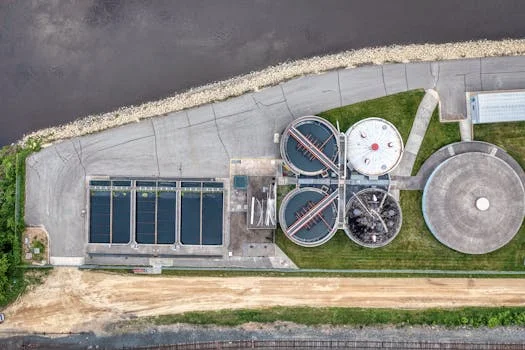
MBR cuts footprint by up to 60% because the membrane cassette replaces both the secondary clarifier and most tertiary filtration. On tight urban sites or brownfield upgrades, that delta often decides the project. MBR typically runs on PLC with remote monitoring, so one operator can oversee several plants; extended aeration uses simpler mechanics but wants eyes on the clarifier daily for RAS rates, DO, and early signs of bulking.
MBR maintenance is membrane-centric: CIP cycles, integrity tests, air-scour blower checks, and pump rebuilds. Extended aeration maintenance is mechanical: sludge wasting, clarifier scrapers, diffusers, and aeration equipment. Solids handling is shared by both, and an 8-step protocol for sludge press equipment maintenance applies equally to either process.
| Operational Aspect | MBR System | Extended Aeration System | Notes |
|---|---|---|---|
| Footprint Requirement | 60% less | Larger (requires clarifier and potentially larger aeration basin) | MBR is ideal for space-constrained sites. |
| Automation Level | High (PLC control, remote monitoring) | Medium (requires more manual oversight) | MBR is suitable for remote or unmanned operations. |
| Operator Skill Level | Higher (for membrane management and advanced controls) | Medium (for process monitoring and mechanical maintenance) | Both require skilled operators, but MBR demands specific membrane expertise. |
| Key Maintenance Tasks | Membrane cleaning (chemical/physical), inspection, integrity testing | Sludge wasting, clarifier scraper maintenance, DO control, aeration equipment | Membrane fouling is MBR's primary maintenance challenge. |
| Sludge Management | Produces less, highly concentrated sludge | Produces more sludge, lower concentration | MBR's longer SRT leads to less excess sludge. |
| Response to Influent Variability | Highly stable, consistent effluent quality | More sensitive to shock loads and flow variations | MBR's robust separation maintains performance. |
Which System Is Right for Your Application?
Pick on three axes: effluent target, influent strength, and site constraints. MBR is the right call when reuse quality, small footprint, or unmanned operation is the driver. With disinfection, MBR meets most California Title 22 reuse solids and turbidity targets; Directive 91/271/EEC secondary BOD and TSS limits also sit within typical MBR range. Sensitive-area nutrient limits under that Directive still need anoxic or anaerobic zones, the same as for extended aeration. Extended aeration fits sewer discharge or non-critical reuse (dust suppression, landscape irrigation) when lower CAPEX at small-to-mid flows outweighs the loss in clarity. For high-strength industrial streams above 500 mg/L BOD, MBR's higher loading tolerance usually wins on life-cycle cost. Underground or packaged deployments are a different shape of decision; a data-driven comparison of package sewage treatment plants covers those layouts.
| Decision Factor | MBR System Recommendation | Extended Aeration System Recommendation | Rationale |
|---|---|---|---|
| Effluent Quality Goal | High-quality reuse (e.g., irrigation, industrial process water, Title 22 compliance) | Discharge to sewer, non-critical reuse (e.g., dust suppression, landscape irrigation) | MBR's physical barrier ensures superior clarity, pathogen removal, and consistent quality. |
| Influent Strength | High-strength industrial wastewater (>500 mg/L BOD) | Medium-strength municipal or industrial wastewater (<500 mg/L BOD) | MBR tolerates higher organic loads within a smaller volume. |
| Site Footprint | Limited land availability (e.g., urban, existing plant upgrades) | Ample land available | MBR requires up to 60% less space due to membrane separation. |
| Automation & Staffing | Remote or unmanned sites, desire for high automation, reduced operator intervention | Sites with available operators for daily monitoring and adjustments | MBR's PLC control reduces labor; EA requires more manual process oversight. |
| Capital Budget | Higher initial investment capacity, focus on long-term ROI from water reuse | Lower initial investment budget is critical | EA offers lower CAPEX, making it attractive for budget-conscious projects. |
| Operational Complexity | Willingness to manage membrane-specific challenges (fouling, cleaning) | Desire for simpler biological process management | MBR requires membrane expertise; EA is more straightforward for biological process control. |
Selection Checklist Before You Decide
Use this as a pre-design filter when sizing either system:
- Confirm the effluent target (TSS, BOD, turbidity, pathogen log reduction) and the discharge or reuse rule it must meet.
- Characterize influent: average and peak BOD/COD, TSS, ammonia, temperature range, and any inhibitory compounds.
- Lock down the design flow (m³/d) and peak hourly factor; recheck CAPEX spread at your actual flow band.
- Confirm available footprint, headroom, and crane access for membrane cassette replacement.
- Decide who runs the plant: full-time operators or remote monitoring only, and the skill mix available.
- Budget for membrane replacement at $50–80/m² every 5–7 years on the MBR side, and for polymer or hauling surges on the EA side.
- Check power cost and aeration strategy; fine-bubble vs mechanical aeration changes OPEX materially on extended aeration.
Who This Is For / Where to Look Next
This comparison fits engineers and procurement leads evaluating biological secondary treatment for flows up to a few thousand m³/d where reuse quality, land cost, or operator availability is the deciding factor. Plants above ~10,000 m³/d, or those needing strict biological nutrient removal, sit outside this comparison and warrant a dedicated process selection. For a packaged or underground layout where MBR or extended aeration sits inside a skid, an underground package sewage treatment plant with A/O process is one option. For projects already leaning toward membranes, our MBR Membrane Bioreactor Wastewater Treatment System ships as a skid with 0.1 μm PVDF modules and PLC controls. Request a free quote with your flow, influent strength, and effluent target for a side-by-side CAPEX check.
Frequently Asked Questions
What are the disadvantages of MBR?
The main disadvantages of MBR are higher CAPEX than extended aeration, membrane fouling that requires scheduled chemical cleaning, higher energy use for air scouring, and membrane replacement every 5–7 years at roughly $50–80 per m² of membrane area.
What is the difference between conventional and extended aeration?
Extended aeration is a variant of the conventional activated sludge process that runs at much longer hydraulic retention times (typically 24–48 hours) and lower organic loading rates (F/M ≈ 0.1–0.2 kg BOD/kg MLSS·d), which gives lower sludge yield and more stable operation than conventional activated sludge.
Which is better: SBR or MBBR?
SBR runs in batch cycles (fill, react, settle, draw) and suits highly variable flows; MBBR uses free-floating biofilm carriers in a continuous-flow aeration basin for higher biomass in a smaller tank. Pick by flow pattern, footprint, and effluent target rather than by general ranking.
What is an advantage of MBR treatment for wastewater?
MBR delivers near-reuse effluent (TSS <5 mg/L, turbidity <1 NTU, about 6-log pathogen reduction) from a tank roughly 60% smaller than a comparable extended aeration plant, which is why it is the default for tight sites and reuse permits.
Can extended aeration meet Title 22 standards?
Extended aeration can only meet California Title 22 unrestricted reuse limits with substantial tertiary filtration (for example sand filters) and advanced disinfection (UV or chlorination). MBR already meets most Title 22 effluent parameters because the 0.1 μm membrane physically removes suspended solids and most pathogens before disinfection.