How UV Disinfection Works: The Science Behind Pathogen Inactivation
UV disinfection for wastewater treatment employs ultraviolet light at a specific wavelength of 254nm to effectively inactivate a broad spectrum of pathogens. This process operates by disrupting the nucleic acids—specifically DNA and RNA—within microorganisms. When exposed to UV-C radiation, these genetic materials absorb energy, leading to the formation of pyrimidine dimers. These molecular alterations prevent the microorganisms from replicating their genetic material, effectively rendering them unable to reproduce and cause infection. The goal is to achieve specific log reduction targets: a minimum of 3-log (99.9%) inactivation for bacteria, 4-log (99.99%) for viruses, and 2-log (99%) for protozoa, as recommended by EPA 2024 guidelines. It's important to understand that UV disinfection does not technically "kill" microorganisms in the traditional sense by lysing their cells. Instead, it inactivates them by disabling their reproductive capabilities, thereby preventing the spread of disease. Visually, one can imagine the UV lamp emitting photons that penetrate the water flow, exposing pathogens. Upon exposure, the DNA within these microbes undergoes disruption, leading to their inactivation and a safe discharge or reuse of the treated water.
Key Engineering Parameters: UV Dose, Intensity, and Transmittance Explained
The efficacy of any UV disinfection system is fundamentally governed by three critical engineering parameters: UV dose, UV intensity, and UV transmittance (UVT). These factors are intrinsically linked and directly influence the system's ability to achieve the required pathogen inactivation. The core relationship can be expressed by the formula: UV dose (mJ/cm²) = UV intensity (mW/cm²) × contact time (seconds) / UVT (%). For instance, a system operating at 100 mW/cm² intensity with a 2-second contact time, treating water with 60% UVT, would deliver approximately 33.3 mJ/cm² of UV dose. UV Transmittance (UVT) at the germicidal wavelength of 254nm is a crucial indicator of water clarity and its ability to allow UV light penetration. Treated wastewater typically exhibits UVT values ranging from 40% for secondary effluent to 70% for tertiary-treated water. Lower UVT values necessitate higher UV intensity, longer contact times, or a combination of both to compensate for reduced light penetration. Lamp intensity benchmarks vary by type; low-pressure UV lamps generally provide intensities between 50–100 mW/cm², while medium-pressure lamps can achieve 100–200 mW/cm², offering higher output but often at a greater energy cost. Contact time, measured in seconds, is a function of the reactor's hydraulic design, specifically the flow velocity through the UV exposure chamber. Typical contact times for industrial applications range from 1 to 10 seconds. It is vital to recognize that suspended solids (TSS) and dissolved organic matter significantly impact UVT by absorbing and scattering UV light. Effective pretreatment, such as dissolved air flotation (DAF) systems, can dramatically improve UVT. For example, DAF pretreatment can improve UVT by 20–30% by removing 92–97% of TSS, thereby enhancing UV disinfection efficiency. For more details on how DAF systems improve UVT for UV disinfection, refer to our article on how DAF systems improve UVT for UV disinfection.
| Parameter | Typical Range/Value | Impact on UV Disinfection |
|---|---|---|
| UV Dose (mJ/cm²) | 20-100+ (application dependent) | Directly correlates to pathogen inactivation log reduction. Higher dose = greater inactivation. |
| UV Intensity (mW/cm²) | 50-200 (lamp type dependent) | Higher intensity reduces required contact time for a given dose. |
| Contact Time (seconds) | 1-10 (reactor design dependent) | Longer contact time allows for higher UV dose at a given intensity. |
| UV Transmittance (UVT at 254nm) | 40-70% (wastewater quality dependent) | Lower UVT requires higher intensity or longer contact time due to light scattering/absorption. |
| Suspended Solids (TSS) | Varies widely | Absorbs and scatters UV light, reducing UVT and overall disinfection efficacy. |
UV Disinfection System Design: Sizing, Reactor Configurations, and Flow Management
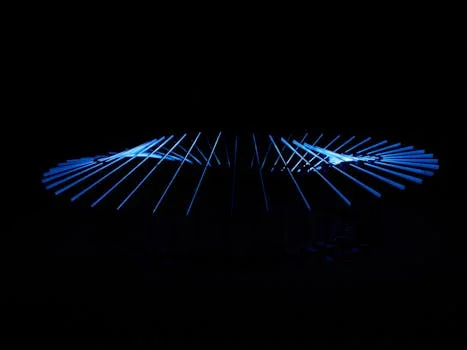
Proper system sizing and reactor configuration are paramount for ensuring reliable and efficient UV disinfection. The fundamental sizing formula for a UV system is: Flow rate (m³/h) × UV dose (mJ/cm²) / (UVT × lamp efficiency) = Required UV power (mW/cm²). For instance, to treat 100 m³/h of wastewater requiring a 40 mJ/cm² dose with a water UVT of 60% and assuming a lamp efficiency of 0.8, the required UV intensity output would be approximately 83.3 mW/cm². Reactor configurations are broadly categorized into open-channel systems, typically used in larger municipal applications where space is less constrained, and closed-vessel systems, preferred for industrial applications due to their compactness and containment. Modular designs also offer scalability for growing treatment needs. Open-channel systems generally present a lower capital cost but require a larger footprint. Conversely, closed-vessel systems offer better control over flow dynamics and are more easily integrated into existing plant layouts. Effective flow management is critical to prevent short-circuiting, where a portion of the wastewater bypasses the UV exposure zone, leading to under-dosing. Uniform velocity profiles within the reactor are essential, and for larger or complex systems, computational fluid dynamics (CFD) modeling can be invaluable for optimizing flow patterns. Common design pitfalls to avoid include inadequate lamp spacing, which can lead to uneven UV distribution; poor inlet and outlet designs that disrupt flow uniformity; and a lack of redundancy, such as insufficient backup lamps, to ensure continuous disinfection during maintenance or lamp failures.
UV vs. Chlorine vs. Ozone: Which Disinfection Method is Best for Your Wastewater?
Selecting the optimal disinfection method for industrial wastewater involves a careful evaluation of various factors, including efficacy, operational costs, environmental impact, and regulatory compliance. UV disinfection, chlorine dioxide (ClO₂), and ozone (O₃) each present distinct advantages and disadvantages.
| Parameter | UV Disinfection | Chlorine Dioxide (ClO₂) | Ozone (O₃) |
|---|---|---|---|
| Log Reduction (Typical) | 3-4+ log (bacteria, viruses) | 3-5+ log (bacteria, viruses, protozoa) | 4-6+ log (bacteria, viruses, protozoa) |
| Chemical Residue | None | Yes (chlorites, chlorates) | None (dissipates quickly) |
| Disinfection Byproducts (DBPs) | None | Potential (e.g., trihalomethanes) | Minimal, but can form bromate in bromide-containing waters |
| CAPEX | Moderate to High | Low to Moderate | High |
| OPEX | Low (energy, lamp replacement) | Moderate (chemical cost, labor) | High (energy for generation) |
| Maintenance | Lamp replacement, quartz sleeve cleaning | Chemical handling, dosing equipment maintenance | Ozone generator maintenance, off-gas destruction |
| Application Suitability | Food/Bev (no taste/odor), Water Reuse, Sensitive Discharges | Municipal (residual protection), Large Scale | High Pathogen Load, Oxidation Needs (e.g., color, odor) |
UV disinfection's primary advantage lies in its chemical-free operation, eliminating concerns about disinfection byproducts (DBPs) and leaving no residual in the treated water, making it ideal for environmentally sensitive discharges or direct water reuse applications. Chlorine dioxide generators, such as those from HydropureWater, offer robust disinfection capabilities and can provide a residual effect, but require careful chemical handling and monitoring to manage potential DBPs. For a detailed comparison of disinfection methods, including chlorine dioxide, explore our article on how does a chlorine dioxide generator work. Ozone is the most potent oxidant, effective against a wide range of microorganisms including resistant protozoa, but its high energy consumption for generation and associated equipment costs can be significant. For instance, UV disinfection is the preferred choice in the food processing industry to avoid imparting taste or odor to the product. Chlorine is often favored in large-scale municipal plants for its cost-effectiveness and residual protection. Ozone can be considered for high-demand applications like hospital wastewater treatment where a high degree of inactivation is critical. For detailed information on medical wastewater treatment and its relevance to UV disinfection, refer to our guide on hospital wastewater treatment and our Medical Wastewater Treatment System.
Industrial Wastewater Applications: UV Disinfection for Food Processing, Hospitals, and Municipal Plants
UV disinfection is a versatile technology applicable across a wide array of industrial sectors, each with specific pretreatment requirements and regulatory targets. In the food processing industry, UV disinfection is widely adopted for treating wastewater from dairy, meat, and beverage operations. Its key advantage here is the absence of chemical residues, which is critical for meeting stringent FDA and EPA standards for water reuse and preventing any impact on product taste or odor. For example, a 50 m³/h UV system was successfully implemented in a cheese plant in Wisconsin in 2024, demonstrating excellent performance in inactivating pathogens. Effective pretreatment, such as DAF systems, is often employed to remove suspended solids and improve UVT. For hospitals and healthcare facilities, UV disinfection plays a vital role in inactivating antibiotic-resistant bacteria (e.g., MRSA, E. coli) commonly found in medical wastewater. Our Medical Wastewater Treatment System is specifically designed for these demanding applications, consistently achieving over 99% kill rates. Membrane bioreactor (MBR) systems are frequently integrated with UV disinfection in hospital settings to achieve superior effluent quality prior to UV treatment. In the municipal sector, UV disinfection is a standard technology for tertiary treatment, particularly before discharge to receiving waters or for water reuse initiatives. A significant 5,000 m³/h UV system installed in California in 2023 successfully met stringent regulatory requirements for 4-log virus inactivation. Pretreatment for municipal wastewater often involves secondary or tertiary treatment processes to reduce TSS and BOD, thereby optimizing UV system performance.
For wastewater treatment in food processing, consider our dissolved air flotation (DAF) machine. For demanding applications like hospital wastewater, our medical wastewater treatment system is an ideal solution. To achieve high-quality effluent suitable for UV disinfection, integrating with MBR systems is often recommended.
Cost Breakdown: UV Disinfection System CAPEX, OPEX, and ROI Calculation
Understanding the cost implications of UV disinfection is crucial for budgeting and investment justification. The Capital Expenditure (CAPEX) for a UV disinfection system typically includes several components: UV lamps (approximately 30%), the reactor vessel (25%), the control system (20%), installation costs (15%), and miscellaneous expenses (10%). For a mid-sized system capable of treating 100 m³/h, the CAPEX can range from $150,000 upwards, depending on system complexity and features. Operational Expenditure (OPEX) primarily consists of energy consumption (around 40%), periodic lamp replacement (30%), routine maintenance (20%), and system cleaning (10%). For a larger system processing 500 m³/h, OPEX can be as low as $0.05 per cubic meter. The Return on Investment (ROI) for UV disinfection is often realized through reduced operational costs compared to chemical disinfection methods. For example, a food processing plant might find that a UV system provides a payback period of approximately 3 years compared to using chlorine, due to lower chemical procurement, reduced labor for chemical handling, and avoidance of potential compliance penalties related to DBPs. Cost-saving strategies can be implemented through the selection of energy-efficient lamps, the integration of automated cleaning systems for quartz sleeves, and opting for modular designs that allow for phased capacity expansion as treatment needs grow.
| Cost Component | Typical Percentage of CAPEX | Typical Percentage of OPEX |
|---|---|---|
| UV Lamps | 30% | 30% |
| Reactor Vessel | 25% | - |
| Control System | 20% | - |
| Installation | 15% | - |
| Energy | - | 40% |
| Maintenance | - | 20% |
| Cleaning | - | 10% |
| Miscellaneous | 10% | - |
How to Select the Right UV Disinfection System: A Step-by-Step Decision Framework
Selecting the appropriate UV disinfection system requires a systematic approach to ensure it meets all operational and regulatory demands. Follow these six steps to guide your decision-making process:
- Define Effluent Quality and Regulatory Targets: Clearly establish the required effluent quality parameters, including UVT, TSS, BOD, and COD. Simultaneously, identify the specific log reduction targets for bacteria, viruses, and protozoa mandated by local, regional, and national regulations (e.g., EPA discharge permits).
- Calculate Required UV Dose: Based on the pathogen inactivation targets and the anticipated UVT of the treated wastewater, calculate the minimum UV dose (mJ/cm²) necessary. For instance, achieving 4-log virus inactivation in water with 60% UVT typically requires a dose of at least 40 mJ/cm².
- Determine Flow Rate and Reactor Configuration: Accurately assess the maximum and average flow rates of the wastewater stream. Select the most suitable reactor configuration (open-channel or closed-vessel) based on space availability, footprint constraints, and the nature of the wastewater.
- Compare Lamp Types and System Specifications: Evaluate different UV lamp technologies (low-pressure vs. medium-pressure) based on their intensity output, energy efficiency, and lifespan. Consider the overall system design, including the number of lamps, their arrangement, and the reactor's hydraulic efficiency.
- Evaluate Control Systems and Monitoring Capabilities: Assess the sophistication of the control system. Options range from manual operation to advanced automated systems with real-time UV intensity monitoring, automatic wiper systems, and data logging for performance tracking and compliance reporting.
- Request Quotes and Validate with Pilot Testing: Obtain detailed proposals from reputable manufacturers, ensuring they clearly outline system specifications, performance guarantees, and warranty terms. For wastewater streams with highly variable quality or high TSS concentrations, conducting pilot testing is highly recommended to validate system performance and optimize design parameters before full-scale installation.
Frequently Asked Questions
What is the primary mechanism of UV disinfection in wastewater?
UV disinfection inactivates microorganisms by exposing them to germicidal UV light (254nm wavelength), which damages their DNA and RNA, preventing them from replicating and causing infection.
What is UV Transmittance (UVT) and why is it important?
UVT measures the percentage of UV light at 254nm that passes through a water sample. It's crucial because lower UVT, caused by suspended solids and organics, reduces UV light penetration and necessitates a higher UV dose for effective disinfection.
How is the required UV dose calculated?
The UV dose is calculated by multiplying UV intensity by contact time and dividing by UV Transmittance (UV Dose = Intensity × Time / UVT). This formula ensures adequate light exposure for pathogen inactivation.
Are there any byproducts formed during UV disinfection?
No, UV disinfection is a chemical-free process and does not create disinfection byproducts (DBPs) like chlorine-based methods. This makes it environmentally friendly and suitable for water reuse.
What are the typical log reduction targets for UV disinfection in wastewater?
EPA guidelines typically recommend a minimum of 3-log reduction for bacteria, 4-log for viruses, and 2-log for protozoa, depending on the specific application and discharge requirements.
How does UV disinfection compare to chlorine disinfection in terms of cost?
While initial CAPEX for UV systems can be higher, their OPEX is often lower due to the absence of chemical purchase and handling costs. Long-term ROI can be favorable, especially in applications where DBPs are a concern.
Can UV disinfection treat wastewater with high levels of suspended solids?
High suspended solids reduce UVT. Effective pretreatment, such as DAF or MBR systems, is often necessary to remove solids and improve UV efficiency before UV disinfection.
What is the lifespan of UV lamps in a disinfection system?
The operational lifespan of UV lamps typically ranges from 8,000 to 12,000 hours, after which they need to be replaced to maintain optimal UV output and disinfection efficacy.
Related Equipment
- chlorine dioxide generators for comparison — view specifications, capacity range, and technical data
Need a customized solution? Request a free quote with your specific flow rate and pollutant parameters.