The submerged membrane bioreactor cost for PVDF modules typically runs $7–10.50/m², with compact packages near $2,700–3,000/set. At installed scale, membrane bioreactor cost is usually $150–300/m³/day of capacity. Operating expenditure sits near $0.35–0.65/m³ treated under common industrial tariffs. Field comparisons from 2025 show MBR lifetime cost 20–35% below SBR when high-grade reuse is the project requirement.
What Sets Submerged Membrane Bioreactor Cost?
Capital for a submerged train is set by membrane area, design flux, and tank layout. PVDF flat-sheet media in the 80–225 m² class often prices at $7–10.50/m². Turnkey industrial plants commonly land at $150–300/m³/day installed. Operating cost is usually $0.35–0.65/m³, with energy near 60% of that total under industrial power tariffs.
Submerged MBR capital spending is set mainly by membrane area, flux design, and tank configuration. Module media often prices at $7–10.50/m² for PVDF flat sheets in the 80–225 m² class. Turnkey industrial plants commonly land at $150–300/m³/day installed. Typical OPEX is $0.35–0.65/m³, with energy about 60% of that total under industrial electricity tariffs.
High-strength food wastewater needs more membrane area than greywater at the same daily flow. Flux and solids loading drive cassette count faster than nameplate m³/day alone. Most plants we size for industrial reuse run at the lower end of the flux window to protect cleaning intervals and TMP stability.
A standard 32 m³/day capacity module typically prices near $2,700 on current supplier lists. Larger integrated units around 135 m³/day can exceed $3,000 per set. An MBR Membrane Bioreactor Wastewater Treatment System for 10–2,000 m³/day generally costs 15–25% more in upfront capital than a modular retrofit into existing concrete tanks. The integrated route can cut land use by up to 60% and reduce onsite civil work for the same hydraulic load.
Frames in 304 or 316 stainless steel with 0.1 μm PVDF membranes cost more up front but slow replacement cycles. Modern submerged trains use 10–20 times less energy than older external cross-flow loops. Coarse-bubble aeration covers both oxygen demand and membrane scouring in one duty for most industrial MLSS ranges.
Buyers who need a wider checklist on typical costs for a membrane bioreactor system can use that sibling guide with the component ranges below. Keep both sheets in the bid file so media, frames, and PLC lines stay comparable across vendors.
| Component/Factor | Estimated Price Range (USD) | Impact on Total CAPEX |
|---|---|---|
| PVDF Membrane Module (per m²) | $7.00 – $10.50 | 30–40% |
| Integrated System (per set) | $2,700 – $3,000+ | 50–70% |
| Stainless Steel Frame/Housing | $500 – $1,200 | 10–15% |
| Control & Automation (PLC) | $1,500 – $5,000 | 5–10% |
MBR Wastewater Treatment Plant Cost Breakdown
An mbr wastewater treatment plant cost model for turnkey industrial systems typically ranges from $150 to $300 per m³/day of treatment capacity. In 2025, average industrial MBR OPEX sits between $0.35 and $0.65/m³ of treated effluent. Local electricity tariffs and CIP chemical prices move that band more than membrane brand alone for most plants.
Industrial submerged MBR duty in this guide stays at 0.8–1.2 kWh/m³ because membrane scour sits on top of process air. Do not paste the municipal aerobic figure onto a food or textile train.
US EPA publishes a page titled Membrane Bioreactors - Wastewater Management Fact Sheet. Use that public overview for process context, then price media and packages from the tables in this guide.
Energy remains the largest OPEX share at about 60% of daily running cost. Submerged MBRs require 0.8–1.2 kWh/m³ for aeration blowers and permeate suction pumps. Membrane replacement every 5 to 7 years is roughly 20% of lifecycle cost. Fouling control, stable flux, and sensible scour rates stretch cassette life and cut the annualized replacement line.
CIP chemicals usually add $0.05–0.10/m³ on food and textile trains with routine maintenance cleans. Labor often stays under one hour of daily oversight, or about $0.02–0.05/m³ at typical operator wage rates. Procurement teams should model five-year OPEX next to hardware quotes when comparing membrane bioreactor cost across vendors.
Chemical cleaning on a municipal anaerobic SAF-MBR pilot was about $0.0031/m³ ($11/MG), per the California Energy Commission (2024). Food and textile trains here still carry $0.05–0.10/m³ because CIP is more frequent. Keep municipal sewage chemistry off an industrial CIP line.
| OPEX Category | Cost per m³ (USD) | Percentage of OPEX |
|---|---|---|
| Electricity (0.8–1.2 kWh/m³) | $0.20 – $0.35 | 60% |
| Membrane Replacement (Annualized) | $0.07 – $0.13 | 20% |
| Chemicals (CIP/Cleaning) | $0.05 – $0.10 | 15% |
| Maintenance & Labor | $0.02 – $0.05 | 5% |
Industrial MBR System CAPEX per Cubic Meter
Industrial MBR system CAPEX per cubic meter of daily capacity usually falls between $150 and $300/m³/day once tanks, blowers, and controls are in the price. Most plants we size for food wastewater land near the top of that band. Greywater at the same flow often stays near the bottom because membrane area is smaller.
A modular retrofit into existing concrete tanks generally costs 15–25% less up front than a new integrated package for 10–2,000 m³/day. The integrated route can still cut land use by up to 60%. Revisit the submerged membrane bioreactor cost after peak-day flux is fixed, not on nameplate flow alone.
New conventional plants are often priced at $1,300 to $2,600 per m³/d in the California Energy Commission report (2024). The same note quotes $5 to $10 per gallon per day for a 12 MGD works. That full-plant range is not the industrial package band of $150–300/m³/day.
What Is MBR Membrane Price Today?
MBR membrane price for industrial PVDF flat-sheet media commonly falls between $7 and $10.50 per square meter for the module alone. An 80 m² cassette lands near $840 at $10.50/m². A 225 m² cassette is about $2,360 at the same unit rate before frames, headers, and controls.
PVDF flat sheet membrane modules from 80–225 m² are the media package most plants compare first in competitive bids. Stainless frames add $500–$1,200 depending on grade and cassette height. PLC packages often add $1,500–$5,000 depending on I/O density and redundancy needs.
Submerged membrane module price also moves with polymer grade, pore rating near 0.1 μm, and cassette mechanical design. Quote apples-to-apples on active area, guaranteed flux at a stated MLSS and temperature, and CIP chemical compatibility before ranking unit rates.
Screen the membrane bioreactor price on active area, not on a cassette nickname. Headline totals for the europe membrane bioreactor (mbr) market and the wider membrane bioreactor market change with the publisher. They are not a substitute for the $7–10.50/m² media line on your bid tab.
A 12 MGD anaerobic SAF-MBR model in the California Energy Commission report (2024) used $25/m² for ZeeWeed 500 membranes with a 10-year life. That municipal anaerobic allowance is not the industrial PVDF flat-sheet band of $7–10.50/m². Keep the two scopes on separate lines in the comparison sheet.
MBR vs SBR Lifecycle Cost Comparison
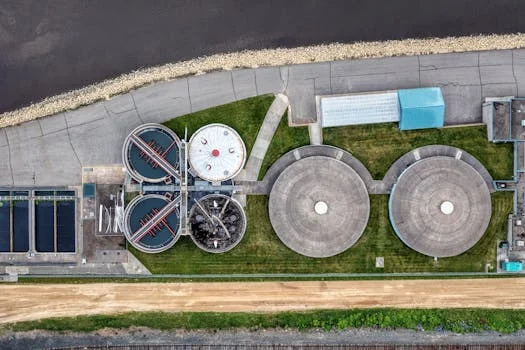
MBR effluent turbidity stays below 1 NTU in well-operated trains. Sequencing batch reactors more often leave 5–15 NTU after clarification. Dissolved air flotation alone typically leaves 20–50 NTU and does not deliver biological nutrient removal or pathogen barriers needed for high-grade reuse.
DAF still earns its keep as pretreatment for oil, grease, and solids before biology. Many reuse trains place an integrated MBR wastewater treatment system for 10–2,000 m³/day after DAF polishing duty. Footprint for MBR is about 60% smaller than conventional SBR layouts on the same design flow.
SBR OPEX can look lower on paper at $0.25–0.45/m³. Lifetime cost in reuse duty is still often 20–35% higher than MBR because tertiary filters and land both add cost. Sites comparing civil packages sometimes also review prefabricated versus traditional pump station construction costs when wet-well and transfer scope sits on the same CAPEX sheet.
| Metric | MBR System | SBR System | DAF System |
|---|---|---|---|
| Effluent Quality (Turbidity) | < 1 NTU | 5–15 NTU | 20–50 NTU |
| Footprint Requirement | Minimal (1x) | Large (2.5x) | Moderate (1.5x) |
| OPEX per m³ | $0.35 – $0.65 | $0.25 – $0.45 | $0.30 – $0.50 |
| Water Reuse Suitability | Direct Reuse | Requires Filtration | Pretreatment Only |
| CAPEX Intensity | High | Medium | Low/Medium |
What Is Submerged Membrane Bioreactor Structure?
Submerged membrane bioreactor structure places flat-sheet or hollow-fiber cassettes inside the aeration tank rather than in an external loop. Diffusers under the cassette scour the membrane surface while the biology removes BOD and nutrients in the same volume. That single-tank layout is why footprint stays smaller than clarifier-based trains.
A typical cassette stack includes membrane sheets or fibers, a stainless support frame, permeate headers, and air scour piping. Permeate leaves under mild suction through the header. Mixed liquor stays in the bioreactor at elevated MLSS compared with conventional activated sludge plants.
Use this structure checklist before freezing drawings and equipment datasheets. Confirm tank freeboard for cassette lifts and maintenance clearances around the train. Size air scour separately from process oxygen demand at the design MLSS. Specify 304 or 316 frames for chloride risk in coastal or brine-exposed plants.
Lock PLC I/O for TMP, DO, and CIP sequences before FAT. Reserve space for one spare cassette bay if expansion is likely within five years.
Submerged MBR ROI for Industrial Water Reuse
Submerged MBR ROI for industrial water reuse often lands at a 3 to 5 year payback when freshwater displacement is the design case. HydropureWater field data from 2025 shows facilities can recycle up to 80% of process water when reuse quality is the design target. That utility offset is what pays the CAPEX back in most industrial cases.
Payback in textile, food processing, and pharmaceutical plants is often 3 to 5 years. For 500 m³/day, annual savings can reach $180,000 under typical municipal water tariffs. Against $600,000 installed CAPEX, simple payback is about 3.2 years. Some regions still offer 10–20% CAPEX rebates for industrial water conservation projects.
"For a 500 m³/day facility, switching to an MBR system typically reduces freshwater intake by 70%, resulting in an average annual utility savings of $150,000–$200,000, depending on local water tariffs."
According to US EPA (2016), decentralized MBR reuse avoids 0.94 to 0.96 m³ of drinking water per m³ of wastewater treated. Net energy benefits for an aerobic MBR, once that displaced drinking water is counted, start at the 1 MGD scale in the same study. A 500 m³/day plant is below 1 MGD, so cash savings can still show a 3.2 year payback while the full energy balance stays local.
Build the business case with CAPEX, five years of OPEX, and circular-water savings in one model. Strict enforcement markets raise the cost of non-compliance fast enough that payback shortens further. Compliance framing used in guides such as Thailand wastewater treatment standards and compliance helps finance teams stress-test discharge-fee risk.
Lock these cost drivers before award so vendor bids stay comparable. Confirm design flux and membrane area for the peak day, not only average flow. Confirm the energy tariff assumed for 0.8–1.2 kWh/m³ in the operating model.
Set cassette life at 5–7 years in the OPEX sheet used by finance. Include CIP chemical unit cost, civil footprint credit versus SBR, and any rebate percentage on CAPEX.
Who This Is For / Next Step
Plant engineers and EPC buyers sizing industrial reuse, municipal polish, or space-constrained upgrades are the readers this cost sheet is built for. Look elsewhere if you only need oil and solids removal without biology—DAF alone may be enough. If you already have flow, COD, and reuse targets, send them through our request a project quote form for a capacity-matched CAPEX and OPEX sketch.
Frequently Asked Questions
Module price, 1 MLD plant CAPEX, lifecycle cost versus SBR, operating cost shares, and cassette expansion are the five buyer questions below.
What is the cost of a 1 MLD STP using MBR?
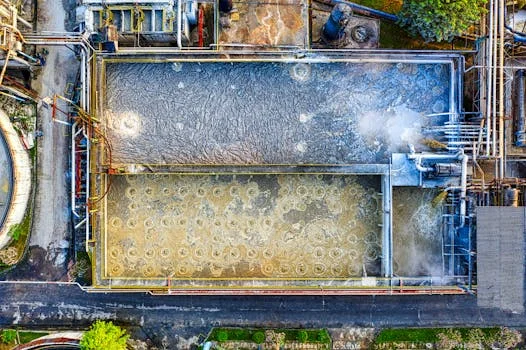
A 1,000 m³/day submerged MBR sewage treatment plant generally costs between $150,000 and $300,000 installed for industrial-grade packages. Daily operating cost typically ranges from $0.40 to $0.65 per cubic meter treated under common electricity and CIP assumptions. Final quotes still move with civil scope, stainless grade, and automation depth. Ask vendors to separate membrane media, frames, and tanks in the bill of quantities.
How much does an MBR membrane module cost?
Individual PVDF flat sheet membrane modules range from $7 to $10.50 per square meter for the media. For a standard 80 m² module, the price is approximately $840. A high-capacity 225 m² module costs around $2,360 before frames and controls. Confirm active area, pore rating near 0.1 μm, and flux warranty conditions before comparing unit rates across suppliers.
Is MBR cheaper than SBR?
MBR is usually more expensive than SBR on initial CAPEX. On a 10-year total cost of ownership in water reuse applications, MBR is often 20–35% cheaper because tertiary filtration and land both shrink. SBR OPEX can look lower day to day, yet reuse trains still need filters that MBR already replaces. Choose SBR when reuse is not required and land is inexpensive.
What affects submerged MBR operating cost?
The four primary factors are energy consumption at about 60% of OPEX, membrane replacement near 20%, chemical usage for cleaning near 15%, and labor or maintenance near 5%. Specific energy of 0.8–1.2 kWh/m³ sets the electricity line. Reducing excess aeration while holding TMP stable is the fastest OPEX cut most plants can make without changing hardware.
Can MBR systems be expanded if production increases?
Yes, submerged MBR technology is modular by design. Capacity rises by adding membrane cassettes or installing additional integrated modules in parallel on a shared permeate and air header. Reserve tank freeboard and blower margin during first build so later cassettes do not force a full civil rebuild. Most industrial skids we supply keep one bay free when five-year growth is already on the master plan.
Further Reading
Explore these in-depth articles on related wastewater treatment topics: