A prefabricated wastewater pumping station lifts sewage from low areas, overcomes elevation changes, and moves flow to treatment. Collection systems use them at every scale, from a single residential duplex unit to multi-pump trunk stations handling thousands of cubic meters per hour.
For decades, cast-in-place concrete wet wells with above-ground pump houses were the default. Over the past 20 years, prefabricated (packaged or integrated) stations have taken a larger share of small and medium projects. This comparison covers construction time, installed capital cost, lifecycle maintenance, and selection limits so you can match the station type to flow, depth, site constraints, and schedule.
Prefabricated vs Traditional Pump Stations at a Glance
Prefabricated pump stations typically cut installed capital cost by 30–40% for a 50 L/s duplex municipal station and compress project duration from 37–74 weeks to 18–40 weeks. Factory-built GRP or HDPE wet wells resist H₂S without 10–15 year recoating cycles common on unprotected concrete. Traditional cast-in-place still fits flows above 500 L/s or depths over 12 m.
What Is a Prefabricated Pump Station?
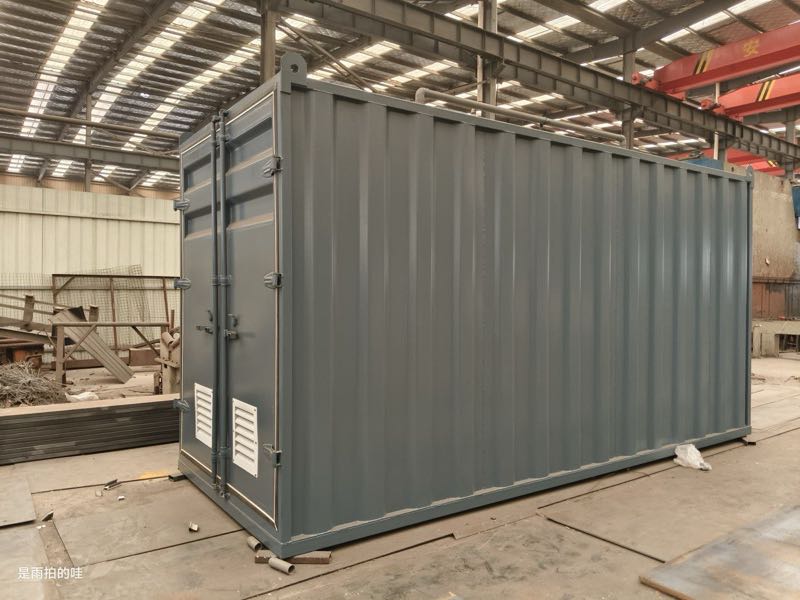
A prefabricated pump station is a factory-built unit that arrives on site substantially complete. The wet well (typically GRP/fiberglass or HDPE), pumps, piping, valves, guide rails, level controls, and control panel are pre-assembled and tested before shipment. On site, crews lower the unit into an excavation, connect the incoming sewer and force main, backfill, and commission.
Modern units span small residential packages (5–10 L/s) to large municipal packages (500+ L/s). The approach shares DNA with underground integrated treatment plants — factory-built, quality-controlled, and sized for rapid deployment.
What Is a Traditional Pump Station?
A traditional pump station is a site-built structure. It usually includes a cast-in-place or precast concrete wet well, sometimes a separate dry well for the pumps, a pump house or enclosure, and pumps, piping, valves, and controls specified and installed one by one. Design, procurement, and assembly all happen on the construction site under the general contractor.
How Much Does Pump Station Construction Cost?
Pump station construction cost is driven by wet-well structure, pumps and controls, site civil work, and schedule-related contractor overhead, not by a single equipment line item. For a representative medium municipal sewage station (50 L/s design flow, 8 m total dynamic head, duplex submersible pumps), full installed cost typically lands at $175,000–300,000 for traditional cast-in-place versus $113,000–191,000 for a packaged station.
Those figures are station-level installed costs. They are not water treatment plant construction cost per MGD or per m³/d plant benchmarks; treatment-train cost per capacity unit belongs in plant estimating, while this comparison stays on lift-station scope.
| Cost Category | Traditional | Prefabricated |
|---|---|---|
| Engineering & design | $25,000–40,000 | $10,000–20,000 |
| Wet well structure | $40,000–70,000 | Included in package |
| Pumps & controls | $35,000–55,000 | Included in package |
| Piping, valves, fittings | $15,000–25,000 | Included in package |
| Packaged station (complete) | — | $80,000–130,000 |
| Site excavation & backfill | $15,000–25,000 | $10,000–18,000 |
| Concrete work (base slab) | $8,000–15,000 | $5,000–8,000 |
| Electrical installation | $12,000–20,000 | $5,000–10,000 |
| Above-ground structure | $20,000–40,000 | $0 (all below grade) |
| Commissioning | $5,000–10,000 | $3,000–5,000 |
| Total installed cost | $175,000–300,000 | $113,000–191,000 |
For this representative project, the prefabricated station is 30–40% less expensive on an installed-cost basis. Savings come from shorter engineering, no above-ground pump house, less site duration (lower contractor overhead), and factory assembly efficiency. The gap narrows above about 200 L/s and for unusual geometry, very deep installs, or non-standard duties that standard packages cannot absorb.
Construction Time Comparison
Schedule is where packaged stations show the sharpest edge for most plants we size under 200 L/s:
| Phase | Traditional | Prefabricated |
|---|---|---|
| Design & engineering | 8–16 weeks | 4–8 weeks |
| Permitting | 4–12 weeks | 4–12 weeks (same) |
| Procurement | 12–20 weeks | 8–14 weeks (factory lead time) |
| Site preparation | 2–4 weeks | 1–2 weeks |
| Wet well construction | 6–12 weeks | 1–2 days (crane set) |
| Mechanical/electrical install | 4–8 weeks | Pre-installed (1–3 days on site) |
| Commissioning | 1–2 weeks | 2–5 days |
| Total project duration | 37–74 weeks | 18–40 weeks |
Time savings come from parallel work — the station is built in the factory while site preparation proceeds — and from removing wet trades on site (no formwork, rebar, pour, or cure). For emergency replacements or grant deadlines, that schedule gap often decides the type.
Lifecycle Cost and Maintenance
Lifecycle cost for a lift station is dominated by corrosion protection, access labor, and odor controls, not only pump energy. Plant owners comparing package versus cast-in-place should also review broader maintenance cost for waste water treatment plants when the station feeds a package plant or headworks with shared O&M budgets.
Corrosion Resistance
Wastewater pump stations are aggressively corrosive. Hydrogen sulfide (H₂S) attacks concrete and metal above the water line, while the wastewater corrodes submerged metals.
- Traditional concrete wet wells: Concrete is highly susceptible to H₂S-induced corrosion (biogenic sulfuric acid attack). Unprotected concrete can lose 5–10 mm of thickness per year in severe conditions. Protective coatings (epoxy, polyurea) help but need reapplication every 10–15 years at significant cost.
- Prefabricated GRP/HDPE wet wells: These materials resist H₂S corrosion, chemical attack, and biological degradation. A GRP wet well does not corrode in a wastewater environment, which removes coating cycles and recoating cost.
Structural Longevity
A well-built concrete wet well, if properly protected, has a design life of 50–75 years. A GRP prefabricated wet well has a design life of 50+ years with essentially zero structural maintenance. In practice, concrete protection is often thin or ages poorly, cutting effective life to 25–40 years without costly rehabilitation.
Pump Access and Maintenance
Prefabricated stations with submersible pumps on guide rails allow removal without confined-space entry — a crane lifts the pump from grade. Traditional dry-well stations require entry into a separate pump chamber, which adds confined-space protocols and higher labor cost.
What About Dosing Pump Maintenance Packs?
Dosing pump maintenance packs cover metering-pump wear parts (diaphragms, check valves, seals) on chemical feed skids used for sulfide and odor control. Budget them as consumables on a 6–24 month cycle depending on duty and chemical, separate from wet-well structural O&M. Integrated dosing skids still need those spare kits and calibrated flow-proportional control.
Odor Control
Prefabricated stations are more odor-contained because they sit fully sealed below grade with only small surface vents. Traditional stations with above-ground pump houses often vent odorous air. Near residences, that containment can avoid a separate odor system — a savings of $15,000–50,000.
Quality Control: Factory vs Field
Factory fabrication improves quality relative to field builds in four practical ways:
- Controlled environment: No rain delays, temperature extremes, or wind affecting construction quality.
- Specialized workforce: Factory technicians who build pump stations repeatedly, versus field crews who may build one every few years.
- Factory testing: The complete station — pumps, controls, level sensors, valves — can be wet-tested before shipment. Problems are fixed in the factory, not on site.
- Consistent quality: Production jigs, templates, and QC processes keep units on specification. Field quality varies with the contractor.
When to Choose a Prefabricated Wastewater Pumping Station
A prefabricated wastewater pumping station is the clear choice when flow, schedule, neighbors, and corrosion risk align with package limits:
- Flow rate is under 200 L/s: This is the sweet spot for standard prefabricated designs.
- Fast delivery is required: Emergency replacements, fast-track developments, or grant-funded projects with tight deadlines.
- The site is near residences: Below-grade installation cuts visual impact, noise, and odor.
- Corrosion is a concern: High H₂S environments, coastal areas, or aggressive groundwater.
- Long-term maintenance cost matters: The low-maintenance GRP/HDPE structure outperforms concrete on a lifecycle basis.
- Remote locations: Shorter on-site work reduces mobilization cost and community disruption.
Selection checklist before you freeze the type:
- Confirm design flow (L/s) and whether it stays under about 200 L/s for standard packages.
- Confirm total dynamic head and wet-well depth; flag depths above 12 m for structural review.
- Require H₂S and groundwater data for corrosion and anti-flotation design.
- Map neighbors and odor-sensitive receptors within a few hundred meters.
- Lock factory lead time (often 8–14 weeks) against permit and civil schedules.
- Specify N+1 pumps and backup power where overflow would harm property, health, or receiving water.
- Decide whether chemical dosing for sulfide control must ship integrated or as a separate skid.
When to Choose Traditional
Traditional cast-in-place stations remain appropriate when:
- Very large flows (>500 L/s): Wet-well dimensions exceed standard prefabricated sizes, and the cost advantage shrinks.
- Complex geometry: Non-circular shapes, multiple inlets at varying depths, integrated overflow structures, or combined sewer layouts may need custom concrete.
- Extreme depths (>12 m): Very deep installs may need reinforced concrete, especially in poor soils or high groundwater.
- Integration with other structures: When the station sits inside a larger treatment complex.
- Local regulations require it: Some jurisdictions have not yet updated standards to name prefabricated stations explicitly, though this is becoming rare.
Chemical Dosing Integration
Modern pump stations increasingly include chemical dosing for odor and corrosion control. Hydrogen sulfide — formed under anaerobic conditions in gravity sewers — drives odor complaints, infrastructure attack, and worker exposure risk. Common control strategies include:
- Ferric or ferrous dosing at the pump station: Precipitates dissolved sulfide and limits H₂S release. Requires an Automatic Chemical Dosing System with flow-proportional control.
- Calcium nitrate dosing: Provides an alternative electron acceptor, limiting sulfate reduction and sulfide formation. Dosed upstream in the sewer.
- Magnesium hydroxide dosing: Raises pH in the force main and suppresses H₂S release at the discharge point.
Prefabricated stations can ship with integrated dosing, cutting on-site work. The storage tank, metering pump, injection fitting, and controls mount on the station structure or in an adjacent GRP enclosure.
Integration with Treatment Systems
For small communities and developments, the pump station often sits next to or inside the treatment package. Prefabricated stations pair naturally with integrated water purification systems and underground package plants. Modular pump and treat units support parallel deployment and a shared control architecture. Some manufacturers offer combined pump-and-treat packages with one control panel and remote monitoring.
Where the lift station serves a healthcare campus, regional effluent rules and on-site treatment scope still govern the downstream train. Keep the station-type decision separate from those compliance packages, then align force-main discharge with the applicable plant standard.
Installation Best Practices
Regardless of type, installation quality sets long-term performance:
- Geotechnical investigation: Confirm soil, groundwater, and bearing capacity before design. High groundwater needs dewatering during install and anti-flotation design (weight or ground anchors).
- Anti-flotation design: Buoyancy is a real risk for below-grade tanks, especially GRP/HDPE. Design for flotation resistance when empty at maximum groundwater. That usually means a reinforced concrete base slab with holding-down bolts.
- Backfill specification: Granular backfill (clean gravel or sand) compacted in 150–200 mm lifts gives prefabricated shells the lateral support they need. Native clay is generally not acceptable directly against the shell.
- Inlet and outlet connections: Flexible joints absorb differential settlement between the rigid station and connecting pipe, reducing cracking and infiltration.
- Ventilation: Stations are confined spaces with H₂S risk. Provide natural ventilation (inlet near base, outlet at top) or forced ventilation for access, balanced against odor containment.
Who This Is For / Next Step
Who this is for: municipal and developer projects under about 200 L/s that need faster delivery, below-grade aesthetics, or H₂S-resistant wet wells. Who should look elsewhere: stations above about 500 L/s, depths over 12 m, or custom geometry that packages cannot match. Next step: send flow, head, depth, and site constraints through our request-quote form so engineering can confirm package fit versus cast-in-place.
Frequently Asked Questions
How long does it take to install a prefabricated pump station?
Site preparation (excavation, base slab) typically takes 3–5 days. The station itself is craned into position and connected in 1–2 days. Backfilling takes 1–2 days. Electrical connection, testing, and commissioning add 2–3 days. Total on-site time is typically 7–12 working days, compared to 8–16 weeks for a traditional concrete station. Factory lead time (8–14 weeks after order) runs in parallel with site preparation and permitting.
Can prefabricated pump stations handle solids and debris?
Yes. Modern prefabricated stations are designed for raw sewage service. They use submersible sewage pumps with vortex or channel impellers capable of passing solids of 50–100 mm diameter. Wet-well geometry minimizes sedimentation with a benched, inclined floor that channels solids toward the pump suction. Anti-rag cutters are available where rag content is high, and some stations include a grit sump for periodic cleaning under high grit loading.
What is the design life of a GRP prefabricated pump station?
GRP (Glass Reinforced Plastic / Fiberglass) has a proven track record in corrosive environments. Manufacturers typically warrant the structural shell for 25–30 years, with an expected service life of 50+ years. Pumps, controls, and valves usually last 15–25 years and are replaceable. Unlike concrete, GRP does not corrode or spall in wastewater, so the shell outlasts the mechanical package. Early Scandinavian GRP stations from the 1970s still run on their original shells.
Do I need a backup pump and backup power for my pump station?
Backup (standby) pumps are required by virtually all design standards. The standard layout is N+1 redundancy — two pumps where one covers design flow. Larger stations often use 2+1 or 3+1. Backup power (generator or secondary feed) is required wherever overflow would damage property, public health, or the environment — nearly all sewage stations. Most prefabricated packages can include a generator pad and automatic transfer switch.
Is a prefabricated pump station cheaper than cast-in-place?
For a 50 L/s duplex municipal station at 8 m total dynamic head, installed cost is typically $113,000–191,000 prefabricated versus $175,000–300,000 traditional — about 30–40% lower. Above roughly 200 L/s, or with deep or non-standard geometry, the gap narrows and custom concrete may win on fit rather than package price.