Reverse osmosis (RO) is a pressure-driven water purification process that removes 95-99% of total dissolved solids (TDS) by forcing feedwater through a semipermeable membrane with ~0.0001 micron pores. Industrial RO systems operate at 150-1200 psi to overcome osmotic pressure (π = iCRT), producing ultrapure permeate for semiconductor manufacturing, boiler feedwater, and pharmaceutical applications. Recovery rates reach 95% in optimized systems, with membrane lifespans of 3-5 years under proper pretreatment.
How Osmosis and Reverse Osmosis Work: The Physics Behind the Process
To understand industrial water treatment, one must first grasp the physical equilibrium of osmosis. Osmosis is the natural, spontaneous movement of solvent molecules (typically water) through a semipermeable membrane from a region of low solute concentration to a region of high solute concentration. This movement continues until the chemical potential on both sides of the membrane is equal. In industrial settings, this natural flow is the primary obstacle to purification, as water "wants" to dilute the contaminants rather than leave them behind.
The force driving this movement is quantified as osmotic pressure (π). According to the van 't Hoff equation, π = iCRT, where "i" is the dimensionless van 't Hoff index (dissociation factor), "C" is the molar concentration of the solute, "R" is the ideal gas constant, and "T" is the absolute temperature. For example, standard seawater with a TDS of 35,000 mg/L exerts an osmotic pressure of approximately 390 psi (26.9 bar) at 25°C. To stop this flow, an equal counter-pressure must be applied.
Reverse osmosis occurs when external hydraulic pressure is applied to the high-concentration side (the feedwater) that significantly exceeds the osmotic pressure of the solution. Typically, industrial systems operate at 1.5 to 3 times the calculated osmotic pressure to maintain an efficient flux. This pressure forces water molecules through the membrane matrix while rejecting ions, organics, and particulates. The membrane acts as a molecular sieve with a selectivity threshold of approximately 100 Daltons. While water molecules (18 Daltons) pass freely, larger hydrated ions like Sodium (Na⋅) and Chloride (Cl–) are repelled by both size exclusion and electrostatic interaction with the membrane surface.
Reverse Osmosis System Components: Engineering Specs and Process Flow
An industrial RO system is an integrated assembly of high-precision components designed to maintain constant pressure and protect the delicate membrane surface. The process begins with feedwater pretreatment, which is critical to preventing premature membrane failure. Typical pretreatment includes multi-media filters for RO pretreatment and TSS removal, utilizing layers of anthracite, sand, and garnet to achieve a Silt Density Index (SDI) of less than 5. These systems generally require backwashing every 1 to 3 days to maintain hydraulic efficiency.
The high-pressure pump is the "engine" of the RO system. For brackish water applications (TDS < 5,000 mg/L), 316L stainless steel centrifugal pumps are standard, operating between 150 and 400 psi. Seawater applications require duplex or super-duplex stainless steel to resist chloride-induced pitting, with pressure ranges reaching 800 to 1,200 psi. Modern systems utilize Variable Frequency Drives (VFDs) to achieve 85-90% energy efficiency and ensure Net Positive Suction Head (NPSH) requirements are met to prevent pump cavitation.
| Component | Material/Spec | Engineering Parameter |
|---|---|---|
| Pre-filtration | Polypropylene Cartridge | 5–20 micron absolute rating |
| High-Pressure Pump | Duplex SS / 316L | Efficiency: 85%+; VFD controlled |
| Membrane Elements | Thin-Film Composite (TFC) | Active area: 400–440 ft² (8-inch) |
| Pressure Vessels | FRP (Fiberglass) | ASME Section X; 300–1200 psi rating |
| Control System | PLC / SCADA | Real-time conductivity & flow monitoring |
The RO membrane modules are housed within Fiberglass Reinforced Plastic (FRP) pressure vessels. Most industrial systems employ spiral-wound membranes, where multiple layers of membrane, feed spacers, and permeate spacers are wrapped around a central perforated tube. A standard 8-inch diameter, 40-inch long element provides approximately 400 square feet of active surface area. In a typical process flow, feedwater enters the vessel; approximately 10-15% of the water passes through the membrane as permeate in a single element, while the remaining "concentrate" or "brine" flows across the membrane surface at high velocity (10-30 ft/s) to sweep away rejected salts and prevent scaling.
RO Membrane Selection: Pore Size, Rejection Rates, and Material Trade-offs
Selection of the membrane chemistry determines the ultimate purity of the effluent. HydropureWater industrial RO systems for ultrapure water primarily utilize Thin-Film Composite (TFC) membranes. TFC membranes consist of a thin polyamide barrier layer (0.2 μm) supported by a polysulfone layer. These membranes offer superior rejection rates and are stable across a wide pH range (2-11), though they are highly sensitive to oxidizing agents like chlorine.
In contrast, Cellulose Acetate (CA) membranes are occasionally used in applications where biological fouling is a high risk because they can tolerate continuous chlorine exposure up to 1 ppm. However, CA membranes are susceptible to hydrolysis if the pH exceeds 8.0 and have a narrower operating temperature range (up to 35°C compared to TFC's 45°C). For most industrial engineers, TFC is the default choice due to its 99%+ rejection of divalent ions like Calcium and Magnesium.
| Contaminant Ion | Typical Rejection Rate (%) | Organic Solute | Typical Rejection Rate (%) |
|---|---|---|---|
| Sodium (Na⋅) | 98.0 – 99.5% | Glucose | >99% |
| Chloride (Cl–) | 98.5 – 99.5% | Urea | 50 – 70% |
| Calcium (Ca²⋅) | 99.0 – 99.8% | Pesticides | >98% |
| Sulfate (SO²–) | 99.5 – 99.9% | Bacteria/Viruses | >99.9% |
Flux performance is also temperature-dependent. As water temperature drops, viscosity increases, requiring higher pressure to maintain the same permeate flow. A common engineering rule of thumb is a 3% flux decline for every 1°C decrease below the standard 25°C reference point. This must be accounted for during the system design phase to ensure the high-pressure pump has sufficient head for winter operations.
Pressure, Recovery, and Energy Efficiency: Key Performance Parameters
The efficiency of an RO system is defined by its recovery rate: the ratio of permeate flow to total feedwater flow. For brackish water systems, recovery rates typically range from 75% to 90%, achieved by staging pressure vessels in a "tapered array" (e.g., 2:1 ratio). Seawater systems, due to the extreme osmotic pressure of the concentrate, usually operate at 35% to 50% recovery. Attempting to force higher recovery without proper design leads to concentration polarization, where the salt concentration at the membrane surface is significantly higher than in the bulk solution, triggering rapid scaling.
Energy consumption is the largest component of an RO system's operational cost. According to 2024 industrial benchmarks, brackish water RO consumes 2.0 to 5.0 kWh/m³ of produced water. Seawater RO is more energy-intensive, requiring 5.0 to 10.0 kWh/m³. To mitigate these costs, large-scale plants integrate Energy Recovery Devices (ERDs) such as pressure exchangers. These devices transfer the high hydraulic pressure of the concentrate stream directly to a portion of the incoming feedwater, reducing the load on the high-pressure pump by up to 60%.
Designers must also monitor the flux rate, expressed in GFD (gallons per square foot per day) or LMH (liters per square meter per hour). For high-fouling wastewater applications, flux is kept conservative (8-12 GFD) to extend membrane life. In clean process water applications, flux may be increased to 15-18 GFD to reduce the total number of membrane elements required, thereby lowering initial capital expenditure (CapEx).
Reverse Osmosis vs. Nanofiltration vs. Ultrafiltration: Which Filtration Method Fits Your Application?
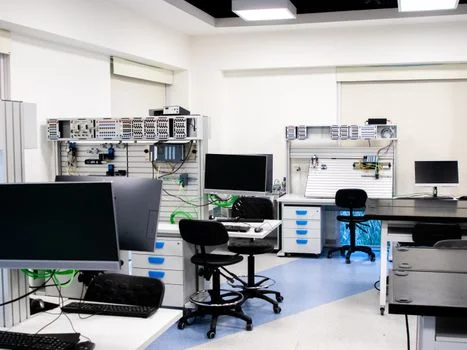
Choosing the correct membrane technology requires balancing the required water quality against energy and capital costs. While RO provides the highest level of purification, it is not always the most cost-effective solution for every industrial stream. Integrated water purification systems often combine these technologies in series to optimize performance.
| Feature | Ultrafiltration (UF) | Nanofiltration (NF) | Reverse Osmosis (RO) |
|---|---|---|---|
| Pore Size (μm) | 0.01 – 0.1 | 0.001 – 0.01 | < 0.0001 |
| Operating Pressure | 10 – 100 psi | 50 – 300 psi | 150 – 1200 psi |
| TDS Rejection | 0% | 50 – 90% | 95 – 99.8% |
| Primary Use Case | Turbidity/SS removal | Softening/Color removal | Desalination/Ultrapure |
| Energy (kWh/m³) | 0.1 – 0.5 | 1.0 – 3.0 | 2.0 – 10.0 |
Ultrafiltration is excellent for removing suspended solids and macromolecules but provides zero salt rejection; it is frequently used as a pretreatment step for MBR systems for wastewater reuse and RO pretreatment. Nanofiltration, often called "loose RO," selectively rejects divalent ions (Ca²⋅, Mg²⋅) while allowing some monovalent ions (Na⋅, Cl–) to pass. This makes NF ideal for water softening and specific industrial separations where complete desalination is unnecessary and energy savings are prioritized.
Industrial RO System Design: Step-by-Step Engineering Framework
Designing a zero-risk industrial RO system follows a rigorous five-step engineering framework. Failure to complete Step 1 (Feedwater Analysis) is the leading cause of system failure in the field.
- Step 1: Feedwater Characterization: Conduct a comprehensive lab analysis for TDS, pH, temperature, turbidity, and specific scaling ions (Silica, Barium, Strontium, Iron). The SDI (Silt Density Index) must be measured on-site; a value >5 indicates a high risk of particulate fouling.
- Step 2: Pretreatment Strategy: Based on the analysis, design the pretreatment train. If chlorine is present, precise chemical dosing for RO pretreatment and antiscalant injection is required to protect TFC membranes from oxidation. If hardness is high, an ion-exchange softener or antiscalant dosing is mandatory.
- Step 3: Membrane Selection: Choose the membrane chemistry (TFC vs CA) and the specific model (High Rejection vs Low Energy). For RO systems for PCB CMP wastewater treatment and metal recovery, specialized fouling-resistant membranes are often selected.
- Step 4: Hydraulic Modeling & Sizing: Calculate the total membrane area required. For a 100,000 GPD system operating at a conservative flux of 12 GFD, the designer needs 8,333 ft² of membrane area. This equates to approximately 20 standard 8-inch elements (400 ft² each).
- Step 5: Array Configuration: Organize the elements into pressure vessels and stages. A common 75% recovery system uses a 2-stage array (e.g., 4 vessels in the first stage, 2 vessels in the second stage). This maintains high crossflow velocity in the second stage as the total water volume decreases.
| Parameter | Ideal Range for Feedwater | Limit for Membrane Warranty |
|---|---|---|
| Turbidity | < 0.1 NTU | < 1.0 NTU |
| SDI (15 min) | < 3.0 | < 5.0 |
| Free Chlorine | 0.0 mg/L | < 0.1 mg/L |
| Iron (Fe) | < 0.05 mg/L | < 0.1 mg/L |
Common RO System Failures: Causes, Symptoms, and Troubleshooting
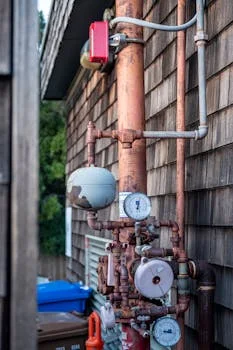
Operational downtime in RO systems is usually signaled by three primary symptoms: a decline in permeate flow, an increase in salt passage (higher TDS), or an increase in the differential pressure (ΔP) across the vessels. A 10-15% change in any of these normalized parameters indicates that the membranes require cleaning (CIP - Clean In Place).
Low Permeate Flow: This is typically caused by fouling or scaling. Inorganic scaling (Calcium Carbonate) often occurs in the last stage of the system where concentration is highest. It can be diagnosed by a sharp increase in ΔP. Troubleshooting involves a low-pH CIP (pH 2-3) using citric acid to dissolve the mineral deposits. Biological fouling, common in surface water sources, presents as a slimy film and requires a high-pH CIP (pH 11-12) using sodium hydroxide and surfactants.
High Permeate TDS: If the effluent quality degrades, the most common causes are membrane oxidation (chlorine damage) or mechanical leaks in the O-rings. If chlorine vs. chlorine dioxide for RO membrane disinfection was not managed correctly, the polyamide layer may be permanently compromised. Integrity testing through "probing" (inserting a tube into the permeate manifold to find the specific leaking element) is the standard engineering fix.
RO System Costs and ROI: CapEx, OPEX, and Payback Period for Industrial Buyers
For procurement managers, the total cost of ownership (TCO) is the decisive metric. Industrial RO systems generally have a CapEx range of $0.50 to $2.00 per gallon per day (GPD) of capacity, depending on the complexity of the pretreatment and the automation level. A 100,000 GPD brackish water system typically requires a $100,000 to $150,000 initial investment.
| Cost Category | Typical Range ($/m³ of Permeate) | Notes |
|---|---|---|
| Electrical Energy | $0.20 – $0.60 | Based on $0.10/kWh |
| Membrane Replacement | $0.05 – $0.15 | Amortized over 3–5 years |
| Chemicals (CIP/Antiscalant) | $0.03 – $0.08 | Includes acid/caustic/antiscalant |
| Labor & Maintenance | $0.05 – $0.12 | Routine monitoring and CIP labor |
| Total OPEX | $0.33 – $0.95 | Excludes feedwater purchase costs |
The Return on Investment (ROI) is often realized through the displacement of expensive municipal water or the recovery of valuable process water. For a manufacturing plant paying $2.50/m³ for municipal water, installing an RO system with an OPEX of $0.60/m³ generates savings of $1.90/m³. At a flow rate of 400 m³/day, the annual savings exceed $270,000, leading to a payback period of less than 12 months for the capital equipment.
Industrial Compliance and Discharge Standards for RO Systems
Compliance with environmental regulations is the final design constraint. RO permeate typically far exceeds EPA Secondary Drinking Water Standards, often achieving TDS levels below 50 mg/L. However, for specialized sectors like semiconductor fabrication, the SEMI F63-0918 standard requires resistivity of 18 MΩ⋅cm (TDS < 0.05 mg/L). In these cases, RO is used as a primary stage followed by Electrodeionization (EDI) or mixed-bed ion exchange.
The management of RO concentrate is increasingly regulated under NPDES permits. Because RO concentrates all feedwater impurities into a smaller volume, the brine may exceed local discharge limits for chlorides or heavy metals. In "Zero Liquid Discharge" (ZLD) architectures, the RO system serves as the volume reduction step, concentrating the waste to 100,000+ mg/L TDS before it is sent to an evaporator or crystallizer. RO systems for electronics industry water compliance must be designed with these downstream discharge limits in mind to avoid regulatory fines and operational shutdowns.
Frequently Asked Questions
What is the maximum TDS an industrial RO system can treat? Standard brackish water RO systems handle up to 10,000 mg/L TDS. High-pressure seawater systems can treat up to 45,000 mg/L TDS. Beyond this range (e.g., produced water or ZLD brine), specialized "Ultra-High Pressure RO" (UHPRO) systems operating at 1,800+ psi are required to overcome the extreme osmotic pressure.
How often should RO membranes be replaced in an industrial setting? Under optimal pretreatment and routine CIP maintenance, industrial TFC membranes typically last 3 to 5 years. Factors that shorten this lifespan include frequent exposure to free chlorine, operating at temperatures above 45°C, or allowing the system to sit stagnant without proper preservation (biogrowth).
What is the difference between 1-stage and 2-stage RO systems? A 1-stage system passes all feedwater through one set of vessels, typically achieving 50% recovery. A 2-stage system takes the concentrate from the first stage and uses it as feedwater for a second set of vessels. This configuration is the industrial standard for achieving 75-85% recovery without exceeding flux limits.
Can RO remove dissolved gases like CO² or Oxygen? No. RO membranes are highly effective at removing ions and large molecules, but dissolved gases are small and non-polar, allowing them to pass through the membrane matrix. If low CO² or O² levels are required (e.g., for boiler feed), a degasifier or membrane contactor must be installed after the RO system.