A submerged membrane bioreactor (MBR) integrates biological wastewater treatment with ultrafiltration (0.1–0.4 μm pore size) membranes immersed directly in the aeration tank. The system typically achieves 99% TSS removal and effluent COD <50 mg/L at MLSS of 8,000–12,000 mg/L, allowing it to meet EPA discharge limits without secondary clarifiers. Energy demand sits between 0.6 and 1.2 kWh/m³, driven mostly by the coarse-bubble scouring air that keeps membrane surfaces clean.
How a Submerged Membrane Bioreactor Working Principle Drives the Process Flow
A submerged MBR replaces the gravity clarifier of a conventional plant with a physical membrane barrier, so solids separation no longer depends on settling velocity. The submerged membrane bioreactor working principle is built on a five-stage sequence that handles screening, denitrification, biological oxidation, membrane filtration, and disinfection in series.
- Influent Screening: Raw wastewater passes through 2–6 mm fine bar screens. This step is critical for submerged systems to prevent hair, fibers, and large debris from entangling in the membrane modules, which can lead to "ragging" and irreversible mechanical damage.
- Anoxic Zone (Denitrification): The screened influent enters an anoxic tank where dissolved oxygen (DO) is maintained below 0.5 mg/L. Here, heterotrophic bacteria utilize nitrate as an oxygen source, converting it to nitrogen gas while reducing the carbon load.
- Aerobic Bioreactor: In the main aeration tank, DO levels are maintained at 2–4 mg/L. The system operates at a high Mixed Liquor Suspended Solids (MLSS) concentration of 8,000–12,000 mg/L. Microorganisms break down organic matter with a Food-to-Microorganism (F/M) ratio of 0.05–0.15 kg BOD/kg MLSS·d, significantly lower than conventional activated sludge.
- Submerged Membrane Filtration: The 0.1–0.4 μm PVDF or PES membranes are immersed directly in the aerobic zone or a dedicated membrane tank. A suction pump creates a slight vacuum, drawing treated water through the membrane pores while retaining all biomass, bacteria, and viruses within the tank.
- Effluent Disinfection: While the membrane provides a significant pathogen barrier, the permeate often undergoes UV or chlorine dioxide disinfection to meet stringent "Class A" water reuse standards.
The process dynamics are governed by a long Sludge Retention Time (SRT) of 20–50 days and a relatively short Hydraulic Retention Time (HRT) of 4–8 hours. Aeration serves a dual purpose: fine bubble diffusers provide oxygen for biomass mixing and metabolism, while coarse bubble aerators positioned at the base of the membrane modules provide constant scouring at 0.2–0.5 Nm³/m²·h to prevent the accumulation of a cake layer on the membrane surface. Most plants we size for food and beverage streams run at the lower end of the SRT range (20–30 days) because high FOG feeds start to foam past 35 days.
Engineering Specs: Flux, Transmembrane Pressure, and Membrane Lifespan
Industrial MBR design balances throughput against membrane longevity through three coupled variables: flux, transmembrane pressure (TMP), and aeration demand. For standard industrial wastewater, design flux is 15–30 LMH. When influent COD exceeds 2,000 mg/L, designers derate flux to 10–20 LMH to control organic loading on the membrane surface. Operational TMP should remain between 0.1 and 0.3 bar; once TMP reaches 0.5 bar, the control system must trigger a chemical cleaning cycle to prevent pore clogging.
| Engineering Parameter | Typical Range (Industrial) | Impact on System Performance |
|---|---|---|
| Design Flux Rate | 15 – 30 LMH | Higher flux reduces footprint but increases fouling risk. |
| MLSS Concentration | 8,000 – 12,000 mg/L | Allows for high organic loading in small tank volumes. |
| Transmembrane Pressure (TMP) | 0.1 – 0.5 bar | Indicator of membrane fouling; triggers cleaning cycles. |
| Specific Aeration Demand (SADm) | 0.2 – 0.5 Nm³/m²·h | Critical for membrane scouring and fouling prevention. |
| Membrane Lifespan | 5 – 10 Years | Determines long-term CAPEX; dependent on cleaning rigor. |
Fouling in HydropureWater's integrated MBR system with submerged PVDF membranes is controlled through both physical and chemical strategies. Physical mitigation includes relaxation cycles (for example, 8 minutes of filtration followed by 2 minutes of relaxation) and backpulsing. Chemical mitigation combines Maintenance Cleaning (MC) with low-concentration NaOCl and Recovery Cleaning (RC) using 1–2% citric acid to remove inorganic scaling (HydropureWater field data, 2025).
Submerged MBR vs Conventional Activated Sludge: Cost and Performance Comparison
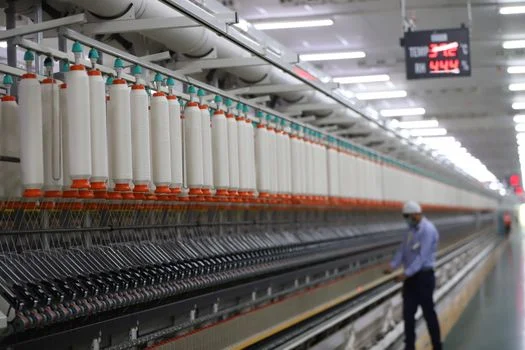
Adopting MBR technology means weighing a higher initial investment against stronger effluent quality and a much smaller footprint. Capital Expenditure (CAPEX) for an MBR is typically 30–50% higher than for Conventional Activated Sludge (CAS) because of the membrane modules and the more sophisticated control system. Total Cost of Ownership (TCO), however, often shifts in favor of MBR whenever water reuse or strict discharge compliance is mandatory.
Operational Expenditure (OPEX) is dominated by energy. MBR systems require 0.6–1.2 kWh/m³ compared to 0.3–0.5 kWh/m³ for CAS, and the delta comes almost entirely from the air scouring that keeps membranes clean. The trade is that MBRs generate far less waste sludge at higher SRTs, often reducing sludge handling costs by 40–60% compared to conventional systems. The elimination of the secondary clarifier also lets MBRs fit into 40% of the land area required by CAS.
| Performance Parameter | Submerged MBR | Conventional Activated Sludge (CAS) | Notes |
|---|---|---|---|
| Effluent TSS | <1 mg/L | 10 – 30 mg/L | MBR meets direct reuse standards. |
| Effluent COD | <50 mg/L | 60 – 100 mg/L | MBR provides better organic oxidation. |
| Footprint Requirement | Minimal (1x) | Large (2.5x) | MBR eliminates secondary clarifiers. |
| Energy Consumption | 0.6 – 1.2 kWh/m³ | 0.3 – 0.5 kWh/m³ | MBR energy is higher due to scouring. |
| Sludge Production | Low | Moderate to High | Longer SRT in MBR reduces biomass waste. |
Selecting the Right MBR Configuration: A Decision Framework for Industrial Applications
Choosing an MBR configuration means matching membrane material and module geometry to the chemical and physical character of the influent. For most industrial applications, PVDF flat sheet membrane modules for submerged MBR applications are preferred over PES (polyethersulfone) because PVDF tolerates higher chlorine doses and survives repeated chemical cleanings with less strength loss.
- Influent Strength: If COD is >2,000 mg/L or Fats, Oils, and Grease (FOG) are present, install DAF systems for MBR pre-treatment to prevent rapid membrane blinding.
- Temperature Extremes: Biological activity and flux are temperature-dependent. Below 15 °C, water viscosity increases and microbial activity slows; flux rates may drop by 20–30%. In cold climates, tank insulation or heat exchangers are required to maintain a 20–30 °C optimal range.
- Regulatory Targets: For discharge to a municipal sewer, a 0.4 μm microfiltration membrane is enough. For high-grade industrial reuse such as boiler feed or cooling-tower makeup, a 0.04–0.1 μm ultrafiltration membrane is required to remove colloidal silica and viruses.
- Space vs. Maintenance: Hollow fiber membranes offer higher packing density but clog easily with sludge cake between fibers. Flat sheet membranes are easier to clean and more tolerant of high MLSS, though they carry a higher CAPEX per square meter.
A typical decision tree is: (1) confirm influent compatibility (pH 6–9, low FOG) → (2) define required effluent quality (reuse vs. discharge) → (3) calculate required membrane area from the derated industrial flux → (4) pick membrane geometry (flat sheet for high fouling potential vs. hollow fiber for low-strength, high-volume feeds).
MBR Process Flow Diagram: Where Peak Flows, High Solids, and Stable Flux Intersect
An MBR process flow diagram differs from a CAS flow sheet in three places: there is no secondary clarifier, the membrane cassette sits inside or beside the aeration tank, and a backpulse or relaxation line returns to the bioreactor. For plants that experience peak flows with high solids, the flow path must include an equalization basin ahead of the anoxic zone so the membrane sees a dampened load rather than a shock. Stable flux during peak events is maintained by holding TMP below 0.3 bar and by allowing the SADm to ride up to 0.5 Nm³/m²·h; quick recovery from a fouling event is achieved with the 2–4 hour CIP sequence described in the troubleshooting section below.
Industrial Wastewater Clarifier Selection: When MBR Replaces a Secondary Clarifier
Industrial wastewater clarifier selection normally compares primary circular or rectangular units, secondary lamella plates, and DAF units on three metrics: hydraulic loading, solids loading, and overflow rate. With MBR, the secondary clarifier is removed entirely, so the comparison reduces to whether a primary clarifier or DAF is needed upstream of the bioreactor. Sludge characteristics from the MBR are typically well-stabilized at SRT 20–50 days, so the downstream sludge thickening step can be sized smaller than for a CAS plant. For solids handling downstream, an MBR paired with a plate or belt filter press is a common configuration in food and beverage plants.
Troubleshooting Submerged MBR Fouling: Symptoms, Causes, and Solutions
Engineers should monitor the TMP trend line; a sudden spike usually points to a physical process failure, while a slow, steady climb suggests biological or inorganic scaling.
Symptom: Rapid TMP Increase (0.1–0.3 bar/day)
Root Cause: Formation of a thick cake layer due to insufficient aeration scouring or excessively high MLSS (>15,000 mg/L).
Solution: Verify coarse bubble blower output. Increase aeration scouring rate to 0.5–0.8 Nm³/m²·h or implement a "sludge wasting" protocol to bring MLSS back to the 10,000 mg/L design point.
Symptom: Irreversible Fouling (TMP remains >0.4 bar after physical cleaning)
Root Cause: Biofouling caused by Extracellular Polymeric Substances (EPS) or inorganic scaling (calcium carbonate/magnesium).
Solution: Perform a Clean-in-Place (CIP). Use 500 ppm sodium hypochlorite for organic/biological fouling and 1% citric acid for mineral scaling. Ensure the soak time is at least 2–4 hours.
Symptom: Persistent Foaming in Aeration Tank
Root Cause: High F/M ratio or the presence of filamentous bacteria often triggered by rapid changes in influent organic load.
Solution: Increase SRT by reducing sludge wasting. If foaming persists, use silicone-based antifoam agents sparingly, as excessive antifoam can foul membranes.
Who This Guide Is For and Next Steps
This page is written for plant engineers and EPC contractors sizing a new biological train, for procurement managers comparing MBR bids, and for operators dealing with rising TMP. If your site only needs primary treatment or BOD reduction for sewer discharge, a conventional activated sludge or MBBR system may be more economical; if your target is reuse or strict TSS limits, MBR is the right tool. For a sizing review or a quote based on your influent data, send your flow and load figures through the MBR inquiry form.
Frequently Asked Questions
What is the typical energy consumption of a submerged MBR system?
Submerged MBRs typically consume 0.6–1.2 kWh per cubic meter of treated water. Roughly 60–70% of that energy is used for aeration—both for biological oxygen demand and for membrane scouring. For a 1,000 m³/d industrial plant, electricity cost usually lands between $60 and $120 per day, depending on local utility rates (per 2025 industry benchmarks).
How often do MBR membranes need chemical cleaning?
Maintenance Cleaning with low-concentration NaOCl is typically triggered every 1–2 weeks based on TMP rise, while Recovery Cleaning with 1–2% citric acid is run every 3–6 months. A full CIP soak of 2–4 hours at 500 ppm NaOCl or 1% citric acid is required only when TMP stays above 0.4 bar after the routine cleaning cycle.
What is the difference between submerged MBR and MBBR?
A submerged MBR uses membranes immersed in the aeration tank to physically separate solids from treated water, producing effluent below 1 mg/L TSS. An MBBR (Moving Bed Biofilm Reactor) relies on plastic carriers with attached biofilm and still needs a downstream clarifier, so its effluent TSS is typically 10–30 mg/L. MBR gives higher effluent quality and a smaller footprint; MBBR is simpler to operate and uses less energy.
What influent pre-treatment does a submerged MBR require?
A 2–6 mm fine bar screen is mandatory to keep rags and fibers out of the membrane cassettes. For influent COD above 2,000 mg/L or with significant FOG, a DAF unit is recommended upstream to prevent rapid membrane blinding. pH should be held between 6 and 9 to protect both biomass and membrane chemistry.
How long do submerged MBR membranes last before replacement?
PVDF and PES submerged membranes typically last 5–10 years in industrial service, depending on cleaning rigor, fouling history, and feedwater character. Plants that hold TMP below 0.3 bar, keep MLSS near 10,000 mg/L, and run routine Maintenance Cleaning on schedule usually reach the upper end of that range.