MBR wastewater treatment system cost in Ghana runs US$180–$300 per m³/day of capacity, for plants from 10 m³/day to 2,000 m³/day. A 10 m³/day modular unit starts near US$20,000 before civil works.
MBR Wastewater Treatment System Cost in Ghana
MBR wastewater treatment system cost in Ghana sits at US$180 to US$300 per m³/day for equipment from 10 m³/day to 2,000 m³/day. A 100 m³/day skid, excluding civil works, is about US$18,000 to US$30,000. Automation and a container frame move the quote inside that band. Most plants we size for Accra land at the lower end when pretreatment is built in from day one.
Price moves with automation, membrane area and whether the package is containerized. A bare process skid excludes piping, a screen and the concrete pad. Keep those three lines in the budget, or the headline rate will not survive contact with the site.
Why Ghana's Industrial Sector Needs MBR Wastewater Systems
Ghana's urban population grew from 44% in 2000 to 58% in 2023, and that shift loaded the sewer networks in Accra and Kumasi. Central plants did not keep up, so factories now carry more of the treatment duty themselves. Only 15% of urban wastewater is treated nationally (UN-Habitat, 2022), which leaves a compliance gap for every site that discharges. The Ghana EPA Liquid Waste Regulations (2019) require on-site treatment for any facility generating over 5 m³/day of effluent.
Accra's own numbers are lower still. A widely cited sanitation profile puts collection at approximately 10% of the wastewater generated in the capital, so most factories cannot hand their load to a municipal network that does not reach them. Tema and Takoradi industrial yards are already built out, which rules out the lagoons and oxidation ponds a conventional design would ask for. Those plants need a land bank many plots simply do not have.
Accra's main municipal plant shows the scale of the gap. A peer-reviewed study of the Mudor Wastewater Treatment Plant recorded a UASB train of six reactors operating in parallel, with capacity between 16,000 m³/d and 18,000 m³/d, while the sewage actually arriving ranged from 1,752 m³/d to 7,534 m³/d. Its final effluent met the EPA-Ghana permissible discharge limits for solids and organics, though nutrients exceeded the guidelines. Municipal capacity of that size will not absorb new industrial loads, which keeps the on-site duty where the 2019 regulations put it.
Membrane bioreactor (MBR) technology closes that gap inside the fence line by cutting the required footprint. For city-scale context, read Sewage Treatment Plant Ghana: 2026 Process, Cost & Buyer's Guide beside this factory-focused note.
How MBR Systems Work: Membrane + Activated Sludge
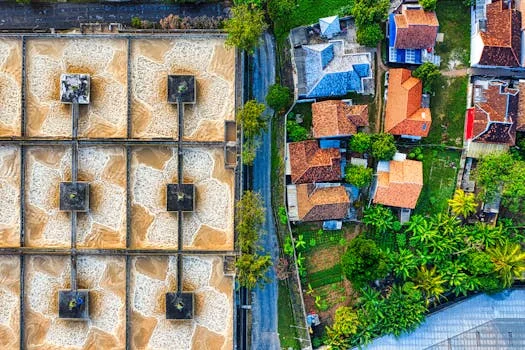
An integrated MBR membrane bioreactor system combines the biological treatment efficiency of activated sludge with advanced membrane filtration in one tank. The usual sheet is submerged polyvinylidene fluoride (PVDF) flat sheet with a 0.1 μm pore size, which holds solids back while the mixed liquor stays in the basin. Greater than 98% removal of Total Suspended Solids (TSS) and Chemical Oxygen Demand (COD) is the performance band quoted for that cut. Effluent at that level suits irrigation, industrial cooling towers and non-potable cleaning.
The MBR Membrane Bioreactor Wastewater Treatment System is the package built around that submerged layout. Pair it with PVDF flat sheet membrane modules with 0.1 μm pore size when the same cut is wanted as a spare module. Submerged flat sheets in HydropureWater's DF Series use about 10–20 times less energy than traditional cross-flow membrane systems. Integrated aeration scours the sheet continuously, which limits fouling on the high-solids industrial streams common in Ghana.
Most sheets we specify for Ghana food waste run at the lower flux end of the design range. Hot liquor and oil films blind a sheet faster than a clean municipal feed. Keep the flux conservative and the air scour on, or transmembrane pressure climbs within weeks. That is a design choice, not a cleaning afterthought.
MBR vs MBBR for Ghana Industrial Wastewater
MBR vs MBBR for Ghana industrial wastewater is a reuse-and-land decision, not a brand choice. MBR filtration runs below 1 μm, so the effluent can be reused directly on a tight plot. CAPEX is highest of the three, and the compact design needs approximately 60% less footprint than conventional plants. In Tema or Kumasi that land saving often pays for the extra equipment.
MBBR suits a mid-capacity industrial park where some land remains. Biofilm carriers raise the biological rate, yet a separate secondary clarifier is still required. Effluent is usually not fit for direct reuse without tertiary polishing. CAPEX sits below MBR and above a simple SBR.
SBR is the low-CAPEX option below 500 m³/day, with fill, react, settle and draw cycles in one tank. Effluent can be good, but the cycle needs an operator who actually watches it. Unstaffed sites lose the settle phase and then fail the permit. Most unstaffed sites we see in Ghana struggle with the SBR draw cycle.
Here is the same comparison in one view. Read the Ghana row last: it is the decision rule, not a slogan.
| Feature | MBR (Membrane Bioreactor) | MBBR (Moving Bed Biofilm Reactor) | SBR (Sequential Batch Reactor) |
|---|---|---|---|
| Effluent Quality | Excellent (TSS <5 mg/L, COD <30 mg/L) | Good (TSS <30 mg/L, COD <100 mg/L) | Good (TSS <20 mg/L, COD <80 mg/L) |
| Footprint | Very Compact (60% smaller than conventional) | Compact (smaller than SBR) | Moderate (larger than MBBR) |
| CAPEX | Highest | Medium | Lowest |
| OPEX | Medium (energy, membrane replacement) | Low (energy, carrier maintenance) | Medium (energy, operator attention) |
| Water Reuse Potential | High (direct reuse for irrigation, cooling) | Low (requires tertiary treatment for reuse) | Moderate (requires tertiary treatment for reuse) |
| Operational Complexity | Medium (automation-ready) | Low-Medium | Medium-High (batch control) |
| Ghana Application Suitability | Space-constrained sites, high-value reuse, strict EPA compliance | Mid-capacity industrial parks, moderate land availability | Smaller facilities (<500 m³/day), lower CAPEX priority |
Choose MBR when reuse quality and a small plot are both mandatory. Choose MBBR when discharge standards are moderate and a clarifier fits the site. Choose SBR when flow stays under 500 m³/day and a trained operator is on the payroll. The table's TSS and COD bands are the numbers to put in the permit narrative.
Membrane Bioreactor Price per m3 Ghana
Membrane bioreactor price per m3 Ghana means US$180 to US$300 per m³/day of installed capacity, not a fee per cubic metre already treated. Divide that rate by the design flow and you are back at the equipment budget, before civil works. A small 10 m³/day unit carries fixed costs that push its price above the band, which is why a 10 m³/day modular MBR starts nearer US$20,000. Most bids we compare move on freight and screens, not on the headline rate.
Membrane replacement is a separate price, about $25 per square meter of membrane area, on a 5–7 year cycle. It is not inside the $180 to $300 per m³/day equipment band. On a 100 m³/day plant the table below spreads that cost as $1,500 - $2,500 a year. Treat it as a sinking fund, not as a surprise in year five.
Containerized MBR System Ghana EPA Compliance
A containerized MBR system aimed at Ghana EPA compliance can be on stream in less than four weeks once the pad, power and inlet pipe are ready. The Ghana EPA Liquid Waste Regulations (2019) put on-site treatment on any facility generating over 5 m³/day. A box plant does not skip that duty. It only shortens the build so the permit date is reachable.
Design sheets for these packages target TSS below 10 mg/L and COD below 50 mg/L, which this guide treats as Class A reuse standards. The comparison table above is stricter, at TSS below 5 mg/L and COD below 30 mg/L. Both sit well inside a typical pond result. Most container plants we commission in Ghana slip when the power cable, not the tank, arrives late.
Compliance is a sampling result plus a permit, not a brochure claim. Keep inlet COD, outlet TSS and outlet COD on one lab sheet tied to the EPA file. The Mudor study above shows why nutrients deserve their own line: solids and organics passed the EPA-Ghana limits while nitrogen and phosphorus did not. Containerized units still need a screen, or rags reach the sheets in the first month.
MBR System CAPEX OPEX Ghana Cedi
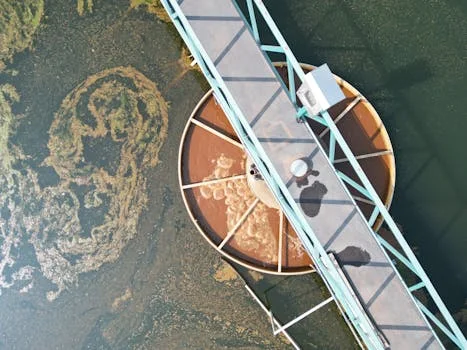
MBR system CAPEX OPEX in Ghana cedi starts with the exchange rate on the bid. According to the Ghana News Agency (September 2026), PURC applied a weighted average Cedi-to-Dollar rate of GHS 11.5646 in its fourth-quarter 2026 review, after GHS 11.2228 in the third quarter. State the rate you used, because two bids a quarter apart are not comparable otherwise.
The capital expenditure band behind those conversions is $180 to $300 per cubic meter per day (m³/day), for systems from 10 m³/day to 2,000 m³/day, sold mostly as modular containerized units. Installation and commissioning add $5,000 - $10,000 on the 100 m³/day example, and civil works add $8,000 - $15,000. Containerized skids pull cost out of the civil line and into the equipment line. They do not delete either line.
Energy is the OPEX line to check. Aeration dominates at 0.8 to 1.2 kWh/m³ of treated wastewater, and the table below still uses the $0.08/kWh planning average with $2,920 - $4,380 a year at 1.0 kWh/m³ for 100 m³/day. Chemicals run $1,000 - $2,000 a year, maintenance labour $1,500 - $3,000, and amortized membrane replacement $1,500 - $2,500 over the 5-7 year life.
Return on investment is still framed at 3–5 years in this guide, from lower purchased-water use, avoided EPA fines, and reuse in cooling, boiler feed after further polishing, or cleaning. The third-quarter tariff rises nudged the value of reused water up. They do not by themselves prove a three-year payback, so run the numbers on your tariff class and your real inlet load. For a wider Ghana cost build-up, see Wastewater Treatment Plant Cost in Ghana 2026: Engineering Breakdown with Local Data, ROI & Equipment Selection.
Here is the estimated cost breakdown for a typical 100 m³/day industrial MBR system in Ghana, followed by a short acceptance checklist.
| Cost Category | Estimate (USD) | Notes |
|---|---|---|
| CAPEX (System Purchase) | $18,000 - $30,000 | For a 100 m³/day system, excluding civil works |
| Installation & Commissioning | $5,000 - $10,000 | Includes piping, electrical, and initial setup |
| Civil Works (Basins, Enclosure) | $8,000 - $15,000 | Variable based on site conditions and design |
| Annual OPEX (Energy) | $2,920 - $4,380 | Assuming 1.0 kWh/m³ and $0.08/kWh (Ghana average) |
| Annual OPEX (Chemicals) | $1,000 - $2,000 | For membrane cleaning and disinfection |
| Annual OPEX (Maintenance & Labor) | $1,500 - $3,000 | Routine checks, minor repairs |
| Membrane Replacement (Yearly Avg.) | $1,500 - $2,500 | Amortized over 5-7 year lifespan for a 100 m³/day system |
Use this short list before you accept a quote.
- Confirm design flow and the peak hour, not only the daily average.
- Separate equipment, installation ($5,000 - $10,000) and civil works ($8,000 - $15,000).
- Fix the electricity tariff class with the utility before locking any payback figure.
- Add membrane replacement at about $25 per square meter over 5–7 years.
- Add a screen, and dissolved air flotation if fats, oils and grease run high.
- Convert dollars at a stated weighted average rate, and print the rate on the bid.
- Ask whether commissioning is inside the less-than-four-weeks container claim.
Membrane Bioreactor for Accra Industrial Reuse
A membrane bioreactor for Accra industrial reuse is the right tool when cooling, wash-down or irrigation needs very low solids. The comparison table puts that quality at TSS below 5 mg/L and COD below 30 mg/L. Cooling towers and non-potable wash-down are the usual sinks. Boiler feed still needs further polishing beyond the membrane.
Accra heat and protein-rich effluent cause foam, and foam drives fouling, lower permeate flux and unstable operation. Food plants and breweries are the usual source, because fats, oils and greases arrive in slugs. Flat sheet membranes, such as those in HydropureWater's DF Series, resist that cake better than hollow fiber membranes, thanks to a robust sheet and continuous, vigorous aeration scour. Most breweries we size still need flotation ahead of the membrane.
A rotary mechanical bar screen, such as HydropureWater's GX Series, should remove rags, fibers and larger suspended solids before the basin. Dissolved air flotation (DAF) is the next step when fats, oils and grease are high. Automatic clean-in-place (CIP) systems let the crew run chemical cleaning cycles without pulling the sheets, which cuts downtime and extends membrane life. Watch transmembrane pressure (TMP) and clean on the rise, not after flux has already collapsed.
Land is the other constraint on reuse projects. An MBR needs about 60% less land than a conventional wastewater plant. A 200 m³/day system can typically fit within 40 m² when the tanks are containerized and the screen sits beside the skid. That 40 m² is a layout claim, so check tank height and truck access before you lease the yard.
Who Should Specify This Plant
Factories in Accra, Kumasi, Tema and Takoradi that generate over 5 m³/day and need reuse quality or a very small plot are the MBR case. Owners with cheap land and a discharge-only permit should price a lagoon or an SBR before paying MBR capital. Flows under 500 m³/day with a full-time operator are the SBR case in the table. Buyers who skip that check usually overpay.
Next, send daily flow, inlet COD, oil and grease, and the discharge or reuse point for a sized MBR quotation. One set of those four numbers is enough to test the US$180 to US$300 per m³/day band against your plot. Put the cedi rate you used in the same note.
Frequently Asked Questions
What is the price of an MBR wastewater treatment system in Ghana?
CAPEX for an MBR system in Ghana typically ranges from $180–$300 per m³/day of capacity. A 10 m³/day modular unit can start from approximately US$20,000, excluding civil works. The 100 m³/day planning line is US$18,000 to US$30,000 for the purchase alone. Installation adds $5,000 - $10,000, and basins can add $8,000 - $15,000.
Is MBR better than MBBR for industrial use in Ghana?
MBR is the better industrial choice in Ghana when reusable water and a small plot are both required. Filtration runs below 1 μm, TSS sits under 5 mg/L, COD under 30 mg/L, and the footprint is about 60% smaller than a conventional plant. MBBR is cheaper, yet its TSS under 30 mg/L and COD under 100 mg/L still need polishing before reuse. Most food plants we see in Accra fail a reuse test on MBBR alone.
How much land does an MBR system require?
An MBR system requires approximately 60% less land than conventional wastewater treatment plants such as lagoons or oxidation ponds. A 200 m³/day unit can typically fit within an area as small as 40 m² when tanks are containerized and the screen sits beside the skid. In Tema, where plots are built out, that 40 m² pad is often the only free yard. Check tank height and truck access before treating 40 m² as a lease figure.
Can MBR systems handle high-strength food processing wastewater?
Yes, an MBR can treat high-strength food processing wastewater if fats, oils, grease and rags are removed first. A rotary screen, and dissolved air flotation where oil is high, protects the 0.1 μm sheets from ragging and oil films. Protein-rich streams in Accra still foam in hot months, so plan antifoam and steady air scour. Most breweries we size still need the flotation step, because a membrane is not a grease trap.
Do MBR systems comply with Ghana EPA standards?
Yes, these MBR packages are specified to meet Ghana EPA liquid waste regulations from 2019, including on-site treatment above 5 m³/day. Design targets used here are TSS below 10 mg/L and COD below 50 mg/L, treated in this guide as Class A reuse standards. Compliance still depends on sampling, a valid permit, and pretreatment when the inlet load spikes. A membrane skid does not replace the EPA file or the lab sheet.