Package Wastewater Treatment Plant in Ghana: What Buyers Need
A package wastewater treatment plant in Ghana typically treats 1–80 m³/h with MBBR, SBR, MBR, or extended aeration. A 10 m³/day MBBR unit costs about $28,000–$35,000 FOB China and roughly $42,000–$50,000 landed at Tema Port. Design specs commonly target effluent BOD below 30 mg/L.
Ghana’s urban population share rose from 44% in 2000 to 58% in 2023, adding load to sewer networks in Accra and Kumasi. Most municipal grids are at capacity, so on-site packaged plants serve new commercial and industrial developments without long sewer extensions. Earlier project briefs often cited UN-Habitat (2022) figures showing only about 15% of urban wastewater treated nationally, which still frames why regional EPA offices push enforcement.
Prior Ghana EPA liquid-waste practice required on-site treatment for industries, hospitals, and residential institutions generating more than 5 m³/day of effluent. According to the Environmental Protection (Effluent) Regulations, 2025 (L.I. 2506), which commenced on 25 July 2025, discharges must meet Ghana Standard GS 1212. The Environmental Protection Act, 2025 (Act 1124) is the parent statute. In Tema and Takoradi, modular footprint matters because land costs more than lagoon acreage.
Packaged plants fit Ghana constraints: limited plot area, fast deployment, and scarce on-site biological specialists. Pre-engineered skid-mounted or containerized trains often move from slab preparation to treatment in under four weeks. Mining camps and industrial parks use that schedule to keep environmental permits aligned with financing and export timelines.
Core Technologies: MBBR vs SBR vs MBR
Moving Bed Biofilm Reactor (MBBR) systems use high-surface-area polyethylene media to support biofilm. Field sizing for food and beverage plants in Ghana typically shows 90–95% BOD removal at industrial organic loads (HydropureWater field data, 2025). MBBR trains handle toxic shocks reasonably well and produce less sludge than many suspended-growth designs. Most plants we size for breweries and soft-drink lines run media fill fractions at the lower end of the vendor range to leave headroom for load spikes.
Sequential Batch Reactor (SBR) systems run timed fill, react, settle, and decant cycles in one tank. Batch mode suits hospitals and campuses in Kumasi where daily flow swings are large. SBRs can reach 95–98% BOD removal when PLC aeration and decant timing stay calibrated. Operators need reliable power and instrument spares because a missed decant cycle quickly raises effluent TSS.
Membrane Bioreactor (MBR) pairs biology with ultrafiltration. A high-efficiency MBR system for reuse-quality effluent commonly removes over 98% of BOD and TSS. MBR footprints run about 60% smaller than conventional layouts because secondary clarifiers are omitted. For a data-driven comparison of MBR vs MBBR vs SBR systems, buyers should weigh higher capital cost against irrigation or cooling-tower reuse value in water-stressed Accra districts.
| Technology | BOD Removal | Footprint Requirement | Primary Application in Ghana | Complexity |
|---|---|---|---|---|
| MBBR | 90–95% | Medium | Breweries, Food Processing, Textiles | Low (Biofilm-based) |
| SBR | 95–98% | Medium-High | Hospitals, Residential Estates | Medium (Cycle-based) |
| MBR | 98%+ | Very Low | Water Reuse, Urban High-rises | High (Membrane-based) |
| Extended Aeration | 85–90% | High | Municipal/Low-budget projects | Very Low |
Technology choice should follow influent COD/BOD ratio, peak-to-average flow, and whether reuse or surface discharge drives the permit. Hospitals comparing packaged biology trains can also review institutional layouts used for hospital wastewater treatment in Cameroon when pathogen control and chemical dosing are the binding constraints.
Key Performance Parameters for Ghanaian Applications
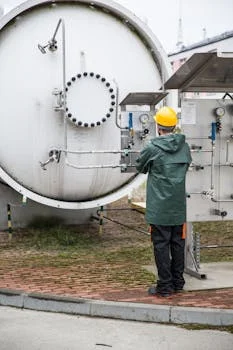
Engineering buyers should rate a compact sewage treatment system in Accra on measurable effluent and energy metrics. Typical Ghana design influent BOD sits between 200 and 400 mg/L. Many purchase specs still require effluent BOD below 30 mg/L to clear local EPA review with margin. MBR units often reach <5 mg/L BOD, while MBBR effluent commonly lands at 20–30 mg/L depending on organic loading rate.
TSS is the second gate for visual clarity and downstream reuse. An Underground Package Sewage Treatment Plant (WSZ Series) configured with MBR can hold TSS below 10 mg/L. MBBR and SBR trains usually leave TSS at 15–30 mg/L and may need sand filtration before discharge to sensitive receiving waters. When plot area is tight, buried package tanks keep access roads and parking free.
Power dominates OPEX where tariff volatility is high. MBR energy use is typically 1.2–1.8 kWh/m³ because membranes need scour air and transmembrane pressure. MBBR for larger industrial flows often runs 0.8–1.2 kWh/m³. Selecting a high-performance MBR membrane module with a realistic design flux reduces blower oversizing and cuts night-time power draw.
| Parameter | MBBR Specs | SBR Specs | MBR Specs |
|---|---|---|---|
| Effluent BOD (mg/L) | 20–30 | 10–20 | <5 |
| Effluent TSS (mg/L) | 20–30 | 10–20 | <10 |
| Footprint (50 m³/day) | 30–40 m² | 45–60 m² | 15–25 m² |
| Energy Use (kWh/m³) | 0.8–1.2 | 1.0–1.5 | 1.2–1.8 |
What Do Package Sewage Plant Upgrades Cost?
Package sewage plant upgrade costs in Ghana combine equipment, freight, duty, civil works, and annual power. For a 10 m³/day MBBR plant, FOB China pricing is $28,000–$35,000. Landed cost at Tema Port often rises to about $42,000–$50,000 after ocean freight, insurance, and the common 12% import duty plus VAT. MBR packages usually carry a 30–40% capital premium over MBBR because of membranes and denser instrumentation.
Installation and commissioning typically add $5,000–$8,000 for a concrete base slab, local piping, and electrical tie-in. Remote video commissioning with local contractors cuts expatriate travel on many industrial sites. Where influent solids are high, budgeting a dissolved air flotation or pressure flotation system as pretreatment protects the biology train and extends media or membrane life.
Annual OPEX for a 10 m³/day MBBR plant is roughly $4,200 for blower power and routine pump service. Comparable MBR OPEX is about $7,800 when membrane replacement every five to seven years is amortized. Lift stations and wet wells beside the package plant should follow the same civil logic used when comparing prefabricated versus traditional pump stations. Sludge handling reliability also matters; following a maintenance best practices for sludge handling systems keeps pumps and dewatering units from failing early.
| Cost Category (10 m³/day) | MBBR (Est. USD) | MBR (Est. USD) |
|---|---|---|
| FOB Purchase Price | $28,000 – $35,000 | $38,000 – $48,000 |
| Landed Cost (Tema Port) | $42,000 – $50,000 | $55,000 – $68,000 |
| Installation/Commissioning | $5,000 – $8,000 | $6,000 – $9,000 |
| Annual OPEX | ~$4,200 | ~$7,800 |
Selection checklist before you issue an RFQ
- Confirm daily average and peak flow in m³/d, plus BOD and TSS of the design influent.
- State the discharge point: sewer, surface water, or on-site reuse.
- Reserve footprint for a 50 m³/day train (about 15–60 m² by technology).
- Budget landed cost, not only FOB, including Tema Port duty and VAT.
- Plan blower redundancy and local spare-part lead times in Accra or Kumasi.
- Decide who operates the PLC: plant staff, EPC contractor, or remote OEM support.
- Include sludge haulage or on-site dewatering in the five-year OPEX model.
Which Industrial Discharge Limits Matter in 2026?
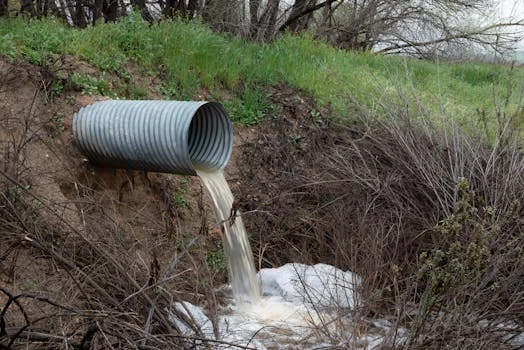
Industrial discharge limits that matter in 2026 for Ghana sites are those written into EPA permits under Act 1124 and L.I. 2506, which point to GS 1212. Purchase documents for surface-water discharge still commonly specify BOD <30 mg/L, TSS <50 mg/L, and pH 6–9 to keep operating margin. Nutrient limits for nitrogen and phosphorus tighten in sensitive catchments, so modular plants need anoxic zones when the regional EPA office requires nitrate control. Buyers comparing permit language across markets sometimes cross-check frameworks such as wastewater treatment regulations in Thailand for how sector tables are structured, then return to Ghana GS 1212 for the binding numbers.
Wastewater reuse in Ghana for non-potable uses often follows WHO drinking-water guideline logic for pathogen indicators. Agricultural irrigation targets commonly keep fecal coliforms below 1,000 MPN/100 mL. Biology alone rarely hits that target on variable hospital or food-plant flows. Pairing MBR effluent with a chlorine dioxide generator for disinfection gives a controllable residual for landscaping or dust suppression.
Who This Is For / Next Step
Plant engineers, EPC contractors, and procurement managers use this guide when sizing on-site package plants for Ghana factories, hospitals, estates, and camps. Teams that already have stable sewer access and a municipal plant with spare capacity may not need a full package train. If you are matching flow, BOD load, and permit limits to a containerized or underground unit, share your influent data through our request-quote form for a sized options sheet.
Frequently Asked Questions
What is the lifespan of a packaged wastewater plant in Ghana?
Structural tanks last 15–20 years with routine maintenance in typical Ghana coastal and inland climates. Blowers and pumps usually need overhaul or replacement every 5–7 years under continuous duty. MBR membranes commonly last 5–7 years when cleaning schedules and influent screening stay within the design envelope.
Can these plants handle industrial wastewater from textiles or food processing?
Yes, when pretreatment matches the load. MBBR handles high BOD loads up to about 1,200 mg/L that are common in food processing. Textile lines need screening and chemical coagulation before biology; a pretreatment phase involving chemical coagulation or fine screening removes fibers and dye solids that would foul media or membranes.
Are spare parts available locally in Ghana?
Standard pumps, valves, and electrical components are stocked in Accra and Kumasi. Specialized MBR membranes and high-efficiency blowers are usually imported with 4–8 week lead times, so projects should hold critical spares on site. Specifying common IEC motor frames and local-voltage panels shortens downtime when OEM parts are delayed.
How long does installation take after the equipment arrives at Tema Port?
Most skid or containerized package plants finish civil, mechanical, and electrical hook-up in two to four weeks after site access is clear. Remote commissioning can cut expatriate travel when local electricians follow OEM checklists. Delays usually come from incomplete slabs, missing three-phase power, or influent piping that was not hydrotested.
What discharge quality should a 10 m³/day plant target for EPA review?
Many Ghana RFQs still set effluent BOD below 30 mg/L and TSS at or below 50 mg/L with pH between 6 and 9 for surface discharge. MBR designs often deliver BOD <5 mg/L and TSS <10 mg/L when membranes are intact. Confirm the exact GS 1212 sector table listed on your EPA permit before freezing the process design.