Municipal Sewage Treatment Plant CAPEX UK 2026: Compliance, Capacity and Cost
Municipal sewage treatment plant CAPEX in the UK for 2026 runs about £5M–£10M at 10,000 PE and £50M–£100M above 100,000 PE. Permit limits, process choice, land, and sludge route set the final budget. Works above 2,000 PE need secondary treatment.
UK municipal sewage treatment plant CAPEX for 2026 is approximately £5M–£10M at 10,000 PE, £25M–£35M at 50,000 PE, and £50M–£100M above 100,000 PE in the retained benchmark. Final cost depends on permit limits, civil works, land, odour control, sludge handling, commissioning and delivery risk.
UK municipal sewage treatment plants above 2,000 PE require secondary treatment under Directive 91/271/EEC as retained in UK law. Standard effluent limits are BOD ≤25 mg/L, COD ≤125 mg/L and TSS ≤35 mg/L. Sensitive areas also require phosphorus ≤1 mg/L and total nitrogen ≤10 mg/L.
In 2025, the UK's 1,451 municipal sewage treatment plants manage wastewater for an estimated 79 million population equivalent (PE). Regulatory oversight rests on the EU Urban Waste Water Treatment Directive (91/271/EEC), transposed via the Water Industry Act 1991 and Environmental Permitting Regulations 2016. In 2022, 97.98% of England’s generated load from wastewater treatment works met these rules. Non-compliance can trigger fines up to £250,000 per day under the Environmental Damage Regulations 2015.
Earlier AMP7 guidance used £51 billion for 2020–2025; the Ofwat PR24 final determination sets £104 billion total expenditure for AMP8 2025–30 (Ofwat, 2025). Ofwat's final determination page adds that the 2024 price review will see a quadrupling of new investment in the water sector over the next five years. Over 120 UK water bodies remain designated as sensitive areas for eutrophication risk, so tertiary phosphorus removal to below 1 mg/L is often mandatory.
According to Environment Agency permit guidance, a bespoke application needs a written management system that identifies and minimises pollution risks, a check on whether a risk assessment is required, and a plan to control and monitor emissions. Proposals using complex or novel technology can ask to send application information in stages, so the approval programme belongs in the project schedule rather than being treated as a post-design task.
| Regulatory Framework | Key Requirements | UK Implementation & Enforcement |
|---|---|---|
| EU Urban Waste Water Treatment Directive (91/271/EEC) | Secondary treatment for agglomerations >2,000 PE; tertiary treatment for sensitive areas (e.g., nutrient removal); sludge disposal regulations. | Transposed into UK law via Water Industry Act 1991 and Environmental Permitting Regulations 2016. |
| Water Industry Act 1991 | Establishes statutory duties for water companies regarding wastewater collection and treatment. | Governs operational standards and investment planning. |
| Environmental Permitting Regulations 2016 | Regulates discharges to water bodies, setting specific effluent limits. | Enforced by the Environment Agency (England), SEPA (Scotland), NRW (Wales), and NIEA (Northern Ireland). |
| Ofwat AMP Cycles (e.g., AMP7, AMP8) | Sets price limits and investment obligations for water companies. | Drives capital investment in wastewater infrastructure, totalling £51 billion for AMP7 (2020–2025). |
| Environmental Damage Regulations 2015 | Provides for penalties for environmental damage, including breaches of environmental permits. | Fines can reach up to £250,000 per day for non-compliance. |
The same Environment Agency guidance states you can have contractors carry out activities at your site and remain the operator, provided you have sufficient control, and that the operator is legally responsible for the activity whether or not it is in operation. A design pack should therefore name the legal operator, define monitoring ownership and include contingency actions for abnormal flow, equipment failure and sampling excursions.
Process Design Parameters for UK Sewage Treatment Plants: Influent, Effluent, and Sludge Specs
Designing effective municipal sewage treatment plants in the UK starts with influent, effluent and sludge numbers that match permit conditions. Typical UK municipal wastewater influent often ranges from 200–500 mg/L BOD, 400–800 mg/L COD, 200–400 mg/L TSS, and 30–70 mg/L ammonia, according to UKWIR 2023 data. Effluent must meet Directive 91/271/EEC limits: typically BOD ≤25 mg/L, COD ≤125 mg/L, and TSS ≤35 mg/L. For the 120+ designated sensitive areas, phosphorus must reach ≤1 mg/L and total nitrogen ≤10 mg/L.
Sludge production averages 0.2–0.4 kg dry solids/PE/day. Dewatering targets commonly aim for 20–30% dry solids to cut haulage volume, aligning with CIWEM 2024 guidelines.
Biological process choice sets hydraulic retention time (HRT). Activated sludge systems typically need 6–12 hours. Membrane bioreactors (MBR) can run at 4–8 hours with a smaller footprint and higher energy use. Dissolved air flotation (DAF) used as pre-treatment typically needs only 1–3 hours.
The Environment Agency reports it is now investigating more than 2,200 wastewater treatment works that discharge into English waters. That figure is not a replacement for a site permit, but it reinforces a practical rule: size monitoring, alarms and standby equipment against the actual receiving-water and permit conditions.
| Parameter | Typical UK Influent Range | EU Directive 91/271/EEC Effluent Limit (Standard) | EU Directive 91/271/EEC Effluent Limit (Sensitive Area) | Sludge Production | Hydraulic Retention Time (HRT) |
|---|---|---|---|---|---|
| BOD (Biochemical Oxygen Demand) | 200–500 mg/L | ≤25 mg/L | (Implied stricter by context) | N/A | N/A |
| COD (Chemical Oxygen Demand) | 400–800 mg/L | ≤125 mg/L | (Implied stricter by context) | N/A | N/A |
| TSS (Total Suspended Solids) | 200–400 mg/L | ≤35 mg/L | (Implied stricter by context) | N/A | N/A |
| Ammonia (as N) | 30–70 mg/L | (Depends on NMP requirements) | (Depends on NMP requirements) | N/A | N/A |
| Phosphorus (as P) | 5–15 mg/L | (Depends on NMP requirements) | ≤1 mg/L | N/A | N/A |
| Nitrogen (Total N) | 20–50 mg/L | (Depends on NMP requirements) | ≤10 mg/L | N/A | N/A |
| Dry Solids Production | N/A | N/A | N/A | 0.2–0.4 kg/PE/day | N/A |
| Activated Sludge HRT | N/A | N/A | N/A | N/A | 6–12 hours |
| MBR HRT | N/A | N/A | N/A | N/A | 4–8 hours |
| DAF Pre-treatment HRT | N/A | N/A | N/A | N/A | 1–3 hours |
For sludge cake targets of 20–30% dry solids, filter presses for UK sludge dewatering (20–30% dry solids, 20–30 bar pressure) are a common mechanical option at 20–30 bar operating pressure. Most plants we size for municipal service run near the lower end of the influent range, but storm dilution and trade inputs must be tested before the biological volume is fixed.
Technology Comparison: MBR vs. Activated Sludge vs. DAF for UK Municipal Plants
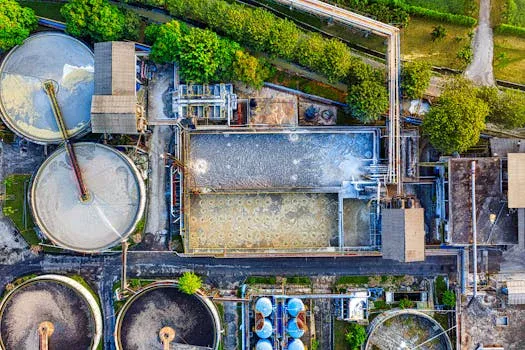
Selecting wastewater treatment technology for UK municipal plants balances effluent quality, footprint, OPEX and energy. Membrane bioreactor (MBR) trains consistently achieve <1 mg/L TSS and <10 mg/L BOD, while using up to 60% less land than conventional activated sludge. MBRs typically incur 20–30% higher OPEX because membranes are replaced every 5–8 years and energy use sits near 0.8–1.2 kWh/m³.
Conventional activated sludge remains cost-effective for 10,000–100,000 PE plants, with OPEX generally £0.20–£0.30/m³. Activated sludge's main drawback is space for secondary clarifiers, often raising overall footprint by about 30%.
Dissolved air flotation (DAF) pre-treatment removes 90–95% of TSS and 60–80% of FOG in industrial-municipal hybrids or as polishing. DAF CAPEX commonly ranges £500–£1,500/m³/h capacity, with energy near 0.2–0.4 kWh/m³. MBR trains also generate about 20% less sludge volume than activated sludge, though dewatering may need 0.5–1.0 kg polymer/ton dry solids.
| Technology | Typical Effluent Quality (TSS/BOD) | Footprint Efficiency | Estimated OPEX (£/m³) | Estimated Energy Consumption (kWh/m³) | Sludge Production (Relative) | Primary Applications |
|---|---|---|---|---|---|---|
| MBR Systems | <1 mg/L TSS, <10 mg/L BOD | 60% smaller than AS | £0.25–£0.38 (20–30% higher than AS) | 0.8–1.2 | 20% less | High-quality effluent, limited space, nutrient removal |
| Activated Sludge | <35 mg/L TSS, <25 mg/L BOD | Standard footprint (requires secondary clarifiers) | £0.20–£0.30 | 0.4–0.6 | Baseline | General municipal treatment, 10,000–100,000 PE |
| DAF Pre-treatment | 90–95% TSS, 60–80% FOG removed | Compact | (Varies based on application) | 0.2–0.4 | (Varies) | Pre-treatment, industrial-municipal hybrids, FOG removal |
For space-constrained sites needing high effluent quality, consider MBR systems for UK municipal plants (0.1 μm PVDF membranes, 60% smaller footprint). Where FOG and solids dominate the load, DAF pre-treatment for UK municipal-industrial hybrids (90–95% TSS removal) is a practical front-end step. The selection should compare whole-life cost, not only tank volume: membrane replacement, blower duty, chemical cleaning and sludge disposal can reverse the initial CAPEX ranking.
CAPEX and OPEX Breakdown for UK Sewage Treatment Plants: 2025 Cost Benchmarks
Capital expenditure for municipal sewage treatment plants in the UK scales with capacity: about £5M–£10M for 10,000 PE, £25M–£35M for 50,000 PE, and £50M–£100M above 100,000 PE, aligning with Ofwat AMP funding ranges. Technology choice shifts CAPEX per PE: activated sludge typically £500–£800/PE, while MBR often sits at £700–£1,200/PE because of membrane modules. For industrial site cost structure rather than municipal PE bands, see the sibling note on UK industrial wastewater plant CAPEX by technology. If you are comparing build budgets against England works data, review how much does a waste water treatment works take to build uk# for the England-specific breakdown.
Operational expenditure is driven by energy (30–40%), chemicals (15–20%), sludge disposal (20–25%), labour (10–15%), and maintenance (10–15%), according to UKWIR 2024 benchmarks. Sludge disposal in the UK can range from £50–£150/ton for landfill to £20–£50/ton for agricultural use under the Sludge (Use in Agriculture) Regulations 1989.
ROI levers include energy-efficient blowers (up to 30% energy savings), automated dosing (about 20% polymer reduction), and longer membrane life. Those levers can save about £50,000 per year on a 50,000 PE plant. According to Ofwat (2025), AMP8 also funds a £6 billion nutrient programme and upgrades at over 1,700 wastewater treatment works, keeping phosphorus and overflow projects central to 2025–30 CAPEX plans.
| Plant Capacity (PE) | Estimated CAPEX Range (£) | Activated Sludge CAPEX (£/PE) | MBR CAPEX (£/PE) | Typical OPEX Breakdown (%) | Sludge Disposal Costs (£/ton) |
|---|---|---|---|---|---|
| 10,000 | 5M–10M | 500–800 | 700–1,200 | Energy: 30–40% Chemicals: 15–20% Sludge Disposal: 20–25% Labour: 10–15% Maintenance: 10–15% |
Landfill: 50–150 Agriculture: 20–50 |
| 50,000 | 25M–35M | 500–800 | 700–1,200 | (As above) | (As above) |
| 100,000+ | 50M–100M | 500–800 | 700–1,200 | (As above) | (As above) |
For tighter chemical control and lower polymer spend, an automated chemical dosing system is usually specified early in detailed design. Build the estimate in separate civil, mechanical, electrical, instrumentation, commissioning and owner-risk lines; otherwise a low equipment quote can hide the largest site costs.
UK Sewage Treatment OPEX Breakdown Energy Sludge: What Drives the Bill?
UK sewage treatment OPEX is usually dominated by energy, chemicals, sludge disposal, labour and maintenance, with the original benchmark allocating 30–40%, 15–20%, 20–25%, 10–15% and 10–15% respectively. The practical control point is the operating envelope: blower turndown, ferric dose, polymer conditioning, cake solids and haulage distance should be measured together.
Energy rises when aeration is controlled by fixed timers instead of dissolved-oxygen or ammonia feedback. Sludge cost rises when a plant sends dilute cake off site, so the 20–30% dry-solids target must be checked against polymer consumption and press cycle time. Most plants do not save money by maximising one percentage in isolation; they reduce the combined cost per m³ treated.
The Environment Agency guidance says a permit holder must comply with permit conditions and maintain appropriate controls. For a UK OPEX model, include sampling, permit management, emergency storage and planned maintenance alongside electricity and consumables, because those items affect both operating cost and compliance resilience.
What Chemical Dosing Equipment Suits Municipal Plants?
Ferric-based phosphorus dosing with automatic control is the usual first upgrade when UK plants must hold effluent phosphorus below 1 mg/L. Typical CAPEX for chemical phosphorus removal sits near £200–£500/PE, with OPEX about £0.05–£0.10/m³ for ferric chloride programmes, as reported in CIWEM 2023 practice notes. Dose control should track flow and orthophosphate so polymer and coagulant use stay inside the 15–20% chemicals share of OPEX. Pair the skid with online residual monitors and duty/standby pumps so a single pump failure does not breach the permit overnight.
Package works that already include dosing tanks and controls can shorten site installation. For compact England schemes, package wastewater treatment plants in England often ship with pre-piped chemical lines ready for ferric or alum.
Phosphorus Removal Upgrade Cost UK Wastewater Works
Phosphorus removal upgrade cost in UK wastewater works is commonly framed as £200–£500/PE CAPEX and £0.05–£0.10/m³ OPEX for ferric chloride dosing in the stated benchmark. The final allowance must also cover storage, bunding, dosing pumps, analyzers, control integration, civil modifications, sludge impact and commissioning against the site permit.
Chemical dosing is often the fastest retrofit where a plant has spare contact volume and a clear chemical delivery route. Biological phosphorus removal can reduce chemical demand where anaerobic selector volume, recycle control and stable sludge age already exist, but the option needs a process model and pilot evidence before the equipment budget is reduced. A phosphorus limit below 1 mg/L also makes sampling frequency and analyzer maintenance material cost drivers.
Equipment Selection Checklist for UK Compliance Specs
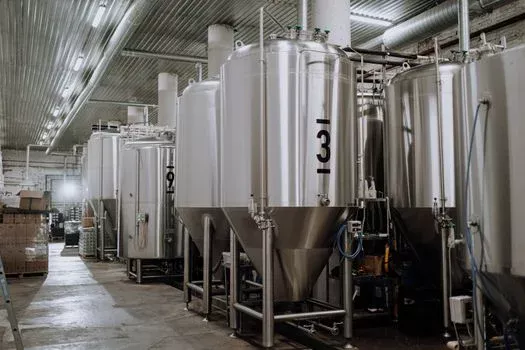
Equipment selection for UK municipal sewage treatment plants should follow a fixed decision order: influent PE load, effluent standards (especially sensitive-area nutrients), available footprint, energy tariff, and sludge outlet route. For MBR systems, specify about 0.1 μm PVDF membranes when the permit needs near-reuse quality solids. DAF units should generate 40–60 μm microbubbles for stable solid-liquid separation. Filter presses rated 20–30 bar remain the baseline for 20–30% dry solids cake.
Plants serving over 10,000 PE need backup aeration on full redundancy and 24–48 hours emergency storage. Vendor packs should show WRAS or DWI approval for any potable-contact parts and cold-weather performance data for UK winters.
Before procurement, check at least seven items: design PE and peak flow; permit limits and receiving water; hydraulic and organic load tests; duty and standby philosophy; energy and chemical performance terms; sludge cake and disposal route; and commissioning, spares and operator training. Where visual impact or land take is constrained, an Underground Package Sewage Treatment Plant (WSZ Series) can place secondary treatment below grade while keeping access for maintenance.
Which Suppliers Serve Large Municipal Plants?
Large municipal buyers shortlist suppliers that document PE capacity, permit compliance cases, and UK cold-weather references rather than brochure claims alone. Ask for membrane life data at 5–8 years, energy in kWh/m³ at design flow, and sludge cake solids at stated bar pressure. Prefer vendors who can supply redundant aeration, dosing and standby power as a single package with UK spare-parts lead times under typical AMP delivery windows.
Who This Is For / Next Step
EPC engineers, water-company project managers and procurement leads sizing works from about 2,000 PE upward under UWWTD retained limits are the primary readers. Domestic septic design below that PE band needs a different sizing method. For a scoped equipment list against your permit and PE load, request a UK process and equipment review with influent data, discharge limits, site constraints and the required delivery window.
Frequently Asked Questions
What are the penalties for non-compliance with UK sewage treatment regulations?
Fines can reach up to £250,000 per day under the Environmental Damage Regulations 2015. Regulators such as the Environment Agency and Ofwat can also add enforcement notices and reputational sanctions. Permit breaches often sit alongside pollution-incident scoring, so one failed sample can trigger both financial and operational scrutiny across an AMP period.
How does Brexit affect UK sewage treatment standards?
Core Urban Waste Water Treatment Directive 91/271/EEC limits remain in UK law through the Water Industry Act 1991 and related permitting rules. Immediate effluent numbers have not been relaxed. Long-term planning should still track possible UK-only divergence on nutrients and storm overflows during AMP8 delivery, while the site permit remains the controlling document.
What is the typical lifespan of MBR membranes in UK municipal plants?
MBR membranes in UK municipal plants typically last 5 to 8 years. Life depends on influent grit and FOG control, cleaning chemistry, and transmembrane pressure discipline. UKWIR 2024 membrane studies stress that poor pre-treatment shortens module life faster than temperature alone, so membrane allowance should be linked to screening and DAF performance.
Can UK sewage treatment plants use chlorine dioxide for disinfection?
Chlorine dioxide can disinfect final effluent when generators meet applicable water-contact standards such as EU Drinking Water Directive 98/83/EC and WHO guidance. ClO₂ generators for UK effluent disinfection (99.9% pathogen kill, no THMs) are used where operators want high pathogen kill without forming trihalomethanes typical of free chlorine.
What are the most cost-effective upgrades for UK plants struggling with phosphorus limits?
Chemical dosing with ferric chloride is usually the lowest-CAPEX path to phosphorus below 1 mg/L. Reported ranges are about £200–£500/PE CAPEX and £0.05–£0.10/m³ OPEX in CIWEM 2023 notes. Biological P removal can cut chemical spend later if the plant already has anaerobic selector volume and stable sludge age, but retrofit cost should include monitoring and sludge effects.
Further Reading
Explore these in-depth articles on related wastewater treatment topics: