MBR Membrane Bioreactor Working Principle and Why Factories Are Switching
An MBR membrane bioreactor couples activated sludge with submerged or side-stream microfiltration/ultrafiltration membranes (0.1–0.4 μm pore size), eliminating secondary clarifiers and shrinking plant footprint by 60–70% versus conventional activated sludge. Effluent typically meets COD ≤50 mg/L, BOD ≤10 mg/L, and TSS ≤5 mg/L, aligning with US EPA 40 CFR Part 433 (metal finishing) and the EU Urban Waste Water Directive 91/271/EEC. The technology wins where conventional systems fail: high-strength influent (COD >1,000 mg/L), severely limited plot area, and reuse-quality demand for process water.
A Shenzhen electronics manufacturer cut treatment footprint 60% after switching to MBR, kept COD ≤50 mg/L, and avoided EPA fines during a period of shrinking industrial park space. The same pattern now drives adoption across food and beverage, textile, and chemical plants that need both compliance and reuse.
MBR Process Flow: Step-by-Step Engineering Breakdown
The MBR process flow runs influent through fine screening (1–3 mm) and grit removal, then splits into an anoxic zone (HRT 1–2 h, DO <0.5 mg/L, 70–90% nitrate reduction) and an aerobic bioreactor (MLSS 8,000–12,000 mg/L, F/M 0.05–0.15 kg BOD/kg MLSS/day, DO 1.5–3.0 mg/L). Mixed liquor then crosses the membrane module: submerged MBRs run 15–30 LMH at TMP 0.1–0.5 bar, while side-stream units reach 40–80 LMH with external pumping. Polished effluent exits at COD ≤50 mg/L, BOD ≤10 mg/L, TSS ≤5 mg/L.
| Process Stage | Key Parameters | Purpose |
|---|---|---|
| Pre-treatment | Fine Screening (1-3 mm), Grit Removal | Protection of membranes from large solids and abrasives |
| Anoxic Zone | HRT: 1-2 hours DO: <0.5 mg/L Nitrate Reduction: 70-90% |
Denitrification (Nitrogen removal) |
| Aerobic Bioreactor | MLSS: 8,000-12,000 mg/L F/M Ratio: 0.05-0.15 kg BOD/kg MLSS/day DO: 1.5-3.0 mg/L |
Organic degradation and biomass growth |
| Membrane Filtration (Submerged) | Flux: 15-30 LMH TMP: 0.1-0.5 bar Pore Size: 0.1-0.4 μm |
Solid-liquid separation, effluent polishing |
| Effluent | COD: ≤50 mg/L BOD: ≤10 mg/L TSS: ≤5 mg/L |
High-quality treated water for discharge or reuse |
Process Flow: Influent → Fine Screen → Grit Removal → Anoxic Zone → Aerobic Bioreactor → Membrane Module → Effluent
2025 MBR Engineering Specs: Flux Rates, Energy Use, and Membrane Lifespan
Submerged MBRs run at 15–30 LMH with 0.6–1.2 kWh/m³ energy draw, while side-stream MBRs push 40–80 LMH at 1.5–3.0 kWh/m³. PVDF membranes in either configuration last 5–10 years when aeration scouring (0.2–0.4 Nm³/m²/h) and CIP protocols are kept on schedule. Submerged systems require cleaning every 7–14 days because cake layers build faster; side-stream modules stretch to 30–60 days between cleans.
| Parameter | Submerged MBR | Side-Stream MBR | Notes |
|---|---|---|---|
| Flux Rate (LMH) | 15–30 | 40–80 | Higher flux rates require smaller membrane area but can increase fouling potential. |
| Energy Consumption (kWh/m³) | 0.6–1.2 | 1.5–3.0 | Submerged MBRs are generally more energy-efficient due to integrated aeration for scouring. |
| MLSS (mg/L) | 8,000–12,000+ | 3,000–8,000 | Higher MLSS in submerged MBRs enhances biological activity and reduces footprint. |
| Transmembrane Pressure (TMP) (bar) | 0.1–0.5 | 0.1–0.3 | TMP is a key indicator of membrane fouling; higher TMP necessitates cleaning. |
| Membrane Lifespan (Years) | 5–10 | 5–10 | Dependent on material (e.g., PVDF), operational practices, and cleaning protocols. |
| Pore Size (μm) | 0.1–0.4 | 0.1–0.4 | Ensures complete removal of suspended solids and bacteria. |
| Cleaning Frequency (Days) | 7–14 (submerged) | 30–60 (side-stream) | More frequent cleaning for submerged MBRs due to cake layer formation. |
| Footprint Reduction (%) | 60–70% | 40–50% | Compared to conventional activated sludge systems. |
Flux drives capital cost: pushing flux up shrinks membrane area, but it raises fouling risk and energy load. Most plants we size for industrial reuse run at the lower half (15–20 LMH submerged) to keep TMP stable and CIP intervals predictable.
MBR vs Conventional Activated Sludge: When to Choose Which System
Pick MBR when influent COD exceeds 1,000 mg/L, plot area is below 0.4 m²/m³/day, or reuse-quality effluent is a target. Pick conventional activated sludge when influent stays under 500 mg/L, footprint is not constrained, and reuse is optional — capital runs $800–$1,500/m³/day versus $1,500–$3,000/m³/day for MBR.
| Factor | MBR | Conventional Activated Sludge | Notes |
|---|---|---|---|
| Influent COD (mg/L) | Ideal for >1,000 | Suitable for <500 | MBR handles higher organic loads more effectively. |
| Space Requirements (m²/m³/day) | 0.2–0.4 | 0.5–1.0 | MBR systems offer substantial footprint reduction. |
| Effluent Quality (COD/TSS) | COD ≤50 / TSS ≤5 | COD 60–100 / TSS 10–30 | MBR achieves significantly higher effluent quality. |
| Energy Use (kWh/m³) | 0.6–1.2 | 0.3–0.6 | Conventional systems are typically more energy-efficient per volume. |
| Sludge Production (kg/kg BOD removed) | 0.2–0.4 | 0.4–0.6 | MBR systems can produce less sludge due to higher MLSS and SRT. |
| Capital Cost ($/m³/day) | $1,500–$3,000 | $800–$1,500 | MBR has higher initial investment, primarily due to membrane modules. |
| Operational Complexity | Moderate to High (membrane maintenance) | Moderate (clarifier operation) | MBR requires specialized knowledge for membrane care. |
| Reuse Potential | High | Limited | MBR effluent is suitable for many non-potable reuse applications. |
A Bangladesh textile factory cut effluent COD from 800 mg/L to 40 mg/L with an MBR and reused 70% of the flow in dyeing. For applications such as MBR Membrane Bioreactor Wastewater Treatment System configurations, integrated submerged PVDF trains ship pre-assembled and shorten on-site commissioning.
MBR Membrane Fouling: Causes, Prevention, and 2025 Mitigation Strategies
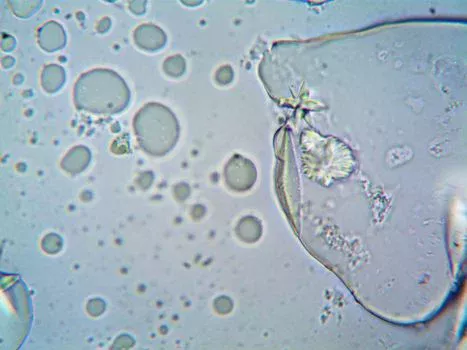
Fouling falls into three buckets: cake layers (reversible biomass buildup), pore blocking (colloids lodged inside pores, often irreversible), and biofouling (microbial colonies inside the membrane). Operating submerged MLSS above 12,000 mg/L without enough scouring, or letting fine solids slip past pre-treatment, accelerates all three.
Hold aeration scouring at 0.2–0.4 Nm³/m²/h and flux at 15–30 LMH (submerged) for prevention. Run automated backwash with permeate for 1–2 minutes every 10–15 minutes, schedule chemically enhanced backwash with NaOCl 200–500 mg/L or citric acid, and reach for enzymatic cleaners on persistent biofouling. The 2025 playbook adds machine-learning flux trending that flags a 20% drop in 24 hours and triggers a CIP before TMP spikes. Field rule: If flux declines >20% in 24 hours, check MLSS, verify aeration, and run a chemical clean immediately.
MBR Selection Framework: 7 Questions to Ask Before Buying
A systematic pre-purchase checklist protects CapEx and lifecycle cost. Use these seven questions on every supplier shortlist.
1. What is your influent COD/BOD/TSS? MBRs are ideal for high-strength wastewater (COD >1,000 mg/L); conventional systems may suffice below 500 mg/L. Knowing the influent is the foundation.
2. What is your space constraint? MBR systems need 0.2–0.4 m²/m³/day versus 0.5–1.0 m²/m³/day for conventional systems — a critical differentiator on tight urban sites.
3. What effluent standards must you meet? MBRs consistently reach COD ≤50 mg/L, suitable for strict discharge limits or reuse. Conventional systems typically deliver COD 60–100 mg/L.
4. What is your CapEx and OpEx budget? MBR CapEx runs $1,500–$3,000/m³/day with OpEx of $0.30–$0.50/m³; conventional systems are $800–$1,500 CapEx and $0.15–$0.30 OpEx, but effluent and footprint trade off.
5. What is the membrane warranty? For PVDF membranes, a minimum 5-year warranty is standard. Suppliers offering under 3 years often signal lower-grade material or weak support.
6. What cleaning protocols are included? Insist on automated Clean-In-Place (CIP) with NaOCl and citric acid cycles plus backwash sequencing.
7. What is the supplier's track record? Request at least three references for operating plants with over 5 years of data.
| Category | MBR (1,000 m³/day Plant, 10-Year TCO) | Conventional Activated Sludge (1,000 m³/day Plant, 10-Year TCO) | Notes |
|---|---|---|---|
| Capital Expenditure (CapEx) | $1,500,000 – $3,000,000 | $800,000 – $1,500,000 | MBR higher due to membrane modules. |
| Operational Expenditure (OpEx) | $109,500 – $182,500 / year | $54,750 – $109,500 / year | MBR OpEx includes more frequent chemical cleaning and potentially higher energy. |
| Membrane Replacement (5-10 years) | $100,000 – $300,000 (estimate) | N/A | Significant cost for MBR; depends on lifespan and module type. |
| Energy | $73,000 – $146,000 / year (at $0.10/kWh) | $36,500 – $73,000 / year (at $0.10/kWh) | MBR higher, but efficiency improvements are ongoing. |
| Labor & Maintenance | $50,000 – $100,000 / year | $40,000 – $80,000 / year | MBR requires specialized membrane maintenance. |
| Total 10-Year TCO (Estimate) | $2,650,000 – $5,500,000 | $1,400,000 – $2,750,000 | TCO analysis is crucial for long-term decision making. |
For deeper specifications on submerged modules and replacement intervals, review the DF series PVDF flat sheet membrane modules for submerged MBR datasheet, or request a free quote with your flow rate and influent data for a sized proposal.
Who This Is For and Next Step
MBR fits plant engineers and EPC teams handling COD >1,000 mg/L, tight footprints, or reuse mandates in electronics, textile, food and beverage, and chemical plants. Conventional activated sludge still wins for low-strength municipal-style streams where CapEx dominates the decision. Send influent data, target effluent, and plot constraints to scope a train.
Frequently Asked Questions
What is the difference between submerged and side-stream MBR?
Submerged MBRs keep membranes inside the bioreactor and run at 15–30 LMH with 0.6–1.2 kWh/m³ energy draw. Side-stream MBRs pump mixed liquor through external modules, hitting 40–80 LMH at 1.5–3.0 kWh/m³. Submerged layouts are preferred where compact design and energy efficiency matter most.
How often do MBR membranes need to be replaced?
High-quality PVDF membranes, cleaned every 7–14 days (submerged) or 30–60 days (side-stream), typically last 5–10 years. Premature replacement follows irreversible fouling that chemical cleaning cannot resolve or physical damage to modules.
Can MBR treat high-salinity wastewater?
MBRs handle moderate salinity, but levels above 10,000 mg/L inhibit biomass and worsen fouling. For desalination or brine streams, pair MBR with reverse osmosis as pre- or post-treatment.
What is the typical payback period for an MBR system?
Most industrial MBRs pay back in 3–7 years, driven by reuse savings, avoided discharge fees, and avoided penalties. An Indian textile plant reused 70% of MBR effluent in dyeing and hit payback around 4 years.
How does MBR compare to SBR for industrial wastewater?
MBR delivers COD ≤50 mg/L versus SBR's 80–120 mg/L, with a smaller footprint but higher energy (0.6–1.2 kWh/m³ vs 0.3–0.6 kWh/m³). MBR is the stronger fit for reuse-grade effluent and pre-treatment ahead of heavy-metal polishing in PCB lines.