Why Hollow Fiber MBR Maintenance Protects Uptime and OPEX
Hollow fiber MBR maintenance centers on daily TMP and air-scour checks, weekly chemically enhanced backwash at about 500 ppm NaOCl, CIP when flux falls or TMP stays high, and prompt fiber sealing so modules stay below about 5% broken fibers and keep effluent TSS under typical discharge limits.
Unplanned membrane replacement costs were often quoted near $120/m² for PVDF modules in older budgets. Current volume pricing for industrial PVDF hollow fiber is typically $10–40/m² (manufacturer data, 2026), so replacement still dominates lifecycle OPEX when fouling shortens service life. Fouling can raise permeate-pump energy use by 15–30% because higher suction is needed to hold flux through restricted pores. Undetected fiber breakage above 5% of membrane area can push effluent TSS above 10 mg/L and risk discharge violations. Consistent hollow fiber MBR maintenance extends membrane life, limits energy waste, and protects compliance.
Daily Checks Every Operator Should Log
Daily MBR monitoring catches fouling and leaks before weekly cleaning can no longer recover flux. Transmembrane pressure (TMP) normally sits near 10–25 kPa under design flux; a sustained rise above 35 kPa signals accelerated fouling that needs investigation. Air scour should stay near 0.2–0.3 Nm³/h per m² of membrane area so solids do not cake on fiber surfaces. A sudden drop on the suction-pump vacuum gauge usually means a permeate-line clog or an air leak that cuts filtration capacity. Operators should also review PLC alarms and cycle times each shift. Extended filtration cycles or unusual backwash counts must be logged so trends drive the next CEW or CIP decision.
How Do You Clean a Hollow Fiber MBR?
Hollow fiber cleaning uses short chemically enhanced backwashes several times per week, then a deeper CIP soak when TMP or flux no longer recovers. For maintenance cleaning, chemically enhanced backwash (CEW) three times per week with about 500 ppm sodium hypochlorite (NaOCl) is a common plant practice for organic and biological foulants (per Membrane Solutions guidelines). A peer-reviewed textile MBR study likewise applied weekly 500 ppm NaOCl backwash as online maintenance cleaning. Each CEW cycle typically lasts about 60 seconds at roughly 1.5 times normal permeate flux to lift cake from the fiber wall.

During off-cycle windows, inspect modules for broken fibers, heavy biofilm, or header misalignment. Track Fiber Module Count (FMC)—the share of broken fibers in a module. A week-over-week FMC rise above 1% warrants immediate cause analysis before effluent quality drifts. Plants that also run standalone pretreatment often pair MBR tanks with an Ultrafiltration (UF) Water Treatment System when polishing or reuse trains need a separate UF barrier upstream or downstream of biological treatment.
Monthly Deep Cleaning: CIP for Flux Recovery
Monthly or recovery CIP restores flux when daily checks and weekly CEW no longer hold TMP within the normal band. Drain the membrane zone and soak modules in about 2,000 ppm NaOCl for 3–6 hours to oxidize organic and biological foulants. For CaCO₃ or iron scale, run a separate acid clean with 1–2% w/w citric acid. Never mix chlorine and acid in the same tank; toxic chlorine gas can form. After a successful CIP, permeate flux recovery should exceed 90% of the clean-membrane baseline under the same temperature and MLSS conditions. Manufacturer guidance commonly places recovery CIP every 2–6 months, while many plants still schedule a deeper soak every 1–3 months when industrial COD and FOG load are high. An integrated MBR membrane bioreactor system with logged CIP recipes makes these intervals easier to enforce across shifts.
Hollow Fiber vs Flat Sheet vs Tubular MBR?
Hollow fiber, flat sheet, and tubular MBR membranes differ mainly in packing density, backwash ability, screening needs, and replacement cost per square meter. Hollow fiber offers the highest packing density and supports backwash, with typical design flux near 20–25 LMH and fine screening often at 0.5–1 mm. Flat sheet modules trade packing density for easier plate-level cleaning and often run near 25–35 LMH with coarser 1–3 mm screens. Multi-tubular units suit high-solids or high-fouling streams at higher flux (often 50–150 LMH) but cost more per m² and pack less densely. Volume hollow-fiber PVDF pricing is commonly cited near $10–40/m² versus about $15–35/m² for flat sheet and $40–70/m² for multi-tubular stock (manufacturer data, 2026). Choose hollow fiber when footprint and municipal-scale capacity dominate; choose flat sheet when high-FOG industrial loads and plate-level serviceability matter more.
Repairing Broken Fibers in the Field
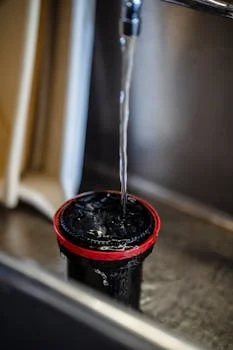
Broken-fiber repair keeps TSS in compliance without waiting for a full module swap when FMC is still low. Use this field sequence:
- Locate the break: Submerge the module and apply low-pressure air (about 0.5 bar) to the permeate side. Bubbles mark the damaged fiber.
- Dry only the damaged fiber: Blot that fiber with a clean paper towel so sealant bonds; HYDRAsub Technical Service Bulletins stress this step.
- Keep neighbors wet: Leave undamaged fibers submerged. Dry-out of adjacent fibers can cause further breaks.
- Cut flush: Trim the damaged fiber flush with the header plate using a sharp blade or scissors.
- Seal the end: Apply a fast-curing epoxy rated for MBR membranes and allow full cure per product instructions.
After repair, keep module FMC below 5%. Above that threshold, individual seals no longer protect effluent quality and module replacement is usually required.
KPI Thresholds That Trigger Action
KPI trends convert maintenance from calendar chores into predictive work orders. A TMP rise faster than about 0.5 kPa per day under stable flux and temperature points to severe fouling that needs more frequent CEW or an early CIP. A permeate flux drop greater than 10% over 30 days at constant suction setpoints likewise justifies CIP scheduling. Aeration pressure drop rising more than 15% above the clean-diffuser baseline often means clogged diffusers and uneven scour. Log every CEW, CIP, and fiber repair with dose, duration, TMP before/after, and flux recovery so schedules tighten against real fouling rates.
| KPI | Normal Range/Threshold | Actionable Deviation | Recommended Action |
|---|---|---|---|
| Transmembrane Pressure (TMP) | 10–25 kPa | >35 kPa (sustained) or >0.5 kPa/day rise | Increase CEW frequency, schedule CIP |
| Permeate Flux | Target Flux (e.g., 15-20 LMH) | >10% decline over 30 days | Schedule CIP |
| Air Scour Flow Rate | 0.2–0.3 Nm³/h per m² | <0.2 Nm³/h per m² (sustained) | Inspect blowers, clean diffusers |
| Fiber Module Count (FMC) | <1% | >1% weekly increase or >5% overall | Investigate cause, perform fiber repair; consider module replacement if >5% |
| Aeration Pressure Drop | Stable (based on system design) | >15% increase | Inspect/clean air diffusers |
Maintenance Checklist Before You Change the Protocol
Use this short checklist when reviewing a submerged hollow fiber train or writing a new SOP:
- Confirm fine screening (often 0.5–1 mm for hollow fiber) is intact and cleaned on schedule.
- Verify air scour at 0.2–0.3 Nm³/h per m² and diffuser DP within 15% of baseline.
- Trend TMP daily; act if sustained >35 kPa or rise >0.5 kPa/day.
- Keep CEW near 500 ppm NaOCl on the agreed weekly cadence unless manufacturer limits differ.
- Separate acid and hypochlorite CIP steps; never mix in one soak.
- Repair fibers promptly; plan module swap if FMC stays above 5%.
- Budget replacement using current $10–40/m² hollow-fiber ranges, not outdated $120/m² placeholders alone.
This guide is for plant engineers and EPC teams running submerged hollow fiber MBR trains who need repeatable CEW/CIP rules and fiber-repair criteria. Buyers comparing only clarifier upgrades without membrane tanks should look at conventional activated-sludge options first. If you need sizing help for a UF polishing stage beside the bioreactor, review the Ultrafiltration (UF) Water Treatment System specs, then request a free quote with flow rate, MLSS, and discharge limits.
Frequently Asked Questions

How often should hollow fiber MBR membranes be chemically cleaned?
Chemically enhanced backwash is commonly run about three times per week at roughly 500 ppm NaOCl for organic control. A full CIP soak is typically needed every 1–3 months on industrial loads, while manufacturer recovery windows often span 2–6 months when fouling is milder. Raise CEW frequency or pull CIP forward when TMP rises faster than about 0.5 kPa per day or flux falls more than 10% in 30 days.
What causes hollow fiber breakage in submerged MBR modules?
Fiber breaks usually trace to excessive backwash pressure, uneven air scour, chemical overexposure (high chlorine or extreme pH), handling damage, or fatigue from repeated filtration cycles. Hair and fibrous debris that bypass coarse screens also abrade hollow fibers. Keeping scour even and screening tight cuts the breakage rate more than any post-break sealant can.
Can I keep running an MBR with broken fibers?
Short-term operation with a few sealed or known breaks is possible if FMC stays well below 5%. Once broken-fiber area exceeds about 5%, effluent TSS can climb above 10 mg/L and discharge risk rises. Repair promptly or replace the module rather than stretching run time on a leaking cassette.
What is the typical lifespan of PVDF hollow fiber MBR membranes?
With steady CEW, timely CIP, and fiber repair, PVDF hollow fiber MBR membranes commonly last 5–7 years in industrial and municipal service. Manufacturer guidance notes service can stretch toward 7–10 years under favorable feed and disciplined cleaning, while poor pretreatment can cut life to about 3–5 years. Track cumulative chlorine exposure against the OEM limit, not calendar years alone.
How do I know if my hollow fiber MBR is fouled?
Fouling shows as a sustained TMP rise above the 10–25 kPa normal band, flux loss greater than 10% over 30 days at fixed suction, higher permeate-pump energy, and more frequent high-pressure or low-flow alarms. Visual biofilm on fibers and rising diffuser pressure drop support the same diagnosis. Act on the trend before a single CIP can no longer restore 90% of clean flux.