Why Sludge Dewatering Matters: The Hidden Costs of Poor Solids Management
Ineffective sludge dewatering directly impacts a wastewater treatment plant’s operational budget and regulatory compliance. Sludge disposal costs currently range from $50-$300/ton (2025 EPA data), frequently accounting for 30-50% of the total wastewater treatment OPEX at industrial facilities. Poor dewatering significantly increases hauling costs, often by 2-3x, because a higher water content means more volume and weight to transport. For instance, a plant producing 100 tons of dewatered sludge per day at 15% solids content will incur double the hauling costs compared to the same dry solids output at 30% solids. Beyond direct expenditure, regulatory penalties for non-compliance with solids disposal standards, such as EPA 40 CFR Part 503 in the US or the EU Sludge Directive 86/278/EEC, can easily exceed $100,000 annually for large industrial facilities. Optimizing sludge dewatering is a critical strategy for `sludge disposal cost reduction` and improving `wastewater treatment plant OPEX`. A notable case study involved a food processing plant that reduced its disposal costs by 40% annually simply by upgrading from an older belt press to a modern filter press, increasing its cake solids content from 18% to 42%.How Sludge Dewatering Systems Work: Process Mechanisms and Key Parameters
Sludge dewatering systems separate solids from liquids, reducing sludge volume and weight for more economical disposal. The primary metric for dewatering efficiency is the `solids capture rate` (%), which indicates the percentage of suspended solids removed from the influent sludge, and the `cake solids content` (%), representing the percentage of dry solids in the final dewatered cake. Each dewatering technology employs distinct physical mechanisms:- Belt Press: This system uses gravity drainage followed by mechanical pressure. Sludge is fed onto a moving porous belt, allowing free water to drain by gravity. The sludge then passes through a series of rollers that progressively increase pressure, squeezing out more water. Typical throughput for belt presses ranges from 5-50 m³/h, making them suitable for moderate-volume applications with fibrous sludge.
- Centrifuge: Centrifugal force separates solids from liquid. Sludge enters a rapidly rotating bowl (typically 3,000-4,000 G), causing denser solids to settle against the bowl wall. A helical scroll conveyor then moves the dewatered solids toward the discharge ports, while clarified liquid (centrate) exits separately. Centrifuges are compact and operate continuously.
- Plate and Frame Filter Press: This is a batch process utilizing pressure filtration. Sludge is pumped into a chamber formed by a series of recessed filter plates covered with cloth media. Pressure (typically 5-15 bar) forces the liquid through the filter cloths, leaving a solid cake behind. Once the chambers are full, the press opens, and the dewatered cake is discharged. Cycle times usually range from 2-6 hours, yielding very dry cake.
- Rotary Press: Also known as a screw press, this system uses low-pressure filtration and continuous operation. Sludge is fed into a cylindrical chamber containing a slowly rotating screw within a series of fixed and moving rings. Water drains through the gaps between the rings, while the screw compresses the sludge, gradually increasing pressure along its length and discharging dewatered cake at the end. Typical throughput is 3-30 m³/h.
| Dewatering System | Primary Mechanism | Typical Sludge Type | Operation Type |
|---|---|---|---|
| Belt Press | Gravity drainage + Mechanical pressure | Fibrous, Municipal, Food Processing | Continuous |
| Centrifuge | Centrifugal force (3,000-4,000 G) | Oily, Biological, Fine particles | Continuous |
| Plate and Frame Filter Press | Pressure filtration (5-15 bar) | High solids, Industrial, Mining | Batch |
| Rotary Press | Low-pressure filtration (1-3 bar) + Screw compression | Biological, Moderate solids, Industrial | Continuous |
Engineering Specs Compared: Belt Press vs. Centrifuge vs. Filter Press vs. Rotary Press
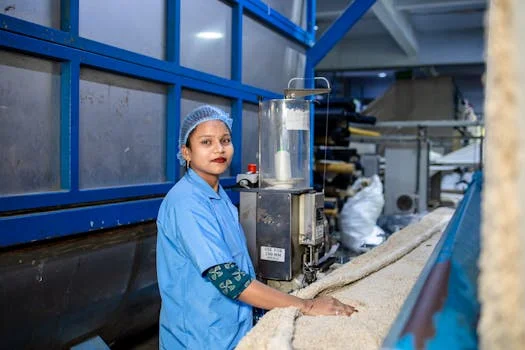
Filter presses consistently achieve the highest `solids capture rate`, typically 95-98%, surpassing centrifuges (90-95%), rotary presses (85-92%), and belt presses (80-90%) (Top 1, Top 3 data). This superior capture minimizes solids recycling to the headworks, improving overall treatment efficiency. Regarding `sludge cake solids content`, plate and frame filter presses lead with 30-50% dry solids, followed by rotary presses (25-35%), centrifuges (20-35%), and belt presses (15-25%) (Top 1, Top 2 data). Higher cake solids directly translate to reduced sludge volume and lower `sludge disposal cost reduction`.
Conversely, `sludge dewatering energy consumption` varies significantly. Centrifuges are the most energy-intensive, consuming 0.8-1.2 kWh/m³ of sludge treated, primarily due to high rotational speeds. Belt presses consume 0.5-0.8 kWh/m³, rotary presses 0.4-0.7 kWh/m³, and filter presses are the most energy-efficient at 0.3-0.5 kWh/m³ (Top 3 PAA). `Polymer dosing for sludge conditioning` also represents a significant operational cost. Belt presses typically require the highest chemical usage at 3-6 kg polymer/ton dry solids, followed by centrifuges (2-4 kg/ton), rotary presses (1-3 kg/ton), and filter presses (0.5-2 kg/ton) (Top 2 source).
Footprint considerations are crucial for space-constrained facilities. Centrifuges generally have the smallest footprint, followed by rotary presses, then belt presses, with filter presses requiring the largest area due to their batch operation and associated infrastructure. Maintenance frequency also impacts `wastewater treatment plant OPEX`. Belt presses often require weekly belt washing and alignment, centrifuges may need monthly bearing replacements, rotary presses typically require quarterly seal replacement, and filter presses generally require annual cloth replacement, depending on sludge characteristics.
| Parameter (2025 Data) | Belt Press | Centrifuge | Plate and Frame Filter Press | Rotary Press |
|---|---|---|---|---|
| Solids Capture Rate (%) | 80-90% | 90-95% | 95-98% | 85-92% |
| Cake Solids Content (%) | 15-25% | 20-35% | 30-50% | 25-35% |
| Energy Consumption (kWh/m³) | 0.5-0.8 | 0.8-1.2 | 0.3-0.5 | 0.4-0.7 |
| Chemical Usage (kg polymer/ton dry solids) | 3-6 | 2-4 | 0.5-2 | 1-3 |
| Footprint (Relative) | Medium-Large | Smallest | Largest | Small |
| Throughput Range (m³/h) | 5-50 | 10-100+ | 1-30 (batch) | 3-30 |
| Maintenance Frequency | Weekly belt washing | Monthly bearing checks | Annual cloth replacement | Quarterly seal checks |
| Capital Cost Range (USD) | $50k-$200k | $150k-$400k | $200k-$500k | $100k-$300k |
| OPEX Range (per ton dry solids) | $15-$35 | $18-$40 | $10-$30 | $12-$32 |
For applications demanding the highest cake solids and lowest chemical consumption, HydropureWater plate and frame filter presses for high-solids sludge dewatering are often the preferred choice, despite their larger footprint and batch operation.
Which Sludge Dewatering System is Right for Your Application? A Decision Framework
Selecting the optimal sludge dewatering system for `industrial wastewater solids management` involves a structured decision-making process that aligns sludge characteristics with system capabilities and operational constraints. This framework helps engineers and plant managers narrow down options effectively.Step 1: Characterize Your Sludge
Begin by thoroughly understanding your sludge. Key parameters include:- Solids Concentration: The percentage of dry solids in your influent sludge (e.g., 0.5% to 10%).
- Particle Size Distribution: Fine, colloidal, or coarse particles.
- Organic/Inorganic Content: High organic content (e.g., biological sludge) behaves differently from high inorganic content (e.g., mining tailings).
- pH and Temperature: These affect polymer efficacy and material compatibility.
- Abrasiveness/Corrosiveness: Important for material selection and equipment longevity.
- Flocculation Properties: How well the sludge responds to chemical conditioning.
Step 2: Define Your Goals
Clearly articulate what you aim to achieve with dewatering:- Maximize cake solids for lowest disposal cost.
- Minimize footprint due to space limitations.
- Reduce chemical usage for OPEX savings.
- Achieve specific regulatory compliance for solids content.
- Ensure continuous operation with minimal operator intervention.
Step 3: Evaluate Constraints
Identify any limitations that will influence your choice:- Space Limitations: Available area for equipment installation.
- Budget: Capital expenditure (CAPEX) and operational expenditure (OPEX) limits.
- Operator Skill Level: Complexity of operation and maintenance.
- Noise Restrictions: Relevant for facilities near residential areas.
- Power Availability: Electrical supply capacity.
Step 4: Match Sludge Characteristics to System Strengths
This step leverages the data from the engineering comparison to align your specific needs with the most suitable technology:- Filter Press: Ideal for sludges requiring the highest cake solids (30-50%) and lowest chemical usage, especially for high inorganic content or industrial sludges where disposal costs are paramount. Best for batch operations.
- Centrifuge: Excellent for space-limited installations and continuous operation, particularly effective for oily or biological sludges with variable solids concentrations. Note its higher energy consumption.
- Belt Press: A cost-effective solution for lower capital budgets and simpler operation, suitable for fibrous sludges and moderate throughputs, often found in food processing or smaller municipal plants. Learn how belt filter presses optimize food processing wastewater treatment.
- Rotary Press: Offers a balance of continuous operation, moderate cake solids, and low energy consumption, often preferred for biological or mixed industrial sludges where a compact, continuous system is desired.
Flowchart: Select Your Sludge Dewatering System
(Represented in prose as a decision path)
- Start: Characterize Your Sludge: Is your sludge high-solids (>5% dry solids) or low-solids (<5% dry solids)? Is it abrasive, oily, or fibrous?
- If High-Solids & Goal is Maximum Cake Solids: Consider Plate and Frame Filter Press.
- Constraint Check: Do you have sufficient footprint? Is batch operation acceptable? If yes, Filter Press is likely best.
- If No/Limited Footprint: Consider Rotary Press (for continuous operation and moderate solids) or Centrifuge (for oily/fine particles).
- If Low-Solids & Goal is Continuous Operation: Consider Belt Press or Centrifuge.
- Constraint Check: Is capital cost a primary concern? If yes, Belt Press.
- If Space is Limited & Higher OPEX is Acceptable: Centrifuge.
- If Fibrous Sludge & Moderate Cake Solids Required: Consider Belt Press or Rotary Press.
- If Oily Sludge & Compact System Needed: Centrifuge is often the best fit.
- If Corrosive Sludge & High Solids Required: Filter Press or Rotary Press with appropriate materials.
Industry-Specific Recommendations:
- Food Processing: Often uses Belt press or Rotary press for moderate solids and high throughput, balancing capital cost with continuous operation.
- Mining: Filter press is frequently chosen for high solids content, abrasive slurries, and the need for very dry cake with minimal chemical usage.
- Municipal: Centrifuge or filter press are common, depending on plant size, space, and the need for consistent compliance with variable solids.
- Chemical: Filter press or rotary press are preferred for corrosive or hazardous sludges, where high solids and robust construction are critical.
Lifecycle Cost Analysis: Capital vs. Operational Costs for Industrial Dewatering Systems
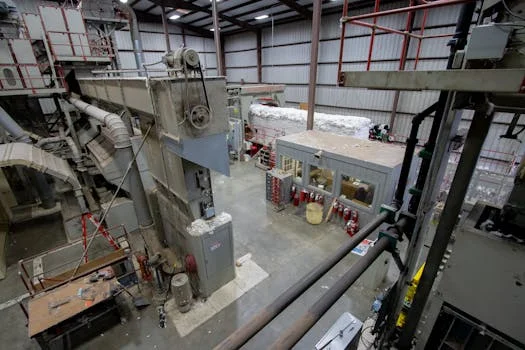
Capital cost ranges (2025 USD) vary significantly: Belt presses are typically the least expensive ($50k-$200k), followed by rotary presses ($100k-$300k), centrifuges ($150k-$400k), and plate and frame filter presses ($200k-$500k). These figures represent typical industrial-scale units and can fluctuate based on capacity, automation, and material of construction.
Operational expenditure (OPEX) is a continuous cost stream broken down per ton of dry solids. This includes:
- Energy: $2-$10 per ton dry solids, with centrifuges at the higher end.
- Chemicals: $5-$20 per ton dry solids, with belt presses typically requiring more polymer.
- Maintenance: $3-$15 per ton dry solids, covering spare parts and labor.
- Disposal Savings: This is a negative cost (i.e., a saving) ranging from $10-$50 per ton dry solids, directly proportional to the cake solids content achieved.
A simple ROI calculation example illustrates the long-term benefits. Consider a plant processing 100 m³/h of sludge (assuming 2% solids, producing 2 tons dry solids/hour) operating 16 hours/day, 300 days/year (9,600 tons dry solids/year).
Scenario 1: Belt Press (Lower CAPEX, Higher OPEX)
- Capital Cost: $150,000
- Cake Solids: 20%
- OPEX (Energy + Chemicals + Maintenance): $15/ton dry solids
- Disposal Cost (at 20% solids, assume $100/ton wet sludge): $500/ton dry solids
- Annual OPEX (excluding disposal): $15/ton * 9,600 tons = $144,000
- Annual Disposal Cost: 9,600 tons dry solids / 0.20 solids = 48,000 tons wet sludge * $100/ton = $4,800,000
- Total 5-Year TCO: $150,000 + (5 * $144,000) + (5 * $4,800,000) = $24,870,000
Scenario 2: Plate and Frame Filter Press (Higher CAPEX, Lower OPEX, Higher Solids)
- Capital Cost: $350,000
- Cake Solids: 40%
- OPEX (Energy + Chemicals + Maintenance): $8/ton dry solids
- Disposal Cost (at 40% solids, assume $100/ton wet sludge): $250/ton dry solids
- Annual OPEX (excluding disposal): $8/ton * 9,600 tons = $76,800
- Annual Disposal Cost: 9,600 tons dry solids / 0.40 solids = 24,000 tons wet sludge * $100/ton = $2,400,000
- Total 5-Year TCO: $350,000 + (5 * $76,800) + (5 * $2,400,000) = $12,734,000
In this example, despite the higher initial CAPEX, the filter press yields a 5-year Total Cost of Ownership (TCO) that is nearly half that of the belt press, primarily due to significant `sludge disposal cost reduction`. Every 1% increase in cake solids reduces disposal costs by approximately 2-3% (EPA 2024 data). Hidden costs, often overlooked, include downtime for maintenance (e.g., belt press: 4-8 hours/month; filter press: 2-4 hours/month), operator training, and the cost of maintaining a spare parts inventory. These factors underscore the importance of a holistic LCCA.
| Cost Component | Belt Press | Centrifuge | Plate and Frame Filter Press | Rotary Press |
|---|---|---|---|---|
| Capital Cost (USD) | $50k-$200k | $150k-$400k | $200k-$500k | $100k-$300k |
| Energy (per ton dry solids) | $4-$7 | $7-$10 | $2-$4 | $3-$6 |
| Chemicals (per ton dry solids) | $10-$20 | $8-$15 | $5-$10 | $6-$12 |
| Maintenance (per ton dry solids) | $8-$15 | $5-$12 | $3-$8 | $4-$10 |
| Disposal Savings Potential (per ton dry solids) | $10-$25 | $15-$30 | $30-$50 | $20-$35 |
| Typical Annual Downtime (hours/year) | 48-96 | 24-48 | 12-24 | 24-48 |
Common Problems and Troubleshooting for Industrial Sludge Dewatering Systems
Effective troubleshooting and preventive maintenance are essential for maximizing uptime and efficiency in industrial sludge dewatering operations. Recognizing common failure modes and implementing best practices can significantly reduce `wastewater treatment plant OPEX`.- Belt Press Problems:
- Belt tracking issues: Often caused by uneven sludge feed, worn rollers, or misaligned belts. Regular visual inspection, roller cleaning, and belt tension adjustment are crucial.
- Blinding: The filter belt pores become clogged, reducing dewatering efficiency. Causes include improper polymer dosing or high grease content in sludge. Increase belt wash water pressure, adjust polymer, or pre-treat sludge.
- Uneven cake formation: Indicates inconsistent sludge distribution or pressure. Check feed pump consistency and scraper blade alignment.
- Centrifuge Problems:
- Excessive vibration: A serious issue often caused by imbalanced solids loading, worn bearings, or mechanical misalignment. Immediate shutdown and professional inspection are required.
- Bearing failure: Can result from inadequate lubrication or operating beyond design limits. Follow manufacturer's lubrication schedule and monitor bearing temperatures.
- Poor solids capture: May be due to incorrect polymer dosage, insufficient bowl speed, or high feed flow rate. Adjust `polymer dosing for sludge conditioning` or reduce throughput.
- Filter Press Problems:
- Cloth blinding: Filter cloths become clogged, leading to longer cycle times and poor filtrate quality. Causes include fine particles, oily sludge, or insufficient wash. Implement regular cloth washing, consider different cloth materials, or adjust polymer.
- Uneven cake discharge: Often caused by uneven chamber filling or worn filter cloths. Inspect plates for damage and ensure even pressure distribution.
- Hydraulic leaks: Can occur from worn seals or hoses. Regular inspection and replacement of seals, particularly during annual maintenance, are key.
- Rotary Press Problems:
- Disk/Screen wear: Abrasive sludge can wear down the filtering elements, reducing efficiency. Implement a preventive maintenance schedule for inspection and replacement.
- Seal leakage: Can lead to loss of solids capture. Regularly inspect and replace seals as per manufacturer recommendations.
- Low throughput: May be due to excessive backpressure, insufficient polymer, or clogged screens. Check discharge gate, adjust `polymer dosing for sludge conditioning`, and clean screens.
General troubleshooting tips for all systems include ensuring proper `sludge conditioning` (e.g., pH adjustment, polymer dosing), regular equipment calibration, and comprehensive operator training. Utilizing PLC-controlled chemical dosing systems for sludge conditioning can significantly improve polymer optimization and reduce operational issues.
Frequently Asked Questions
What is the most used dewatering method for industrial sludge?
The most used dewatering method varies by industrial application and specific sludge characteristics. Plate and frame filter presses are dominant for high-solids applications (30-50% cake solids) requiring maximum dewatering. Centrifuges excel in space-limited installations and for continuous processing of biological or oily sludges. Belt presses are often chosen for lower capital cost projects with moderate dewatering requirements, particularly for fibrous sludges.
What is a major limitation of using centrifuges for sludge dewatering?
A major limitation of using centrifuges for sludge dewatering is their relatively high energy consumption, typically 0.8-1.2 kWh/m³ of sludge treated. They can also be sensitive to variations in feed solids concentration and particle size, potentially requiring more precise `polymer dosing for sludge conditioning` to maintain optimal performance.
Can a centrifugal pump handle sludge?
Standard centrifugal pumps are generally not designed to handle high-solids sludge, typically struggling with concentrations above 5% solids. For industrial sludge, especially dewatered cake or high-concentration slurries, positive displacement pumps (e.g., progressive cavity pumps, piston pumps) are required due to their ability to handle viscous fluids and high solids content without clogging or excessive wear.
What is the most prevalent method for sludge reduction?
The most prevalent method for sludge reduction in industrial applications involves dewatering to significantly reduce volume and weight, followed by off-site disposal. Further reduction can be achieved through thermal drying, which can increase solids content to 90% or more, or incineration, which reduces sludge to ash. For municipal sludge, composting or anaerobic digestion are also common methods for volume reduction and stabilization.
How do I choose between a belt press and a filter press for my food processing plant?
For a food processing plant, the choice between a belt press and a filter press depends on your priorities. A filter press will deliver higher cake solids content (30-50%) and lower `chemical usage` (0.5-2 kg polymer/ton dry solids), leading to substantial `sludge disposal cost reduction`. However, it has a higher capital cost and larger footprint, operating in a batch mode. A belt press offers a lower capital cost, simpler continuous operation, and is suitable for fibrous sludges, but yields lower cake solids (15-25%) and requires more chemicals. For specific guidance, evaluating your exact sludge characteristics and operational goals is crucial.
Related Equipment
- HydropureWater plate and frame filter presses for high-solids sludge dewatering — view specifications, capacity range, and technical data
- PLC-controlled chemical dosing systems for sludge conditioning — view specifications, capacity range, and technical data
Need a customized solution? Request a free quote with your specific flow rate and pollutant parameters.