Industrial Wastewater Treatment in Ahmadi 2025: Engineering Guide with Costs, Compliance & Equipment Checklist
Industrial wastewater treatment in Ahmadi requires tailored solutions to meet Kuwait EPA’s strict effluent limits (e.g., BOD < 30 mg/L, TSS < 50 mg/L) while handling high-TDS streams from petrochemical and refinery operations. Local projects in 2025 range from KWD 50,000 for small DAF systems to KWD 2M+ for integrated MBR-RO plants. Key challenges include foam control in aeration tanks (pH 6–9), sludge disposal costs (20–30% of O&M), and compliance with Kuwait’s 2023 Circular No. 214/2023. This guide provides process specs, cost benchmarks, and a supplier checklist for Ahmadi’s industrial base.
Kuwait EPA Wastewater Standards for Ahmadi Industrial Facilities: 2025 Compliance Checklist
Kuwait EPA’s Circular No. 214/2023 mandates stringent effluent limits for industrial discharges in Ahmadi, ensuring environmental protection and sustainable water management. Industrial facilities, particularly those in the petrochemical and refinery sectors, must rigorously adhere to these parameters to avoid significant penalties, which can reach up to KWD 50,000 for non-compliance. The limits cover a broad spectrum of pollutants, from conventional organics and suspended solids to heavy metals and salinity. For high-TDS wastewater exceeding 10,000 mg/L, additional advanced treatment technologies such as electrokinetic processes or reverse osmosis (RO) are often necessary to meet Kuwait’s strict salinity limits, which are crucial for protecting marine ecosystems and promoting water reuse.
Sludge generated from wastewater treatment must also comply with Kuwait’s Hazardous Waste Management Regulation (2020). Improper disposal, especially of sludge containing heavy metals or toxic organics common in petrochemical wastewater, carries substantial fines. Approved disposal pathways include secure landfilling for inert sludge, incineration for certain hazardous wastes, or, in specific cases, reuse as fertilizer after extensive treatment and regulatory approval. The permitting process for new wastewater treatment systems in Ahmadi requires comprehensive documentation, including detailed Environmental Impact Assessments (EIA), process flow diagrams, and certifications for operating personnel, ensuring that proposed installations meet all technical and environmental requirements before commissioning.
| Parameter | Effluent Limit (Maximum) | Unit |
|---|---|---|
| pH | 6.0 - 9.0 | - |
| Biochemical Oxygen Demand (BOD₅) | 30 | mg/L |
| Chemical Oxygen Demand (COD) | 100 | mg/L |
| Total Suspended Solids (TSS) | 50 | mg/L |
| Oil and Grease | 10 | mg/L |
| Total Dissolved Solids (TDS) | 1000 (or +10% of influent, whichever is higher, max 5000) | mg/L |
| Ammonia Nitrogen (NH₃-N) | 10 | mg/L |
| Total Nitrogen (TN) | 30 | mg/L |
| Total Phosphorus (TP) | 2 | mg/L |
| Sulfide (H₂S) | 0.5 | mg/L |
| Chromium (Total) | 0.5 | mg/L |
| Lead (Pb) | 0.1 | mg/L |
| Cadmium (Cd) | 0.05 | mg/L |
| Mercury (Hg) | 0.005 | mg/L |
| Zinc (Zn) | 2 | mg/L |
| Copper (Cu) | 1 | mg/L |
Process Selection for Ahmadi Industrial Wastewater: DAF vs. MBR vs. Electrokinetic vs. RO
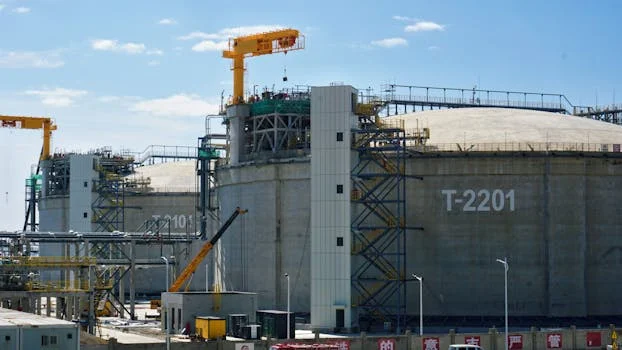
Selecting the optimal industrial wastewater treatment process in Ahmadi hinges on influent characteristics, desired effluent quality, and stringent Kuwait EPA compliance targets. For industries like refineries and food processing, which often have influent TSS ranging from 500–1,500 mg/L and significant oil/grease content, DAF systems for Ahmadi’s high-TSS industrial wastewater are highly effective. These systems typically remove 92–97% of TSS and 80–90% of oil/grease, making them ideal for primary or secondary treatment, especially as a pre-treatment step for more advanced processes.
When near-reuse-quality effluent is required, MBR systems for near-reuse-quality effluent in Ahmadi achieve 95–99% COD removal and produce effluent with filtration levels below 1 μm. However, MBR systems require robust pre-treatment to handle high-TDS streams and prevent membrane fouling, often integrating DAF or chemical coagulation before the biological stage. For highly challenging wastewater, particularly high-TDS streams exceeding 10,000 mg/L with toxic and recalcitrant organics common in petrochemical operations, electrokinetic treatment offers a specialized solution. While its capital expenditure (Capex) can be 2–3 times higher than conventional biological systems, electrokinetic processes effectively remove contaminants that are difficult for biological or physical-chemical methods. Finally, reverse osmosis (RO) systems are widely employed for tertiary treatment in Ahmadi, achieving up to 95% TDS reduction. RO is crucial for facilities aiming for industrial water reuse or requiring extremely low salinity discharge, but it necessitates extensive pre-treatment (typically DAF followed by MBR or ultrafiltration) to protect membranes from fouling by suspended solids, oil, and biological growth.
| Process | Influent Suitability | Effluent Quality | Capex (KWD) | Opex (KWD/year) | Maintenance Complexity |
|---|---|---|---|---|---|
| DAF (Dissolved Air Flotation) | High TSS (500-1500 mg/L), High Oil/Grease (refineries, food processing) | Reduced TSS (92-97%), Oil/Grease (80-90%), pre-treatment for advanced systems | 50,000 - 200,000 | 10,000 - 50,000 | Moderate |
| MBR (Membrane Bioreactor) | Moderate COD (200-1000 mg/L), Low-Moderate TSS (post-DAF), requires pre-treatment for high-TDS | High COD removal (95-99%), low TSS (<5 mg/L), near-reuse quality | 300,000 - 1,500,000 | 50,000 - 300,000 | High (membrane cleaning/replacement) |
| Electrokinetic | High-TDS (>10,000 mg/L), toxic/recalcitrant organics (petrochemical) | Effective removal of specific toxic compounds, moderate TDS reduction | 600,000 - 3,000,000 | 80,000 - 400,000 | High (electrode management) |
| RO (Reverse Osmosis) | Low TSS/BOD/COD (post-MBR/UF), high TDS for desalination/reuse | High TDS reduction (up to 95%), high-purity water for reuse | 200,000 - 800,000 | 40,000 - 200,000 | High (membrane fouling/replacement, pre-treatment) |
2025 Cost Benchmarks for Industrial Wastewater Treatment in Ahmadi
Projected capital expenditure (Capex) for industrial wastewater treatment systems in Ahmadi for 2025 ranges from KWD 50,000 for compact DAF units to over KWD 2 million for large-scale MBR-RO integrated plants. These benchmarks provide a realistic financial framework for plant managers and procurement teams evaluating new installations or upgrades. For instance, DAF systems for Ahmadi’s high-TSS industrial wastewater, designed for capacities between 4–300 m³/h, typically incur a Capex of KWD 50,000–200,000. Operational expenditure (Opex) for DAF systems ranges from KWD 10–30/m³, primarily driven by chemical consumption, power usage, and labor costs for solids removal and maintenance.
More advanced MBR systems, suitable for capacities of 10–2,000 m³/day, represent a higher upfront investment, with Capex ranging from KWD 300,000–1.5M. Their Opex, at KWD 15–40/m³, reflects the energy intensity of membrane operation and the periodic cost of membrane replacement. Sludge disposal is a significant O&M component across all systems, accounting for 20–30% of total operational costs, with charges in Ahmadi typically KWD 50–150/ton, depending on the sludge type and disposal method. Tertiary RO systems, essential for achieving high-purity effluent for reuse, have a Capex of KWD 200,000–800,000 for capacities of 10–200 m³/h, with Opex of KWD 5–20/m³ due to membrane replacement schedules and power consumption for high-pressure pumps. Facilities can expect payback periods of 3-7 years, driven by reduced compliance penalties, potential water reuse savings, and improved operational stability.
| System Type | Typical Capacity | Capex (KWD) | Opex (KWD/m³) | Lifespan (years) | Estimated Payback Period (years) |
|---|---|---|---|---|---|
| DAF System (Primary/Pre-treatment) | 4-300 m³/h | 50,000 - 200,000 | 10 - 30 | 10 - 15 | 3 - 6 |
| MBR System (Secondary/Tertiary) | 10-2,000 m³/day | 300,000 - 1,500,000 | 15 - 40 | 15 - 20 (modules 5-10) | 4 - 8 |
| RO System (Tertiary/Desalination) | 10-200 m³/h | 200,000 - 800,000 | 5 - 20 | 15 - 20 (membranes 3-5) | 5 - 10 |
| Sludge Dewatering (Filter Press/Screw Press) | 0.5-10 m³/h sludge | 30,000 - 150,000 | 50 - 150 (per ton sludge) | 10 - 20 | 2 - 5 (from disposal savings) |
Foam Control and Sludge Handling: Critical Challenges in Ahmadi’s Wastewater Treatment
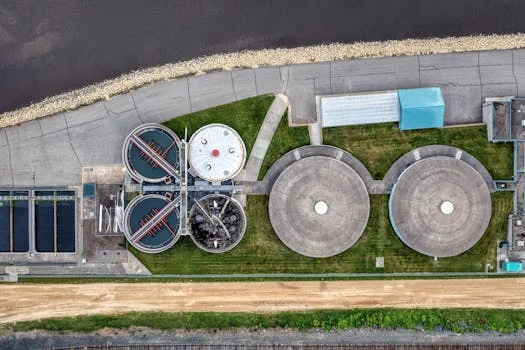
Effective foam control in aeration tanks and efficient sludge handling are critical operational challenges in Ahmadi’s industrial wastewater treatment, significantly impacting compliance and operational expenditure. Foam formation in aeration tanks, especially within the typical pH range of 6–8.5 for many industrial effluents, can reduce oxygen transfer efficiency, lead to biological upsets, and create health and safety hazards. Addressing this requires carefully selected defoamers, with silicone-free options often preferred to avoid potential biological toxicity that could disrupt microbial activity in the activated sludge process. Excessive foaming can cause downtime and increase maintenance, underscoring the need for proactive management strategies.
Sludge handling, encompassing thickening, dewatering, and disposal, accounts for a substantial 20–30% of total operational and maintenance (O&M) costs in industrial wastewater treatment. Choosing the right dewatering technology is paramount: sludge dewatering solutions for Ahmadi’s industrial plants, such as plate and frame filter presses, offer high solids content in the cake (30-50%) and are suitable for diverse sludge types, while screw presses provide continuous operation and lower labor requirements. Kuwait’s hot climate, with temperatures often exceeding 40°C, accelerates sludge decomposition, leading to odor issues and potential pathogen growth. Implementing rapid dewatering strategies or employing cooling systems for sludge storage can mitigate these challenges. A notable case study involved an Ahmadi refinery that reduced foam-related downtime by 40% through the implementation of pH-adjusted defoamers in conjunction with an automatic chemical dosing system, demonstrating the tangible benefits of optimized chemical management.
Supplier Checklist for Industrial Wastewater Treatment in Ahmadi
Selecting a qualified wastewater treatment supplier in Ahmadi requires a rigorous evaluation process that prioritizes local compliance expertise, proven regional experience, and robust after-sales support. For local Kuwaiti suppliers, it is imperative to verify their explicit understanding and adherence to Kuwait EPA’s Circular No. 214/2023, including their ability to provide all required documentation for permitting and ongoing compliance. This ensures that the proposed solution will meet local regulatory mandates without issues. International suppliers, while offering global expertise, should demonstrate a strong track record and provide tangible case studies from the Middle East, ideally with clients like Saudi Aramco or ADNOC, to prove their understanding of the region's unique industrial demands and environmental conditions.
A comprehensive supplier checklist should include critical items such as the availability of local service support and spare parts, which are vital for minimizing downtime in Ahmadi's often remote industrial sites. Effective operator training programs are essential to ensure the client's team can efficiently run and maintain the new system. look for suppliers who offer explicit compliance guarantees, standing by their system's ability to meet Kuwait EPA effluent limits. Flexible financing options can also be a significant advantage for large capital projects. Red flags during the evaluation process include suppliers lacking Kuwait EPA certification, providing vague cost estimates without detailed breakdowns, or being unable to furnish verifiable references within the petrochemical or refinery sectors, which are predominant in Ahmadi.
| Category | Checklist Item | Importance |
|---|---|---|
| Compliance & Expertise | Kuwait EPA Circular No. 214/2023 knowledge & certification | Critical |
| Compliance & Expertise | Proven track record in petrochemical/refinery wastewater treatment | High |
| Experience & References | Case studies/references from Middle East (e.g., Saudi Aramco, ADNOC) | High |
| Product & Technology | Detailed process flow diagrams and equipment specifications | High |
| Product & Technology | Ability to handle high-TDS, oil/grease, and specific toxic compounds | Critical |
| Support & Service | Local service support and availability of spare parts in Kuwait | Critical |
| Support & Service | Comprehensive operator training programs | High |
| Commercial & Financial | Transparent and detailed cost estimates (Capex/Opex) | Critical |
| Commercial & Financial | Compliance guarantees and performance warranties | High |
| Commercial & Financial | Flexible payment terms or financing options | Moderate |
Frequently Asked Questions
Ahmadi plant managers and environmental engineers frequently inquire about specific costs, compliance requirements, and optimal technologies for industrial wastewater treatment.
Q1: What are the key Kuwait EPA effluent limits for industrial facilities in Ahmadi?
A1: Key Kuwait EPA effluent limits for industrial discharges in Ahmadi, as per Circular No. 214/2023, include BOD < 30 mg/L, TSS < 50 mg/L, oil and grease < 10 mg/L, and pH between 6.0-9.0. Specific limits also apply to heavy metals and total dissolved solids (TDS).
Q2: What is the typical cost range for a DAF system in Ahmadi?
A2: The typical capital expenditure (Capex) for a DAF system in Ahmadi ranges from KWD 50,000 to KWD 200,000 for capacities between 4–300 m³/h, per 2025 benchmarks. Operational expenditure (Opex) is typically KWD 10–30/m³.
Q3: Which wastewater treatment technology is best suited for high-TDS petrochemical wastewater in Ahmadi?
A3: For high-TDS (>10,000 mg/L) petrochemical wastewater containing toxic organics, electrokinetic treatment is highly effective. For achieving significant TDS reduction for reuse, a multi-stage system combining DAF, MBR, and Reverse Osmosis (RO) is generally recommended.
Q4: How significant are sludge disposal costs in Ahmadi’s industrial wastewater treatment?
A4: Sludge disposal costs represent a significant portion of total operational and maintenance (O&M) expenses, typically accounting for 20–30%. Costs in Ahmadi range from KWD 50–150/ton, depending on sludge characteristics and disposal methods.
Q5: What are the critical factors to consider when selecting a wastewater treatment supplier in Ahmadi?
A5: Critical factors include the supplier's proven adherence to Kuwait EPA Circular No. 214/2023, local service and spare parts availability, verifiable case studies in the Middle East's petrochemical sector, comprehensive operator training, and clear compliance guarantees.