Bahrain municipal sewage treatment plants such as the 100,000 m³/d Muharraq facility and the MBR-based Ma’Amir plant report 95–99% BOD removal and supply treated sewage effluent (TSE) for irrigation. Muharraq alone represents about USD 310 million of PPP investment under a 29-year concession with the Ministry of Works (Almar Water Solutions project data). Typical CAPEX for a 10,000 m³/d train still ranges from about $1.2M for conventional trains to $5M for MBR, before site-specific salinity and disinfection adders.
Bahrain Municipal Sewage Treatment: What Engineers Need First
Bahrain municipal sewage treatment for reuse is tertiary-grade by design. Major plants target irrigation-ready BOD and TSS under influent salinity often above 3,000 mg/L TDS and 35–45°C ambient air. Benchmarks include Muharraq at 100,000 m³/d, Ma’Amir MBR near 50,000 m³/d, and Madinat Salman at 40,000 m³/d expandable to 60,000 m³/d. Choice follows land limit, reuse grade, and OPEX.
Bahrain sits in extreme water stress. Roughly 80% of supply still comes from desalination (Bahrain Water Authority figures cited in earlier programme summaries), so every cubic metre of reliable TSE offsets costly potable water. Population growth near 2.1% per year (World Bank 2023 series) keeps raising network and plant loads. Plants therefore act as water factories, not only disposal assets.
Law No. 21/2018 set a national push for tertiary treatment so TSE can support landscaping and agriculture. In the Ma’Amir service area, recycled water has been linked to about a 30% cut in agricultural groundwater extraction. Designers still face seawater infiltration into aging sewers and summer heat that cuts oxygen solubility and shifts microbial kinetics. Most plants we size for Gulf municipal catchments therefore specify salinity-tolerant biology, oversized aeration or cooling margins, and disinfection that meets Ministry of Works (MoW) reuse limits.
Technical Specifications of Bahrain’s Major Sewage Treatment Plants
Bahrain’s municipal infrastructure mixes Membrane Bioreactor (MBR) trains with Conventional Activated Sludge (CAS) plus tertiary polishing. The 100,000 m³/d Muharraq plant is the large-scale conventional-plus-tertiary benchmark. Almar reports a USD 310 million BOOT/BOO scheme, a 16.5 km deep gravity trunk sewer, sludge incineration, and tertiary reclaim for irrigation and industry. The Ma’Amir facility marks the shift toward compact membrane systems where land is tight and reuse specs are strict.
The Ma’Amir MBR plant uses MBR membrane bioreactor systems for Bahrain’s high-salinity wastewater to reach about 99% BOD removal and 95% TSS removal (Stantec 2024 figures cited in prior plant summaries). Muharraq follows biological treatment with disc filtration and UV disinfection for TSE, and earlier summaries put BOD removal near 95%. CAS usually burns less power per cubic metre; MBR wins when footprint and direct-reuse quality dominate the decision.
| Parameter | Ma’Amir Plant (MBR) | Muharraq Plant (CAS + Tertiary) | Madinat Salman (Irrigation Focus) |
|---|---|---|---|
| Design Capacity (m³/d) | 50,000 | 100,000 | 60,000 |
| BOD Removal (%) | >99% | 95% | 97% |
| TSS Removal (%) | >95% | 90% | 94% |
| Nitrogen Removal (%) | 90% | 75% | 85% |
| Energy Use (kWh/m³) | 0.8 – 1.2 | 0.4 – 0.6 | 0.7 – 0.9 |
| Footprint (m²/m³/d) | 0.5 | 1.2 | 0.8 |
Earlier planning tables listed Madinat Salman at 60,000 m³/d. WABAG’s current project record states 40,000 m³/d expandable to 60,000 m³/d, using MLE activated sludge, disc filtration, chlorination, and sludge drying for island irrigation. Keep both figures in mind when comparing bids: expansion capacity is not the same as firm capacity.
Energy use remains a hard constraint. MBR plants in Bahrain often sit at 0.8–1.2 kWh/m³ once high ambient temperature raises liquid viscosity and membrane scour demand. The land trade-off is real: MBR trains typically need about 60% less land than conventional layouts, which is why compact underground sewage treatment plants for Bahrain’s urban projects appear on dense plots. Muharraq’s published expansion allowance of an extra 60,000 m³/d shows how large CAS sites can still grow without a full greenfield move.
MBR vs. Conventional Systems: Which is Right for Bahrain’s Climate?
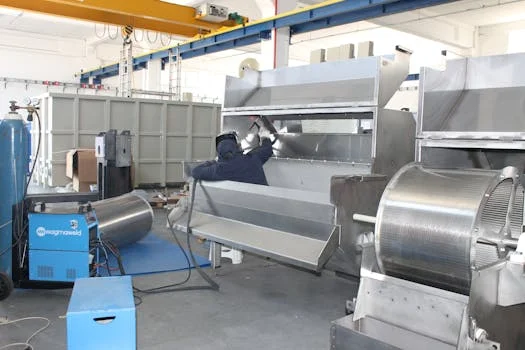
MBR versus conventional selection in Bahrain hinges on salinity, summer temperature, land price, and the reuse contract. Influent TDS often exceeds 3,000 mg/L from seawater infiltration. PVDF MBR membranes are preferred in that band because they can tolerate TDS up to about 10,000 mg/L without the early degradation sometimes seen in lower-grade PES materials (HydropureWater field data, 2025).
Temperature resilience is the second filter. Conventional activated sludge often loses about 20% settling efficiency when wastewater exceeds 35°C as sludge volume index rises. MBR skips secondary clarifiers and holds solids by filtration, so effluent stays stable through 35–45°C peaks. That same logic drives many of Qatar’s MBR wastewater treatment requirements and cost benchmarks, which share Bahrain’s heat and salinity profile.
| Feature | MBR Systems (PVDF) | Conventional Activated Sludge |
|---|---|---|
| Salinity Tolerance | High (Up to 10,000 mg/L TDS) | Moderate (Requires pre-treatment >5k) |
| Effluent Quality | Ultra-pure (Suitable for direct reuse) | Requires tertiary filtration for reuse |
| Temp. Resilience | Stable up to 45°C | Settling efficiency drops >35°C |
| Land Requirement | Minimal (High MLSS concentration) | High (Large clarifiers needed) |
| OPEX (Bahrain) | ~$0.25/m³ | ~$0.18/m³ |
MBR OPEX is higher because membranes are typically replaced every 5–7 years and aeration demand is heavier. Payback often comes from skipping large clarifiers and selling higher-grade TSE to irrigation or industry users. Where reuse limits are milder and land is available, CAS plus robust tertiary stages remains a sound choice.
Cost Benchmarks for Municipal Sewage Treatment Plants in Bahrain (2025)
Capital cost for Bahraini municipal plants tracks technology, automation, and disinfection scope. For a 10,000 m³/d capacity block, MBR systems typically run $3M–$5M, while conventional systems sit near $1.2M–$2.5M. The MBR premium covers membrane modules and controls needed for high MLSS operation. Large PPP packages can sit far above unit rates: Muharraq’s published investment is USD 310 million for 100,000 m³/d plus conveyance and incineration.
OPEX in Bahrain is dominated by power and chemicals. MBR averages about $0.25–$0.30/m³; conventional plants often land at $0.15–$0.20/m³. Scarcity changes the ledger. With desalinated water near $1.50/m³ in the Gulf, a reuse-focused STP can show a 3–7 year payback when TSE displaces desalinated irrigation water (see global wastewater treatment cost benchmarks and ROI calculator).
| Cost Category | MBR (per 10k m³/d) | Conventional (per 10k m³/d) |
|---|---|---|
| CAPEX Range | $3.0M – $5.0M | $1.2M – $2.5M |
| OPEX ($/m³) | $0.25 – $0.30 | $0.15 – $0.20 |
| Membrane Replace. | $0.05 – $0.08 /m³ | N/A |
| Chemical/Disinfection | $0.02 – $0.04 /m³ | $0.04 – $0.06 /m³ |
Local cost drivers include on-site chlorine dioxide generators for Bahrain’s wastewater reuse disinfection, which add roughly $0.3M–$0.8M CAPEX but help hold fecal coliform limits for irrigation. Integrated water purification systems are often needed when catchments carry industrial organic spikes, a pattern still common around Ma’Amir-type service zones.
Supplier Selection Checklist for Bahrain’s Municipal Sewage Treatment Projects
Supplier shortlists for Bahrain’s municipal sector should prove high-salinity and high-temperature delivery, not only brochure BOD curves. Prefer vendors with operating references in the GCC, comparable to the diligence used for Kuwait’s industrial wastewater treatment standards and supplier criteria.
- Technical Compliance: Does the supplier guarantee effluent quality meeting Law No. 21/2018 targets (BOD <10 mg/L, TSS <10 mg/L)?
- Material Specifications: Are membranes and mechanical components (pumps, valves) rated for high-salinity (TDS >3,000 mg/L) and high-temperature (45°C) environments?
- Operational Transparency: Does the supplier provide a detailed breakdown of 10-year OPEX, including membrane replacement schedules and energy consumption guarantees?
- Disinfection Integration: Can the supplier integrate advanced disinfection (UV or ClO₂) to meet WHO reuse guidelines for unrestricted irrigation?
- Local Support: Does the supplier have a Bahraini joint venture or a local service team capable of 24-hour response times for critical equipment failure?
- Track Record: Can the supplier provide references for plants of similar capacity (e.g., 50,000+ m³/d) currently operating in the Middle East?
- Modular Delivery: Can the offer include package or modular trains for regional expansions such as Abu Quwah and Al Qadam-scale works without redesigning the whole process train?
MoW procurement often favors suppliers who can stage capacity in modules, keep TSE quality stable through summer peaks, and document 10-year membrane and blower replacements in writing. Ask for factory acceptance test data at the design TDS and temperature, not only at temperate lab conditions.
Who This Is For / Next Step
Plant engineers, EPC process leads, and procurement managers should use these benchmarks when sizing or upgrading Bahrain municipal sewage treatment under reuse contracts. Desalination-only scopes and industrial ZLD packages with no municipal TSE duty need a different brief. Teams comparing MBR and CAS trains for a MoW or developer package should share influent TDS, peak summer temperature, land limit, and target BOD/TSS. Use the request a Bahrain STP sizing and quote form so CAPEX and OPEX bands can be narrowed to your site.
Frequently Asked Questions
What capacity do Bahrain’s main municipal STPs run today?
Muharraq operates at 100,000 m³/d design capacity and has published room for about +60,000 m³/d. Ma’Amir is commonly cited near 50,000 m³/d on MBR. Madinat Salman is listed by WABAG at 40,000 m³/d expandable to 60,000 m³/d. Always confirm firm versus expandable capacity in the tender documents.
Is MBR or conventional better for Bahrain’s heat and salinity?
MBR is usually preferred when land is scarce, TDS exceeds roughly 3,000 mg/L, and summer wastewater temperatures stay above 35°C. Conventional trains remain competitive where land is available and a full tertiary filter-plus-disinfection train can meet irrigation TSE limits at lower OPEX near $0.15–$0.20/m³.
How much does a 10,000 m³/d municipal plant cost in Bahrain?
Indicative CAPEX is about $3.0M–$5.0M for MBR and $1.2M–$2.5M for conventional per 10,000 m³/d, excluding unusual civils or long conveyance. Add $0.3M–$0.8M if on-site ClO₂ generation is required for irrigation disinfection compliance. OPEX then typically lands near $0.25–$0.30/m³ for MBR and $0.15–$0.20/m³ for conventional trains.
What effluent quality should suppliers guarantee for TSE reuse?
Procurement packages tied to Law No. 21/2018 commonly ask for BOD <10 mg/L and TSS <10 mg/L with disinfection that meets unrestricted irrigation practice. Bid forms should also lock energy use (kWh/m³) and membrane replacement intervals under stated TDS and temperature conditions.
Which cost drivers matter most after CAPEX?
Power for aeration or membrane scour, membrane replacement every 5–7 years on MBR, and disinfection chemicals dominate OPEX. Desalinated water near $1.50/m³ makes reliable TSE valuable when it displaces irrigation demand, often supporting a 3–7 year payback on reuse-focused plants.