An industrial dust collection system removes particulate contaminants from plant air to protect workers and equipment. These systems reach up to 99.5% particulate removal efficiency (EPA 2024 benchmarks) under OSHA, NFPA, and EPA rules. This article keeps collection cost dust efficiency explained optimized selection tied to capture, transport, separation, and disposal. Typical metrics include 4–6 in. w.g. pressure drop, 500–50,000 CFM airflow, and 1–5 year filter life.
What are industrial dust collection systems?
Industrial dust collection systems are facility-scale air purification units that remove dust, debris, and related particulates from process air. They deliver up to 99.5% particulate removal efficiency (EPA 2024 benchmarks) through capture hoods, duct transport, and bag, cartridge, cyclone, or wet scrubber separation. Key metrics include 4–6 in. w.g. pressure drop and 500–50,000 CFM capacity.
OSHA sets PELs such as 5 mg/m³ for crystalline silica and 15 mg/m³ for nuisance dust. 2024 penalty structures reach up to $16,131 per serious violation. Combustible dust sites that miss NFPA 652 controls face secondary explosion risk and large property losses.
OSHA data show 2.7% of workers in dust-heavy sectors develop COPD, versus 1.3% in other sectors. Long-term exposure to metal fines or pharmaceutical actives links to silicosis, lung cancer, and systemic toxicity. Unmanaged dust also abrades machinery and can cut equipment life by 20–30% through bearing and electronics wear (EPA 2019).
Under the Clean Air Act, plants emitting more than 10 tons per year of one HAP, or 25 tons of combined HAPs, need Title V permits. Failure to document 99% capture efficiency can trigger EPA-mandated shutdowns. Dust collection is therefore a legal and asset-protection requirement, not an optional add-on.
How do industrial dust collection systems move and separate dust?
System design balances airflow (CFM) against static pressure (in. w.g.). The process follows four stages: capture, transport, separation, and disposal. Capture hoods hold about 200 FPM for light dust and up to 2,000 FPM for heavy metal grinding so particles stay out of ambient air.
Ducts then carry dust-laden air at 3,500 to 4,500 FPM to limit dropout. In a pulse jet collector, bags or cartridges trap particles on or inside the media. When differential pressure reaches a set point such as 5 in. w.g., a 80–100 PSI air burst reverses flow and drops the cake into the hopper; a detailed engineering guide to pulse jet dust collectors covers that cleaning cycle.
| Component | Engineering Function | Key Metric |
|---|---|---|
| Inlet Plenum | Reduces air velocity to drop heavy particles | Inlet Velocity (FPM) |
| Filter Media | Primary separation of sub-micron particles | Air-to-Cloth Ratio (e.g., 3:1) |
| Pulse Valve | Automated cleaning via compressed air blast | Pulse Duration (0.1s) |
| Exhaust Fan | Provides the motive force for airflow | Static Pressure (in. w.g.) |
| Rotary Valve | Discharges dust while maintaining air seal | Seal Integrity (PSI) |
Baghouses often use depth filtration in felt media. Cartridge units rely on pleated surface filtration to raise area in a smaller footprint. Hazardous duties may add HEPA secondary filters rated 99.97% at 0.3 µm.
Dust collector types, efficiency data, and industry fit

Technology choice follows particle size distribution, dust loading, and chemistry. Baghouses suit high-volume, high-temperature duties. Cartridge collectors fit fine, dry powders where floor space is tight. Combustible metal dust or sticky emissions often need a wet scrubber; see integrated SO₂ and particulate scrubber for industrial boilers.
| Parameter | Pulse Jet Baghouse | Cartridge Collector | Cyclone Separator | Wet Scrubber |
|---|---|---|---|---|
| Efficiency (>1 µm) | 99.9% | 99.99% | 70–90% | 95–98% |
| Airflow (CFM) | 1,000–200,000 | 500–50,000 | 500–25,000 | 1,000–100,000 |
| Pressure Drop | 4–6 in. w.g. | 2–4 in. w.g. | 2–6 in. w.g. | 6–15 in. w.g. |
| CAPEX ($/CFM) | $15–$50 | $20–$60 | $5–$15 | $30–$80 |
| OPEX (Yearly) | Moderate | High (Filter Cost) | Low | High (Water/Waste) |
| Media Lifespan | 1–3 Years | 1–2 Years | N/A (Mechanical) | N/A |
| Combustible Dust | With Venting/Suppression | With Venting/Suppression | Pre-separator only | Inherent Safety |
| Footprint | Large | Compact | Vertical/Medium | Medium to Large |
The ATEX-certified pulse jet baghouse for combustible dust applications is common in woodworking and metalworking with high material rates. Cleaning may run at 4–6 bar or 6–8 bar. Higher pulse pressure cleans harder but can shorten media life if frequency is too aggressive.
Wet scrubbers remain the practical path for hygroscopic or sticky dust that blinds dry filters in minutes. Scrubber blowdown then needs solids removal; a High-Efficiency Sedimentation Tank (Lamella Clarifier) settles that slurry before reuse or discharge.
Collection cost dust efficiency explained optimized in five selection steps
Buyers should score Total Cost of Ownership, not purchase price alone. A low-CAPEX cyclone can look cheap, then fail OSHA silica limits and erase the savings through fines.
- Step 1: Define Dust Characteristics: Determine the Kst value (explosivity), Mohs hardness (abrasiveness), and moisture content. If Kst > 0, NFPA 652 compliance requires explosion venting or chemical suppression.
- Step 2: Calculate Required Airflow: Use the formula Q = V × A, where Q is airflow (CFM), V is capture velocity, and A is the hood area. For a 4-ft welding bench requiring 200 FPM, you need approximately 1,200 CFM (accounting for duct losses).
- Step 3: Map to Compliance: Ensure the system meets EPA MACT (Maximum Achievable Control Technology) standards for your specific industry. In food processing, this may include stainless steel construction for wash-down compatibility.
- Step 4: Filter Media Selection: Match media to the dust. PTFE-coated membranes are essential for sticky dust to ensure a clean release during the pulse cycle, while Nomex is required for high-temperature flue gases (>375°F).
- Step 5: Lifecycle Cost Analysis: Calculate TCO using: CAPEX + (Annual Energy Cost + Filter Replacement Cost + Waste Disposal) × 10 Years. Cartridge systems often have lower CAPEX but higher OPEX due to frequent filter changes in high-load environments.
2025 Selection Checklist:
- Is the dust combustible? (Requires ATEX/NFPA components)
- Is the dust abrasive? (Requires heavy-gauge ducting and inlet baffles)
- What is the required particle cutoff? (0.3 µm vs 1.0 µm)
- Is compressed air available at 90 PSI with a -40°F dew point?
- Does the facility have height or floor space restrictions?
How does dust control support operational efficiency in industrial water treatment?
Plants that scrub acid gases or sticky particulates create liquid waste that still holds solids. Pairing the scrubber train with a High-Efficiency Sedimentation Tank (Lamella Clarifier) keeps clarifier loading stable and reduces carryover. That link between air-side capture and water-side solids handling is where collection cost dust efficiency explained optimized decisions show up in utility bills.
Common dust collection failures and field fixes
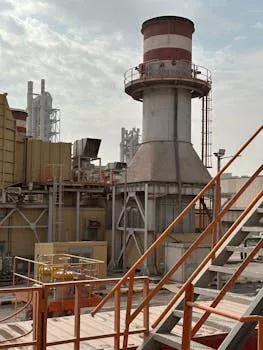
Most downtime traces to weak pulse cleaning or the wrong air-to-cloth ratio. Filter blinding embeds dust in the media and cuts airflow. Running below the dew point turns dust into mud that pulses cannot shed; heat tracing or PTFE-coated media reduces that mode.
Torn pulse-valve diaphragms cut cleaning pressure and raise differential pressure in local zones. HydropureWater field data shows annual diaphragm replacement plus 5-micron compressed-air filters can extend pulse valve life by 400%. Hopper bridging from fine or moist dust needs bin vibrators or air cannons so the rotary valve stays fed.
| Symptom | Likely Cause | Diagnostic Test | Solution |
|---|---|---|---|
| DP > 8 in. w.g. | Filter Blinding | Visual inspection for "mudding" | Replace filters; check dew point |
| Dust at Exhaust | Broken Filter/Seal | Fluorescent leak powder test | Replace damaged bags/gaskets |
Mini-case: a 4-ft welding bench at 200 FPM needs about 1,200 CFM after duct losses. Undersizing that hood airflow recreates the low-capture complaints listed above.
Who this is for / Who should look elsewhere / Next step
This guide is for plant engineers and procurement teams specifying baghouses, cartridges, cyclones, or wet scrubbers for metalworking, woodworking, pharma, or chemical lines. Teams seeking only portable vacuums or consumer air cleaners should look elsewhere. If your scrubber blowdown or clarifier load is part of the same project, request a paired airflow and slurry-settling review before freezing CAPEX.