Choose by discharge route, wastewater variability, and site constraints
For petroleum wastewater in Chattanooga, MBR is usually the stronger option when treated water must be reused, suspended-solids carryover must remain consistently low, the site has limited space, or oil and FOG shocks make clarifier settling unreliable. Conventional activated sludge can be more economical for stable, discharge-only duty with usable aeration and clarifier assets. Supplied planning references list MBR SRT at 20–60 days, COD below 50 mg/L, and TSS below 5 mg/L, versus CAS SRT of 5–15 days, COD of 60–100 mg/L, and TSS of 20–30 mg/L. These are screening values, not Chattanooga limits. Final selection requires measured petroleum wastewater data, the discharge or reuse pathway, current permits, pretreatment needs, and lifecycle cost.
The first decision is not whether MBR or conventional activated sludge is universally better. It is whether the project has a firm reuse requirement, a discharge-only obligation, or a viable hybrid arrangement. MBR becomes more defensible when the treated water must feed a process, cooling tower, or boiler, when low solids carryover is essential, or when recurrent emulsified-oil and FOG loading makes secondary-clarifier performance unreliable. A submerged-PVDF MBR system should still be evaluated as one part of pretreatment, equalization, biological treatment, and polishing.
Conventional activated sludge remains a credible option for discharge-only service with stable loading, useful aeration and secondary-clarifier assets, and a priority on lower near-term capital and operating cost. A hybrid should be considered when existing biological capacity can be retained but better solids separation is required for the final discharge or reuse route.
Do not issue a Chattanooga equipment specification until the buyer verifies current discharge permits, sewer limitations, groundwater or surface-water constraints, monitoring requirements, and the final destination of the water. The supplied research does not establish Chattanooga-specific limits. It also relies on London refinery planning references and Ohio regulatory context, so those values are screening inputs—not local requirements.
| Measured project condition | Preliminary preference | Selection question to resolve |
|---|---|---|
| Firm process, cooling-tower, or boiler-feed reuse | MBR, with reuse-specific polishing | What chemistry and performance criteria does the receiving process impose? |
| Discharge-only duty with stable loading and useful civil assets | Conventional activated sludge | Do current permit limits support the predicted solids and contaminant performance? |
| Useful CAS assets but stricter final solids separation | Hybrid CAS biology plus membrane separation or polishing | Can hydraulic integration, controls, redundancy, and bypass provisions be demonstrated? |
| Recurrent FOG or emulsified-oil surges | Enhanced pretreatment, then MBR or CAS | Does equalization and oil recovery prevent shock loading and fouling? |
Build the petroleum wastewater design basis before comparing MBR and CAS
A defensible design begins with segregated, 12-month source data rather than a blended plant average. Produced water, desalter brine, tank-bottom draws, spent caustic, wash water, and stormwater runoff should be recorded separately because their contaminants, temperatures, and operating patterns may require different treatment and disposal decisions. The buyer should obtain flow and temperature records for each stream, together with COD, BOD, TSS, free and emulsified oil, FOG, phenols, PAHs, sulfides, ammonia, pH, conductivity, and salinity.
The supplied London refinery planning profile, reproduced in HydropureWater’s 2026 comparison, lists stream temperatures of 30–70 °C, free or emulsified oil often at 50–500 mg/L, phenols at 10–100 mg/L, and ammonia at 20–80 mg/L. These are not Chattanooga limits. They show what must be measured locally and why a refinery wastewater treatment design cannot safely use a generic plant average.
Require each bidder to state its guaranteed design flow and influent limits, then document SRT, HRT, membrane material and pore size, design flux, scour-air demand, cleaning chemistry, redundancy, solids inventory, and expected replacement intervals. The bidder must also identify how oil and grease pretreatment protects the biological process and membranes. A DAF oil and FOG pretreatment system is an option to evaluate only where measured wastewater characteristics support that selection.
- Request 12 months of segregated flow, temperature, and analytical records by petroleum stream.
- Define peak sustained flow, duration of slug loads, temperature excursions, and seasonal conditions.
- Identify the receiving sewer, surface water, groundwater, reuse point, or other final destination.
- Obtain current permits, sewer limits, reuse criteria, and monitoring obligations.
- Issue the resulting signed design basis with every bid request.
| Design-basis field | Minimum buyer input | Vendor response required |
|---|---|---|
| Wastewater sources | Separate produced water, desalter brine, tank-bottom, caustic, wash-water, and runoff data | Stream-specific treatment assumptions and exclusion of untested flows |
| Flow and temperature | Monthly records, peak sustained flow, slug duration, and temperature range | Guaranteed design flow and hydraulic basis |
| Organics, solids, oil, and FOG | COD, BOD, TSS, free and emulsified oil, and FOG | Influent limits and pretreatment and biological loading calculations |
| Petroleum-specific chemistry | Phenols, PAHs, sulfides, ammonia, pH, conductivity, and salinity | Compatibility, inhibition, toxicity, and materials assessment |
| Destination | Discharge or reuse route and applicable criteria | Guaranteed effluent basis, sampling method, and polishing scope |
Compare process performance without confusing planning values with guarantees
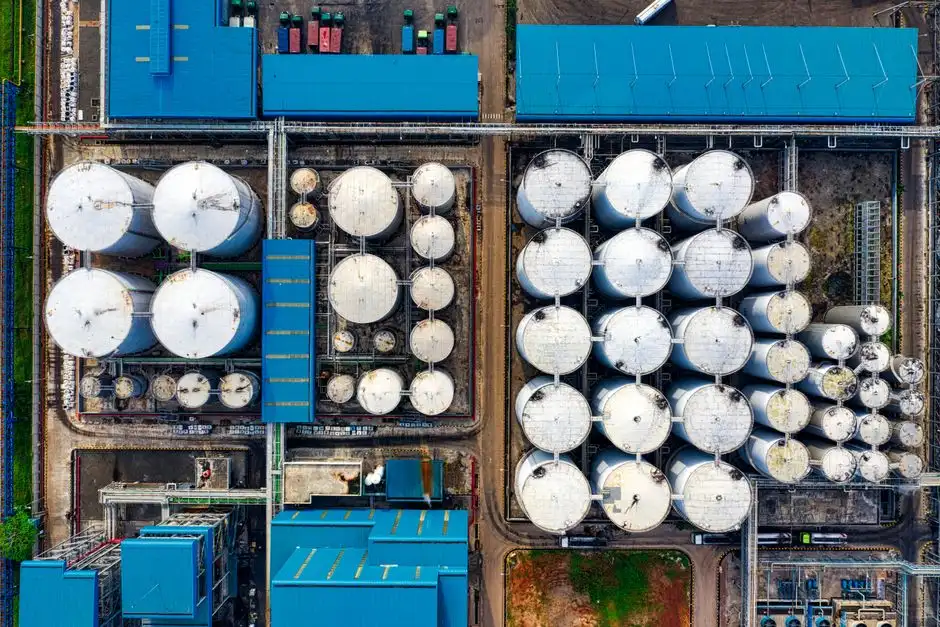
Both MBR and conventional activated sludge use biological degradation, but their solids-separation mechanisms differ. MBR retains biomass behind submerged membranes; conventional activated sludge depends on a secondary clarifier to settle biological floc. That distinction matters when FOG, surfactants, or variable loading impair settling or carry solids into the discharge.
The supplied 2023 Membranes planning reference, as cited by HydropureWater’s 2026 comparison, lists MBR SRT of 20–60 days and HRT of 4–8 hours, compared with CAS SRT of 5–15 days and HRT of 6–12 hours. The same source reports typical refinery MBR effluent of COD below 50 mg/L and TSS below 5 mg/L, versus CAS COD of 60–100 mg/L and TSS of 20–30 mg/L. These are planning references, not Chattanooga guarantees or permit limits.
The membrane barrier does not remove every dissolved contaminant and cannot compensate for uncontrolled free oil, grease, incompatible chemicals, excessive suspended material, or unsuitable pH. Biological treatment still performs much of the dissolved-organic and nitrogen removal. For industrial water reuse, low suspended solids alone does not establish fitness for service; conductivity, silica, hardness, residual oxidant, scaling, and final polishing must be evaluated against the actual receiving process.
Each bidder should define the guaranteed oil and grease basis and sampling method. The supplied comparison gives no refinery effluent oil and grease values for this decision, so no responsible bidder should infer one from the MBR and CAS TSS ranges.
| Comparison parameter | MBR planning reference | CAS planning reference | Procurement treatment |
|---|---|---|---|
| Biological SRT | 20–60 days | 5–15 days | Vendor must calculate from site flow, temperature, and loading |
| HRT | 4–8 hours | 6–12 hours | Vendor must reconcile HRT with biological volume and redundancy |
| Refinery COD | Below 50 mg/L | 60–100 mg/L | Screening reference only; require a site-specific guarantee |
| Refinery TSS | Below 5 mg/L | 20–30 mg/L | Screening reference only; state sampling and compliance basis |
| Effluent oil and grease | Not supplied for this comparison | Not supplied for this comparison | Require guaranteed concentration, sampling point, and method |
Compare lifecycle cost, footprint, and operating obligations
MBR generally carries a higher capital and operating burden than conventional activated sludge, so equipment price alone will not determine the economic result. The supplied HydropureWater 2026 comparison gives new MBR capital cost of $2.0 million–$8.5 million versus CAS at $1.2 million–$4.5 million for 50–500 m³/day, depending on capacity and pretreatment. These are directional refinery planning references, not quotations for a Chattanooga project.
The same supplied comparison gives MBR operating cost of $0.40–$0.75/m³ and estimates MBR operating costs at 20–30% above CAS. The project budget should instead use bidder-specific electricity, chemical, labor, sludge-disposal, and membrane-replacement pricing, plus any required reuse polishing. The MBR cost per m³ and lifecycle-cost guide provides a framework for that comparison, but it does not establish Chattanooga economics.
Scour-air estimates in the supplied research are approximately 0.7–1.4 kWh/m³, with another refinery estimate of 0.8–1.5 kWh/m³. Require the selected vendor to reconcile its energy model with the guaranteed design flow, selected membrane configuration, and operating schedule. Include lifecycle items that can otherwise be omitted: membrane cleaning, replacement intervals, critical blowers, spare parts, operator labor, sludge handling, and downstream polishing.
HydropureWater’s product catalog states a 60% footprint reduction for its integrated MBR system versus conventional systems. That is a catalog claim, not a guaranteed Chattanooga layout. A scaled site plan must include equalization, oil and grease pretreatment, blowers, cleaning equipment, maintenance access, controls, and expansion space before footprint savings are credited in the business case.
| Cost or obligation | Supplied planning reference | Buyer action before selection |
|---|---|---|
| Initial capital | MBR: $2.0–$8.5 million; CAS: $1.2–$4.5 million for 50–500 m³/day | Request equivalent, itemized bids with the same treatment and civil scope |
| Operating cost | MBR: $0.40–$0.75/m³; MBR estimated at 20–30% above CAS | Build a site-specific model using vendor consumption data |
| Scour air | Approximately 0.7–1.4 kWh/m³; another estimate of 0.8–1.5 kWh/m³ | Reconcile the energy model with guaranteed flow and configuration |
| Footprint | HydropureWater catalog states 60% reduction | Compare scaled site plans including pretreatment and maintenance access |
| Reuse value | No Chattanooga water or sewer value supplied | Confirm firm demand and local water purchase and sewer charges |
Issue one RFQ with common scope and performance criteria

One RFQ should give MBR, conventional activated sludge, and hybrid bidders the same influent basis, destination requirements, and scope boundaries. Require equivalent pricing for pretreatment, equalization, biological tanks, blowers, pumps, controls, electrical work, civil work, commissioning, operator training, and performance testing. Without that alignment, capital and operating comparisons will not be meaningful.
Request membrane drawings, hydraulic calculations, aeration and scour-air sizing, the clean-in-place strategy, control narratives, redundancy, maintenance schedules, and replacement pricing. The selected technology should also have a documented operating burden. For MBR, that includes transmembrane-pressure monitoring, scour-air reliability, membrane cleaning, and replacement planning; the supplied submerged MBR maintenance protocol can support that RFQ scope. For CAS, require sludge-wasting, scum-removal, and clarifier-control provisions.
- Attach the signed design basis, 12-month source data, and destination criteria.
- Define guaranteed flow, influent limits, and required effluent guarantees with sampling methods.
- Require drawings, calculations, controls, redundancy, maintenance, and complete-plant pricing.
- Validate reuse against actual site-water chemistry and the receiving process.
- Define acceptance testing, membrane-replacement responsibility, spares, blower redundancy, training, and post-acceptance support.
For industrial water reuse, the review must address conductivity, silica, hardness, residual oxidant, scaling, and any required polishing before water enters a cooling tower, boiler-feed system, or other process user. Low TSS should not be treated as a reuse approval.
The RFQ should also state who owns membrane replacement, how spare-parts availability will be maintained, what critical-blower redundancy is included, how acceptance tests will be performed, and what operating support remains available after acceptance. The buyer should reject bids that offer only equipment output without biological, pretreatment, hydraulic, controls, and site-integration design.
Frequently Asked Questions
Is MBR worth the extra cost for a Chattanooga petroleum wastewater project?
It can be justified when firm reuse, constrained space, or dependable solids separation provides measurable value. The supplied 2026 comparison estimates MBR operating cost at 20–30% above CAS and gives MBR capital of $2.0–$8.5 million versus CAS at $1.2–$4.5 million for 50–500 m³/day, but these are not Chattanooga quotations. Request equal-scope bids and model site-specific electricity, chemicals, labor, sludge disposal, membrane replacement, water purchase, sewer charges, and recovered-water value.
How should MBR or activated sludge equipment be sized for refinery wastewater?
Size from segregated source data, not a blended average. Require each bidder to state guaranteed design flow, influent limits, SRT, HRT, membrane material and pore size, design flux, scour-air demand, cleaning chemistry, redundancy, solids inventory, and replacement intervals. These inputs must reflect actual flow, temperature, contaminant concentrations, and slug conditions.
Which questions should a wastewater equipment supplier answer in the RFQ?
Require drawings, hydraulic calculations, aeration and scour-air sizing, pretreatment, controls, redundancy, maintenance, commissioning, training, acceptance testing, spares, and complete-plant pricing. Also require clarification of membrane-replacement responsibility, critical-blower redundancy, operating support, and whether any performance guarantee applies to the treatment system or only an individual equipment module.
Can MBR effluent be reused in cooling towers or boilers?
Possibly, but MBR performance alone does not establish suitability. Validate the actual treated-water chemistry against the receiving process, including conductivity, silica, hardness, residual oxidant, scaling, and required polishing. The receiving process owner must define the applicable water criteria before that reuse route enters the design basis.
What Chattanooga-specific information must be verified before selecting treatment equipment?
Obtain current permits, sewer limitations, groundwater or surface-water constraints, monitoring requirements, and the final reuse or discharge criteria. The supplied research uses London, Ohio, Florida, and Debary planning references and does not establish Chattanooga limits. A local engineer should also verify site conditions, receiving agreements, and all applicable monitoring obligations before an equipment award.