Secondary Clarifier Working Principle and Design Parameters
The secondary clarifier working principle and design parameters come down to one comparison: the settling velocity of activated-sludge flocs must beat the upward hydraulic velocity, or solids cross the effluent weir. Municipal designs hold surface overflow at 16–24 m³/m²/day so effluent TSS stays below 20 mg/L. Industrial designs run 24–32 m³/m²/day when flocs are denser.
Secondary clarifiers separate activated-sludge biomass from treated wastewater by gravity-driven phase separation. The terminal settling velocity of biological flocs must exceed the upward hydraulic velocity of the liquid stream, or solids carry over the effluent weir. The settling velocity follows Stokes' Law, v = (g(ρₚ-ρₗ)d²)/(18μ). Here g is gravitational acceleration, ρₚ and ρₗ are the densities of particle and liquid, d is particle diameter, and μ is dynamic viscosity.
In activated sludge, Stokes' Law is limited because flocs are non-spherical, porous, and subject to hindered settling as concentration rises. Effective settling starts with floc formation. Microorganisms produce extracellular polymeric substances (EPS) that bind individual bacteria into stable aggregates. Engineers target a floc size between 100 and 500 μm.
Flocs that are too small (pin floc) stay suspended. Flocs that are too light or dominated by filamentous organisms resist downward motion and push effluent Total Suspended Solids (TSS) above the permit limit. Most plants we sample on municipal sludge sit near the middle of the 100 and 500 μm window, because pin floc is what shows up in the grab sample.
Inside a secondary clarifier, four settling zones occur with depth and concentration:
- Discrete Settling: In the upper clarified zone, particles settle independently without interaction.
- Flocculent Settling: Particles collide and aggregate as they fall, gaining mass and velocity.
- Hindered (Zone) Settling: At depths of 0.5–1.5 m, high MLSS concentrations force particles to settle as a unified blanket.
- Compression Settling: In the bottom layer, the weight of overlying solids squeezes water out of the sludge matrix and thickens the underflow.
Clarifier efficiency is highly sensitive to Mixed Liquor Suspended Solids (MLSS). Conventional activated sludge runs at 1,500–4,000 mg/L, and modern Membrane Bioreactor (MBR) systems and high-rate processes reach 6,000–12,000 mg/L per WEF 2023 guidelines. That solids load forces a larger clarifier surface area, or a lamella clarifier for compact footprint and 30% lower chemical use, to hold separation efficiency.
Ontario's Design Guidelines for Sewage Works draw a line at the top of that band. The guideline states that MLSS levels greater than 5000 mg/L may be considered if pilot or other operational data shows that the aeration and clarification system are capable of supporting such high solids concentrations. In practice, solids above 5000 mg/L usually belong in a membrane train, so plants at that end of the range follow the mbr working principle instead of pushing a gravity clarifier harder.
What a Secondary Clarifier Does in Wastewater Treatment
A secondary clarifier is a gravity sedimentation tank placed after the biological reactor that captures and thickens activated-sludge biomass so clarified effluent can move on to disinfection. Operating correctly, it returns concentrated sludge to the aeration basin as Return Activated Sludge (RAS) and wastes the excess as Waste Activated Sludge (WAS). In secondary clarifier wastewater treatment, that return loop is what keeps the aeration tank stocked with working biomass.
Most plants we commission keep RAS moving around the clock, because a stopped return lets the blanket climb past the 0.3–1.0 m municipal band. The tank is simple to describe and unforgiving to operate. Engineers who want the unit defined without the loading math can read the companion page on a secondary clarifier.
Critical Design Parameters: SOR, SLR, and RAS Rates for 95%+ TSS Removal
Hydraulic and solids loading rates set the surface area and depth required to hold effluent TSS below 20 mg/L. The Surface Overflow Rate (SOR) is the volume of water applied per unit of surface area per day. Per EPA 2024 benchmarks, municipal systems target 16–24 m³/m²/day, while industrial applications handling denser flocs can run at 24–32 m³/m²/day. Crossing those limits creates upward velocities that outrun biomass settling and trigger washout.
The federal permit floor sits underneath those targets. The US EPA secondary treatment rule at 40 CFR § 133.102 sets a 30-day average suspended solids limit of 30 mg/L and a 7-day average of 45 mg/L. The same rule requires a 30-day average removal of no less than 85 percent. A design target below 20 mg/L TSS is tighter than that federal floor, which is why the washout row in the table below flags TSS above 30 mg/L.
The Solids Loading Rate (SLR) is the more critical parameter for secondary clarification because it accounts for both influent flow and RAS flow. Citing WEF 2023 data, an SLR above 6 kg/m²/day correlates with a 40% increase in effluent TSS. Industrial plants with high-strength waste, such as pulp and paper, can push SLR to 8 kg/m²/day when the Sludge Volume Index (SVI) stays stable.
| Parameter | Municipal Standard (EPA 2024) | Industrial Standard (HydropureWater Data) | Impact of Exceeding Limit |
|---|---|---|---|
| Surface Overflow Rate (SOR) | 16–24 m³/m²/day | 24–32 m³/m²/day | Hydraulic washout; TSS >30 mg/L |
| Solids Loading Rate (SLR) | 3–5 kg/m²/day | 5–8 kg/m²/day | Blanket rise; oxygen depletion in sludge |
| RAS Flow Rate | 25–50% of influent | 50–100% (High-rate) | Inadequate MLSS in aeration tank |
| Sludge Blanket Depth | 0.3–1.0 m | 0.5–1.2 m | Denitrification and rising sludge |
Read across the two columns and the planning span is an SOR of 16–32 m³/m²/day, an SLR of 3–8 kg/m²/day, and RAS at 25–50% of flow. Most plants we size for municipal permits near 20 mg/L TSS stay inside the left-hand column. High-rate industrial trains live in the right-hand one.
RAS rate is the primary operating lever. Systems requiring full nitrification often run RAS at rates above the incoming flow so biomass leaves the clarifier before denitrification begins. A plant at 10,000 m³/day influent with a 30% RAS rate must pump 3,000 m³/day of settled sludge back to the head of the biological train. Ontario's guideline also asks that return-sludge pumping stay variable over the full range given, on pumps with at least 80 mm (3 in) suction and discharge openings.
Operators watch sludge blanket depth with a sludge judge or an ultrasonic sensor; a blanket above 1.5 m sharply raises the risk of TSS spikes from turbulence and reduced settling volume. Plants that need design data for tank geometry and loading curves can review our secondary clarifier design paramter reference sheet.
Circular vs. Rectangular Clarifiers: Performance, Cost, and Use-Case Matching
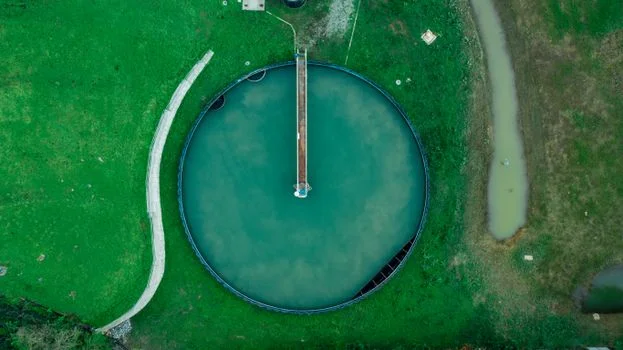
Secondary circular clarifiers account for roughly 78% of municipal wastewater installations globally because their sludge collection mechanism is efficient and structural cost per cubic meter of treated volume is low (WEF 2023). Most use a center-feed, peripheral-overflow layout that lengthens the flow path and encourages flocculation. Rectangular clarifiers show up in about 65% of industrial installations, especially in pulp, paper, and food processing, where space is tight and modular expansion is common.
Rectangular units run with a length-to-width ratio of 3:1 to 5:1 and use chain-and-flight scrapers to move sludge to a collection hopper. They offer a smaller footprint (0.03 m²/m³ against 0.05 m²/m³ for circular) but carry higher maintenance costs due to underwater chain complexity. Circular clarifiers, with CapEx of $120–$250/m³, deliver 92–97% TSS removal on low-solids municipal waste. Rectangular units, at $180–$350/m³ CapEx, handle high-solids industrial loads where footprint matters most.
| Feature | Circular Clarifier | Rectangular Clarifier | Lamella Clarifier (Alternative) |
|---|---|---|---|
| TSS Removal Efficiency | 92–97% | 90–95% | 95–99% |
| Footprint Requirement | High (0.05 m²/m³) | Medium (0.03 m²/m³) | Very Low (0.01 m²/m³) |
| Energy Consumption | 0.02 kWh/m³ | 0.03 kWh/m³ | 0.01 kWh/m³ |
| Primary Application | Municipal / Large Flow | Industrial / Restricted Space | High-Solids / Retrofits |
Selection hinges on wastewater characteristics. Circular designs suit consistent, low-SVI municipal sludge. For dairy or textile plants where solids loading swings wildly, the hydraulic stability of a rectangular basin or the inclined plates in the lamella clarifier design specs and performance benchmarks reference offers better process security. Plants that struggle with sludge volume typically add sludge dewatering systems to handle clarifier underflow downstream.
Activated Sludge Clarifier Lamella Plate Design Specs
Activated sludge clarifier lamella plate design specs come down to three figures in the table above: 95–99% TSS removal, a footprint of 0.01 m²/m³, and energy use of 0.01 kWh/m³. Those numbers sit well below the circular footprint of 0.05 m²/m³ and the rectangular footprint of 0.03 m²/m³. Choose plates when the plot is fixed and the solids swing, which is the case the table labels high-solids retrofits. Most plants we size for dairy or textile peaks pick this geometry before they accept a new circular tank.
Secondary Clarifier Troubleshooting for High Effluent TSS: A Diagnostic Guide
Secondary clarifier troubleshooting for high effluent TSS follows a fixed measurement order: effluent TSS first, then SVI, then sludge blanket depth. Operational failures usually show up as sludge bulking or rising sludge, both driven by microbial morphology or uncontrolled denitrification in the sludge blanket. When effluent TSS exceeds 30 mg/L, the first move is to measure the Sludge Volume Index (SVI).
An SVI above 150 mL/g points to filamentous bulking, often from low dissolved oxygen (DO) or nutrient deficiency in the aeration tank. The fastest field response is an automated polymer dosing to prevent bulking sludge, which raises floc density and settling speed. Rising sludge is a separate failure mode caused by denitrification: nitrate (NO₃) converts to nitrogen gas (N₂) in the anaerobic core of a deep blanket, and the bubbles float the flocs. Operators spot clumps on the surface and fix them by raising the RAS rate so sludge spends less time in the tank.
Short-circuiting is the third common failure: failed influent baffles let wastewater bypass the settling zones and exit straight over the weirs. Weir misalignment produces the same symptom at one panel. Both are found with a dye or tracer study, not with a spreadsheet.
Diagnostic Flowchart for High Effluent TSS:
- Measure Effluent TSS: Is TSS >30 mg/L? If yes, proceed.
- Measure SVI: Is SVI >150 mL/g?
- Yes: Filamentous bulking. Check DO levels in aeration; apply coagulants/polymers.
- No: Proceed to step 3.
- Inspect Sludge Blanket: Is blanket depth >1.5 m?
- Yes: SLR is overloaded or RAS rate is too low. Increase RAS flow to 50–70%.
- No: Proceed to step 4.
- Check for Gas Bubbles: Is sludge "clumping" on the surface?
- Yes: Denitrification. Increase RAS rate or reduce MLSS via wasting (WAS).
- No: Inspect for mechanical short-circuiting or weir misalignment.
CapEx and OPEX Breakdown: Secondary Clarifier Costs for Municipal and Industrial Plants
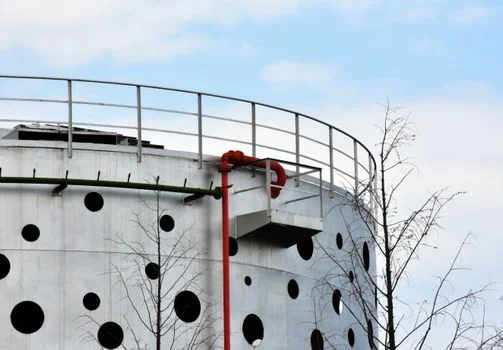
Capital expenditure (CapEx) for secondary clarifiers runs $120 to $350 per m³ of treated capacity, driven by material selection and site geotechnical requirements. Concrete basins are standard for municipal plants with diameters above 30 m, while stainless steel or epoxy-coated carbon steel tanks suit modular industrial systems. According to 2025 RSMeans data, secondary clarifier equipment (scrapers, drives, and weirs) makes up about 40% of total CapEx.
Operating expenses (OPEX) are dominated by energy and labor. The scraper drive itself draws only 0.02–0.03 kWh/m³, but RAS pumping can swallow 15–20% of a plant's total energy bill. Chemical costs for polymer during bulking events are variable, and most audits we run find the blower, not the scraper, moves the power bill. Plants sizing a full biological train around the clarifier often pair it with a packaged Underground Package Sewage Treatment Plant (WSZ Series) for sites where footprint and civils cost dominate.
Engineering Selection Checklist for Specifying a Secondary Clarifier
Run these checks before locking in a design. Most plants we review fail the peak-flow check first, because average SOR looked fine and the 1.5× peak did not.
- Confirm peak SOR at 1.5× average flow stays below the 24 m³/m²/day (municipal) or 32 m³/m²/day (industrial) ceiling.
- Size SLR against the highest anticipated MLSS, including the WAS strategy, and stay under 5 kg/m²/day (municipal) or 8 kg/m²/day (industrial).
- Verify sludge blanket instrumentation: ultrasonic sensor or pressure-density probe with high-level alarm at 1.2 m.
- Match geometry to site: circular for low-SVI municipal flow, rectangular for modular industrial sites, lamella for retrofits where footprint is fixed.
- Reserve budget for the downstream sludge handling train before committing to a high-rate clarifier.
Who This Guide Is For and What to Do Next
This guide fits plant engineers sizing municipal activated-sludge trains and EPC contractors selecting industrial clarifiers for flows between 1,000 and 50,000 m³/day. If you operate a high-purity reuse membrane system or a DAF-only pretreatment line, look at DAF and MBR resources instead. Send your influent profile, target effluent TSS, and site footprint to our engineers for a sized equipment list and budgetary proposal via request a quote.
Frequently Asked Questions
What is the main purpose of a secondary clarifier in wastewater treatment?
A secondary clarifier separates biological solids from treated wastewater after the aeration basin, producing an effluent with TSS below 20 mg/L and returning concentrated biomass as RAS. It is the unit that turns a mixed-liquor reactor into a working activated-sludge system. Operators also waste excess solids as WAS so aeration tank MLSS stays inside the 1,500–4,000 mg/L band used for conventional plants.
How do you calculate the required surface area of a secondary clarifier?
Divide the peak hourly flow (m³/day) by the design Surface Overflow Rate, then check the result against the Solids Loading Rate using MLSS × (Q + RAS). Most municipal designs land at 16–24 m³/m²/day SOR; industrial designs run 24–32 m³/m²/day SOR. The larger of the two areas, overflow or solids, sets the tank diameter or basin plan. A 10,000 m³/day plant at 30% RAS must also pump 3,000 m³/day of return sludge.
What causes rising sludge in a secondary clarifier?
Rising sludge is caused by denitrification inside a deep sludge blanket: nitrate converts to nitrogen gas, the bubbles attach to flocs, and the flocs float. The fix is to raise the RAS rate or lower the blanket depth so sludge does not sit long enough to go anaerobic. A blanket above 1.5 m is the usual warning line in the field.
How do I select a clarifier system for industrial wastewater?
Match geometry to the site, loading to the floc, and footprint to the plot. Circular units fit municipal flow at low SVI and show 92–97% TSS removal in this guide. Rectangular units handle high-solids industrial waste in narrow plots at 90–95% TSS removal. Lamella plates give 95–99% TSS removal at about 0.01 m²/m³, the smallest footprint of the three.
What is the typical CapEx range for a secondary clarifier?
Budget $120–$350 per m³ of treated capacity. Circular municipal units sit at $120–$250/m³, and rectangular industrial units at $180–$350/m³. Mechanical internals (scrapers, drives, weirs) add about 40% of total CapEx per the 2025 RSMeans split used here. Concrete basins become the usual choice once diameter exceeds 30 m.
What federal TSS limits must secondary clarifier effluent meet?
Under 40 CFR § 133.102, a secondary treatment plant must hold its 30-day average effluent TSS at or below 30 mg/L and its 7-day average at or below 45 mg/L. The rule also requires 30-day average removal of at least 85 percent. Local permits often set tighter numbers than these federal floors, and a clarifier aimed at 20 mg/L leaves headroom for both.