MBR or Conventional Activated Sludge for a Debary Petroleum Facility?
For petroleum wastewater in Debary, MBR is usually the stronger choice when treated water must be reused, solids carryover must remain consistently low, the site has limited space, or oil and FOG shocks make clarifier performance unreliable. CAS can be more economical for simple discharge-only duty with an existing aeration basin. The supplied refinery reference reports typical MBR SRT of 20–60 days, COD below 50 mg/L, and TSS below 5 mg/L, compared with CAS SRT of 5–15 days, COD of 60–100 mg/L, and TSS of 20–30 mg/L. The final choice still depends on the petroleum stream, pretreatment, Florida permit or reuse criteria, reuse destination, and lifecycle cost.
This comparison applies to refineries, petroleum terminals, petrochemical operations, and industrial facilities producing oily wastewater. The relevant distinction is not simply “advanced” versus “conventional” equipment. It is whether the site needs a compact, stable solids barrier and reuse capability, or whether existing civil assets, discharge-only service, and lowest near-term cost justify CAS.
One limitation must be explicit: the supplied 2026 comparison uses London, Ohio refinery planning references and Ohio regulatory references. Its values are useful for screening technology, but they are not Debary limits. Florida permit conditions, groundwater or surface-water constraints, sewer limitations, and the destination of the treated water must be verified before an equipment specification is issued. The MBR cost-per-m³ and lifecycle-cost guide supports the cost and reuse framework, but it does not establish Florida compliance.
What Debary's Petroleum Wastewater Design Basis Must Capture
A defensible MBR-versus-CAS decision begins with a segregated, 12-month wastewater dataset, not a blended plant average. Produced water, desalter brine, tank-bottom draws, spent caustic, wash water, and stormwater runoff should be recorded separately because their contaminants, temperatures, and operating patterns may demand different treatment and disposal decisions.
The London refinery planning profile in the supplied HydropureWater comparison describes produced water, desalter brine, tank-bottom draws, spent caustic, and stormwater runoff at 30–70 °C, with free or emulsified oil often at 50–500 mg/L, phenols at 10–100 mg/L, and ammonia at 20–80 mg/L. These are London refinery planning values, not Debary limits. A Debary engineer should instead use measured site data and permit conditions.
| Design-basis item | Information needed for Debary | Why it controls treatment selection |
|---|---|---|
| Wastewater source | Separate records for produced water, desalter brine, tank-bottom draws, spent caustic, wash water, and stormwater runoff | Identifies where oil, salts, toxicity, and flow variability enter the system |
| Flow and temperature | 12-month record, including peak flow and temperature by stream | Sets equalization, biological, cooling, and reuse-equipment requirements |
| Organic and solids loading | COD, BOD, TSS, free and emulsified oil, FOG, phenols, and PAHs | Defines biological loading and the need for oil-water separation |
| Transfer and discharge path | Surface-water discharge, groundwater injection, sanitary sewer discharge, process reuse, cooling-tower makeup, boiler feed, or zero-liquid-discharge pretreatment | Sets the receiving requirements and whether tertiary polishing is necessary |
| Site and operating constraints | Available footprint, electrical capacity, operator capability, and acceptable discharge or reuse reliability | Distinguishes a new MBR, retained CAS, or hybrid configuration |
Before selecting a final performance target, obtain the current Florida permit, applicable reuse criteria, sanitary-sewer limitations, groundwater limits, and receiving-water or aquifer constraints. Also characterize sulfides, ammonia, pH, conductivity, and salinity. The MBR sizing and process-design guide provides a useful framework for converting this information into an influent basis, hydraulic design, SRT, HRT, and membrane-area calculation.
Where MBR and Conventional Activated Sludge Separate
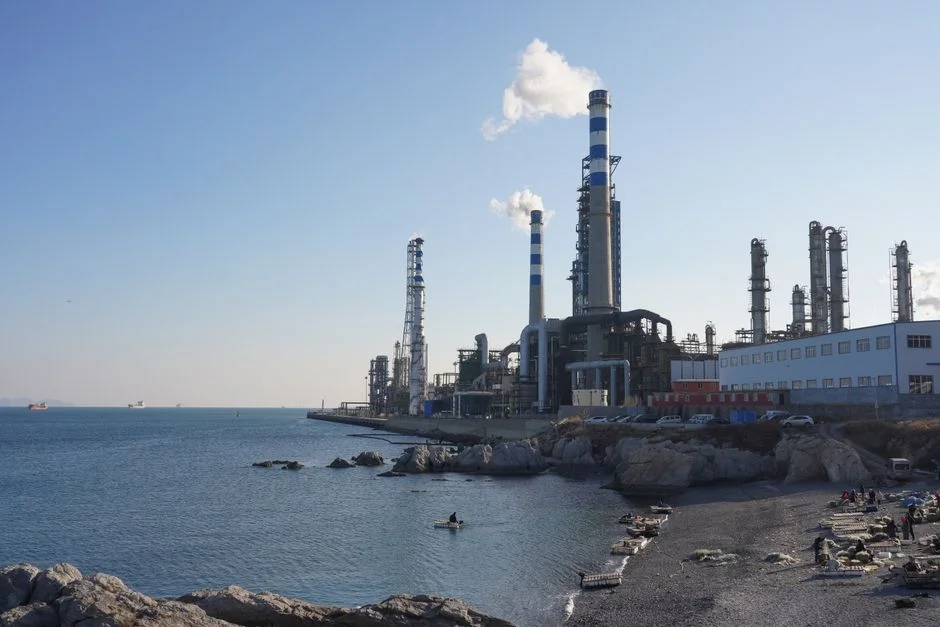
MBR and CAS use the same core biological mechanism but separate solids in fundamentally different ways. Both use an aerated biological basin where heterotrophic bacteria oxidize dissolved organics and nitrifiers convert ammonia to nitrate. The decisive difference occurs after biological treatment: CAS depends on a secondary clarifier, while MBR uses submerged membrane separation.
CAS requires biomass to form settleable floc. Petroleum FOG or surfactant surges can impair settling, promote filamentous bulking, and wash solids from the clarifier. MBR retains biomass inside the reactor without depending on settleable floc and provides a physical barrier for suspended solids. That barrier is why MBR is generally more suitable when stable oil and solids carryover is operationally important.
- Screen and segregate the petroleum wastewater streams.
- Provide equalization and oil recovery before biological treatment.
- Apply FOG control, such as a DAF oil and FOG pretreatment system, where the influent characterization supports it.
- Provide pH control and biological pretreatment suitable for the petroleum stream.
- Remove dissolved organics and ammonia in an aerated biological basin.
- Separate solids in a secondary clarifier for CAS or submerged membranes for MBR.
- Add tertiary treatment where the discharge or reuse destination requires it.
- Route the final effluent to the permitted discharge or reuse point.
Neither membranes nor the biological basin should be treated as a substitute for upstream oil control. Uncontrolled free oil, grease, incompatible chemicals, excessive suspended material, or unsuitable pH can overload the biological process and foul or damage membranes. The membrane barrier controls separation; it does not remove every dissolved contaminant. Biological degradation still performs most dissolved-organic and nitrogen removal, while reuse polishing remains a separate engineering step.
An integrated submerged-PVDF MBR system combines the biological and membrane components, but the equipment scope still needs to be aligned with equalization, pretreatment, aeration, controls, and downstream polishing. MBR is not a complete petroleum-wastewater plant by itself.
Performance and Operating Stability for Petroleum Wastewater
The supplied 2023 Membranes review, as cited by HydropureWater, gives MBR SRT of 20–60 days and HRT of 4–8 hours, compared with CAS SRT of 5–15 days and HRT of 6–12 hours. The same source reports typical refinery MBR effluent of COD below 50 mg/L, TSS below 5 mg/L, and oil and grease below 2 mg/L, versus CAS COD of 60–100 mg/L and TSS of 20–30 mg/L.
| Planning comparison | MBR | Conventional activated sludge | Engineering implication |
|---|---|---|---|
| Biological sludge retention time | 20–60 days | 5–15 days | Longer MBR SRT provides a larger treatment window for complex and recalcitrant organics |
| Hydraulic retention time | 4–8 hours | 6–12 hours | Final values depend on the verified design flow, temperature, and loading basis |
| Refinery effluent COD | Below 50 mg/L | 60–100 mg/L | MBR provides a stronger solids-capture and biological-treatment platform for reuse assessment |
| Refinery effluent TSS | Below 5 mg/L | 20–30 mg/L | Low TSS can reduce downstream solids-loading, but does not establish full reuse readiness |
| Refinery effluent oil and grease | Below 2 mg/L | Not supplied for this comparison | Ask bidders to define the guaranteed oil and grease basis and sampling method |
These figures are planning references from the 2023 Membranes review, not guaranteed results for a Debary facility. Long MBR SRT can support degradation of complex hydrocarbons and recalcitrant organics, while membrane retention protects the solids inventory from dependence on clarifier settling. That combination can improve process stability when emulsified-oil or FOG surges are recurrent.
The operating burden shifts as well. MBR requires scour-air reliability, transmembrane-pressure monitoring, a clean-in-place protocol, and membrane replacement planning. CAS requires controlled sludge wasting, scum removal, and active control of filamentous bulking. The supplied source states that membrane CIP is performed every 6–12 months and gives membrane life of 5–8 years; these are planning references, not guarantees for petroleum duty.
Low TSS also does not by itself establish suitability for cooling-tower or boiler-feed reuse. Conduct a separate assessment of conductivity, silica, hardness, residual oxidant, scaling, and the final polishing needed for the intended service. The lifecycle-cost reference identifies these reuse considerations, while a 0.1 μm DF Series flat-sheet membrane module provides one membrane configuration to evaluate against the project design basis.
Capital, Energy, and Lifecycle Cost

MBR generally carries a higher capital and operating burden than CAS, so the comparison must extend beyond equipment price. HydropureWater's supplied planning range gives new MBR CAPEX of $2.0 million–$8.5 million for 50–500 m³/day, depending on capacity and pretreatment, while CAS CAPEX is $1.2 million–$4.5 million. These are directional refinery planning references, not quotations for a Debary project.
| Planning item | MBR reference | Procurement interpretation |
|---|---|---|
| New CAPEX for 50–500 m³/day | $2.0 million–$8.5 million | Obtain a site-specific bid with the required pretreatment and civil scope clearly itemized |
| Indicative OPEX | $0.40–$0.75/m³ | Use only as a screening allowance pending an energy, chemical, labor, and membrane model |
| Operating-cost difference | Estimated 20–30% above CAS because of scour air and periodic CIP | Compare the estimate with site labor rates, electricity prices, chemical use, and disposal costs |
| MBR energy | Approximately 0.7–1.4 kWh/m³ for scour air; another refinery estimate in the source is 0.8–1.5 kWh/m³ | Require the vendor to reconcile its energy model with the guaranteed design flow and selected equipment |
| London reuse scenario | A 200 m³/day refinery reuses 70% of treated effluent and avoids $200,000–$400,000 per year in fresh-water and sewer costs | Do not transfer the savings to Debary without confirming local water prices, sewer charges, and a firm reuse demand |
Build the lifecycle model using electricity price, chemical consumption, membrane replacement, labor, sludge disposal, water purchase, sewer charges, and the value of recovered water. The project should also price avoided clarifier upsets, reduced downstream polishing demand, operator capability, spare-parts strategy, and the consequences of future reuse or tighter discharge requirements.
Do not adopt an unsupported payback claim. The London scenario shows why reuse can materially change the economics, but it is not a Debary forecast. The MBR cost-per-m³ and lifecycle-cost guide provides the planning basis for comparing quotations; the final model should use vendor data and verified site inputs.
A Decision Framework for Debary Petroleum Facilities
The selection should follow the required destination of the water, not a generic preference for one technology. MBR is favored when reuse is a firm project requirement, TSS and oil carryover must remain consistently low, the plot is constrained, or routine FOG and emulsified-oil surges make clarifier operation unreliable. CAS is favored when service is discharge-only, an aeration basin and clarifier already have useful civil life, loading is stable, and the business case prioritizes lower near-term capital and operating costs.
| Debary operating scenario | Preferred screening path | Required evidence before final selection |
|---|---|---|
| Process, cooling-tower, or boiler-feed reuse is required | MBR with reuse-specific polishing where needed | Reuse criteria, water chemistry, final-user requirements, and polishing validation |
| Discharge-only duty with suitable existing civil assets | CAS | Current permit, loading stability, clarifier condition, sludge-handling route, and lifecycle cost |
| Existing CAS has civil life but the reuse target requires better solids separation | Hybrid CAS biology with polishing or membrane separation | Hydraulic and treatment integration study, footprint, controls, and bypass or redundancy plan |
| Recurrent FOG or emulsified-oil surges | Enhanced pretreatment followed by MBR or CAS | Source characterization, equalization performance, oil-recovery data, and membrane-fouling or clarifier-settling assessment |
| Groundwater injection or sensitive receiving context | Technology selection deferred until the pathway is verified | Current Florida authorization, groundwater limits, aquifer constraints, and monitoring requirements |
Oil-water separation, equalization, pH control, and appropriate biological pretreatment are required before either technology. Membrane selection cannot compensate for uncontrolled free oil, grease, or incompatible chemicals. For either alternative, the petroleum-plant sewer-limit compliance workflow illustrates why discharge pathway, monitoring, and evidence must be addressed before equipment selection.
Require bidders to state the guaranteed design flow, influent basis, SRT, HRT, membrane material and pore size, design flux, scour-air demand, cleaning chemistry, redundancy, solids inventory, and expected replacement intervals. The final choice remains conditional on current Florida permit or reuse criteria because the supplied research does not establish a Debary-specific limit. The MBR sizing and process-design guide can support those design checks.
What to Request Before Ordering Equipment
Begin procurement with a signed process basis. It should identify wastewater sources, flow range, temperature, oil and grease, COD, BOD, TSS, phenols, PAHs, sulfides, ammonia, pH, conductivity, and salinity. Request supporting analytical records and the averaging periods used to establish peak and sustained design conditions. A vendor cannot responsibly size equipment from a single blended wastewater average.
Then request membrane drawings, hydraulic calculations, aeration and scour-air sizing, CIP strategy, control narratives, redundancy, maintenance schedules, and replacement pricing. For the DF Series, ask the supplier to reconcile the listed module output with the complete biological and pretreatment design rather than treating module capacity as plant capacity.
Ask for reuse validation using the actual site-water chemistry and intended downstream equipment. That review should address membrane scaling, conductivity, silica, hardness, residual oxidant, and any required polishing. The response should explain what monitoring or treatment is necessary before the water enters a cooling tower, boiler-feed system, or other process user.
Confirm whether the quotation includes pretreatment, equalization, biological tanks, blowers, pumps, controls, electrical work, civil work, commissioning, operator training, and performance testing. Also clarify membrane replacement responsibility, spare-parts availability, critical-blower redundancy, and the operating support included after acceptance.
HydropureWater's verified product catalog describes the integrated submerged-PVDF MBR system from 10 to 2,000 m³/day and a stated 60% footprint reduction compared with conventional systems. It also lists DF modules using 0.1 μm PVDF elements at 32–135 m³/day per configuration. These catalog statements define offered configurations, not the permitted capacity or guaranteed performance of a Debary plant.
Frequently Asked Questions
Will MBR take less space than CAS at a Debary petroleum facility?
MBR often reduces the footprint because it removes the secondary clarifier and retains solids in the biological reactor. HydropureWater's verified catalog states a 60% footprint reduction for its integrated MBR system compared with conventional systems, but that is a catalog claim rather than a guaranteed Debary layout. Request a scaled site plan that includes equalization, pretreatment, blowers, CIP equipment, maintenance access, and future expansion.
What pretreatment is required before choosing MBR or CAS?
Both alternatives need controlled oil, grease, suspended material, pH, and equalization ahead of biological treatment. A DAF oil and FOG pretreatment system may be appropriate where the measured wastewater supports it, but the selection should follow source characterization. Free oil, emulsified oil, surfactants, incompatible chemicals, and slug loads must be addressed because neither a clarifier nor a membrane can be expected to compensate for uncontrolled contamination.
How much will MBR cost compared with CAS?
The supplied HydropureWater planning references give new MBR CAPEX of $2.0 million–$8.5 million for 50–500 m³/day and CAS CAPEX of $1.2 million–$4.5 million. They also give indicative MBR OPEX of $0.40–$0.75/m³ and estimate MBR operating costs at 20–30% above CAS. Request site-specific quotations with identical influent, flow, pretreatment, civil, controls, commissioning, and reuse-polishing scope before using either range for a budget decision.
How should a buyer select and size a supplier’s MBR?
Select a supplier only after requiring a signed design basis, guaranteed flow, influent limits, SRT and HRT, membrane material and pore size, design flux, scour-air demand, CIP chemistry, redundancy, controls, maintenance, replacement intervals, and complete-plant pricing. Distinguish the integrated MBR skid capacity from the output of an individual DF Series flat-sheet module; a module listing is not a complete plant design. Permit or reuse compliance should also remain a buyer verification item because no technology automatically establishes compliance with a Florida or Debary requirement.