Start with the permit, not the treatment equipment
Petroleum plants near Kansas City generally meet sewer-discharge requirements through a permit-specific treatment train: segregate oily process streams, control batch releases and pH, remove free and emulsified oil with dissolved air flotation, treat remaining pollutants as required, and document results through the KC Water Industrial Pretreatment Program. The controlling requirements come from 40 CFR Part 403, applicable categorical standards, Missouri rules, Kansas City Municipal Code Chapter 60, Article IV, and the facility’s permit. Significant Industrial User status may apply at 25,000 gallons per day or a 5% capacity contribution, but non-SIUs remain regulated. Final limits, sampling points, frequencies, and monitoring methods must be confirmed against current permit and local-limit documents before equipment selection.
The governing framework begins with the federal Clean Water Act and EPA’s General Pretreatment Regulations at 40 CFR Part 403, followed by Missouri Clean Water Law and rules and Kansas City Municipal Code Chapter 60, Article IV. KC Water’s Regulatory Compliance Division implements these requirements through industrial user permits and written authorization. General prohibitions, categorical pretreatment standards, site-specific local limits, and permit conditions can overlap; equipment must satisfy the most stringent applicable requirement, not merely a generic pretreatment standard.
Determine Significant Industrial User status before fixing the design basis. KC Water lists categorical coverage, average water use or discharge of 25,000 gallons per day or more, a process waste stream contributing 5% or more of average dry-weather hydraulic or organic capacity, acceptance of off-site waste, and designation by the director as pathways to SIU status. Industrial users that do not meet those criteria remain subject to applicable Chapter 60 requirements, and KC Water determines whether a permit or other authorization is required.
| Document or decision | What the engineer must establish |
|---|---|
| Current industrial user permit | Authorized discharge point, monitoring requirements, reporting schedule, conditions, and any facility-specific limits. |
| Permit fact sheet | Whether the discharge is classified as significant or categorical, and which unit operations and reporting provisions apply. |
| Applicable local-limit schedule | The current oil and grease, TPH, pH, and other pollutant limits actually binding at the discharge point. |
| Categorical pretreatment standard | Whether the petroleum operation falls within a regulated production category and which production-based requirements apply. |
| Approved monitoring plan | Sampling locations, analytical methods, frequencies, reporting forms, and record-retention instructions. |
The local limits in the supplied research are not Kansas City petroleum-plant limits. Before setting design targets, request the current permit, fact sheet, local-limit schedule, applicable categorical standard, and approved monitoring plan from KC Water. The broader Kansas City pretreatment requirements guide provides useful regulatory orientation, but it cannot substitute for the facility’s current authorization.
Map the wastewater before selecting the equipment
A petroleum facility should not be treated as one uniform wastewater stream. Build a source-by-source map covering tank washings, vehicle or equipment washdown, oily condensate, stormwater, cooling blowdown, process water, floor drainage, and laboratory or maintenance drains. Each source then needs an assigned sampling point, segregation route, treatment step, and release authorization.
The oil and grease definition materially affects the treatment decision. Hazen and Sawyer distinguishes polar, primarily animal-vegetable FOG from non-polar petroleum-based hydrocarbons classified as TPH. A petroleum operation may also use surfactants through cleaners or detergents, and those compounds can interfere with oil separation. Hazen and Sawyer’s account of the SCWWA review also notes that high-temperature, high-pH, surfactant-laden wastewater can be difficult to pretreat, so detergent inputs cannot be hidden inside a generic oil-and-grease sample.
Characterize each regulated source with representative samples. The required program should distinguish free oil from emulsified oil, identify settleable solids, measure TPH, establish pH, and document flow variability. Toxicity and any production-based categorical requirement also need to be addressed. Where permit sampling instructions exist, use them before finalizing sampling locations, analytical methods, or expected effluent values.
| Wastewater source | Information to establish | Design consequence |
|---|---|---|
| Tank washings and washdown | Free versus emulsified oil, detergents, solids, pH, batch volume | Segregate surfactants and high-strength batches; establish whether equalization and DAF are justified. |
| Oily condensate | Oil form, flow pattern, TPH, solids, temperature | Determine whether the stream can remain separate or should join DAF treatment. |
| Floor and equipment drainage | Source, settleable solids, oil, episodic flow | Define automatic isolation and controlled routing before treatment. |
| Cooling blowdown and process water | Soluble pollutants, flow variability, production-based requirements | Determine whether biological or polishing steps are needed after oil removal. |
| Stormwater | Whether clean, commingled, or contaminated | Separate clean stormwater from regulated process wastewater; do not use dilution to create apparent compliance. |
Source segregation should be decided before equalization is sized. Clean stormwater should remain separate from regulated process wastewater wherever practicable. Dilution changes concentration without removing the pollutant load and is not a treatment strategy. The permit and KC Water’s Regulatory Compliance Division instructions should then be matched to the characterization plan so that the laboratory data answer the enforceable questions rather than a broader wish list of parameters.
Control the batch discharge before treating it
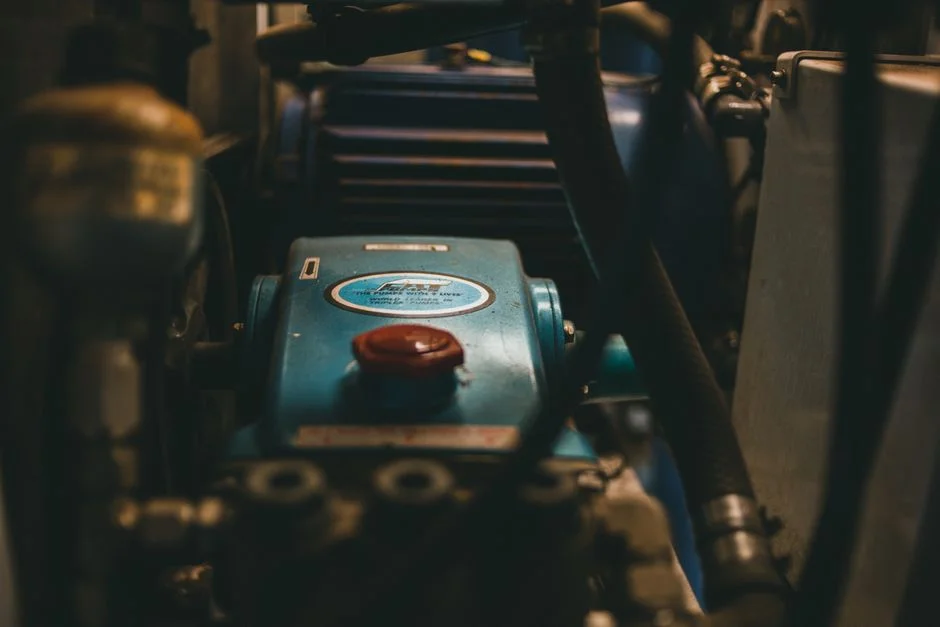
Batch control is a compliance barrier between the process and the treatment system. Prepare an Accidental or Slug Discharge Control Plan and review it when process conditions change; KC Water specifically identifies changes affecting spill or slug-discharge potential as a reason to update the plan.
Size equalization from the facility’s worst-case batch, not its average flow. The basin must receive the credible batch volume, provide controlled release, and prevent an off-specification discharge from reaching the sewer connection. A KC Water enforcement example cited in the existing Kansas City chemical-plant pretreatment guide involved a slug discharge of more than 30,000 gallons. That is a documented compliance example, not a universal Kansas City design volume; the design input must come from the facility’s own batch analysis.
Where strong acid or caustic batches are present, use a PLC-controlled chemical dosing system with reliable pH measurement and controlled reagent feed. Intermittent manual dosing leaves response time dependent on operator availability and cannot demonstrate consistent control as readily as an instrumented system.
The operating procedure should define batch authorization, tank isolation, high-level alarms, release sequencing, bypass prevention, spill notification, and the steps required to hold off-specification wastewater. A treatment train should never be the only control preventing a slug from reaching the sewer.
Audit trail: identify the batch, release it only after specified checks, record its treatment route and sample results, and preserve the authorization. That chain connects source control to treatment performance and compliance evidence.
Match each pollutant to the treatment step
The correct treatment train follows the pollutants that actually control the permit. Source segregation and routine housekeeping come first because flotation cannot compensate for uncontrolled recurring oil releases. Free and emulsified oil, FOG, suspended solids, and colloidal matter point to dissolved air flotation when representative characterization supports that duty.
The available dissolved air flotation system for petroleum wastewater covers 4 to 300 cubic metres per hour across 13 standard models, according to the product catalog. That range does not establish the required capacity. Selection must follow the measured flow, contaminant loading, equalization behavior, and pretreatment needs.
Use lamella clarification when flocculated suspended solids or metals require removal. The product catalog states a surface-loading range of 20 to 40 cubic metres per hour; verify that value against the selected geometry, settling duty, and chemical-conditioning assumptions. Biological polishing is justified when soluble or biodegradable organics, ammonia, BOD, or COD remain and the influent analysis or permit supports biological treatment. An integrated MBR wastewater treatment system provides a filtration specification below 1 micrometre, but that specification is not an effluent-limit guarantee.
| If characterization identifies… | Evaluate… | Critical design questions |
|---|---|---|
| Free or emulsified oil, FOG, suspended solids, or colloidal material | DAF | What are the flow and load peaks? Is emulsification controlled? What recycle, solids handling, and pretreatment are required? |
| Flocculated solids or metals | Clarification, including lamella geometry | What conditioning chemistry is required? How will sludge leave the clarifier and where will it go? |
| Biodegradable organics, ammonia, BOD, or COD | Biological polishing | Is the wastewater biologically compatible? What are the loading, residence-time, fouling, and sludge requirements? |
| Residual solids, color, or trace organics | Multimedia filtration or activated carbon | Which contaminant remains after upstream treatment? What test data support the selected polishing objective? |
| Batch pH or concentration excursions | Equalization and controlled chemical dosing | What is the worst credible batch, and how does off-specification flow remain isolated? |
A DAF-versus-clarifier decision should consider oil form, solids loading, chemical use, sludge characteristics, available space, and reuse objectives. They are not interchangeable simply because both are clarification devices. The DAF versus clarifier selection for petroleum wastewater provides a useful technical comparison. Where biological treatment remains in contention, the MBR versus conventional activated sludge for petroleum wastewater comparison should be applied to the actual dissolved loading and operating constraints, not treated as a universal equipment prescription.
Build a sampling and compliance program that survives an audit
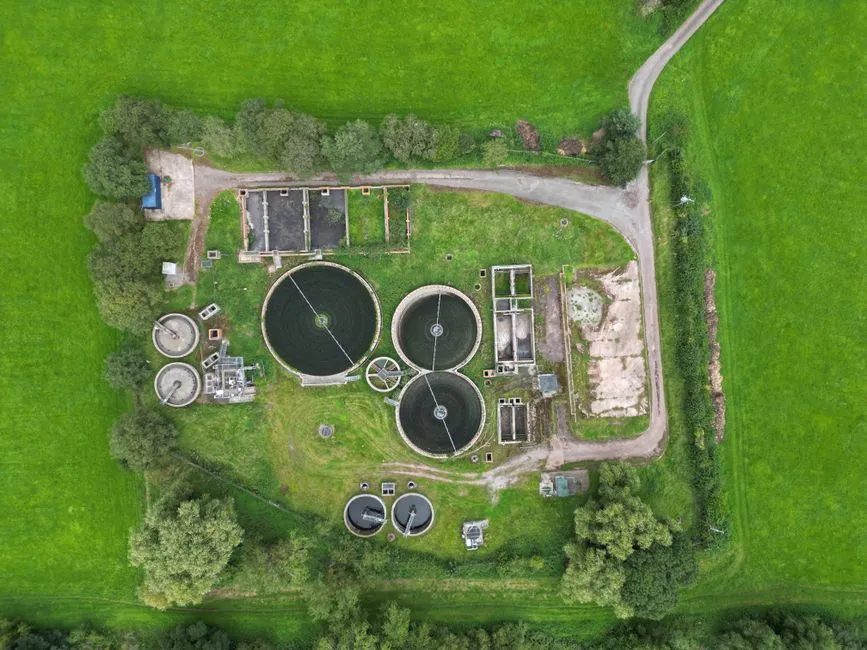
The monitoring program must reproduce the permit’s sampling point, analytical method, frequency, and reporting schedule. The supplied research does not establish universal petroleum-plant monitoring values, so the current permit and KC Water’s written instructions control. Engineering operating targets can be set below permit limits where feasible, but those targets must be labeled as internal controls rather than regulatory limits.
KC Water requires notification within 24 hours after the facility becomes aware of a sampling-derived violation and submission of required repeat-sampling results within 30 days after awareness, subject to applicable federal exceptions. The facility should also maintain the sampling record, laboratory report, cause assessment, corrective action, and evidence that the required follow-up was completed.
Submit a Notice of Change at least 60 days before a planned significant change. KC Water identifies an effluent-quantity change greater than 10%, whether an increase or decrease, as significant and also requires reporting of substantial changes in wastewater character. These are not equipment-startup details to defer until after installation.
| Compliance record | Required connection |
|---|---|
| Batch release record | Source and batch identifier, equalization destination, treatment route, release authorization, sample result. |
| Monitoring record | Permit sampling point, time, flow, analytical method, laboratory report, result. |
| Corrective-action record | Excursion identified, wastewater isolated or treated, notification, repeat sample, disposition. |
| Equipment record | Operating condition, chemical use, sludge removal, maintenance event, deviation from control settings. |
| Change record | Notice of Change, KC Water correspondence, revised permit or approved operating basis. |
Retain monitoring results, laboratory reports, sampling records, and required best-management-practice documentation for at least three years. Keep them longer during unresolved litigation or when directed by the applicable authority, as specified by KC Water’s Industrial Pretreatment Program guidance. An audit should be able to trace each batch or process area through treatment, sampling, corrective action, and authorized release.
Choose treatment equipment with compliance risk in the total cost
Equipment selection should price compliance risk and operability, not just purchase price. Give each supplier the waste characterization, batch profile, permit and local-limit extract, required sampling points, reuse target, available footprint, available utilities, and sludge-disposal route. Without those inputs, a price comparison compares different assumptions rather than comparable systems.
Require each OEM to state the design flow, peak equalization duty, contaminant-loading basis, control philosophy, redundancy, maintenance access, and mapping between design assumptions and permit obligations. Controls and monitoring should be evaluated separately from tank and pump capacity: a nominal treatment process can still fail compliance when automation, alarms, or release control is inadequate.
Include downstream sludge handling in the comparison. DAF and lamella systems can produce oil-rich or chemical sludge that affects operations, storage, transport, and disposal. A bid that excludes sludge removal or disposal cost does not represent the complete treatment-system obligation.
| Procurement input or issue | Question the supplier must answer | Buyer check |
|---|---|---|
| Waste characterization | Which measured loads and water qualities determine the design? | Does the proposal cite representative plant data, including worst-case batches? |
| Permit interface | Which permit conditions drive equipment or controls? | Can each design assumption be linked to a permit or fact-sheet condition? |
| Controls and monitoring | How are pH, oil, flow, and release decisions controlled and recorded? | Are alarms, interlocks, fail-safe states, and sample points included? |
| Sludge route | How much sludge is generated, and how is it removed and contained? | Are handling, storage, transport, and disposal responsibilities defined? |
| Price and schedule | What assumptions drive the quotation and delivery plan? | Are exclusions, utility requirements, commissioning items, and approval dependencies visible? |
Hazen and Sawyer’s survey of approximately 50 utilities found FOG limits ranging from 50 to 300 milligrams per litre and total oil and grease limits ranging from 100 to 600 milligrams per litre. Its 2017 account also described SCWWA’s local limits of 300 milligrams per litre for animal-vegetable FOG and 100 milligrams per litre for TPH. These figures show that local limits vary; they are not Kansas City limits and must not become procurement guarantees. For a Kansas City petroleum plant, request the current KC Water documents before asking for a performance guarantee or fixed price.
Frequently Asked Questions
Does a petroleum plant need to be a Significant Industrial User to comply?
No. KC Water’s Industrial Pretreatment Program states that industrial users that do not meet SIU criteria must still comply with applicable Chapter 60 requirements. SIU status can arise from categorical coverage, average water use or discharge of 25,000 gallons per day or more, a process waste stream contributing 5% or more of average dry-weather hydraulic or organic capacity, off-site waste acceptance, or director designation. Confirm the classification with KC Water before designing the reporting program.
How should equalization and treatment capacity be sized?
Size equalization from the credible worst-case batch and peak receiving flow, not average wastewater flow. Use the batch profile, pH range, oil form, contaminant loading, and controlled-release sequence to define the required basin duty and treatment capacity. Then request each OEM to show how its design flow and loading assumptions cover those inputs. The cited 30,000-plus-gallon event is a KC Water compliance example, not a standard basin-volume requirement.
What should a buyer compare when selecting a petroleum wastewater supplier?
Compare the stated design basis, controls, redundancy, monitoring, sludge handling, maintenance access, commissioning obligations, and exclusions—not nominal flow capacity alone. Give suppliers the same permit extract, characterization, batch profile, footprint, utility data, and sludge route, then require each proposal to map its assumptions to those inputs. Request pricing and schedule assumptions in writing because the supplied research does not establish comparable quotations, lead times, or guaranteed removal values.
What must be done before a plant changes production or treatment?
Submit a Notice of Change at least 60 days before a planned significant change and report substantial changes in wastewater character. KC Water identifies a change greater than 10% in effluent quantity as significant. Also review the Accidental or Slug Discharge Control Plan when conditions change in a way that affects spill or slug-discharge potential. Obtain confirmation of the revised requirements before startup.
Should a petroleum plant choose DAF, clarification, and biological treatment together?
Choose each step from characterization and the permit. DAF is a candidate where free or emulsified oil, FOG, solids, or colloidal matter control; lamella clarification is a candidate for flocculated solids or metals; biological polishing is a candidate where soluble or biodegradable organics, ammonia, BOD, or COD remain. The equipment train should also prevent batch pH excursions and segregate off-specification wastewater before release.
Related Equipment
- dissolved air flotation system for petroleum wastewater — specifications, capacity range, and technical data