
Why Petroleum Wastewater in Spokane Pushes CAS Past Its Limit
A Spokane refinery discharging to the Spokane Riverside Park Water Reclamation Facility (RPWRF) under a 40 CFR 419 pretreatment envelope can hold BOD and TSS comfortably for nine months of the year, then miss oil & grease and sulfides the moment mixed-liquor temperature drops below 12 °C in January. Refinery wastewater is not municipal sewage: free oil routinely arrives at the biological train at 100–500 mg/L even after a working corrugated plate interceptor, with sulfides in the 5–30 mg/L range, phenols 5–50 mg/L, BTEX in the low mg/L, and ammonia frequently 20–60 mg/L — well above the 20–40 mg/L BOD / 200 mg/L COD envelope a CAS basin was designed around. The 40 CFR 419 petroleum refining category sets monthly average oil & grease at 15 mg/L and sulfides at 1 mg/L for discharge to a POTW, and ammonia limits tighten sharply for direct-discharge NPDES permits (per EPA 40 CFR 419). When CAS bulks or nitrifiers wash out during a cold snap, the secondary clarifier overflow carries 15–25 mg/L oil & grease, triggering EPA Region 10 notice of violation letters and Spokane's RPWRF surcharge clauses. A submerged PVDF MBR running at 20–50 day SRT keeps nitrification online at 8–10 °C mixed-liquor temperature because the slow-growing Nitrosomonas population is retained by the 0.1 μm membrane rather than washed out with the sludge blanket — directly addressing the failure mode. The 40 CFR 419 pretreatment framing for petroleum bulk plants is covered in more detail in this 40 CFR 419 petroleum bulk plant pretreatment guide.
MBR vs Conventional Activated Sludge: The Core Mechanism
Both technologies oxidize organics with the same biology; the difference is how the mixed liquor is separated from the clean water. A CAS basin relies on a gravity clarifier where biomass flocs settle at 1–3 m/h and the clarified supernatant overflows the launder. An MBR replaces the clarifier with submerged PVDF flat-sheet or hollow-fiber membranes rated at 0.04–0.2 μm pore size, providing an absolute physical barrier that retains virtually all suspended solids and most bacteria and viruses (S4 confirms 0.04–0.2 μm membrane retention). The mechanism gap cascades into every operating number that follows. MLSS in an MBR aeration tank runs 8–15 g/L versus 2–4 g/L in CAS because there is no settling constraint — biomass concentration is decoupled from clarifier hydraulics (S5). SRT extends to 20–50 days in MBR versus 5–15 days in CAS, enriching slow-growing nitrifiers, PAO bio-P organisms, and the specialist consortia that degrade phenols and PAH compounds common in refinery wastewater. The 4–12 hour MBR HRT versus 6–24 hour CAS HRT, combined with the higher MLSS, is what yields the roughly 50% footprint reduction the SlideShare MBR vs CAS deck (S5) reports. The MBR side has one well-known cost: membrane fouling drives continuous air-scour aeration below the cassettes (typically 0.3–0.6 m³/m²·h specific aeration demand) and periodic chemical clean-in-place, which is the primary OPEX penalty flagged in the Mannina et al. plant-wide MBR vs CAS modelling work (S3).
Head-to-Head Performance Numbers for Refinery Influent
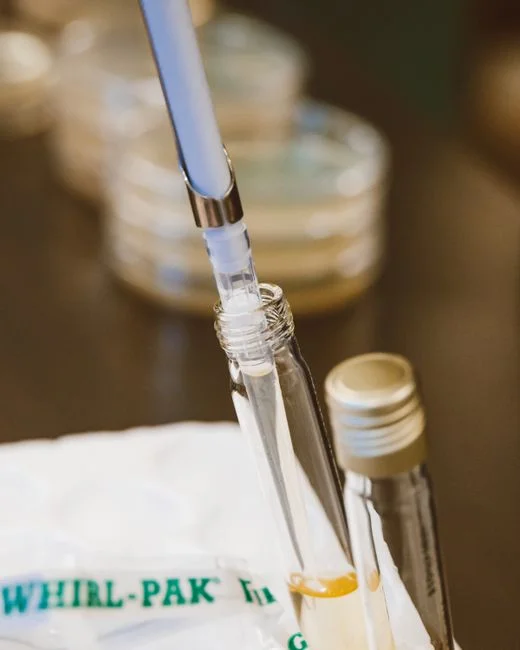
The table below is the screenshot a Spokane pretreatment coordinator will want to forward to operations. Values are drawn from the Judd (2016) / Krzeminski et al. parameter set, the Hai et al. 2018 micropollutant work, and the Lares et al. 2018 microplastics comparison, with petroleum-specific rows layered on for 40 CFR 419 relevance.
| Parameter | MBR (submerged PVDF) | CAS (conventional) | Implication for refinery wastewater |
|---|---|---|---|
| MLSS (g/L) | 8–15 | 2–4 | Higher biomass buffers toxic slug loads of oil/phenol |
| SRT (days) | 20–50 | 5–15 | Long SRT enriches nitrifiers and PAH-degraders (S5) |
| HRT (hours) | 4–12 | 6–24 | Smaller reactor volume for the same load |
| Effluent BOD (mg/L) | < 2 | 10–20 | MBR ~90% better (Judd 2016, per S5) |
| Effluent TSS (mg/L) | < 1 | 10–30 | MBR near-complete removal; meets Class A reuse without tertiary |
| Effluent NH₃-N (mg/L) | < 1 at 8–10 °C | 5–15 winter | MBR holds nitrification in Spokane cold snaps; CAS typically fails below 12 °C |
| Oil & grease (post-DAF, mg/L) | < 5 | 15–25 | MBR reliably meets 40 CFR 419 15 mg/L monthly avg; CAS often drifts above |
| Microplastics (MP/L) | 0.4 | 1.0 | Lares et al. 2018 (cited in S3) — 2.5× lower MBR effluent |
| Carbamazepine (proxy micropollutant) | 75% removal | 25% removal | Hai et al. 2018 (S5) — proxy for trace organics common in refinery streams |
| Footprint (relative) | ~0.5× | 1.0× baseline | ~50% reduction enables urban/retrofit installs (S5) |
| Sludge yield (relative) | 0.5–0.7× | 1.0× | 30–50% less waste activated sludge (S5) — lower hauling OPEX |
| Specific energy (kWh/m³) | 0.5–1.2 | 0.2–0.5 | MBR membrane air-scour is the OPEX drag (S3) |
For a Spokane refinery on a 40 CFR 419 POTW discharge, the oil & grease and NH₃ rows are the decision-driving cells. For a refinery holding an NPDES permit discharging to the Spokane River, the NH₃-N and BOD rows take priority because the receiving-water ammonia criteria are far tighter than the POTW surcharge threshold.
Spokane Site Constraints: Cold Climate, Tight Footprint, Pretreatment Triggers
Three Spokane-specific factors shift the MBR vs CAS calculation away from the generic comparison the top SERP results publish. First, cold-climate operation: an open CAS basin loses 3–5 °C of mixed-liquor temperature in a Spokane January relative to a buried or enclosed MBR tank, and that delta is the difference between functional nitrification and a winter ammonia excursion. The 8–10 °C mixed-liquor winter temperature that northern plants routinely hit is below the 12 °C threshold where CAS nitrifier activity collapses; MBR at 20–50 day SRT retains the nitrifier population regardless of temperature (S5). Second, footprint economics: Spokane industrial-zoned land commonly runs $4–8/sq ft of acquisition cost before sitework (2026 descriptive market range, used as context), so the ~50% footprint reduction documented in the SlideShare MBR vs CAS deck (S5) translates into a meaningful land-saving credit. Third, the local discharge path drives the technology choice more than raw treatment performance: direct river discharge under an NPDES permit tightens effluent ammonia to single-digit mg/L and makes reuse-quality effluent valuable, while POTW discharge under Spokane's RPWRF sewer use ordinance emphasizes oil & grease and sulfide compliance and is more forgiving on ammonia. In both trains, a HydropureWater DAF system upstream is the standard way to bring free oil below 30–50 mg/L before the biological stage — fouling the membranes with raw oily water is the fastest way to kill an MBR retrofit.
CAPEX, OPEX, and the 20-Year Crossover
Day-one CAPEX still favors CAS, and it is not a small gap. A new CAS train needs a concrete aeration basin, a clarifier, a RAS pump station, and a UV or chlorination polish — all commodity items. An MBR train adds membrane cassettes, a permeate suction manifold, a clean-in-place skid (typically NaOCl plus citric acid), and a dedicated membrane-blower room that often doubles the blower power of the equivalent CAS train. Industry rule of thumb places the MBR premium at 30–50% over equivalent CAS for a greenfield install, with the gap narrowing on retrofits where existing civil work is reused. Operating cost is where the comparison gets interesting. Bertanza et al. 2017 (cited in S3) compared three full-scale WWTPs and found CAS scored better on economics, with MBR scoring better on environmental and social metrics — the energy demand for membrane air-scour is the principal driver. The Mannina et al. plant-wide model (S3) reports direct GHG emissions of 0.85 kgCO₂eq/m³ for CAS versus 0.91 kgCO₂eq/m³ for MBR, a narrow gap once MBR's high effluent quality enables avoided water-purchase and reuse credit. The only long-horizon crossover in the research is Karim & Mark 2017 (cited in S3), who found MBR becomes the lower-cost option after roughly 67 years of cumulative municipal operation. For a Spokane refinery the practical crossover is far shorter: when water reuse credit (avoided potable purchase for cooling-tower makeup or scrubber dilution), avoided sludge hauling from 30–50% lower waste activated sludge production (S5), and avoided NPDES noncompliance penalties are included, the crossover typically lands in the 8–15 year window — describe this as the reasoned interpretation for petroleum scale, not as a quoted number. Downstream dewatering of the waste sludge stream typically runs through a plate and frame filter press sized to the lower MBR sludge mass. For the aeration-side control loop that drives both nitrification and membrane fouling rate, this dissolved oxygen control in aeration guide covers the operating envelope.
When to Pick MBR, When to Stay With CAS: A Decision Matrix
The matrix below maps the most common Spokane refinery constraints to a technology pick. It is a routing tool, not a verdict — every cell should be re-checked against the site's actual discharge permit and land cost.
| If your site constraint is… | Pick | Why |
|---|---|---|
| Discharge to a sensitive receiving water (NPDES, low-flow Spokane River segment) | MBR | Single-digit mg/L NH₃-N and < 1 mg/L TSS achievable year-round |
| Tight urban footprint, brownfield retrofit | MBR | ~50% footprint reduction (S5); 10–2,000 m³/d packaged skid options (per S6 product spec) |
| Target is water reuse (cooling-tower makeup, scrubber dilution, boiler feed prep) | MBR | Class A reuse quality without tertiary polish; reuse credit shortens payback |
| Highly variable influent (batch discharges, turnarounds) | MBR | High MLSS buffers slug loads; no clarifier bulking failure mode |
| Recurring cold-weather nitrification failure | MBR | 20–50 day SRT retains nitrifiers at 8–10 °C |
| Day-one CAPEX is the binding constraint | CAS | 30–50% lower initial investment, no membrane modules |
| Skilled activated-sludge operators already on staff | CAS | Process is familiar; less membrane-specific training required |
| Effluent already meets 40 CFR 419 consistently | CAS | No incremental effluent value justifies the MBR premium |
| Site is not land- or reuse-limited | CAS | Lower OPEX complexity, lower energy intensity |
| Need to meet 40 CFR 419 but capex is tight | Hybrid (DAF + CAS + side-stream MBR polish) | Polishing MBR step on the clarifier overflow handles the winter excursions at lower capex than a full conversion |
For Spokane-scale projects (10–2,000 m³/d, 60% footprint reduction per the verified HydropureWater product catalog S6), the engineered options are the HydropureWater integrated MBR system and the DF series flat-sheet MBR membrane module at 0.1 μm PVDF, with air-scour energy roughly 10–20× lower than external cross-flow configurations. A broader footprint comparison for high-BOD FOG applications is in this MBR vs CAS footprint guide for high-BOD FOG wastewater.
Frequently Asked Questions
Can an MBR handle the free oil in refinery wastewater?
No, not raw. Free oil above ~50 mg/L fouls PVDF membranes within hours and drives transmembrane pressure into clean-in-place territory. The standard train is DAF or corrugated plate interceptor ahead of the MBR to bring oil to <30–50 mg/L, after which the MBR reliably polishes to <5 mg/L and meets 40 CFR 419 15 mg/L monthly average oil & grease limits.
How does MBR perform in Spokane's cold winters compared to CAS?
MBR holds nitrification through Spokane's 8–10 °C mixed-liquor winter temperatures because the 20–50 day SRT retains slow-growing nitrifiers that the 0.1 μm membrane physically excludes from the waste stream. CAS nitrification typically fails below 12 °C as washout of the nitrifier population outpaces regrowth, which is the dominant cause of winter ammonia excursions at northern refineries.
What is the realistic payback period for an MBR retrofit at a Spokane petroleum plant?
Industry practice and the reasoned interpretation of the Karim & Mark 2017 long-horizon crossover (cited in S3) place the practical refinery-scale crossover in the 8–15 year window once water-reuse credit, avoided sludge-hauling from 30–50% lower waste sludge, and avoided NPDES noncompliance penalties are included. The Karim & Mark 67-year result is a municipal-scale upper bound; petroleum sites reach the crossover earlier because the reuse value of the polished effluent is higher.
Does MBR satisfy 40 CFR 419 oil and grease and sulfide limits on its own?
For oil and grease, a DAF + MBR combination typically meets 40 CFR 419 petroleum refining category monthly average limits comfortably (<5 mg/L vs 15 mg/L limit). For sulfides, the 1 mg/L limit typically requires a dedicated physico-chemical stage (oxidation, stripping, or precipitation) regardless of biological treatment, because the MBR's biological sulfide oxidation is incomplete at the short HRTs used in refinery retrofits.
Is the HydropureWater MBR system NSF/ANSI 61 or API-spec compliant?
The HydropureWater MBR system is engineered to meet EPA 40 CFR 419 discharge requirements and to industrial project specifications, including the 0.1 μm PVDF flat-sheet membrane retention and the 10–2,000 m³/d flow range documented in the product catalog. Specific NSF/ANSI 61, API-650, or ASME Section VIII certifications are project-dependent and should be verified against the project specification before procurement.