

Identify the limits that control the discharge
Petroleum plants near Nokomis meet sewer pretreatment limits by controlling industrial wastewater where it enters the municipal collection system. EPA explains that POTWs set site-specific local limits to prevent pass-through, interference and sludge-management problems, while categorical standards may also apply. Compliance combines pollution prevention and source segregation with an oil-water separator, DAF polishing, chemical dosing, monitoring, recordkeeping and best management practices. The binding numerical requirements must come from the receiving POTW’s current permit, sewer-use ordinance and applicable federal or state standards—not from a generic treatment design.
EPA’s Local Limits Development Guidance is guidance, not a regulation. EPA states that an indirect discharger’s obligations are determined by the POTW industrial-user permit or equivalent control mechanism and applicable regulatory requirements; if the guidance conflicts with a permit or regulation, the permit or regulation controls. The guidance was published by EPA on 2021-06-25. The review chain should run from the Clean Water Act and applicable 40 CFR Part 403 provisions, through any applicable categorical pretreatment standard, to the receiving POTW’s permit, sewer-use ordinance and approved local-limit program.
EPA identifies the point of connection as the controlling location: POTWs impose local limits at the industrial user’s end-of-pipe discharge, where the user connects to the sewer collection system. EPA’s local-limits web guidance describes these limits as site-specific and permits them to be numeric or narrative, including best management practices. A treatment skid should be designed around the actual connection, not around a representative discharge point elsewhere in the facility.
Before selecting equipment, request the following from the receiving control authority:
- Current sewer-use ordinance and industrial-user permit or equivalent control mechanism;
- Local limits for oil and grease, total suspended solids, pH and every named petroleum constituent;
- Monitoring, reporting, sampling and enforcement provisions;
- The approved end-of-pipe discharge point and sampling protocol;
- Enforcement procedures, surcharge provisions and permit-renewal contacts.
Do not assign a Nokomis-area numerical limit until the receiving POTW and its current approved requirements are identified. Neither EPA’s guidance nor a generic equipment catalog establishes the enforceable limit for a specific facility.
Map the petroleum wastewater before selecting equipment
An average daily flow cannot define separator or DAF hydraulic loading without peak-flow and slug-load information. EPA’s guidance organizes local-limit development around pollutant selection, data collection, calculation of maximum allowable headworks loading, implementation and collection-system concerns; this is the MAHL framework. A plant should apply the same logic to its own design basis: establish the receiving POTW’s constraints, characterize the waste streams, calculate allowable loads, designate controls, and address sewer protection.
To ensure accurate sizing, keep waste streams separate. Tank-bottom water, loading-area wash water, truck or rail drip, vehicle-wash water, hydrostatic-test water and contaminated stormwater have different contaminant forms and operating schedules. Combining them before characterization can conceal both the hydraulic peak and the oil-removal requirement. Document peak instantaneous flow, recurring daily flow, episodic dump or tank-drop volumes, operating schedule, oil-storage inventory and expected future changes.
Characterize free oil, emulsified oil, suspended solids, pH and any petroleum constituents named in the POTW permit. Obtain representative samples where the permit or control authority requires it. EPA’s pollutant-selection checklist includes NPDES permit conditions, water-quality criteria, sludge-quality standards, air-quality standards, resource-protection criteria, prohibitions on treatment-plant interference and evaluations of industrial discharges. These are not equipment-sizing inputs by themselves; they identify what the receiving authority may need to protect.
| Waste stream | Design-basis questions | Failure mode to resolve before equipment selection |
|---|---|---|
| Tank-bottom water and dumps | What volume is released, how quickly, and what does the sample show for free oil, solids and emulsified oil? | High-concentration slug load that can overwhelm downstream polishing |
| Loading-area and vehicle-wash water | What are the recurring flow, peak instantaneous flow, detergent use and emulsion characteristics? | Emulsified oil and solids carryover |
| Truck or rail drip | What contributes to the sewer flow, and are containment and drip-control provisions in place? | Free-oil accumulation and local collection-system impact |
| Hydrostatic-test and contaminated stormwater | What are the discharge frequencies, volumes, petroleum constituents and clean-stormwater separation provisions? | Uncontrolled discharge or a dilute flow that conceals intermittent peaks |
For each stream, record the flow regime, pollutant form, representative concentration, and applicable permit constraint. Use the resulting peak and slug information—not a blended daily average—to establish equipment sizing and equalization needs.
Build a pretreatment train that matches each failure mode
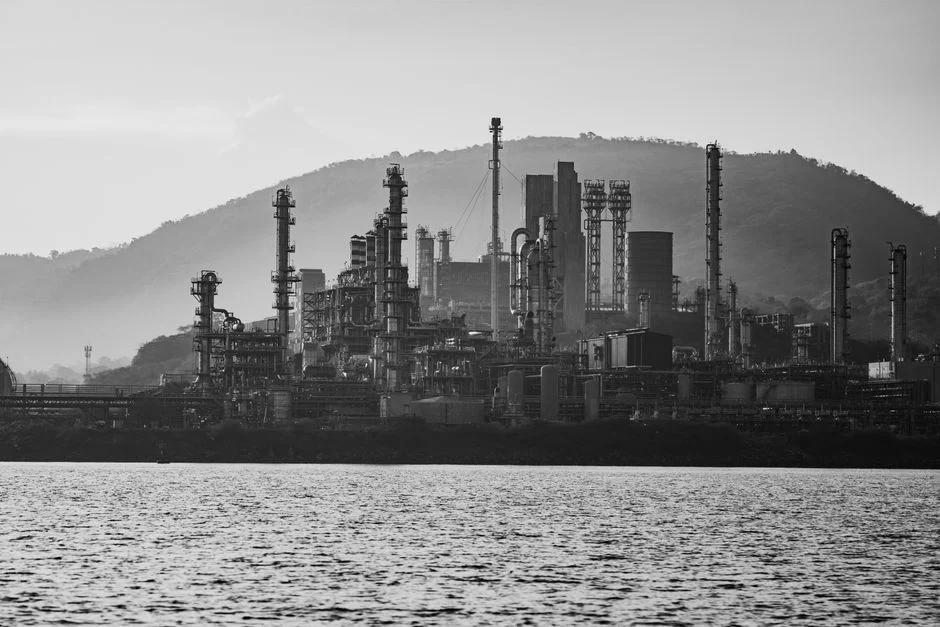
EPA’s Local Limits Development Guidance identifies best management practices as part of the local-limit framework, while Sanford’s pretreatment program explains that limits may be met through pollution prevention, wastewater treatment or BMPs. Source control comes first because no downstream unit should be expected to absorb every operational failure. Segregate clean drainage, contain spills, cover and control dump valves, and prevent untreated product-handling wastewater from bypassing the treatment train.
The treatment sequence should follow contaminant form. A primary oil-water separator removes free oil and captures high-density oily waste before DAF. DAF then addresses suspended solids, FOG, oil and grease, and colloidal matter. HydropureWater lists DAF capacities from 4–300 m³/h across 13 models and identifies petrochemical pretreatment as an application; that published equipment range is a catalog scope, not confirmation that a particular unit is adequate for the site. A supplier should select the appropriate DAF system for petroleum wastewater pretreatment from the documented flow and load basis.
Add chemical treatment only when the design basis establishes a need for pH control, coagulation or demulsification. Specify the proposed chemical, dose range, control sequence, storage requirements, residual-dose verification and chemical handling protocol. An automatic chemical dosing system for oil-water separator pretreatment should not be accepted on a generic “dosing included” statement; its interlocks and operating response need to be tied to the treatment objective.
Biological treatment, membranes or adsorption should be added only when the permit identifies dissolved constituents or residual targets that physical separation and DAF cannot meet. For a process comparison, see how to compare DAF and clarifiers for petroleum wastewater; the choice depends on waste characteristics and the POTW’s written limits.
| Contaminant form or failure mode | Primary control | Next decision |
|---|---|---|
| Free oil | Source segregation, containment and primary oil-water separation | Verify that the separator receives the documented peak and slug load before polishing |
| Emulsified oil and colloidal matter | DAF with chemistry established by the influent characterization | Specify chemical type, dose control and residual-performance verification |
| Suspended solids and FOG | DAF after controlled free-oil removal | Confirm the outlet target against the permit rather than a generic removal claim |
| Dissolved constituents identified by the permit | Evaluate biological, membrane or adsorption polishing | Obtain constituent-specific pilot or supplier performance data tied to the design influent |
| Operational bypass or spill | BMPs, inspection, alarms and documented response procedures | Keep treatment as the last barrier, not the only control |
The end-of-pipe train is the last barrier. Source segregation, operating inspections and corrective-action controls remain necessary even when an oil-water separator and DAF are installed.
Convert permit requirements into a compliance file
The permit-compliance matrix translates written requirements into work instructions before equipment is ordered. Sanford’s pretreatment guidance confirms that a discharge permit states the monitoring, reporting and compliance requirements that the user must observe. For a Nokomis-area petroleum facility, use the receiving authority’s current instructions rather than importing Sanford’s requirements or a generic sampling calendar.
For every regulated parameter, identify the limit basis, averaging period, sample point, sample type, monitoring frequency, analytical method, reporting deadline and responsible person. The matrix should also identify operational triggers: what action starts when a result approaches a limit, who authorizes it, and how the plant demonstrates that the corrective action worked.
| Compliance-matrix field | Information the facility must obtain |
|---|---|
| Parameter and limit | Exact permit wording, units, limit basis and averaging period |
| Monitoring point and sample type | Approved end-of-pipe location, sampling method and whether a grab or composite sample is required |
| Frequency and deadline | Required monitoring frequency and report-submission date |
| Analytical basis | Method required by the permit and laboratory reporting requirements |
| Operating response | Hold, diversion, notification, investigation and resampling actions for an exceedance |
| Responsible personnel | Named sampler, reviewer, operator and management contact |
Maintain flow records, sample logs, laboratory reports, chain-of-custody records, calibration records, equipment inspections, BMP checklists and corrective-action documentation. EPA states that local limits may include BMPs, so the plant should treat source controls as auditable operating requirements.
Plan enforcement response before an exceedance occurs. Sanford describes a progressive sequence that can begin with Notices of Violation and citations and proceed to sewer or water service termination; its surcharge program can assess abnormally high-strength waste, including oil and grease. Those are Sanford examples, not Nokomis requirements, but they show why monitoring, surcharges and service actions must be checked in the receiving authority’s actual rules.
Choose a supplier using site-specific acceptance criteria
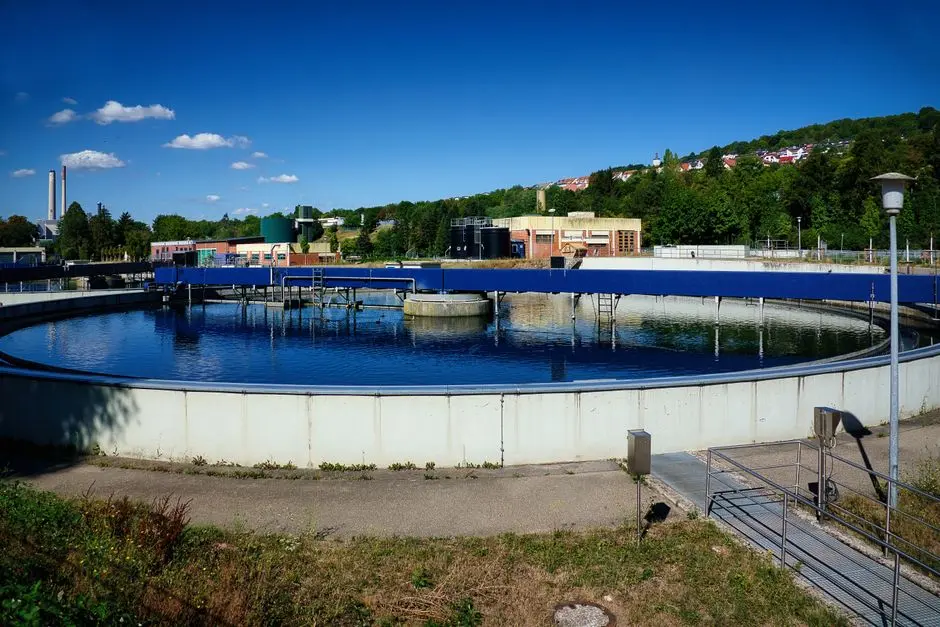
A compliant proposal must be tied to the permit, waste-stream inventory, peak instantaneous flow and treatment objective—not only a nominal capacity. Require each bidder to define the design influent, required outlet quality, equalization strategy, materials of construction, control philosophy, utility demand, sludge-handling approach and performance-test method.
Request a clear acceptance schedule for startup, operator training, maintenance, spare parts, response time and lifecycle cost. Final acceptance should depend on site-specific sampling and applicable permit requirements; generalized removal claims should not substitute for enforceable limits.
| Supplier submission | Acceptance question |
|---|---|
| Process basis | Does it name the controlling permit, discharge point, waste streams and peak instantaneous flow? |
| Performance guarantee | Is the guarantee tied to the documented influent and the required outlet concentration or loading? |
| Hydraulic and process controls | Are flow, level, chemistry, slug response and high-level diversion defined? |
| Construction and operations | Are materials, utilities, maintenance, training, support and spares specified? |
| Testing | Will site-specific sampling and the permit determine acceptance? |
Comparing bids at this level prevents a general process description from being mistaken for an engineered proposal. It also gives operations, maintenance and compliance reviewers a common basis for evaluating price and technical completeness.
Frequently Asked Questions
What pretreatment limit applies to a petroleum plant near Nokomis?
The enforceable limit is the one in the receiving POTW’s current industrial-user permit or equivalent control mechanism, sewer-use ordinance and applicable federal or state requirements. Identify the POTW and confirm the applicable categorical standard before assigning any oil and grease or other numerical limit.
What should a plant provide before requesting a DAF price?
Provide the current permit, waste-stream inventory, peak instantaneous and recurring flows, episodic dump or tank-drop volumes, representative characterization, required outlet objectives and connection details. Request a written process basis and itemized scope; no defensible price can be inferred from average daily flow alone.
Is an oil-water separator enough for petroleum wastewater?
Not if the permit must control emulsified oil, suspended solids or colloidal matter. A separator is normally the primary control for free oil, while DAF or further treatment may be needed for the remaining failure modes. The final train follows the permit and site characterization.
How should a buyer compare DAF suppliers without relying on generic performance claims?
Require each supplier to state the design influent, peak flow, treatment objective, chemical assumptions, control sequence and site-specific performance-test method. Use the compliance matrix and pre-procurement data package as the common evaluation basis, and condition final acceptance on sampling