Why 2024 KC Water Enforcement Changes the Calculus for Chemical Plants
KC Water's Regulatory Compliance Division (RCD) published its 2024 Significant Noncompliance (SNC) list on kcwater.us, and the pattern is specific: slug discharges of 30,000+ gallons, oil and grease exceedances, unpermitted discharge, pH sampled outside the monitoring period, and permit-renewal failures all triggered Notices of Violation and administrative fines (per kcwater.us 2024 SNC table). The list is not a courtesy. Federal rules at 40 CFR 403.8(f)(2)(vii) require the Control Authority to categorize industrial user performance semiannually, with criteria anchored in KC Code 60-181 and Missouri 10 CSR 20-6.100, and a public SNC designation is a procurement and reputational liability the moment it goes live.
The cost-of-failure anchor is real. EMD Millipore Corp. entered a federal Consent Decree in the U.S. District Court for the District of New Hampshire after allegedly causing pass-through of ammonia nitrogen and cBOD into the Contoocook River from 2011–2015; the settlement imposed a $385,000 civil penalty, mandated a WWTP upgrade, required annual operator training, and added quarterly monitoring (per williamsmullen.com, 2017). The Millipore plant held a local pretreatment permit from the Town of Jaffrey — exactly the kind of document a KC chemical plant will hold from the RCD. EPA retained federal enforcement authority over a locally permitted discharge, and the alleged violations included slug-loading notification failures and pH prohibition breaches, both of which appear verbatim on the KC 2024 SNC list.
Forward pressure is also building from the 2024 EPA PFAS MCLs covering six compounds including PFOA and PFOS; KC Water's RCD is actively aligning monitoring and testing procedures with those standards (per kcwater.us). A categorical subpart may be silent on PFAS today, but a local limit and an SNC determination are not.
The Three-Layer Limit Stack Governing Kansas City Chemical Plant Discharges
Three mandatory layers govern every KC chemical plant discharge, and the most stringent applicable layer controls. Layer 1 is the qualitative floor: general prohibitions at 40 CFR 403.5(a) — pass-through is defined at 40 CFR 403.3(p) and interference at 40 CFR 403.3(k) — plus the specific prohibitions at 40 CFR 403.5(b). A discharge can violate either prong without exceeding a numeric limit, and EPA's 2026 guidance treats both as fully enforceable (per EPA 2026 guidance).
Layer 2 is the federal categorical pretreatment standard. For KC chemical plants the dominant subparts are 40 CFR Part 414 (Organic Chemicals, Plastics, and Synthetic Fibers) and 40 CFR Part 415 (Inorganic Chemicals Manufacturing); Part 417 (Soap and Detergent Manufacturing), Part 419 (Petroleum Refining), and Part 433 (Metal Finishing) apply to adjacent product lines (per kcwater.us categorical subpart list). EPA revises subparts on a multi-year cycle, so current values must be confirmed in 40 CFR rather than relied on from memory.
Layer 3 is the site-specific local limit published in KC Water's approved Industrial Pretreatment Program under Kansas City Municipal Code Chapter 60, Article IV. Local limits are often more stringent than the federal floor when the receiving plant's hydraulic or biological capacity is constrained. Statutory authority runs through Clean Water Act §307(b), which directs EPA to set pretreatment standards for pollutants that pass through or interfere, and §402(n), which authorizes POTW pretreatment programs within the NPDES framework (per EPA 2026 guidance).
New industrial users must file a wastewater survey with the RCD before any discharge, per KC Code Sec. 60-141; existing users update on request. Failure can result in sewer service termination. Paperwork goes to the RCD at 7300 Hawthorne Rd, Kansas City, MO 64120, and the RCD drafts the permit and fact sheet for review (per kcwater.us).
Significant Industrial User Status and What It Triggers in the KC Metro
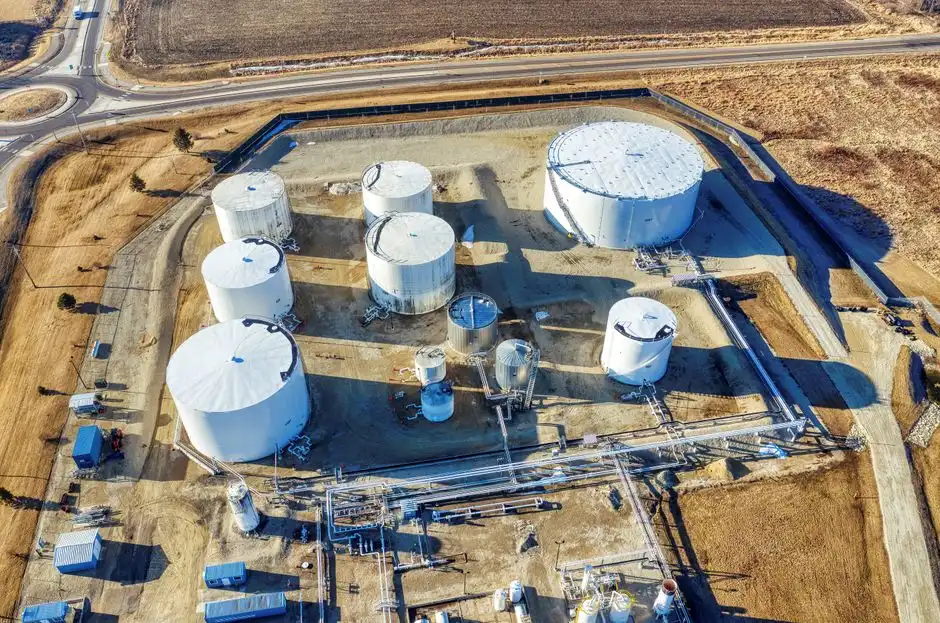
Significant Industrial User (SIU) status is defined at 40 CFR 403.3(v) and fires on any one of three triggers: (1) the user is subject to categorical pretreatment standards, (2) the user discharges an average of 25,000 gpd or more of process wastewater, or (3) the process waste stream makes up 5% or more of the POTW's average dry-weather hydraulic or organic capacity (per EPA 2026 guidance). A KC chemical plant almost always meets trigger (1) through Part 414 or Part 415, and that single fact imposes the full SIU compliance bar.
SIU obligations include a Baseline Monitoring Report (BMR) filed within 90 days of final compliance or new-source startup under 40 CFR 403.12(b), 90-day compliance reports on the Control Authority's schedule, a written control mechanism issued by the POTW, and routine inspection and sampling. A slug load control plan is required under 40 CFR 403.8(f) — written procedures plus equalization capacity for batch releases. Permit reissuance must be applied for at least 90 days before expiration (per Newton ordinance mirroring the federal rule); at KC Water, the RCD drafts the permit and fact sheet for review (per kcwater.us).
A re-permit milestone failure — starting or completing construction, or attaining final compliance, more than 90 days past the schedule date — is itself an enforcement trigger, not a paperwork issue (per 40 CFR 403.8(f)(2)(vii) and KC Code 60-181). For batch operators, a single missed slug-control procedure can move a plant from compliant to SNC in one semiannual review cycle.
The 2026 Unit-Operation Train for Chemical Plant Pretreatment Near KC
Six unit operations, run in roughly this order, handle the majority of chemical plant wastewater streams that discharge to a KC Water POTW. Not every plant needs all six; the right subset is a function of the controlling pollutant.
Equalization is the baseline. Sized for hours to days for batch operations and 4–8 hours for continuous, it is the lowest-cost insurance against slug-load SNC events. Targets are pH, flow, temperature, and concentration swings; the regulatory drivers are 40 CFR 403.5(a) and 40 CFR 403.8(f). pH adjustment with a PLC-controlled chemical dosing system brings strong acid or caustic batches inside the typical 6–9 local limit under 40 CFR 403.5(b) and the KC Water local pH limit. Specify a redundant metering pump and pH probe so a single instrument failure does not produce the kind of pH excursion cited in the 2024 KC Water SNC list.
Dissolved air flotation (DAF) removes free and emulsified oils, FOG, and suspended solids, which is directly relevant to the 2024 KC Water oil and grease exceedance cases. A dissolved air flotation system sized per 2026 compressor oily condensate guidance is the typical pick. Chemical precipitation followed by a high-efficiency lamella clarifier strips dissolved metals (Cd, Cr, Cu, Ni, Pb, Zn); the regulatory driver is 40 CFR Part 433 when metal finishing is in scope, plus the KC Water local metals limit; lamella geometry typically runs 20–40 m/h surface loading. Biological polishing — conventional activated sludge or an integrated MBR membrane bioreactor system — controls cBOD and COD before discharge and prevents the ammonia and cBOD pass-through alleged in the EMD Millipore case; MBR effluent passes a <1 μm filtration step and is the better fit where KC Water local BOD/COD limits are tight. Multimedia and carbon filtration is the final polish for residual COD, color, and trace organics, including PFAS precursor load relevant to KC Water's RCD monitoring alignment; it can be paired with on-site chlorine dioxide disinfection if a polishing kill step is needed downstream of equalization.
Parameter Table: How Each Unit Operation Maps to KC Water and Federal Limits
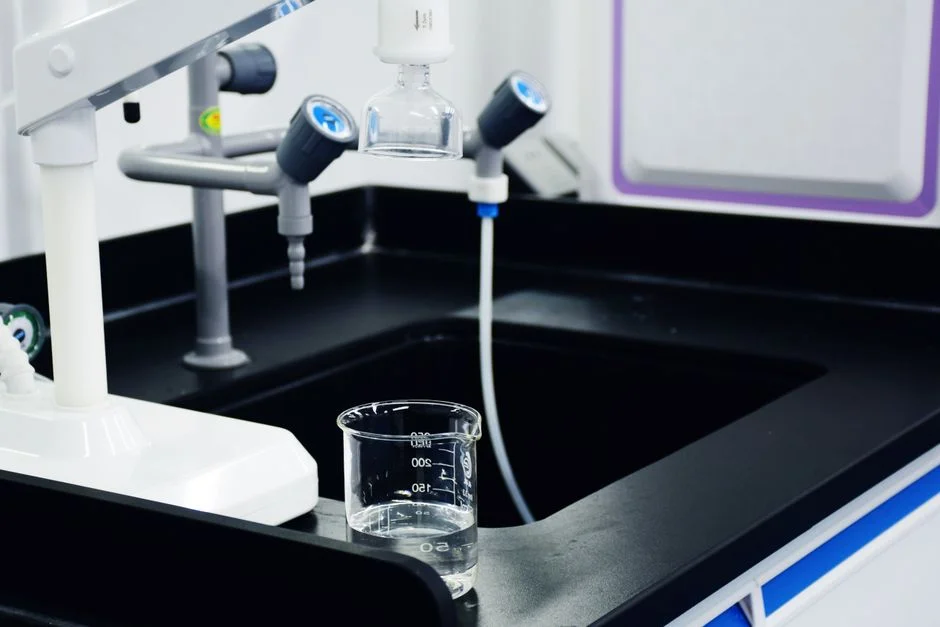
| Unit operation | Influent problem addressed | Typical controlled parameter | Federal regulatory driver (40 CFR) | KC Water / local driver |
|---|---|---|---|---|
| Equalization | Batch pH, flow, temperature, concentration swings | Flow, pH, temperature | 403.5(a) pass-through; 403.8(f) slug load control | KC Water slug control (see 2024 SNC list) |
| pH adjustment / PLC dosing | Strong acid or caustic batches | pH 6–9 | 403.5(b) specific prohibitions | KC Water local pH limit |
| DAF | Free/emulsified oils, FOG, TSS | Oil & grease, TSS | Categorical standard; 403.5(a) | KC Water O&G limit (see 2024 SNC cases) |
| Chemical precipitation + lamella clarifier | Dissolved metals | Cd, Cr, Cu, Ni, Pb, Zn | Part 433 when metal finishing applies | KC Water local metals limit |
| Biological polishing / MBR | cBOD, COD, ammonia | BOD, COD, NH3-N | Part 414/415 categorical; 403.5(a) | KC Water local BOD/COD and 5% SIU organic capacity |
| Multimedia / carbon filtration | Residual organics, color, PFAS precursors | TOC, color, trace organics | EPA 2024 PFAS MCL alignment | KC Water RCD PFAS monitoring |
Decision Framework: Choosing the Right Train for Your Controlling Pollutant
Four axes determine the right equipment train. Axis 1 is the controlling pollutant: oils and TSS point to a dissolved air flotation system; dissolved metals point to chemical precipitation and a high-efficiency lamella clarifier; high COD/BOD points to biological polishing or an integrated MBR membrane bioreactor system; pH swings point to equalization plus a PLC-controlled chemical dosing system. Most plants hit two or three of these simultaneously, which is why the full train is the common case.
Axis 2 is SIU status. If the plant is a categorical SIU, the federal number is the floor and the KC Water local limit is often the binding constraint. A non-categorical plant that exceeds 25,000 gpd or 5% of the POTW's capacity is still an SIU; any plant below those thresholds is still bound by 40 CFR 403.5(a) pass-through and interference prohibitions. Axis 3 is flow pattern: batch operations need equalization sized for hours to days, continuous operations can usually run 4–8 hours, and over-sizing equalization is cheap relative to one SNC event or one Consent Decree. Axis 4 is water reuse intent: an MBR-plus-RO path makes sense where the plant wants to cut purchased water, while discharge-only operations can stay on conventional activated sludge.
Equalization and PLC-controlled pH dosing are the lowest-cost insurance against the specific 2024 KC Water SNC failure modes — slug discharge, pH excursions, and unpermitted discharge. Engineers in similar regulatory environments — see the Hopewell, VA chemical plant pretreatment guide and the Summer Shade chemical plant pretreatment guide — arrive at the same baseline. Under-sizing either of those two unit operations is the most common root cause of failed compliance events at chemical plants discharging to a POTW.
Frequently Asked Questions
Who needs a KC Water pretreatment permit?
Any nondomestic industrial user discharging to the KC Water POTW needs coverage under Kansas City Municipal Code Chapter 60, Article IV, and any Significant Industrial User as defined at 40 CFR 403.3(v) must participate in the Industrial Pretreatment Program. New users file a wastewater survey under KC Code Sec. 60-141 before any discharge, and the RCD drafts the permit and fact sheet at 7300 Hawthorne Rd, Kansas City, MO 64120.
How much equalization capacity is enough to avoid a slug-load SNC?
Continuous operations typically run 4–8 hours of hydraulic retention; batch operations with long cycle times or shared collection systems need equalization sized for hours to days, paired with a written slug load control plan under 40 CFR 403.8(f). The 2024 KC Water SNC list cited a 30,000+ gallon slug discharge as a triggering event, so the basin needs to absorb a worst-case batch, not an average one.
What is the cost of pretreatment noncompliance in the KC metro?
The EMD Millipore Consent Decree imposed a $385,000 civil penalty, a mandated WWTP upgrade, annual operator training, and quarterly monitoring for alleged pass-through of ammonia nitrogen and cBOD into the Contoocook River from 2011–2015 (per williamsmullen.com). At the local level, KC Water's Enforcement Response Plan authorizes administrative orders, emergency actions, legal actions, permit revocation, and cost recovery (per kcwater.us).
Does the 2024 EPA PFAS rule change chemical plant pretreatment design?
Yes — forward-looking. EPA's 2024 drinking water standards set MCLs for six PFAS compounds including PFOA and PFOS, and KC Water's RCD is actively aligning monitoring and testing procedures with those regulations (per kcwater.us). Even where current categorical subparts are silent on PFAS, multimedia and carbon polishing plus active monitoring are now a defensible baseline for chemical plants discharging to KC Water.
Related Equipment
- Dissolved air flotation system — specifications, capacity range, and technical data
- PLC-controlled chemical dosing system — specifications, capacity range, and technical data
- high-efficiency lamella clarifier — specifications, capacity range, and technical data
- integrated MBR membrane bioreactor system — specifications, capacity range, and technical data