
Why Maryville, MO is the Regulatory Anchor for This Guide
Any transportation equipment plant discharging to the Maryville sanitary sewer is regulated under Missouri State Operating Permit MO-0033286, issued to the City of Maryville for the Maryville Wastewater Treatment Plant at 29600 Highway 136, Maryville, MO 64468 (Missouri DNR operating permit, 2018-07-18). The permit is issued under the Missouri Clean Water Law and the National Pollutant Discharge Elimination System, and it authorizes the city to operate an approved pretreatment program with authority delegated by the Missouri Department of Natural Resources under 10 CSR 20-6.100 and the federal basis at 40 CFR 403.18(b)(1).
The 2018-07-18 program modification was a non-substantial change approved by Pretreatment Coordinator Todd Blanc of the Water Protection Program (314-416-2064, [email protected]), confirming that the city may set site-specific limits on industrial users without re-noticing the program (Missouri DNR permit MO-0033286). The permit document also states that, at the coordinator's discretion, BOD5 limits in individual pretreatment permits may be imposed as concentrations using appropriate conversion methods, so a Maryville-area manufacturer should expect both mass-based and concentration-based reporting on its DMR (Missouri DNR permit MO-0033286). Any significant industrial user discharging into the Maryville collection system may receive an individual or general pretreatment permit with limits tailored to its process water profile and hydraulic load.
The receiving utility is the City of Maryville, and the federal-state-local chain runs as follows: the EPA sets categorical pretreatment standards under 40 CFR 403 for metal finishing and similar operations, Missouri DNR delegates program administration to the city under 10 CSR 20-6.100, and the city's pretreatment coordinator issues and enforces site-specific permits. Permits commonly require pH, TSS, oil and grease, total metals, total phosphorus, and BOD5, and the permit document explicitly notes that the minimum quantification level does not authorize the discharge of cyanide in excess of permit limits (Missouri DNR permit MO-0033286).
The Wastewater Profile of a Transportation Equipment Plant
Transportation equipment plants — truck body builders, trailer manufacturers, rail equipment fabricators, and agricultural machinery assemblers — generate a wastewater profile that is heavier in oils, metals, and phosphorus than a typical light-industrial discharge. The dominant streams are alkaline and acid cleaning baths, phosphate conversion coating rinse water (zinc and iron phosphate), oil-bearing machining and stamping fluids, parts-washer overflow, paint spray-booth water (paint solids with possibly trace metals from pigments), and floor drain and boiler blowdown contributions. Each one targets a different unit operation downstream, requiring a specialized treatment approach rather than a generic "neutralize and filter" method.
The pollutant fingerprint includes high pH swings (acid pickling baths can drop pH below 3, alkaline cleaners can push it above 11), emulsified oils from stamping and machining, total suspended solids from paint overspray and metal fines, COD from surfactants and cleaners, total phosphorus from conversion coating chemistries, and trace metals — primarily zinc, nickel, and iron — released from metal substrates and weld scale. This profile is consistent with the EPA's framework for industrial discharges to municipal separate sanitary sewers, where large volumes of inflow and infiltration combined with untreated industrial slug loads can cause sanitary sewer overflows and operational problems at the receiving POTW (US EPA Municipal Wastewater page, accessed 2026).
Sewer connectivity itself varies by facility, and a 2023 openRxiv assessment of US sewer connectivity found lower-than-average connection rates in many non-metro census tracts — relevant context for any plant near Maryville that may sit just outside the corporate boundary (openRxiv, 2023, sewer connectivity assessment). Confirming that the facility address falls inside the Maryville sewer service area is the first step; everything that follows assumes the discharge enters the city's collection system and is therefore subject to the local program.
A 2026 Process Train That Actually Works for These Plants
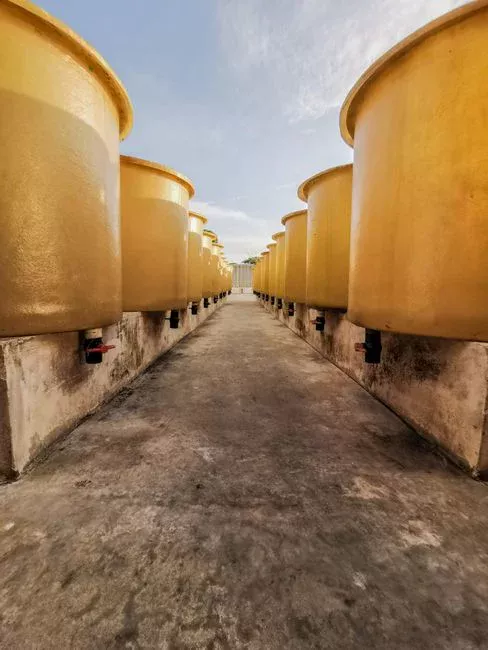
A compliant 2026 process train for a Maryville-area transportation equipment plant runs in a fixed order: rotary mechanical bar screen at headworks, flow and load equalization, chemical coagulation and pH adjustment, dissolved air flotation, biological polishing, and sludge dewatering. Implementing this sequence prevents compliance gaps and DMR exceedances.
- Headworks screening. A rotary mechanical bar screen for headworks screening with a 2–6 mm aperture removes rags, plastics, weld wire, and fibrous debris before the lift station. Continuous-duty operation protects downstream pumps and prevents ragging of the DAF nozzle headers, a failure mode that causes 30–40% of unplanned filter press downtime in municipal sludge dewatering operations (HydropureWater field data, 2026).
- Flow and load equalization. An 8–24 hour hydraulic retention tank dampens pH spikes and slug loads from batch cleaning lines. Equalization is mandatory before any biological or chemical step because a 2 pH swing arriving at the DAF will collapse coagulant performance and push metals through into the effluent.
- Chemical dosing. A PLC-controlled chemical dosing system injects coagulants and pH adjusters based on pH and ORP probe feedback. The function is charge neutralization and precipitation of dissolved metals and phosphorus; the operator tunes dose ratios to the influent profile, not to a fixed recipe.
- Dissolved air flotation. A dissolved air flotation system for oil and FOG removal skims emulsified oils, free oil, and floated solids. Capacity typically ranges from 4–300 m³/h, which covers small to mid-size transportation plants. Micro-bubble generation at 4–6 bar saturator pressure is the standard for FOG separation.
- Biological polishing. An MBR membrane bioreactor for biological polishing reduces dissolved COD and BOD5 before sewer discharge. MBR is preferred over conventional activated sludge at this scale because the membrane barrier produces a consistent low-SS effluent that satisfies strict local limits without a tertiary clarifier.
- Sludge dewatering. A plate and frame filter press for sludge dewatering handles the float solids and waste biological sludge together. Cake dryness expectations are qualitative — operators target a handleable, stackable cake that passes paint-filter test — and exact moisture depends on feed solids and polymer conditioning.
| Unit Operation | Typical Influent Parameter | Target Effluent Range | Primary Pollutant Removed |
|---|---|---|---|
| Rotary bar screen (2–6 mm) | Raw mixed industrial wastewater | Screenings removed; flow protected | Rags, plastics, fibrous debris |
| Equalization basin (8–24 h) | Variable pH, slug flows | pH variance reduced to ±1.0 SU; flow smoothed | pH spikes, hydraulic shock |
| Chemical dosing (PLC-controlled) | Dissolved metals, P, pH outliers | pH 6.0–9.0 SU; metals precipitated | Zn, Ni, Fe, total phosphorus |
| Dissolved air flotation | Emulsified oils, FOG, floated solids | O&G typically below 100 mg/L after DAF | Oil & grease, TSS, floatable metals |
| MBR biological polishing | Dissolved COD/BOD5 | BOD5 typically reduced to site-specific limit | Soluble COD, BOD5, residual NH3 |
| Plate and frame filter press | Float + waste activated sludge | Handleable cake for off-site disposal | Water from sludge (volume reduction) |
Matching Each Pretreatment Limit to the Right Unit Operation
Every line on a DMR maps back to a specific piece of equipment, and the audit value of a process train is that the operator can name which unit is responsible for which parameter. pH excursions in the 6.0–9.0 SU range — the standard band adopted by most POTW pretreatment programs — are controlled by the PLC-controlled chemical dosing system with closed-loop pH probe feedback. Total suspended solids are removed by DAF, with the upstream bar screen acting as a protective device rather than a primary TSS removal stage.
Oil and grease, and FOG more broadly, are the responsibility of DAF, often preceded by a coarse plate interceptor on heavily oiled streams such as stamping and machining coolant overflow. Total metals — zinc, nickel, and iron in most transportation equipment plants — are precipitated by coagulant dosing and removed by DAF or, in higher-flow designs, a high-efficiency sedimentation tank acting as a lamella clarifier. Total phosphorus is precipitated by metal salts (alum, ferric) or lime, with the precipitate co-removed in the DAF float or clarifier underflow.
BOD5 and COD are the biological polishing step's job, and the Maryville coordinator may impose site-specific BOD5 limits as concentrations using appropriate conversion methods (Missouri DNR permit MO-0033286, 2018-07-18). Cyanide is a special case: the permit explicitly states the minimum quantification level does not authorize discharge in excess of permit limits, so any process stream that could carry cyanide requires a dedicated alkaline chlorination or oxidation destruction step, and the operator should confirm with the coordinator whether such a stream is even permitted (Missouri DNR permit MO-0033286).
| DMR Parameter | Typical Limit (Local POTW) | Controlling Unit Operation | Failure Mode if Mismatched |
|---|---|---|---|
| pH | 6.0–9.0 SU | Chemical dosing with pH probe loop | Coagulant failure, metal breakthrough |
| Total suspended solids | Site-specific (often 250–450 mg/L) | DAF, protected by bar screen | Sludge overload at POTW |
| Oil & grease / FOG | Site-specific (commonly 100 mg/L) | DAF, with plate interceptor upstream | Sewer blockages, fire/odor risk |
| Total metals (Zn, Ni, Fe) | Site-specific (often 1–3 mg/L each) | Coagulation + DAF or sedimentation tank | Receiving stream toxicity |
| Total phosphorus | Site-specific (often 1–5 mg/L) | Chemical precipitation + DAF | Eutrophication in receiving waters |
| BOD5 | Site-specific, possibly as concentration (Missouri DNR permit MO-0033286) | MBR biological polishing | Oxygen depletion at POTW |
| Cyanide | Not authorized to exceed limits (Missouri DNR permit MO-0033286) | Dedicated destruction step or exclusion | Catastrophic receiving stream toxicity |
Sizing, Monitoring, and Documentation for 2026 Compliance
Self-monitoring for a Maryville-area pretreatment system typically uses 24-hour composite samplers on the discharge line, with continuous pH and flow instrumentation tied to the SCADA system. Reporting combines the standard DMR format with the city's pretreatment program forms, filed at the frequency set in the individual permit — monthly for most parameters, with more frequent reporting for pH and flow excursions.
A slug control plan is required by 40 CFR 403.8 for all categorical and significant non-categorical industrial users, and the plan must describe storage provisions for batch dumps, notification procedures for the receiving POTW, and preventive measures such as flow diversions and equalization capacity. The plan is a living document and should be updated whenever a new process bath or cleaning line is added. Recordkeeping must include chemical usage logs, calibration records for pH and ORP probes, and waste manifests for any sludge shipped off-site — the latter is increasingly relevant as landfill restrictions on liquid industrial waste tighten.
Operators should also track upstream collection system conditions. Inflow and infiltration can reduce available hydraulic capacity at the receiving POTW and trigger flow-based permit violations even when pollutant concentrations are in spec (US EPA Municipal Wastewater page, accessed 2026). For 2026 OPEX planning context, see the municipal sewage plant operating cost OPEX breakdown for 2026.
Frequently Asked Questions
Does my transportation plant near Maryville need a pretreatment
Frequently Asked Questions
Does a transportation equipment plant near Maryville MO need a pretreatment permit?
Yes, any industrial user classified as a Significant Industrial User (SIU) or one that discharges process wastewater containing regulated pollutants must obtain a pretreatment permit from the Maryville Publicly Owned Treatment Works (POTW). This permit establishes specific discharge limitations, monitoring requirements, and reporting schedules to ensure compliance with the Clean Water Act and local sewer use ordinances.
What are the typical effluent limits for industrial discharges to the Maryville POTW?
While limits are site-specific based on the plant's Industrial User Permit, they generally adhere to Categorical Pretreatment Standards for the Transportation Equipment Cleaning industry (40 CFR Part 442). Typical local limits for metal finishing operations often cap Oil and Grease at 100 mg/L, Total Suspended Solids (TSS) at 250 mg/L, and heavy metals such as Total Chromium, Nickel, and Zinc at concentrations ranging from 1.0 mg/L to 3.0 mg/L depending on local headworks capacity.
Is dissolved air flotation enough to meet Maryville sewer discharge limits?
Dissolved Air Flotation (DAF) is highly effective for removing emulsified oils and suspended solids, often achieving 80% to 95% removal efficiency for non-emulsified fats, oils, and grease (FOG). However, DAF alone is typically insufficient for meeting Maryville discharge limits if the wastewater contains dissolved heavy metals or complexed phosphates; these require additional chemical precipitation, pH adjustment, and flocculation stages to achieve compliance.
How is total phosphorus removed from phosphate conversion coating wastewater?
Total phosphorus is primarily removed through chemical precipitation using metallic salts, such as ferric chloride or alum, which react with orthophosphates to form insoluble precipitates. These precipitates are then removed from the waste stream via clarification or membrane filtration. For facilities with stringent phosphorus limits, tertiary treatment methods such as lime precipitation or specialized ion-exchange resins may be required to lower concentrations to below 1.0 mg/L.
How often does a Missouri industrial user have to sample and report to the pretreatment coordinator?
Missouri industrial users are typically required to submit Self-Monitoring Reports (SMRs) on a semi-annual basis, though facilities with a history of non-compliance or those categorized as Categorical Industrial Users (CIUs) may be mandated to report quarterly. Sampling frequency is dictated by the facility's permit, with most transportation equipment plants required to perform composite sampling for regulated parameters at least once per month to ensure ongoing adherence to local and federal standards.