Why Chemical Plant Pretreatment Is a Two-Layer Compliance Problem
Chemical plants near Summer Shade, Kentucky face a stacked compliance problem: they must satisfy both federal categorical pretreatment standards and the receiving POTW's site-specific local limits — and the local limit is almost always the binding constraint. Pretreatment standards are pollutant discharge limits applied to Industrial Users (IUs) that discharge indirectly to a POTW, while pretreatment requirements are the substantive or procedural rules (permits, reporting, BMPs) that go with them, per the EPA's overview of pretreatment standards and local limits.
The federal layer is the categorical standard. For chemical manufacturing, the most common subparts are 40 CFR Part 414 (Organic Chemicals, Plastics, and Synthetic Fibers), 40 CFR Part 415 (Inorganic Chemicals Manufacturing), and 40 CFR Part 419 (Petroleum Refining) — with Part 414 and Part 415 covering the bulk of specialty and fine-chemical facilities in the south-central Kentucky region. Categorical standards set national, technology-based effluent limits for specific pollutants (COD, TSS, priority pollutants, pH, total metals).
The local layer sits underneath the categorical standard. Under 40 CFR 403.5(c), a POTW must develop numeric or narrative local limits whenever a discharge could cause pass-through or interference. Pass-through is defined at 40 CFR 403.3(p) as a discharge that exits the POTW in quantities or concentrations that cause a violation of the POTW's own NPDES permit, alone or in conjunction with other sources. Interference is a discharge that inhibits or disrupts the POTW's treatment processes, operations, or sludge processes and is therefore a cause of an NPDES or sludge-use violation. Local limits are site-specific, may be numeric or narrative, and are imposed at end-of-pipe — the IU-POTW connection point — meaning the chemical plant must design its pretreatment train to meet the stricter of the two layers, not the looser.
Step 1: Identify Your Categorical Standard and Pull the Local Limits
Before any equipment is sized, the engineer needs two documents in hand: the applicable 40 CFR Part and the receiving POTW's current local-limits letter or ordinance. The sequence below is the fastest path for a Summer Shade-area facility.
- Determine your NAICS code. NAICS 325 (Chemical Manufacturing) breaks into 3251 (Basic Chemical), 3252 (Resin, Synthetic Rubber, Artificial Fibers), 3253 (Pesticide and Fertilizer), 3254 (Pharmaceutical and Medicine), 3255 (Paint, Coating, Adhesive), 3256 (Soap, Cleaning Compound, Toilet Preparation), and 3259 (Other Chemical Product). Each sub-sector typically maps to a specific categorical standard: 3251/3252/3259 → 40 CFR Part 414, inorganic-heavy 3251 lines → 40 CFR Part 415, petroleum-adjacent 3251/petrochemical 3252 → 40 CFR Part 419. Confirm via the EPA's categorical standards tables before scoping equipment.
- Identify the receiving POTW. Facilities in Barren and Metcalfe County typically discharge to the Glasgow Water & Sewer Commission or a similar small municipal system. Call the POTW's pretreatment coordinator and request the current local-limits resolution and any IU discharge permit template.
- Pull the general prohibited discharge standards at 40 CFR 403.5. These are not numeric pollutant limits but absolute prohibitions: no liquids that create fire or explosion hazards, no corrosive discharges that damage collection structures, no slug loads, no discharges that obstruct flow, noxious or malodorous discharges, and any waste that interferes with the POTW. Chemical batch operations must design slug-load control plans to comply with 403.5(b)(6)–(7) — the most-cited general prohibition in chemical-plant enforcement actions.
- Confirm the categorical subcategory and applicability date. 40 CFR Part 414 has subparts A–I with different applicability dates; Part 415 is divided into subparts A–N. The applicability date determines which version of the standard (existing source vs. new source) applies to your facility.
- Cross-check local limits against categorical limits. Where the local limit for BOD, TSS, FOG, sulfides, or ammonia is numerically lower than the categorical standard, the local limit controls by definition under 40 CFR 403.5(c) and 40 CFR 403.7.
EPA's guidance is unambiguous: where a POTW has properly developed and approved local limits under 40 CFR 403.5(c), EPA can enforce those limits as pretreatment standards — meaning non-compliance is enforced exactly like a categorical violation. The IU inherits the obligation to meet the local number, not just the federal number.
Step 2: The Five-Stage Pretreatment Process Train for Chemical Plants
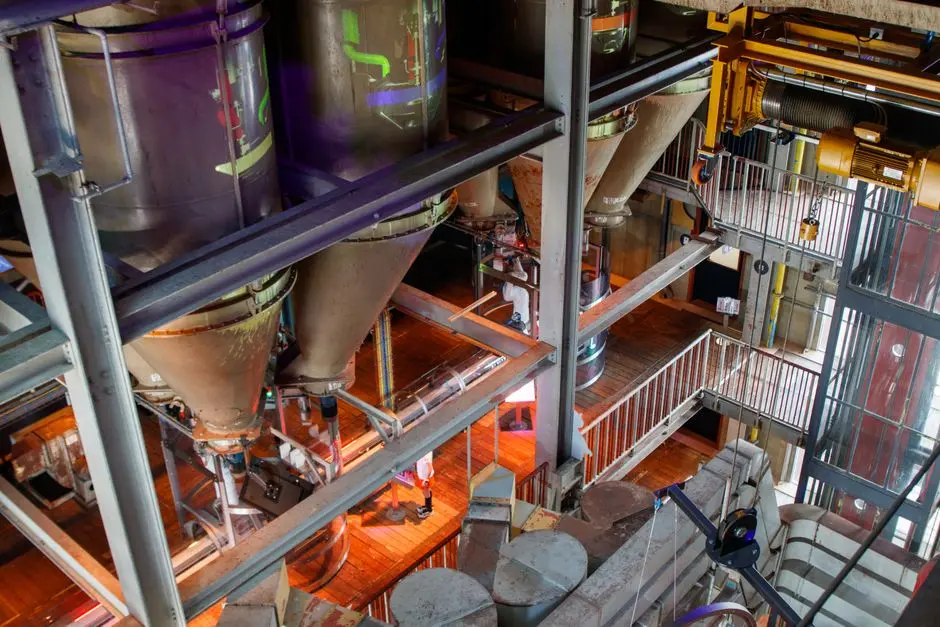
The treatment train below is the standard configuration deployed at small-to-mid chemical plants in the south-central U.S. Each stage is sized from the local-limits document pulled in Step 1.
Stage 1 — Equalization. Chemical batch operations produce hydraulic and load spikes that would cripple downstream biological treatment if sent unsmoothed. An equalization basin sized for 8–24 hours of retention (typical 12-hour HRT for two-shift batch plants) absorbs diurnal peaks and dampens pH/TDS/COD swings. Mixing and aeration are required to prevent septicity; floating aerators or submersible mixers at 5–10 W/m³ are common. Composite flow-weighted sampling for compliance begins here.
Stage 2 — pH adjustment and chemical conditioning. Most categorical and local limits hold pH to 5.0–10.0 or 6.0–9.0; chemical influent routinely arrives at pH 1–3 or 11–13 from reactor washdowns. A PLC-controlled chemical dosing system with redundant pH probes in a serpentine mixing channel injects NaOH, H₂SO₄, or lime, followed by coagulant (PAC, alum, or ACH) and flocculant (PAM, anionic or cationic depending on the solids surface charge) for downstream DAF.
Stage 3 — Dissolved Air Flotation (DAF). A DAF system for oil, FOG, and TSS removal saturates a side stream at 4–6 bar, then releases it through needle valves into the flotation tank, attaching micro-bubbles (10–80 μm) to free oil, emulsified FOG, and flocculated suspended solids. Skimmers remove the float layer; underflow carries clarified water forward. Capacities of 4–300 m³/h across 13 standard models cover everything from a 50-employee batch chemical plant to a 24/7 specialty-chemical operation. Compared with API/CPI separators, a properly sized DAF routinely hits 50–150 mg/L FOG and <30 mg/L TSS in a single stage — see the broader DAF vs oil-water separator cost comparison for sizing context. DAF also protects downstream biology from oil sheeting and emulsifier toxicity.
Stage 4 — Biological treatment. Soluble COD/BOD removal goes through activated sludge or an MBR. A conventional extended-aeration basin at F/M 0.05–0.15 kg BOD/kg MLSS·d handles the load at lower capital cost. An MBR biological treatment system is preferred when the site is footprint-constrained, when slug-load resistance is needed, or when the local limit on TSS is <30 mg/L and a membrane polish is acceptable. MBR effluent typically runs <5 mg/L TSS and <10 mg/L BOD, with HRT 6–12 h versus 18–36 h for CAS.
Stage 5 — Polishing and disinfection. Multi-media filtration (sand + anthracite + garnet) polishes residual TSS before the sewer connection, and a ClO₂ generator provides compliant residual disinfection where the POTW or local ordinance requires fecal-coliform or sulfite control prior to discharge. Polishing is also where trace priority pollutants and color are caught before the connection.
| Stage | Unit Operation | Primary Removal Target | Typical Sizing |
|---|---|---|---|
| 1 | Equalization basin | Flow / load dampening | 8–24 h HRT, 5–10 W/m³ mixing |
| 2 | Chemical dosing (pH + coag/floc) | pH, emulsified oil charge | 2-stage serpentine; dual pH probes |
| 3 | DAF flotation | FOG, TSS, free oil | 4–300 m³/h, 4–6 bar saturator |
| 4 | Biological (CAS or MBR) | Soluble COD/BOD | F/M 0.05–0.15 (CAS) or MBR HRT 6–12 h |
| 5 | Multi-media filter + ClO₂ | Residual TSS, disinfection | 10–20 m/h filtration rate |
Step 3: Typical Influent and Effluent Parameters to Design Around
The table below is the parameter envelope most chemical plants in the 325-NAICS group should be designing to. Local POTW limits will override these targets for any specific parameter — if the Glasgow-area POTW holds FOG to 50 mg/L, the plant designs DAF and biological stages to deliver 25–30 mg/L FOG, not 100.
| Parameter | Typical Chemical Plant Influent | Categorical / Local Limit (typical range) | Achievable After DAF + Bio + Polish |
|---|---|---|---|
| pH | 2–12 (batch swings) | 5.0–10.0 or 6.0–9.0 (40 CFR 403.5 general) | 7.0–8.5 |
| TSS (mg/L) | 200–2,500 | 50–250 (categorical); 30–100 (local common) | <10 (MBR) / 20–30 (CAS + filter) |
| COD (mg/L) | 800–8,000 | 300–1,500 (categorical, subpart-dependent) | 50–200 |
| BOD₅ (mg/L) | 300–4,000 | 50–300 (categorical); 25–200 (local common) | <5 (MBR) / 10–20 (CAS + filter) |
| FOG / O&G (mg/L) | 100–3,000 | 50–100 (local common, 40 CFR 403.5 narrative) | 10–25 |
| Total Nitrogen (mg/L) | 30–300 | 10–50 (local common, N-limiting POTWs) | 5–15 (with biological nitrification) |
| Sulfides (mg/L) | 0.5–30 | 1–10 (local common, corrosion/odor) | <0.5 (with ClO₂ polish) |
| Total Metals (Cd, Cr, Cu, Ni, Pb, Zn) (mg/L) | 0.5–50 | Per 40 CFR Part 414/415/419 tables; local stricter | Categorical compliance + hydroxide precipitation |
BOD, TSS, and FOG are the parameters most often controlled by local limits because they directly drive POTW aeration capacity, clarifier loading, and digester upset. Priority pollutants — specific organics regulated under 40 CFR Part 414/415/419 (e.g., specific solvents, phenols, cyanides) — are typically controlled by categorical limits, with local POTWs generally adopting the categorical number unless site-specific data justify stricter values.
Step 4: Sludge Handling, Monitoring, and Self-Audit
Sludge from chemical-plant pretreatment cannot go to a municipal digester or landfill without dewatering. A plate and frame filter press for chemical sludge is the workhorse in the 5–50 m³/d dry-sludge range, producing 30–45% DS cake from biological, DAF float, and metal-hydroxide sludges. Filter press supernatant recycles to the head of the train. For higher-volume operations a belt press or screw press may be considered, but the plate-and-frame remains the default for chemical sludges because of its tolerance to variable feed and oil content.
Ongoing monitoring is the part the inspector actually looks at. Required at end-of-pipe: continuous flow measurement (with totalizer), continuous pH, daily TSS, and periodic sampling for all categorical pollutants at the frequency specified in 40 CFR Part 414/415/419 monitoring requirements. Most categorical subparts require monthly or quarterly self-monitoring for organics, metals, and whole-effluent toxicity (WET) where applicable.
Self-audit checklist before the next POTW inspection:
- Current local-limits document in hand and dated within the last 12 months
- Categorical standard applicability letter and self-monitoring report on file
- Daily flow/pH/TSS log with calibration records for probes and totalizer
- Slug-load control plan addressing 40 CFR 403.5(b)(6) — written, posted, and trained
- SPCC plan (if oils ≥1,320 gallons storage) per 40 CFR Part 112
- Written BMPs for chemical unloading, reactor washdowns, and tank-rinse routing
- Sludge manifest records from filter-press dewatering operations
- Baseline monitoring report and 90-day compliance report on file (new sources)
For cross-referencing on a different regional POTW dynamic, the Cleveland chemical plant pretreatment guide walks through a similar five-stage train against Lakewood's local-limits structure, useful for benchmarking your own approach against another active program.
Frequently Asked Questions
What is the difference between categorical pretreatment standards and local limits?
Categorical pretreatment standards are federal, technology-based effluent limits set in 40 CFR Parts 405–471 for specific industry subcategories — for chemical plants, mostly 40 CFR Part 414 (Organic Chemicals), Part 415 (Inorganic Chemicals), and Part 419 (Petroleum Refining). Local limits are site-specific numeric or narrative limits developed by the receiving POTW under 40 CFR 403.5(c) to protect against pass-through and interference. The IU must meet the stricter of the two at end-of-pipe, and local limits — once approved — are enforceable as pretreatment standards under federal law.
Which 40 CFR Part applies to my chemical plant?
Match your NAICS code and primary process to the EPA categorical standards table. NAICS 3251/3252/3259 organic-heavy lines map to 40 CFR Part 414, with subparts A–I defining specific organic chemicals. NAICS 3251 inorganic-heavy lines map to 40 CFR Part 415 (subparts A–N). Petroleum-adjacent or petrochemical lines map to 40 CFR Part 419. Confirm applicability and the existing-source vs. new-source version with the EPA categorical standards lookup and your POTW's pretreatment coordinator.
How do I find my local POTW's specific numeric limits near Summer Shade?
Call the pretreatment coordinator at the receiving POTW — for most Barren/Metcalfe County facilities, the Glasgow Water & Sewer Commission. Request the current local-limits resolution, supporting technical justification (often called the Local Limits Development, or LLD, document), and any standard IU discharge permit template. Cross-check that document's effective date is within the last 36 months; older limits may not reflect current POTW headworks analysis.
Can I discharge to sewer if my wastewater is below categorical limits but above local limits?
No. Under 40 CFR 403.5(c) and 40 CFR 403.7, where a properly developed and approved local limit is stricter than the categorical standard, the local limit controls. The IU must meet the local number, not the federal number, and EPA can enforce the local limit as a pretreatment standard. Discharging above a local limit — even below the categorical number — is a pretreatment violation.
What is the most common cause of pretreatment non-compliance for chemical plants?
Slug loads from batch reactor discharges and inadequate equalization capacity. The second most common is pH excursion from caustic or acid wash events routed to the head of the plant without intermediate neutralization. Both are addressed by a working 40 CFR 403.5(b)(6) slug-load control plan and properly sized equalization with PLC-controlled chemical dosing — not by the biological or polishing stages, which arrive too late to protect the POTW.
Related Equipment
- MBR biological treatment system — specifications, capacity range, and technical data