Why Moline-Area Petroleum Sites Discharge to a POTW, Not Direct NPDES
Petroleum storage, distribution, and blending facilities across the Quad Cities corridor do not hold their own NPDES permits for routine process wastewater; they discharge to the Rock Island Water Reclamation District or an equivalent satellite POTW, which serves as the operational gatekeeper. The POTW enforces local sewer-use ordinances that translate federal categorical standards into numeric daily-maximum and instantaneous-maximum limits, then files the compliance paperwork with Illinois EPA under NPDES authority delegated to the state. For a tank farm, terminal, or blender, the operative compliance document is the local limits table on the discharge permit, not a federal rule quoted in isolation.
The regulatory chain layers as follows: 40 CFR Part 403 sets the general pretreatment framework and defines Significant Industrial User (SIU) obligations; 40 CFR Part 423 imposes petroleum-refining categorical standards on facilities that operate crude units, catalytic crackers, or cokers (most Quad Cities terminals and blenders are downstream of these and inherit limits through their local ordinance rather than directly through Part 423); and the local sewer-use ordinance sets the numeric limits a compliance engineer must hit every day. Historical federal context on petroleum systems—for example, USGS Bulletin 1870 (Magoon, 1988) on U.S. petroleum systems—frames why these streams are tracked at all, but is not a current compliance source. The working compliance reference for a Moline-area discharger in 2026 is the local POTW permit, supported by 40 CFR Part 403 reporting deliverables.
The Pretreatment Train: Step-by-Step Process Flow
Stream segregation is the first and most frequently failed step in industrial wastewater pretreatment. A pretreatment train only works if hydrocarbon-bearing streams—tank-farm dike drainage, truck-rack wash water, hydrostatic test water, and equipment area runoff—are kept out of the sanitary and stormwater systems from the inlet. Mixing a 5,000-gallon slug of diesel from a dike drain into a sanitary line is the most common cause of POTW non-compliance events at petroleum sites, and it defeats every downstream unit operation. Slug control therefore lives at the segregation plan, not at the DAF.
Once streams are segregated, the train runs in the following order:
- Source control and segregation. Dedicated sewer laterals for process water, isolated stormwater, and a separate trench drain loop for the truck rack with a normally closed diversion to a slug basin.
- Primary oil/water separation. Either an API gravity separator with roughly 60-minute hydraulic residence for free-oil removal or a corrugated plate interceptor (CPI) for a footprint roughly 25% of an API at the same flow.
- Equalization / surge basin. 8–24 hours of retention, often paired with mechanical mixing, to dampen slug loads from batch tank drops or truck receipts and present a steady feed to flotation.
- Dissolved air flotation (DAF). Micro-bubbles in the 20–80 μm range attach to oil droplets and colloidal solids, float them, and skim them as a floating layer. The industrial DAF system for petroleum pretreatment typically covers 4–300 m³/h on the envelope a specifier sees for terminal applications.
- pH adjustment. Sulfuric acid or caustic dosing through a PLC-controlled chemical dosing skid for pH and coagulant injection to hold the feed at 6.0–9.0 s.u. before biological or chemical polishing.
- Biological polishing. Activated sludge, SBR, or an MBR polishing system for dissolved organics; MBR delivers filtered effluent below 1 μm and gives a real compliance buffer when BTEX or COD swings occur upstream.
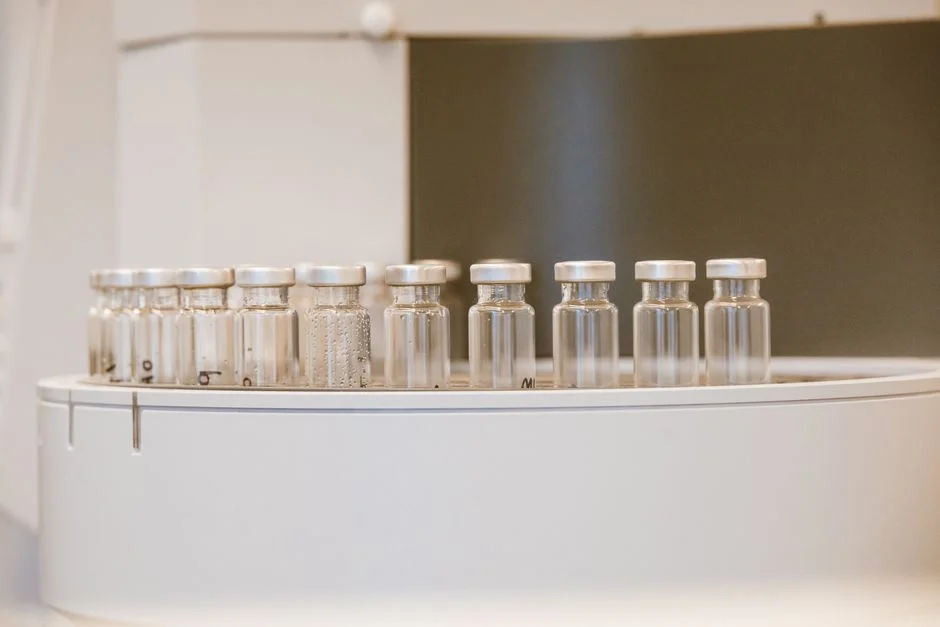
- Final polishing and monitoring. Multimedia filter, magnetic flow meter, continuous pH and temperature probes, and a refrigerated automatic sampler for the 24-hour composite the POTW requires.
Operator rule of thumb: if free oil is segregated upstream and the load is dominated by emulsified streams, the DAF-first configuration often replaces the API entirely and saves footprint—a primary consideration for the small tank farms around the Rock Island Arsenal corridor where space is constrained.
Pretreatment Parameters and the Limits You Must Hit

The limits below are the working envelope a Quad Cities petroleum discharger must hold. Daily-maximum and instantaneous-maximum columns reflect commonly enforced POTW sewer-use limits for petroleum-handling SIUs (typical of Rock Island WRD-class programs); your local permit is the operative document. Removal efficiency ranges are drawn from standard industrial-wastewater texts and are given as qualified ranges rather than single-point guarantees.
| Parameter | Typical local POTW daily max | Typical instantaneous max | Unit operation that removes it | Typical removal range |
|---|---|---|---|---|
| Oil & grease (O&G) | 100 mg/L | 50 mg/L (grab) | API / CPI → DAF → multimedia filter | DAF: 70–95%; full train: >99% |
| Total suspended solids (TSS) | 250 mg/L | — | Equalization → DAF → multimedia filter | DAF: 50–85%; with media filter: >95% |
| pH | 6.0–9.0 s.u. (continuous) | 5.0–10.0 s.u. | Chemical dosing skid with PLC trim | Controlled, not "removed" |
| Sulfide (as S) | 1–10 mg/L | — | Equalization (aeration) → biological → DAF sludge | 50–90% with aeration/MBR |
| Total phenols | 0.5–5 mg/L | — | DAF → biological (MBR/SBR) → activated carbon if needed | MBR: 60–95% |
| BTEX (benzene, toluene, ethylbenzene, xylene) | Site-specific; benzene often <0.05 mg/L | — | Air stripping → biological → carbon | MBR + GAC: >90% |
| COD | Often 300–600 mg/L daily max | — | Equalization → biological (MBR/SBR) → DAF polishing | MBR: 80–95% |
| Flow (peak hourly cap) | Site-specific; sized against the sanitary interceptor | — | Equalization basin + flow meter | Hydraulic, not concentration |
Following this table, SIU permit holders must maintain a written Slug Control Plan that names every potential batch discharge source (tank drops, truck receipts, line flushes, hydrostatic tests) and ties each to a downstream control—typically a dedicated slug basin or a programmed diversion back to equalization. If you can describe how a 10,000-gallon slug would move through your plant on a Sunday morning, the Slug Control Plan is doing its job. For real DAF case data, the real DAF case study at a truck-stop lagoon shows what emergency operation looks like in practice.
Choosing the Right Oil-Water Separator: API, CPI, IGF, or DAF
Most small-to-mid petroleum sites in the Rock Island area are over-spec'ing primary oil/water separation. If your free-oil load is small and your streams are dominated by emulsified hydrocarbons from a truck rack or a blender, a DAF-first configuration will meet the O&G limit and save the footprint of an API or CPI. Use the table below to size the right unit.
| Technology | Best for | Footprint | Capex vs. DAF | Limitations |
|---|---|---|---|---|
| API gravity separator | High free-oil load, large sites | Large (1× baseline) | Lower capex, higher civil cost | Poor on emulsified oil; needs long residence |
| Corrugated plate interceptor (CPI) | Moderate free-oil at small terminals | ~25% of API | Lower capex than DAF | Limited on emulsified oil; plates foul without wash |
| Induced gas flotation (IGF) | Emulsified oil at steady high flow (refineries) | Compact | Comparable to DAF | Mechanically complex; sensitive to gas/oil ratio |
| Dissolved air flotation (DAF) | Variable flow, tighter effluent targets, emulsified + colloidal | Compact | Higher capex than CPI, lower lifecycle cost | Recycle pump and saturator maintenance |
With these technologies identified, decision logic follows: free oil only, large site → API or CPI. Free oil plus emulsified streams, variable flow, POTW target <100 mg/L O&G daily → DAF as primary, CPI as a coarse pre-stage if solids load is high. Refinery-scale steady high flow → IGF or DAF; DAF is the more common choice in 2026 retrofits because of tighter effluent targets and simpler controls. For sizing math on a specific tank-bottom stream, the sizing a DAF for tank bottom water walk-through and the sizing an MBR for tank bottom water guide cover the hydraulic and mass-balance steps a specifier will run.
POTW Permitting and Ongoing Compliance for Moline-Area Dischargers
Equipment alone does not make a compliant discharger. Under 40 CFR Part 403, an SIU must hold a discharge permit that names the applicable limits, a Slug Control Plan, a baseline monitoring report (BMR) at permit issuance, a 90-day compliance report once operations begin, and ongoing self-monitoring on the schedule the POTW sets—typically monthly for most parameters and quarterly for pollutants the local ordinance flags. Rock Island WRD and equivalent satellite POTWs run these programs at the local level, which means the limits table, sample location, and reporting forms are local; federal text is the floor, not the ceiling.
Records to maintain on site, ready for inspection: daily totalized flow with the calibrated flow-meter reading, continuous pH and temperature charts, calibration logs for each automatic sampler and probe, chain-of-custody forms for every split sample sent to the laboratory, the written Slug Control Plan with the dated revision history, and the current POTW permit and any compliance reports due within the last 12 months. A 2026 audit at a Quad Cities terminal will, in practice, open with these documents before it opens the DAF control panel.
Frequently Asked Questions
What is the typical O&G limit a Moline-area POTW enforces for petroleum SIUs?
Most local sewer-use ordinances in the Rock Island WRD class set a daily-maximum O&G limit of 100 mg/L and an instantaneous (grab) limit around 50 mg/L. Compliance is measured by a 24-hour composite sample taken at the designated monitoring point, and excursions trigger the Slug Control Plan. The local permit is the operative document, but 100 mg/L daily / 50 mg/L instantaneous is the working envelope to design against.
Do small petroleum terminals in the Quad Cities need an API separator, or can they go straight to DAF?
If free oil is segregated upstream and the load is dominated by emulsified or colloidal streams—common at truck racks, blenders, and small distribution terminals—a DAF-first configuration is standard practice and often replaces the API entirely. Sites with bulk storage of crude or heavy slop oil still benefit from a CPI or API ahead of the DAF to drop gross free oil and protect flotation nozzles from fouling.
Which federal regulation controls petroleum wastewater discharged to a POTW?
40 CFR Part 403 sets the general pretreatment framework, including SIU classification, permit deliverables, and the Slug Control Plan requirement. 40 CFR Part 423 imposes petroleum-refining categorical standards on facilities that operate refining units; downstream terminals and blenders in the Quad Cities generally inherit equivalent limits through their local sewer-use