Why Cleveland Chemical Plants Face Tighter Pretreatment Scrutiny in 2026
Chemical plants discharging to the Northeast Ohio Regional Sewer District (NEORSD) sewer system operate under a layered compliance framework that stacks federal categorical pretreatment standards under 40 CFR Part 403 on top of NEORSD's Sewer Use Ordinance local limits and an individual industrial user (IU) permit. Federal categorical standards apply to specific industry subcategories — organic chemicals, pharmaceuticals, pesticides, inorganic chemicals — and prohibit both pass-through (pollutants that exit the POTW in violation of its NPDES permit) and interference (discharges that disrupt POTW operations or worker safety). NEORSD's local limits, derived from the receiving-water quality in the Cuyahoga River and Lake Erie and from the POTW's own NPDES permit issued by Ohio EPA, are frequently the controlling number on a parameter-by-parameter basis.
Enforcement in 2026 is active. NEORSD issues Significant Industrial User (SIU) permits with self-monitoring and reporting schedules, and the district retains authority to issue compliance orders, levy surcharges on excessive loadings, and impose discharge bans on non-compliant users. Per the Ohio EPA PFAS Action Plan, NEORSD tightened perfluoroalkyl substance (PFAS) and trace metal monitoring for industrial users in 2024-2025, and 2026 self-monitoring reports now routinely require quarterly PFAS sampling for any chemical plant that uses fluorinated feedstocks, surfactants, or fluoropolymers. Surcharges for exceedances of oil and grease, COD, and ammonia thresholds are calculated on a per-pound basis and can exceed six figures annually for a mid-sized chemical plant.
The Pretreatment Unit Operation Train for Chemical Plant Effluent
A compliant 2026 pretreatment train for a Cleveland-area chemical plant typically follows a five-stage flow equalization → pH/chemical adjustment → solids and oil removal → biological treatment → polishing. Each stage is sized against the controlling local or categorical limit, not generic textbook values.
Stage 1 — Flow and load equalization. A 4-8 hour hydraulic retention time (HRT) buffer tank damps batch discharges and absorbs pH spikes before they reach downstream unit operations. For a 50 m³/h design flow, an 8-hour HRT translates to roughly a 400 m³ equalization basin, typically equipped with mechanical mixers at 4-6 W/m³ to prevent settling and a coarse bar screen at the inlet to protect downstream pumps.
Stage 2 — pH and chemical adjustment. PLC-controlled acid/caustic dosing maintains the inlet pH inside the 6-9 typical NEORSD discharge window. Coagulants (ferric chloride, PAC) and flocculants (anionic polyacrylamide at 0.5-3 mg/L typical) are dosed upstream of the clarifier based on a streaming current detector or inline pH probe signal. A PLC-controlled chemical dosing system for pH and coagulant adjustment closes the loop between probe and metering pump.
Stage 3 — Solids and oil removal. A DAF system for chemical plant pretreatment handles high-FOG and free-oil streams, removing free oil to <10 mg/L and total suspended solids (TSS) to <30 mg/L at hydraulic loadings of 5-25 m/h. A lamella clarifier is the alternative for moderate TSS and chemical-precipitation duty at surface loadings of 20-40 m/h, with smaller footprint but no oil removal.
Stage 4 — Biological treatment. Aerobic biological treatment — activated sludge, sequencing batch reactor (SBR), or membrane bioreactor (MBR) — drives COD/BOD removal and complete ammonia removal via nitrification-denitrification, with effluent ammonia consistently below 1 mg/L as N under stable operation (per DOE Task 6.2 findings on gasification effluents). Mixed liquor suspended solids (MLSS) typically run 6,000-10,000 mg/L in an MBR versus 2,000-4,000 mg/L in conventional activated sludge.
Stage 5 — Polishing and monitoring. A multi-media filter or an MBR membrane (0.1-0.4 μm PVDF pore) drops TSS below detection and provides the consistent effluent that NEORSD's local limits demand. An automated refrigerated sampler and magnetic flow meter at the discharge manhole complete the compliance package, with pH, conductivity, and flow on continuous data logging.
| Stage | Unit Operation | Key Design Parameter | Typical 2026 Target Effluent |
|---|---|---|---|
| 1 | Equalization basin | 4-8 h HRT, 4-6 W/m³ mixing | Flow and load dampening |
| 2 | pH / coagulant dosing | PLC feedback from inline probe | pH 6-9 |
| 3 | DAF or lamella clarifier | 5-25 m/h (DAF), 20-40 m/h (lamella) | O&G <10 mg/L, TSS <30 mg/L |
| 4 | Biological (CAS / SBR / MBR) | MLSS 2,000-10,000 mg/L | COD <200 mg/L, NH₃-N <1 mg/L |
| 5 | Polishing filter or MBR membrane | 0.1-0.4 μm PVDF | TSS <5 mg/L, turbidity <1 NTU |
Local NEORSD vs. Federal Categorical Limits: What Actually Drives Your Design
Equipment selection is driven by whichever standard is more stringent on a parameter-by-parameter basis. 40 CFR Part 403 categorical standards (e.g., 40 CFR Part 414 for organic chemicals, Part 455 for pesticide chemicals) set technology-based effluent limits for specific subcategories. NEORSD's Sewer Use Ordinance sets local limits — typically for metals (Pb, Cd, Cr, Ni, Zn, Cu), oil and grease, sulfides, phenols, ammonia, cyanide, and total toxic organics (TTO) — that reflect the district's wasteload allocation under its NPDES permit from Ohio EPA.
For most Cleveland-area chemical plants, the controlling parameters on the design basis are local, not categorical. The Cuyahoga River's TMDL for phosphorus and the Lake Erie algae targets push NEORSD to set tight ammonia and total nitrogen caps; the receiving-water metals criteria tighten the local metal ceilings below the categorical standards. NEORSD's TTO limit (typically 2.13 mg/L total toxic organics) is the gate that drives activated carbon polishing or advanced oxidation for plants with mixed solvent streams.
The wasteload allocation concept governs this process: NEORSD divides its headroom under the Ohio EPA NPDES permit among SIUs using a combination of local limits, technically-based local limits (TBLLs), and plant-specific mass loadings. Your individual permit ceiling is the result of that allocation. Re-read your IU permit carefully — the local limit schedule lists the controlling parameters, and the wasteload allocation section states your mass-loading budget per shift.
| Parameter | Typical 40 CFR Categorical Range | Typical NEORSD Local Limit | Design Driver |
|---|---|---|---|
| Oil & grease | ~100 mg/L (varies) | 100 mg/L (no visible sheen) | Local + visual |
| Ammonia (as N) | Subcategory-specific | 20-30 mg/L daily max | Local (TMDL-driven) |
| Total phenols | Subcategory-specific | 1-5 mg/L | Local (TTO) |
| Lead / Cadmium | Categorical metal limits | <0.5 mg/L Pb, <0.1 mg/L Cd | Local (receiving water) |
| TTO | Not always set | 2.13 mg/L total | Local (POTW headroom) |
Technology Choices: DAF vs. Lamella vs. MBR for Cleveland Chemical Plants
Technology selection is a match between influent characteristics, site footprint, and the controlling effluent parameter. Three configurations dominate the 2026 chemical-plant market in Northeast Ohio, with conventional activated sludge still in play for high-flow, high-COD streams where footprint is not constrained.
DAF. A DAF system for chemical plant pretreatment excels on high-FOG and free-oil streams — washwater from organic chemical synthesis, lube oil contamination, and surfactant-laden process water. Capacity range: 4-300 m³/h. Micro-bubble flotation (30-80 μm bubble diameter) at saturator recycle rates of 20-30% drives oil to <10 mg/L and TSS to <30 mg/L. Higher CAPEX than gravity clarification but smaller footprint and faster startup.
Lamella clarifier. A lamella clarifier for chemical precipitation handles moderate TSS and metal-hydroxide sludge well at surface loadings of 20-40 m/h. Per HydropureWater design data, parallel-plate geometry delivers roughly 30% lower polymer consumption than conventional circular clarifiers at equivalent overflow rates. No oil removal capability — pair it with DAF or upstream oil-water separation if FOG is present.
MBR. An MBR polishing system for sub-1 μm effluent integrates a 0.1-0.4 μm PVDF membrane directly into the bioreactor, eliminating the separate clarifier and delivering TSS below detection, turbidity <1 NTU, and consistent COD/BOD below 10 mg/L. Footprint is roughly 60% smaller than conventional activated sludge at equivalent loadings. Higher membrane CAPEX and replacement (membranes typically last 5-8 years before replacement), but lower sludge production and tighter effluent.
Conventional activated sludge remains the lowest-CAPEX option for very high-flow BOD/COD streams where the plant has the footprint. The trade-off matrix below frames the choice.
| Technology | Best Fit | Capacity / Footprint | Key Effluent Metric | CAPEX vs. OPEX Profile |
|---|---|---|---|---|
| DAF | High FOG, free oil, emulsions | 4-300 m³/h; compact | O&G <10 mg/L, TSS <30 mg/L | Mid CAPEX, low OPEX |
| Lamella clarifier | Chemical precipitates, metals | 20-40 m/h surface loading | TSS <30 mg/L, no oil removal | Low CAPEX, lowest polymer use |
| MBR (integrated) | Tight footprint, polishing | ~60% smaller than CAS | TSS <5 mg/L, turbidity <1 NTU | High CAPEX, low sludge OPEX |
| Conventional activated sludge | Very high BOD/COD flow | Large footprint required | COD/BOD 20-30 mg/L; needs clarifier | Lowest CAPEX, highest sludge OPEX |
Special Cases: High-Phenol, Ammonia, and Solvent-Laden Streams
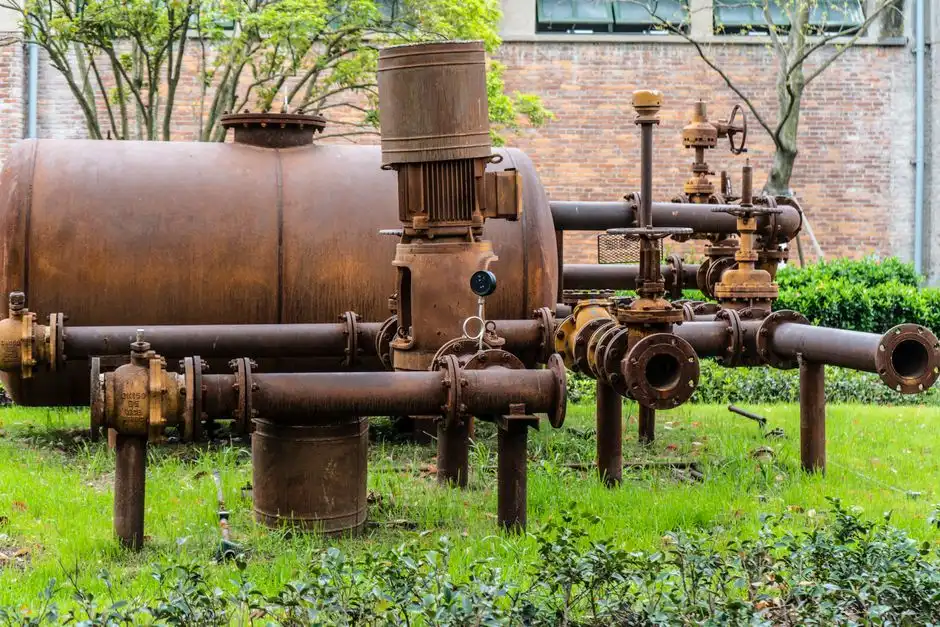
Source segregation is the cheapest insurance a chemical plant can buy. High-strength streams — phenol-bearing condensates, ammoniacal process water, and solvent-laden washwater — should be collected separately and treated upstream of the main equalization basin rather than blended into the bulk flow, where they would balloon the size and cost of the biological stage.
Steam stripping is the workhorse for ammonia and phenol-bearing wastewaters. Per the DOE Task 6.2 study on synfuel gasification effluents, steam stripping reduces phenolics and ammonia to concentrations compatible with biological polishing downstream — and the combined train delivers complete ammonia removal to <1 mg/L as N via nitrification-denitrification. Solvent extraction handles phenolics and acid gases in synfuel and petrochemical streams that would otherwise poison an MBR. Activated carbon adsorption polishes trace organics, TTO components, and color bodies down to the limits in the local TTO schedule. For a deeper look at sizing DAF on oily industrial streams, see this DAF sizing for oily industrial condensate walkthrough, and for an MBR perspective this MBR sizing guide for oily industrial streams gives 2026 design specs.
2026 Compliance and Procurement Checklist for Cleveland Chemical Plants
Use this as the agenda for your next EHS / capital planning meeting. Each step maps to a deliverable your procurement team can act on.
- Pull the current NEORSD IU permit and re-read the self-monitoring schedule, reporting forms, and the local-limit table. Note the wasteload allocation mass-loading ceilings per shift.
- Characterize the influent against both 40 CFR Part 403 categorical standards and NEORSD local limits. Identify the controlling parameter — that is the spec the equipment must hit.
- Run a treatability jar test (DAF, biological) before any CAPEX commitment. Vendor bench-scale tests are not a substitute.
- Specify a PLC-controlled chemical dosing system for pH and coagulant adjustment, automated refrigerated sampling, and a magnetic flow meter at the discharge manhole. Data logging must be 24/7 with NEORSD-accessible records.
- Plan the sludge train. A plate and frame filter press for dewatering gets residuals to 25-35% dry solids for disposal. Budget for chemical and sludge disposal OPEX from day one — this is a recurring line item, not a footnote.
Procurement tip: ask bidders for guaranteed effluent values against your controlling parameter (not generic "treated water" claims), for PLC-controlled chemical dosing system integration, and for a plate and frame filter press for dewatering residuals sized against the sludge load their equipment produces. Require a 12-month warranty with on-site startup support. For background on the broader US municipal pretreatment context, see this reference on US municipal sewage treatment engineering specs.
Frequently Asked Questions
How long does it take to get a NEORSD Significant Industrial User permit?
New SIU permits typically take 90-180 days from the initial application through NEORSD's industrial waste review, depending on whether a slug control plan and baseline monitoring report are required. A 30-day public comment period applies to new categorical industrial users. Start the application at least six months before the planned discharge date.
What effluent quality can a DAF system reliably hit on chemical plant washwater?
A properly sized DAF on chemical plant washwater with reasonable FOG content will deliver oil and grease below 10 mg/L and TSS below 30 mg/L, which meets the typical NEORSD daily-maximum local limits. DAF alone will not remove dissolved organics or ammonia — those require downstream biological treatment or source segregation.
MBR vs. conventional activated sludge for a 50 m³/h chemical plant stream — which is better?
MBR delivers tighter effluent (TSS <5 mg/L, turbidity <1 NTU) at roughly 60% of the footprint of conventional activated sludge, with a longer membrane-replacement cycle (5-8 years) but higher CAPEX. Conventional activated sludge has lower CAPEX and is the better fit when the plant has the footprint and discharge limits allow 20-30 mg/L TSS in the effluent. For high-strength or variable streams in a tight Cleveland site, MBR usually wins on total cost of ownership over 10 years.
What are the sludge disposal requirements for chemical plant pretreatment residuals?
Dewatered sludge from chemical plant pretreatment is typically a non-hazardous industrial waste classified under Ohio Administrative Code 3745-30, but it must be analyzed for metals and TTO before landfill disposal. A plate and frame filter press for dewatering residuals to 25-35% dry solids minimizes hauling volume and disposal cost. Manifests are required for all off-site shipments.
What PFAS monitoring should Cleveland chemical plants expect in 2026?
Per the Ohio EPA PFAS Action Plan carried forward into NEORSD's 2024-2026 enforcement cycle, any SIU that uses fluorinated feedstocks, fluoropolymer processing aids, PFAS-containing surfactants, or chrome plating is required to submit quarterly PFAS analytical results for at least the 29-compound EPA Method 533/537.1 list, with non-detect triggers at the practical quantitation limit. Expect NPDES-driven local PFAS limits to come into force across NEORSD permits by 2027.
Related Equipment
- DAF system for chemical plant pretreatment — specifications, capacity range, and technical data
- PLC-controlled chemical dosing for pH and coagulant adjustment — specifications, capacity range, and technical data
- MBR polishing system for sub-1 μm effluent — specifications, capacity range, and technical data
- lamella clarifier for chemical precipitation — specifications, capacity range, and technical data
- sludge dewatering press for pretreatment residuals — specifications, capacity range, and technical data