The U.S. operates nearly 17,500 municipal sewage treatment plants under EPA NPDES permits. According to ASCE, wastewater and stormwater faced a $69 billion annual funding gap in 2024, with only about 30% of capital needs met. Federal secondary treatment under 40 CFR Part 133 still requires 30-day average BOD5 and TSS ≤30 mg/L with ≥85% removal. Clarifier hydraulic loading commonly spans 0.5–1.5 gpm/ft²; activated sludge BOD removal is typically 85–95%; MBR footprints are often about 50% of conventional plants. CAPEX for 1–10 MGD facilities often ranges from about $1.2M to $15M.
Why U.S. Plants Face Permit Pressure and Aging Assets
U.S. plants must meet tighter NPDES limits on aging networks while capital funding covers only about 30% of wastewater and stormwater needs. ASCE values sewer assets above $1 trillion across nearly 17,500 treatment plants. Collection failures for combined utilities rose from about 2 to 3.3 per 100 miles of pipe over the last decade.
According to ASCE, annual wastewater-plus-stormwater capital needs reached $99 billion in 2024 against a $69 billion gap. Infiltration and inflow dilute influent strength while grit accelerates wear on screens and primary clarifiers. Earlier commentary often cited rising combined-sewer overflow event counts. According to ASCE, combined sewer systems fell from 746 to 738 (2004–2024), and sanitary sewer overflows declined from 0.7 to 0.16 overflows per 100 miles of pipe (2015–2021). Peak wet-weather flows still push cities toward modular high-rate clarification.
Federal Secondary Treatment Standards (40 CFR Part 133) remain the baseline. According to 40 CFR 133.102, 30-day average BOD5 and suspended solids shall not exceed 30 mg/L. Seven-day averages shall not exceed 45 mg/L, and percent removal shall be at least 85%. Effluent pH shall stay within 6.0–9.0 unless listed exceptions apply. Many California and Chesapeake Bay permits tighten phosphorus to ≤0.1 mg/L and total nitrogen below 3 mg/L. Legacy activated sludge plants often cannot meet those nutrient caps without membranes, chemical precipitation, or tertiary filtration.
Engineering Specs for Municipal Sewage Treatment Plants
Municipal engineers size secondary treatment by matching hydraulic loading rates to biological kinetics, MLSS inventory, and sludge settleability. Current practice favors higher MLSS where footprint is scarce, and longer sludge retention times help stabilize nitrification under cold weather and variable loads.
Secondary clarifiers remain a common bottleneck, and standard design primers still cite 0.5–1.5 gpm/ft² surface overflow rates that bulking sludge can collapse during peak flow. Modern DAF pre-treatment for high-TSS influent or lamella clarifiers can operate at 20–40 m/h (8.2–16.4 gpm/ft²). Those rates recover peak capacity inside existing tankage. For membrane bioreactors, flux typically ranges from 12–25 gfd depending on temperature and fouling index, replacing conventional clarifier HLR as the controlling hydraulic metric.
| Parameter | Activated Sludge (CAS) | Membrane Bioreactor (MBR) | DAF (Pre-treatment) |
|---|---|---|---|
| Hydraulic Loading Rate (HLR) | 0.5–1.5 gpm/ft² | 12–25 gfd (Flux) | 8.2–16.4 gpm/ft² |
| BOD Removal Efficiency | 85–95% | 90–98% | 70–85% |
| Effluent TSS | 10–30 mg/L | <1 mg/L | 30–50 mg/L |
| Energy Consumption | 0.3–0.6 kWh/m³ | 0.5–0.8 kWh/m³ | 0.1–0.2 kWh/m³ |
| Sludge Production (lbs TSS/lb BOD) | 0.4–0.6 | 0.2–0.4 | 0.5–0.7 |
| Typical MLSS Concentration | 2,000–4,000 mg/L | 8,000–12,000 mg/L | N/A |
Influent variability drives many design failures. Industrial contributions and seasonal population swings need buffering capacity in the biological reactor. MBR systems decouple sludge retention time from hydraulic retention time. Operators can then hold high biomass that resists shock loads, as covered in this detailed MBR engineering process and efficiency data.
CAPEX and OPEX for 1 MGD, 5 MGD, and 10 MGD Plants
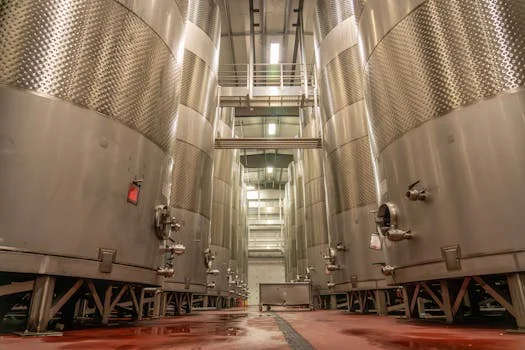
Budgeting for municipal sewage treatment plants in the USA separates capital expenditure from multi-year operating cost. Conventional activated sludge usually offers the lowest CAPEX where land is available, while compact trains trade higher equipment cost for smaller civil works and lower sludge mass.
A 1 MGD conventional activated sludge plant typically costs between $1.2M and $2.0M. An MBR system for the same capacity ranges from $2.5M to $3.5M. The MBR premium is often justified where land is scarce, because an MBR plant may need only about 0.5 acres versus 1.0+ acres for CAS. At 10 MGD, economies of scale narrow the gap, with CAS often costing $8M–$12M and MBR $12M–$15M.
| Plant Capacity | Tech Type | CAPEX Range | OPEX (per kgal) | Primary Cost Driver |
|---|---|---|---|---|
| 1 MGD | CAS | $1.2M – $2.0M | $1.20 – $1.80 | Labor & Sludge Disposal |
| 1 MGD | MBR | $2.5M – $3.5M | $1.80 – $2.50 | Energy & Membrane Replacement |
| 5 MGD | CAS | $5.0M – $7.5M | $0.90 – $1.40 | Aeration Energy |
| 10 MGD | MBR | $12.0M – $15.0M | $1.10 – $1.60 | Membrane Lifecycle Costs |
OPEX is dominated by energy, labor, and chemicals. MBR trains use more power for membrane air scour, yet they produce less sludge and can cut hauling and disposal cost by up to 30%. For smaller communities, cost-optimized package plant solutions for small communities can reduce CAPEX by 20–30% with prefabricated modules that cut on-site civil work. Compact buried trains such as the Underground Package Sewage Treatment Plant (WSZ Series) fit sites where odor control and visual impact limit open tanks.
MBR vs. Activated Sludge vs. DAF for U.S. Municipal Plants
MBR, activated sludge, and DAF selection follows permit limits and site constraints, not a single preferred process. MBR delivers very low effluent TSS and strong pathogen barriers, which supports Title 22 reuse pathways in California and Arizona when the rest of the train is designed accordingly.
Conventional activated sludge remains common where land is cheap and permits stay near 30/30 BOD/TSS. CAS often needs tertiary filtration and chemical phosphorus removal to meet modern nutrient caps. Dissolved air flotation is used as a peak-flow shaver or primary clarifier replacement. Micro-bubbles float solids so DAF units can handle about 10× the solids loading of a gravity clarifier during industrial dumps or storm spikes.
| Feature | Membrane Bioreactor (MBR) | Activated Sludge (CAS) | Dissolved Air Flotation (DAF) |
|---|---|---|---|
| Effluent Quality | Ultra-pure (TSS <1 mg/L) | Standard (TSS <30 mg/L) | Pre-treat (TSS <50 mg/L) |
| Nutrient Removal | Excellent (N <5, P <0.1) | Moderate (Requires Tertiary) | Low (Particulate P only) |
| Footprint | Minimal (50% of CAS) | Large (Requires Clarifiers) | Compact (High-rate) |
| Operational Complexity | High (PLC/Membrane Care) | Medium (Biological Control) | Low to Medium (Chemical) |
| Water Reuse Suitability | Direct Reuse Ready | Requires Post-Filtration | Not Suitable for Reuse |
California phosphorus limits near ≤0.1 mg/L often decide the upgrade path. MBR with enhanced biological phosphorus removal can approach those levels when the membrane barrier captures particulate phosphorus, whereas CAS almost always needs chemical dosing plus sand or cloth filtration. Engineers comparing U.S. and EU permit trajectories can review how Europe’s stricter standards compare to U.S. EPA limits.
How to Select Equipment for U.S. Municipal Plants
Municipal procurement teams reduce non-compliance and overrun risk by locking permit drivers before shopping equipment. The checklist below balances federal secondary standards with state nutrient rules and aging hydraulic bottlenecks.
- Step 1: Define effluent limits. Confirm federal secondary standards versus state nutrient permits. Ammonia <1.0 mg/L or phosphorus <0.1 mg/L usually forces nitrification reliability, chemical P removal, or membrane solids separation.
- Step 2: Quantify peak flow and I&I. Size high-rate clarification or equalization for the 2-hour peak wet-weather rate, not only average daily flow.
- Step 3: Match footprint and civil cost. If land is under about 0.5 acres per MGD of CAS capacity, evaluate MBR or package trains before expanding clarifier area.
- Step 4: Price OPEX over 15–20 years. Include aeration kWh, membrane replacement intervals, polymer use, and sludge haul distance in present-value comparisons.
- Step 5: Specify redundancy. Require N+1 pumps, dual blowers, and spare membrane cassettes or DAF recycle pumps for critical paths.
- Step 6: Verify chemical storage and dosing. Align coagulant, polymer, and alkalinity systems with peak phosphorus and pH control loads before award.
- Step 7: Prefer factory-tested modules for small plants. Prefabricated or underground package units cut field welding and shorten commissioning windows.
What chemical dosing equipment suits municipal plants?
Chemical dosing equipment for municipal plants should meter coagulant, polymer, and alkalinity with ±2–5% accuracy across the full diurnal flow range.Plants targeting phosphorus ≤0.1 mg/L typically need continuous alum or ferric dosing with automatic pH trim. Polymer systems for sludge thickening need aging tanks and dilution water control.
Who supplies equipment for large municipal plants?
Equipment suppliers for large municipal plants should demonstrate NPDES-aligned performance data, U.S. spare-parts stock, and references at similar MGD capacity. Evaluate whether the vendor covers headworks, clarification, biological reactors, and sludge handling as an integrated package or only a single unit process. For decentralized satellites or small communities tied to a regional utility, an Underground Package Sewage Treatment Plant (WSZ Series) can serve flows that do not justify a full custom civil plant.
Who this is for: municipal engineers, EPC contractors, and procurement managers sizing 1–10 MGD upgrades under EPA secondary or state nutrient permits. Who should look elsewhere: industrial dischargers seeking only pretreatment without municipal secondary biology, or buyers needing drinking-water RO trains. Next step: assemble influent data, peak wet-weather hydrographs, and permit limits, then request a process train and CAPEX/OPEX comparison matched to those numbers.
Frequently Asked Questions
What are EPA secondary treatment limits for municipal plants?
According to 40 CFR 133.102, secondary treatment requires 30-day average BOD5 and suspended solids ≤30 mg/L. Seven-day averages shall not exceed 45 mg/L, with at least 85% removal for both parameters. Effluent pH must stay between 6.0 and 9.0 unless exceptions apply. Many state permits add ammonia, total nitrogen, and phosphorus limits above this federal floor.
How much does a 1 MGD municipal sewage plant cost?
A 1 MGD conventional activated sludge plant typically costs $1.2M–$2.0M in CAPEX. An MBR train for the same capacity often ranges $2.5M–$3.5M. OPEX is commonly about $1.20–$1.80 per kgal for CAS and $1.80–$2.50 per kgal for MBR. Drivers include labor, energy, sludge disposal, and membrane replacement.
When should a city choose MBR over activated sludge?
Choose MBR when land is scarce, reuse or very low TSS is required, or nutrient permits demand reliable solids separation. CAS remains cost-effective where land is available and permits stay near 30/30 BOD/TSS. Compare 15–20 year OPEX, not CAPEX alone, before selecting.
What chemical dosing is needed for low phosphorus limits?
Phosphorus limits near ≤0.1 mg/L usually need continuous metal-salt dosing plus polymer for floc capture. Automatic pH and residual monitoring should accompany the feed system. Biological phosphorus removal can cut chemical use, but most CAS plants still keep chemical backup for wet-weather and industrial spikes.
How do package plants fit municipal programs?
Package and underground integrated plants suit small communities, satellite sewersheds, and interim capacity while a regional plant is upgraded. Prefabricated modules can cut CAPEX by 20–30% versus full field-built civil works when flows are within packaged hydraulic ranges and permits match the process train.