Palm oil mill effluent (POME) is a high-strength wastewater with COD up to 50,000 mg/L and BOD up to 25,000 mg/L at acidic pH 4.0–5.0. Typical trains combine anaerobic digestion (80–90% COD removal at HRT 20–30 days) with aerobic polishing and tertiary DAF or MBR to reach discharge limits.Treatment Opex commonly ranges from $0.50–$2.00/m³ depending on scale and technology.
Why POME Treatment is a Critical Challenge for Palm Oil Mills
POME treatment must cut COD near 45,000–55,000 mg/L and BOD near 18,000–25,000 mg/L down to regional discharge limits. The usual train is anaerobic digestion, then aerobic polishing, then tertiary FOG or membrane treatment. Anaerobic stages alone remove about 80–90% COD at HRT 20–30 days and still leave BOD too high for lawful discharge.
A Malaysian palm oil mill was fined $1.2M in 2024 for POME discharge violations where BOD levels reached 1,200 mg/L against a regulatory limit of 200 mg/L. This incident shows the legal and financial risk of weak wastewater control. POME is a viscous liquid from sterilization and clarification of fresh fruit bunches (FFB). According to 2023 Malaysian Palm Oil Board (MPOB) data, typical POME is 95–96% water, 4–5% total solids, and 0.6–0.7% oil and grease, with COD peaking near 50,000 mg/L. MPOB (2025) likewise reports about 0.65 t POME per t FFB processed and roughly 65.88 million t of POME generated in Malaysia in 2024.
Open lagoons release methane—a greenhouse gas long cited as about 21 times more potent than carbon dioxide on a 100-year basis—and hydrogen sulfide toxic to aquatic life. Regulatory pressure continues to rise. Earlier guidance used a 200 mg/L BOD framing for Malaysia toward 2025 and described a 20 mg/L BOD phase-in by 2030 for sensitive catchments. According to MPOB (2025), DOE limits under the Crude Palm Oil prescribed-premises rules set BOD at 100 mg/L for discharge (1984 thereafter). Sensitive areas use Standard A at 20 mg/L BOD and Standard B at 50 mg/L BOD. Indonesia’s Ministry of Environment Regulation 5/2014 remains the national wastewater quality instrument for palm oil mills (UNEP Law and Environment Assistance Platform). The European Union’s Industrial Emissions Directive (2010/75/EU) effectively pushes new mill designs toward zero liquid discharge (ZLD) where reuse is required.
Weak treatment also raises site remediation cost and downstream water treatment load. Global supply-chain rules mean mills that miss sustainability thresholds risk export bans or exclusion from buyers that require RSPO compliance.
Palm Oil Mill Effluent POME Treatment Methods and Benchmarks
Anaerobic digestion achieves 80–90% COD removal with a hydraulic retention time (HRT) of 20–30 days, making it the primary stage for high-strength load cut. Anaerobic microbes break down organics and yield 0.35–0.50 m³ of biogas per kilogram of COD removed. Mills that want energy recovery must still balance aerobic vs. anaerobic treatment for POME; anaerobic stages handle bulk COD but cannot meet discharge standards alone.
Aerobic polishing targets residual BOD at 90–95% removal, typically at HRT 5–10 days and 0.8–1.2 kWh/m³ for aeration. Where land is scarce or TSS and oil and grease limits are tight, a Dissolved Air Flotation (DAF) System offers a compact FOG and solids cut. DAF units run at hydraulic loading rates of 5–10 m/h and can remove 95–98% of fats, oils, and grease (FOG).
Membrane bioreactors (MBR) are used when mills target BOD below 10 mg/L for reuse. An Integrated MBR system for POME compliance uses 0.1 μm filtration for high-quality effluent. Pond systems remain common and low-complexity, yet they need about 1 hectare per 10,000 m³/day and often hold only 70–80% COD removal in peak crop periods.
| Treatment Method | COD/BOD Removal Rate | HRT (Days) | Energy Consumption | Key Engineering Spec |
|---|---|---|---|---|
| Anaerobic Digestion | 80-90% COD | 20-30 | Net Positive (Biogas) | 0.35–0.50 m³ biogas/kg COD |
| Aerobic Polishing | 90-95% BOD | 5-10 | 0.8–1.2 kWh/m³ | MLSS 3,000–5,000 mg/L |
| Dissolved Air Flotation | 90-95% TSS | <0.1 | 0.5–1.0 kWh/m³ | Recycle ratio 20-30% |
| MBR System | 99%+ BOD/COD | 0.5-1.5 | 0.6–1.0 kWh/m³ | 0.1 μm pore size |
| Pond Systems | 70-80% COD | 45-60 | Minimal | Land req: 1 ha/10k m³ |
Compliance Standards for POME Discharge by Region

Malaysia’s Environmental Quality Act 1974 framework, via the Crude Palm Oil prescribed-premises rules, has long set a national BOD discharge limit of 100 mg/L (1984 thereafter). Earlier summaries used a 200 mg/L BOD framing for 2025 designs and a proposed 20 mg/L BOD path by 2030. MPOB (2025) states final discharge at 100 ppm BOD, reduced to 20 ppm in certain sensitive areas in Sabah, Sarawak, and Peninsular Malaysia, with Standard A/B BOD values of 20/50 mg/L. Engineers should size polishing capacity for the 20 mg/L BOD case where catchment rules apply, without rebuilding the whole plant later. Indonesia follows Regulation 5/2014, with the article table values of BOD 100 mg/L, COD 300 mg/L, and TSS 200 mg/L still used here as the design baseline pending site permit review.
Export-oriented mills that face EU Industrial Emissions Directive (2010/75/EU) expectations often move toward ZLD or near-ZLD reuse. In the United States, the EPA baseline of 30 mg/L for both BOD and TSS applies to many industrial discharges to public waterways. Thailand and Nigeria have tightened COD and BOD thresholds as well, so multi-country groups should design to the strictest mill in the portfolio.
| Region | BOD Limit (mg/L) | COD Limit (mg/L) | TSS Limit (mg/L) | Regulation Detail |
|---|---|---|---|---|
| Malaysia (2025) | 200 | 500 | 400 | EQA 1974 |
| Malaysia (2030) | 20 | 100 | 50 | Proposed DOE Standard |
| Indonesia | 100 | 300 | 200 | Reg 5/2014 |
| Thailand | 60 | 250 | 50 | IE Standards 2020 |
| Nigeria | 50 | 250 | 30 | NES 2017 |
| USA (EPA) | 30 | N/A | 30 | General Discharge |
Table cells above retain the original published figures for continuity. For Malaysia design decisions, use the MPOB (2025) DOE-cited values—BOD 100 mg/L nationally and 20 mg/L in sensitive areas—as the current compliance target, and treat the 200 mg/L row as historical framing only.
Equipment Selection Framework: DAF vs. MBR vs. Anaerobic Digesters for POME
Anaerobic digesters are typically reserved for mills with flow rates exceeding 50,000 m³/day because of high capital cost and the chance of biogas revenue. Plant managers must weigh land area, effluent quality, and operating skill. Anaerobic digesters may need 0.5–1.0 hectare, while a DAF system for POME treatment can treat similar FOG loads in 50–200 m² when land is constrained.
Choosing an Integrated MBR system for POME compliance is usually driven by reuse targets or BOD below 10 mg/L. MBR combines biology with membrane separation and removes secondary clarifiers, but needs monthly cleaning and periodic module replacement. DAF remains stronger for high suspended solids and residual oil ahead of biology, and it protects downstream MBR or aerobic tanks from fouling.
| Feature | Anaerobic Digester | DAF System | MBR System |
|---|---|---|---|
| Capex Range | $1.2M – $5.0M | $200K – $1.0M | $500K – $2.0M |
| Opex ($/m³) | $0.20 – $0.50 | $0.30 – $0.80 | $0.50 – $1.50 |
| Footprint | 0.5 – 1.0 ha | 50 – 200 m² | 20 – 100 m² |
| Maintenance | Weekly sludge removal | Daily skimming | Monthly cleaning |
| Energy Balance | Net Positive | 0.5 – 1.0 kWh/m³ | 0.6 – 1.0 kWh/m³ |
For a detailed breakdown of how these technologies compare to older separation methods, see our guide on DAF vs. API separators for industrial wastewater.
What UK trade effluent consent requires?
UK trade effluent consent sets site-specific limits for BOD, COD, suspended solids, oil and grease, and flow before discharge to a public sewer. Palm oil processors or refiners that discharge to UK sewers must match those consent numbers, not only SE Asia mill standards. Consent conditions often add sampling frequency, pH windows, and temperature caps. Design the polishing train to the consent’s tightest parameter so export or UK offtake sites avoid exceedance charges.
How do MBR wastewater treatment systems compare?
MBR wastewater treatment systems typically reach BOD below 10 mg/L at Opex of $0.50–$1.50/m³ and footprints of 20–100 m². That profile suits land-short mills that need reuse-quality water. Compared with ponds or DAF-only trains, MBR raises membrane cleaning cost but removes clarifier area. Mills in Southeast Asia and similar climates should hold flux near 15–20 LMH and keep TMP stable under high FOG, with upstream oil removal before the membranes.
Cost Breakdown and ROI for POME Treatment Systems
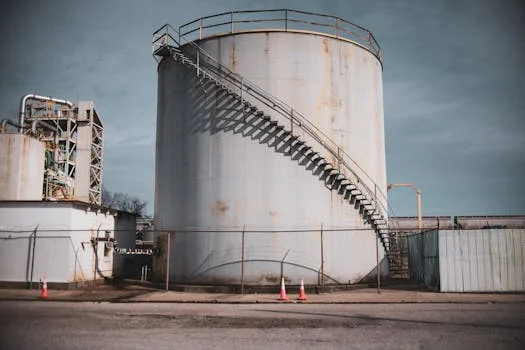
Capital cost for POME plants is dominated by equipment, often 60% to 80% of project spend by technology. Anaerobic digesters carry large civil works (about 20%) and installation (about 20%) for tanks and gas collection. MBR trains are equipment-heavy (about 80%) because membrane modules and controls dominate the bill of materials.
Opex is driven by energy, labor, and chemicals. A PLC-controlled chemical dosing for POME coagulation can cut chemical waste, which often is 20–25% of Opex in DAF and MBR plants. ROI usually comes from biogas at about $0.10–$0.20/kWh, avoided fines of $50K–$500K/year, and water reuse savings of $0.50–$2.00/m³. A 30,000 m³/day mill case in Indonesia reported a 3.5-year payback after anaerobic digestion with DAF polishing.
| System Type | Major Capex Driver | Major Opex Driver | Payback Period |
|---|---|---|---|
| Anaerobic | Equipment (60%) | Energy (40%) | 3–5 Years |
| DAF | Equipment (70%) | Chemicals (25%) | 2–4 Years |
| MBR | Equipment (80%) | Membrane replacement (20%) | 4–6 Years |
Common POME Treatment Failures and How to Troubleshoot Them
Anaerobic digester foaming is mainly caused by high FOG and is reduced by cutting organic loading or dosing antifoam. If biogas output falls, check pH first; values below 6.8 signal acidification and need lime or sodium bicarbonate for alkalinity. Stable pretreatment matters: a PLC-controlled chemical dosing for POME coagulation keeps digester influent more consistent.
DAF failures often show as poor float or high effluent TSS from a low air-to-solids ratio. Keep the recycle ratio between 20% and 30%. If TSS stays high at correct aeration, the unit may be hydraulically overloaded and flow should be cut. For MBR, fouling appears as rising transmembrane pressure (TMP). Raise scouring air and hold flux at 15–20 LMH. For membrane mechanics, see the MBR process and efficiency for POME treatment guide.
Selection checklist before you buy:
- Confirm the governing BOD/COD/TSS limit for each mill catchment, including sensitive-area 20 mg/L BOD cases in Malaysia.
- Measure raw FOG and TSS peaks during peak crop, not only monthly averages.
- Decide whether biogas revenue offsets digester Capex at your actual COD load.
- Match footprint: ponds need ~1 ha/10,000 m³/day; DAF needs 50–200 m²; MBR needs 20–100 m².
- Budget chemicals (20–25% of Opex on DAF/MBR) and membrane replacement on a 4–6 year payback case.
- Require upstream oil removal before MBR if FOG routinely exceeds a few hundred mg/L.
- Document sampling points that match permit or buyer audit rules.
This guide is for mill engineers, EPC contractors, and procurement teams sizing anaerobic, DAF, or MBR trains for palm oil effluent. Groups seeking only municipal sewage designs, or sites with no oily high-COD stream, should use a different process basis. If you need a duty-based equipment shortlist for FOG removal or polishing, HydroPure can map DAF and MBR options to your flow and permit limits.
Frequently Asked Questions

What is the best solution for palm oil mill effluent?
The best train depends on flow and the discharge limit. Large mills above about 50,000 m³/day often use anaerobic digestion plus DAF for roughly 95%+ COD removal at lower Opex. Smaller mills below about 10,000 m³/day, or sites needing BOD below 20 mg/L, usually need MBR polishing. Always size a tertiary FOG or membrane step to the strictest permit at the site.
What methods treat POME effluent?
Common methods include anaerobic digestion at 80–90% COD removal and HRT 20–30 days. Aerobic polishing removes 90–95% BOD at HRT 5–10 days. Dissolved air flotation removes 90–95% TSS and FOG. Membrane bioreactors often reach BOD below 10 mg/L. Coagulation cuts about 50–60% COD, while ponds remove 70–80% COD at HRT 45–60 days. Most compliant mills combine at least two stages.
What is the composition of palm oil mill effluent?
POME typically contains 95–96% water, 4–5% total solids, 0.6–0.7% oil and grease, about 50,000 mg/L COD, 25,000 mg/L BOD, 18,000 mg/L TSS, and about 6,000 mg/L total nitrogen. The pH is acidic, usually 4.0 to 5.0. Sterilizer condensate and clarification wastewater dominate the organic load.
How much does POME treatment cost per cubic meter?
Opex usually ranges from $0.50–$2.00/m³ by scale and technology mix. Anaerobic digestion often costs $0.20–$0.50/m³, DAF $0.30–$0.80/m³, and MBR $0.50–$1.50/m³ under continuous mill duty. Larger continuous systems can cut unit cost by about 30–50% versus small batch plants when organic loading stays steady through the crop cycle.
Can treated POME be reused?
Yes. Treated POME can serve irrigation, boiler makeup after further polishing, or process water when quality allows. MBR effluent often meets reuse targets below 10 mg/L BOD. Anaerobic digestion plus DAF can meet land-application and irrigation standards where local rules permit nutrient reuse.