Municipal Sewage Treatment Plants in France: 2026 Specs, Compliance and Equipment Costs
Municipal sewage treatment plants in France numbered 22,827 collective facilities in 2023, with 106 million p.e. of installed capacity and a treated load of 78 million p.e. (SDES). Earlier published tallies cited 3,334 plants and 74 million p.e.; those older snapshots no longer match the national inventory. The Urban Wastewater Treatment Directive (UWWTD, 91/271/EEC) requires more stringent treatment than secondary for agglomerations above 10,000 p.e. discharging to sensitive areas, and Article 5(4) allows an area-wide alternative of at least 75% nitrogen and 75% phosphorus load reduction. The NOTRe Act (Loi n° 2015-991) set the transfer of sanitation competence to inter-municipal bodies for 1 January 2020.
French Municipal WWTP Landscape: 2023 Data and Regulatory Deadlines
According to the French statistical service SDES (2023 data published 2026), France operates 22,827 municipal wastewater treatment plants treating about 7 billion m³ of wastewater each year. Earlier guidance used 3,334 plants and about 14.81 million m³/d; the 2023 inventory is the figure to use for capacity planning. Of stations above 2,000 p.e., 97% apply biological or physico-chemical treatment and 80% apply more rigorous treatment stages.
A regulatory shift came with the NOTRe Act (Loi n° 2015-991 du 7 août 2015), which set the transfer of sanitation competence from individual municipalities to inter-municipal organizations for 1 January 2020. That centralization concentrates procurement for underground package WWTPs for rural or space-constrained sites in France and compliance monitoring at EPCI level. Procurement managers should confirm the inter-municipal owner before tendering.
UWWTD (Directive 91/271/EEC) Article 5 requires more stringent treatment for discharges to sensitive areas from agglomerations above 10,000 p.e. Plant-level Annex I Table 2 limits apply unless the Member State proves at least 75% reduction of the overall nitrogen and phosphorus load entering all plants in that sensitive area (Art. 5(4)). Less stringent coastal options under Article 6 remain limited to defined less-sensitive areas with supporting studies.
| Parameter | 2022 Data / Regulatory Requirement | Impact on WWTPs in France |
|---|---|---|
| Total WWTPs in France | 3,334 plants | Extensive infrastructure for urban wastewater treatment |
| Wastewater Generated | 74 million p.e. daily | Significant treatment capacity required nationally |
| Plants with Biological + N/P Removal | 2,875 plants (86%) | High adoption of advanced treatment for nutrient removal |
| NOTRe Act Deadline | January 1, 2020 (Sanitation Competence Transfer) | Centralized procurement and management by inter-municipal organizations |
| UWWTD Nitrogen Removal | 75% in sensitive areas (>10,000 p.e.) | Mandates advanced biological treatment with nitrogen removal for compliance |
Read the table rows as historical benchmarks still used in many tender briefs. Pair them with the 2023 SDES counts above when you size national or regional programmes.
Engineering Specs for French Municipal WWTPs: Influent, Effluent, and Process Parameters
Typical influent for French urban WWTPs matches mixed municipal and light industrial sewage. Raw COD commonly runs 500–800 mg/L, BOD 200–400 mg/L, and TSS 200–350 mg/L (SUEZ Degrémont benchmarks). Total nitrogen usually sits at 40–70 mg/L and total phosphorus at 5–10 mg/L, so most designs need biological nutrient removal.
UWWTD Annex I Table 1 sets general secondary limits at COD ≤125 mg/L, BOD ≤25 mg/L, and TSS ≤35 mg/L. For sensitive eutrophic areas, Table 2 sets TN at 15 mg/L (10,000–100,000 p.e.) or 10 mg/L (above 100,000 p.e.), and TP at 2 mg/L or 1 mg/L for the same bands. Earlier project briefs often quoted TN ≤10 mg/L and TP ≤1 mg/L as a single sensitive-area pair; use the p.e. band in Table 2 for permit writing. Those limits drive MBR systems for compact, high-efficiency municipal sewage treatment in France and tertiary polishing where local decrees go lower.
Secondary clarifiers in conventional activated sludge typically run at 0.5–1.5 m³/m²·h. Lamella settlers can take 20–40 m/h and cut footprint when land is scarce. Most plants we size for French communes under 20,000 p.e. sit toward the lower end of those ranges to keep sludge blankets stable.
Conventional activated sludge usually consumes 0.3–0.5 kWh/m³. MBR systems typically need 0.5–0.8 kWh/m³ (2025 design benchmarks) because of membrane scouring and higher aeration intensity. Blower turndown and efficient pumps remain the fastest OPEX levers.
| Parameter | Typical Influent (Urban WWTPs in France) | UWWTD Effluent Limits (General / Sensitive Areas) |
|---|---|---|
| COD (Chemical Oxygen Demand) | 500–800 mg/L | ≤125 mg/L (General) |
| BOD (Biochemical Oxygen Demand) | 200–400 mg/L | ≤25 mg/L (General) |
| TSS (Total Suspended Solids) | 200–350 mg/L | ≤35 mg/L (General) |
| TN (Total Nitrogen) | 40–70 mg/L | ≤10 mg/L (Sensitive Areas) |
| TP (Total Phosphorus) | 5–10 mg/L | ≤1 mg/L (Sensitive Areas) |
| Hydraulic Loading Rate (Secondary Clarifiers) | N/A | 0.5–1.5 m³/m²·h |
| Hydraulic Loading Rate (Lamella Settlers) | N/A | 20–40 m/h |
| Energy Consumption (Conventional AS) | N/A | 0.3–0.5 kWh/m³ |
| Energy Consumption (MBR Systems) | N/A | 0.5–0.8 kWh/m³ |
Treatment Technologies Compared: MBR vs. Conventional vs. Tertiary Systems for French WWTPs
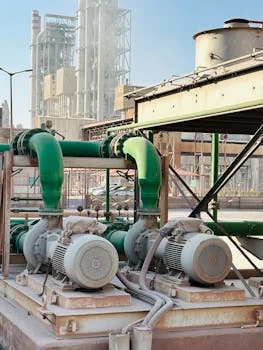
Membrane bioreactor (MBR) trains often reach COD ≤50 mg/L, TN ≤3 mg/L, and TP ≤0.5 mg/L, which suits reuse or tight local permits. Eliminating secondary clarifiers and running higher MLSS typically cuts footprint by about 60% versus conventional activated sludge. Membrane CAPEX often sits about 30% above a conventional baseline, while small-to-medium sites can see about 20% lower OPEX from less sludge and higher automation.
Conventional activated sludge remains the baseline for many French municipal works, with CAPEX near €3M for a 10,000 p.e. plant. It meets Table 1 secondary limits and can hit TN ≤10 mg/L where the process and volume allow, but it needs more land and often a tertiary stage for very low nutrients. Operational simplicity still favors it where land is available.
Tertiary sand filtration plus UV, or on-site ClO₂ generators for tertiary disinfection in French WWTPs, can deliver reuse-quality effluent near COD ≤30 mg/L. That stage typically adds 15–20% CAPEX to a conventional plant and supports irrigation or industrial non-potable reuse. The La Morée WWTP (SUEZ) combines biological treatment with tertiary filtration to hold sensitive-area targets (TN ≤10 mg/L, TP ≤1 mg/L).
| Feature | MBR Systems | Conventional Activated Sludge | Tertiary Treatment (e.g., Sand Filter + UV) |
|---|---|---|---|
| Typical Effluent Quality | COD ≤50 mg/L, TN ≤3 mg/L, TP ≤0.5 mg/L | COD ≤125 mg/L, TN ≤10 mg/L | COD ≤30 mg/L (reuse quality) |
| Footprint Reduction | ~60% smaller | Standard, larger footprint | Additional footprint (15-20% extra) |
| CAPEX (Relative) | 30% higher than conventional | Baseline (€3M for 10,000 p.e.) | 15–20% higher than conventional |
| OPEX (Relative) | 20% lower for small sites (due to automation, less sludge) | Standard (€0.20–€0.40/m³) | Slightly higher (energy for pumps, UV, chemical for ClO₂) |
| Key Advantage | High effluent quality, small footprint, modularity | Lower initial cost, robust, proven technology | Water reuse potential, very high effluent quality |
| Disadvantage | Higher energy consumption, membrane fouling potential | Large footprint, requires secondary clarifiers | Adds cost and complexity to existing systems |
Compliance Checklist for French Municipal WWTPs: UWWTD, NOTRe Act, and Local Regulations
UWWTD compliance for French municipal plants starts with the correct discharge class and p.e. band. Agglomerations above 10,000 p.e. discharging to sensitive areas need more stringent treatment than secondary; the 75% nitrogen and phosphorus load-reduction path is an area-wide alternative under Article 5(4), not a stand-alone plant slogan. Classify the receiving water and p.e. before freezing process design.
The NOTRe Act moved sanitation competence to inter-municipal organizations with a 1 January 2020 statutory date. Budgets, tenders, and long-term asset plans now sit with those EPCI bodies rather than single communes. Confirm the contracting authority early in the bid cycle.
Agences de l'Eau often set local phosphorus limits tighter than UWWTD Table 2, sometimes down to ≤0.5 mg/L in sensitive catchments. Build those agency rules into the process guarantee before ordering equipment.
French decree 2015-1788 calls for continuous online monitoring of COD, TSS, and flow, plus quarterly laboratory checks for TN and TP. Sensor redundancy and auditable data logs are what inspectors ask for first during compliance reviews.
What Does a Municipal Wastewater Treatment Plant Cost in France?
CAPEX for a 10,000 p.e. municipal WWTP in France typically runs about €3 million for conventional activated sludge, about €4 million with tertiary filtration and disinfection, and about €5 million for MBR systems for compact, high-efficiency municipal sewage treatment in France (2025 benchmarks). Those figures cover process equipment and civil works at a mid-range site; soft costs and site remediation sit outside them.
Conventional OPEX usually falls between €0.20–€0.40/m³. MBR OPEX often lands at €0.25–€0.50/m³, driven by aeration energy and membrane maintenance. High-efficiency sedimentation for compact WWTP designs and blower controls remain the usual OPEX cutters on both trains.
MBR payback often falls in a 5–7 year window where land savings, lower sludge haulage, and reuse sales matter. Tertiary irrigation reuse can pay back in 3–5 years when it displaces purchased fresh water. Water-stressed basins see those returns first.
Agences de l'Eau grants can cover up to 50% of CAPEX on compliance-driven upgrades. Larger schemes may also tap EU Cohesion Fund support when they align with European water objectives. Strong process justification shortens grant review cycles.
| Technology Type | Estimated CAPEX (10,000 p.e. WWTP) | Estimated OPEX Range (€/m³) | Primary ROI Drivers |
|---|---|---|---|
| Conventional Activated Sludge | €3M | €0.20–€0.40 | Lower initial investment, proven reliability |
| Tertiary Treatment (e.g., Sand Filtration + UV) | €4M (15–20% higher than conventional) | €0.22–€0.45 | Water reuse for irrigation, improved discharge quality |
| MBR Systems | €5M (30% higher than conventional) | €0.25–€0.50 | Reduced footprint, superior effluent quality, lower sludge volume, potential for water reuse |
How to Select Equipment Suppliers for Municipal Facilities in France
Supplier selection for French municipal facilities starts with proven UWWTD and NOTRe project delivery. Ask for effluent guarantees tied to Table 1 and Table 2 limits, nutrient-removal references, and EPCI contract experience. Operators such as SUEZ and France Environment illustrate the compliance bar buyers expect on regulated sites.
Local 24/7 service inside France is non-negotiable for MBR and other high-automation trains. Spare-parts stock and French-speaking technicians cut downtime risk when a membrane skid or blower fails overnight.
Match technology to land and influent. MBR systems for compact, high-efficiency municipal sewage treatment in France fit constrained urban plots; conventional activated sludge fits open sites. DAF systems for pre-treatment in municipal WWTPs help when FOG or industrial peaks enter the sewer.
Demand itemized CAPEX and OPEX covering equipment, installation, energy, chemicals, labor, and membrane replacements. Opaque spare-parts pricing is the usual source of year-three budget overruns on French WWTP contracts.
Request references from comparable French plants, including outcomes at sites such as La Morée for SUEZ. Verify on-time delivery, permit compliance, and who still holds the service contract.
Engineers sizing MBR retrofits for French plants should also review the industrial wastewater disposal and sanitation in France guide for adjacent pre-treatment and reuse case data that often overlaps with municipal tenders.
Who This Guide Is For and Next Steps
This guide serves procurement managers and plant engineers at inter-municipal bodies, EPC contractors tendering French WWTP upgrades, and consultants specifying equipment for sensitive-area discharges. Look elsewhere if you are scoping a single rural hamlet under 2,000 p.e. with no sensitive-area designation or a purely industrial effluent outside the UWWTD municipal envelope.
Use this pre-tender filter before requesting proposals: confirm UWWTD discharge zone and p.e. band; verify the NOTRe inter-municipal owner and budget cycle; match influent COD/BOD/TN/TP to a baseline technology; demand itemized CAPEX and OPEX; require French-language references and 24/7 service coverage. For a sized cost estimate on your flow and discharge class, send influent data through the inquiry form.
Request a sized CAPEX/OPEX quotation for your French municipal WWTP project.
Frequently Asked Questions

What are the effluent limits for municipal WWTPs in France?
UWWTD Table 1 sets general secondary limits at COD ≤125 mg/L, BOD ≤25 mg/L, and TSS ≤35 mg/L. For sensitive eutrophic areas, Table 2 sets TN at 15 mg/L (10,000–100,000 p.e.) or 10 mg/L (above 100,000 p.e.), and TP at 2 mg/L or 1 mg/L for the same bands. Local Agence de l'Eau rules can go tighter, especially on phosphorus.
How much does a 10,000 p.e. WWTP cost in France?
CAPEX for a 10,000 p.e. plant in France typically runs about €3 million for conventional activated sludge, about €4 million with tertiary treatment, and about €5 million for MBR (2025 benchmarks). OPEX usually spans €0.20–€0.50/m³ depending on energy use, chemicals, and membrane maintenance. Soft costs and site works sit outside those process figures.
What is the NOTRe Act, and how does it affect WWTP procurement?
The NOTRe Act (Loi n° 2015-991 du 7 août 2015) set the transfer of sanitation competence from individual municipalities to inter-municipal organizations for 1 January 2020. Procurement, budgets, and long-term planning for municipal plants now sit with those EPCI bodies. Confirm the contracting authority before you issue or answer a tender.
MBR vs. conventional WWTP: Which is better for urban sites in France?
MBR usually wins on constrained urban sites because footprint can drop by about 60% and effluent can reach TN ≤3 mg/L with reuse potential. Conventional activated sludge keeps lower initial CAPEX near €3M for 10,000 p.e. but needs more land and often tertiary polishing for tight nutrient permits. Choose on land price, discharge class, and staffing model.
Are there subsidies for WWTP upgrades in France?
Yes. Agences de l'Eau grants can cover up to 50% of CAPEX on compliance-driven upgrades. Larger infrastructure schemes may also access EU Cohesion Fund support when they align with European water objectives. Detailed process justification and EPCI sponsorship speed funding decisions.