A tube settler clarifier is an inclined-tube sedimentation unit that raises effective settling area by 3–5× and cuts footprint by up to 70%. At influent turbidity of 50–500 NTU it delivers 92–97% TSS removal (per EPA 2024 benchmarks). Water moves through 60° PVC or PP tubes spaced 50–80 mm, so particles settle on the walls and slide to the hopper. Hydraulic retention falls from 2–4 hours to 30–60 minutes in this clarifier data efficiency explained selection settler review.
The guide covers specs, plant results, and sizing for food, pulp and paper, and municipal flows. Target limits include China GB 8978-1996 (<70 mg/L TSS) and EU Directive 91/271/EEC (<35 mg/L).
What is a tube settler clarifier?
A tube settler clarifier packs inclined PVC or PP tubes into a sedimentation tank so particles travel only 50–100 mm before capture. Typical modules use a 60° angle, 50–80 mm spacing, and hydraulic loading of 20–40 m/h. Plants report 92–97% TSS removal, footprint cuts near 70%, and retention of 30–60 minutes versus 2–4 hours in conventional clarifiers.
Conventional clarifiers need 2–4 hours of hydraulic retention time to reach 80–90% TSS removal (per EPA 2023 data). For a 100 m³/h industrial flow, a circular tank often needs about 100 m² of footprint. With 2025 civil costs of $50–$150/m², land and concrete alone can stall a brownfield upgrade. Gravity settling over 1.5–3 m depth is slow and sensitive to thermal currents and surges.
Many operators raise coagulant and flocculant dose to compensate. Chemical OPEX for conventional systems often runs $0.10–$0.30/m³, which also increases sludge volume. A textile plant in Bangladesh ran a 4-hour HRT clarifier yet only cut TSS from 120 mg/L to 85 mg/L, missing a 70 mg/L local limit without tertiary filtration. Adding tanks for growth is rarely feasible on tight urban sites, which pushes plants toward high-rate settlers.
How Tube Settler Clarifiers Work: Engineering Mechanics
Shallow-depth sedimentation shortens the vertical travel path from 1.5–3 meters to 50–100 mm. Stacked 60° tubes create parallel channels. Solids settle on the tube wall, gain mass, then slide down against the upflow into the sludge hopper.
Performance follows Stokes’ Law. Large area in a small volume keeps the Reynolds number below 500, so flow stays laminar and settled floc is less likely to re-suspend. Hydraulic loading rates of 20–40 m/h far exceed the 1–2 m/h typical of basic gravity settlers.
| Engineering Parameter | Standard Specification | Impact on Performance |
|---|---|---|
| Tube Angle | 60° (Fixed) | Optimal balance between particle capture and sludge self-cleaning. |
| Tube Spacing/Opening | 50 mm – 80 mm | Prevents clogging while maximizing effective settling area. |
| Wall Thickness | 1.0 mm – 2.0 mm | Ensures structural integrity under hydraulic pressure and sludge weight. |
| Material | PVC / PP / HDPE | Chemical resistance and temperature tolerance (up to 90°C for HDPE). |
| Hydraulic Loading Rate | 20 – 40 m/h | Allows for 10x higher flow through the same footprint vs. conventional. |
Influent first passes a flocculation zone where automated chemical dosing for optimal flocculation builds larger flocs. Water then rises through the tube modules. Hexagonal or V-shaped geometry raises wall collisions. Clarified water leaves over V-notch weirs while sludge thickens in a conical hopper.
Tube Settler vs. Plate Settler vs. Conventional Clarifier: Performance Comparison
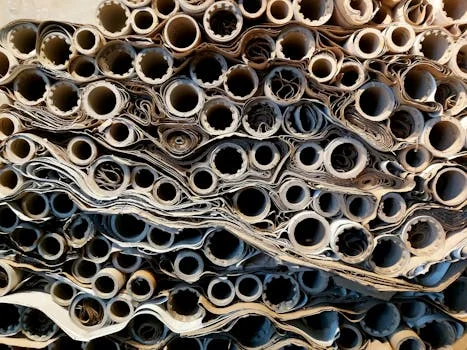
Technology choice is a trade-off among efficiency, footprint, and capital cost. Plate settlers (lamella plates) can match high removal but often cost more because of stainless or heavy plastic plates. Tube settlers sit in the middle: similar efficiency, lower price, and easier retrofit into circular tanks.
| Parameter | Tube Settler | Plate Settler | Conventional Clarifier |
|---|---|---|---|
| TSS Removal Efficiency | 92–97% | 85–92% | 80–90% |
| Footprint Reduction | 70% | 60% | 0% (Baseline) |
| Hydraulic Loading Rate (m/h) | 20–40 | 10–20 | 1–2 |
| CAPEX ($/m³/h) | $1,200–$2,500 | $1,500–$3,000 | $800–$1,800 |
| OPEX ($/m³) | $0.02–$0.05 | $0.03–$0.07 | $0.05–$0.15 |
| Maintenance Frequency | Quarterly (Cleaning) | Monthly (Inspection) | Annual (Desludging) |
Tube settlers lower OPEX mainly through chemical savings and less sludge pumping energy. Settling is more efficient, so less coagulant is needed for the same effluent quality. Modules need more frequent cleaning than open tanks—usually quarterly hosing to limit biofilm—but lifecycle cost still falls because civil works shrink. When modules age or lose capture performance, compare tube settler+degradation efficiency against plate and conventional options before a full rebuild.
Clarifier data efficiency explained selection settler specs that drive sizing
Selection starts with influent TSS, turbidity, and particle size, not a catalog default. When TSS exceeds 300 mg/L, 80 mm spacing reduces bridging risk inside the modules. Surface loading equals flow (m³/h) divided by projected area (m²). At 100 m³/h and 20–40 m/h loading, projected area is only 2.5–5 m² if laminar flow is held.
Material must match temperature and pH. PVC suits many streams below 60°C. PP or HDPE fit hotter or more aggressive industrial wastewater. Integrated packages such as a High-Efficiency Sedimentation Tank (Lamella Clarifier) combine flocculation, tubes, and hopper geometry in one design envelope.
| Regulatory Target | Required Removal | Tube Specification Recommendation |
| China GB 8978-1996 (<70 mg/L TSS) | 95% | 60 mm spacing, 1.0m tube length |
| EU Directive 91/271/EEC (<35 mg/L) | 97% | 50 mm spacing, 1.2m tube length |
| Pre-RO Treatment (<5 NTU) | 99% | 50 mm spacing + tertiary filtration |
Hopper volume for typical 5% solids sludge is 0.05 × flow rate × retention time. A 100 m³/h train with 1-hour retention needs a 5 m³ hopper so sludge does not rise into the tubes. Downstream polishing still matters: review how to select filter media for downstream filtration after tube settlers when limits approach pre-RO turbidity.
Decision Framework Flowchart:
Start → Measure Influent TSS → Is TSS > 500 mg/L? → (If Yes: Add pre-sedimentation/grit removal) → (If No: Select 50-80 mm tube spacing) → Calculate projected surface area based on HLR (20-40 m/h) → Select material based on temp/pH → Verify sludge hopper volume → Ensure compliance with local TSS limits.
How should plants approach industrial wastewater clarifier system selection?
Match the settler to duty, not brand preference. Measure peak TSS and turbidity, set the discharge limit, then choose spacing, tube length, and material from those constraints. Pre-sedimentation is required when TSS exceeds 500 mg/L so modules do not clog.
Which industrial wastewater clarifier selection criteria affect sizing and sludge handling?
Primary criteria are surface loading, tube spacing, and hopper volume. Secondary checks cover temperature, pH, and cleaning access. Tertiary needs appear when effluent must reach <5 NTU before RO, which usually adds filtration after the settler. Energy use stays low because sludge pumps run less often than in long-HRT tanks, but underflow solids still need a thickener plan.
Real-World Efficiency: Tube Settler Performance Data from Industrial Plants
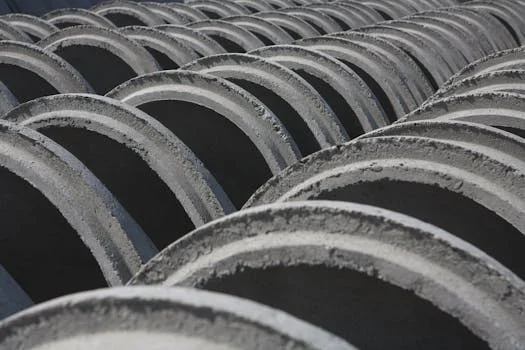
A pulp and paper mill in Indonesia reached 92% TSS removal and 75% COD removal while cutting footprint by 65%. Influent TSS was 450 mg/L and COD 1,200 mg/L. After tube modules replaced a conventional clarifier, effluent TSS fell to 35 mg/L and COD to 300 mg/L. Flocculant dose dropped 30%, saving $0.08/m³ in chemicals.
A U.S. food plant with high FOG and TSS ran tubes at 35 m/h. TSS fell from 220 mg/L to 18 mg/L (92% removal) and FOG from 150 mg/L to 25 mg/L (83% removal). The compact train fit inside an existing building, avoiding new civil works. A Jiangsu municipal plant cut turbidity from 120 NTU to below 5 NTU (96%) and TSS from 180 mg/L to below 12 mg/L (93%), meeting Grade A limits under GB 18918-2002 without sand filters.
Cost Breakdown: Tube Settler CAPEX, OPEX & ROI Calculation
2025 CAPEX for tube settler systems runs $1,200–$2,500 per m³/h, with typical payback of 1.5–3 years versus conventional tanks. Modules cost $800–$1,500/m³ by material. Frames in stainless or coated carbon steel add $200–$500/m², plus install labor. A 100 m³/h package usually lands between $120,000 and $250,000.
OPEX averages $0.02–$0.05/m³, covering sludge-pump energy ($0.005–$0.01/m³), lower chemicals, and quarterly cleaning labor. Sensitivity checks still show payback under 4 years for a 100 m³/h system if chemical savings fall 20% or CAPEX rises 15%. For underflow handling cost, see the cost comparison of sludge thickening technologies for tube settler underflow.
| Cost Category | Estimated Cost (2025) | Notes |
|---|---|---|
| Tube Modules | $800 – $1,500 per m³ | PVC is cheaper; PP/HDPE for high temp. |
| Structural Frame | $200 – $500 per m² | 304/316 Stainless Steel is standard. |
| Installation | $150 – $300 per m² | Includes civil work and module assembly. |
| Annual Maintenance | $0.005 – $0.01 per m³ | Quarterly cleaning and inspections. |
Common Failure Modes & Troubleshooting Guide
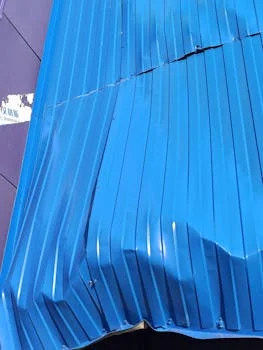
Clogging is the most common failure when TSS exceeds 500 mg/L or flocculation is weak. Blocked tubes cut capacity and raise effluent TSS as flow short-circuits. Widen spacing to 80 mm on high-solids streams, or add air scouring at 0.5–1 m³/m²·h to shake sludge loose.
Hydraulic short-circuiting often traces to poor inlet distribution or warped modules. Uneven entry creates high-velocity lanes that carry floc over the weirs. Clear distributors, replace damaged tubes, and keep sludge withdrawal high enough so the blanket stays below the tube zone.
PVC can crack above 60°C or under strong UV outdoors; switch to HDPE or PP in those duties. Hardness scale responds to lime softening or a monthly acid wash at pH 2–3.
Frequently Asked Questions
Q: What is the optimal tube angle for a tube settler clarifier?
A: 60° is the industry standard. It balances 92–97% TSS capture with sludge that slides under its own weight. Angles below 55° raise clogging risk; angles above 65° cut effective horizontal settling area.
Q: Can tube settlers handle high-turbidity wastewater (>1,000 NTU)?
A: Yes, but pre-treatment is critical. Above 1,000 NTU, use grit or pre-sedimentation to bring solids below 500 mg/L before the tubes. A Chile mining plant reached 95% TSS removal at 1,200 NTU with that two-stage layout.
Q: How often should tube settlers be cleaned?
A: Quarterly cleaning suits most plants with TSS below 300 mg/L. High-solids duties need monthly low-pressure jets (2–3 bar) or air scouring to limit biofilm and bridging.
Q: Are tube settlers suitable for cold climates (<10°C)?
A: Yes, but material selection is key. PVC can turn brittle below 5°C. HDPE or PP holds integrity to -20°C. A Scandinavian paper mill kept 94% TSS removal at 4°C on HDPE modules.
Q: What is the lifespan of a tube settler module?
A: Typically 10–15 years for PVC and PP, and up to 20 years for HDPE. Life depends on chemistry, UV cover, and cleaning force. Inspect yearly and replace when more than 10% of tubes warp or crack.
Who this is for / Who should look elsewhere / Next step
This guide is for plant engineers sizing high-rate clarification for industrial or municipal wastewater with moderate to high TSS and limited plot space. Look elsewhere if you need dissolved-air flotation for free oil, or if solids stay above 500 mg/L with no room for pre-sedimentation. For a duty check on spacing, hopper volume, and material, share influent TSS, temperature, and the discharge limit with your process vendor so the clarifier data efficiency explained selection settler assumptions match your stream.